
What factors influence the cost of roof and gutter washing services?
The cost of roof and gutter washing services is mainly influenced by the size and condition of the roof, the amount of moss or debris, access requirements, cleaning method and any additional safety equipment needed. A site assessment allows the work involved to be evaluated accurately and a tailored quote to be provided.
The cost of roof and gutter washing services is determined by the total time, labour, equipment and risk involved in completing the work safely. The main influences are the size and design of the roof, its condition, the amount of moss and debris present, access to the building, the cleaning method required and any additional work such as repairs, waste removal or gutter clearance.
Roof size and layout affect the amount of cleaning required and the time spent moving equipment around the site. A large roof will generally require more labour, water, cleaning solution and equipment than a small roof. Several roof sections, extensions, roof lights, plant areas and complicated layouts can also increase the duration of the work because each area must be assessed and cleaned without damaging vulnerable features.
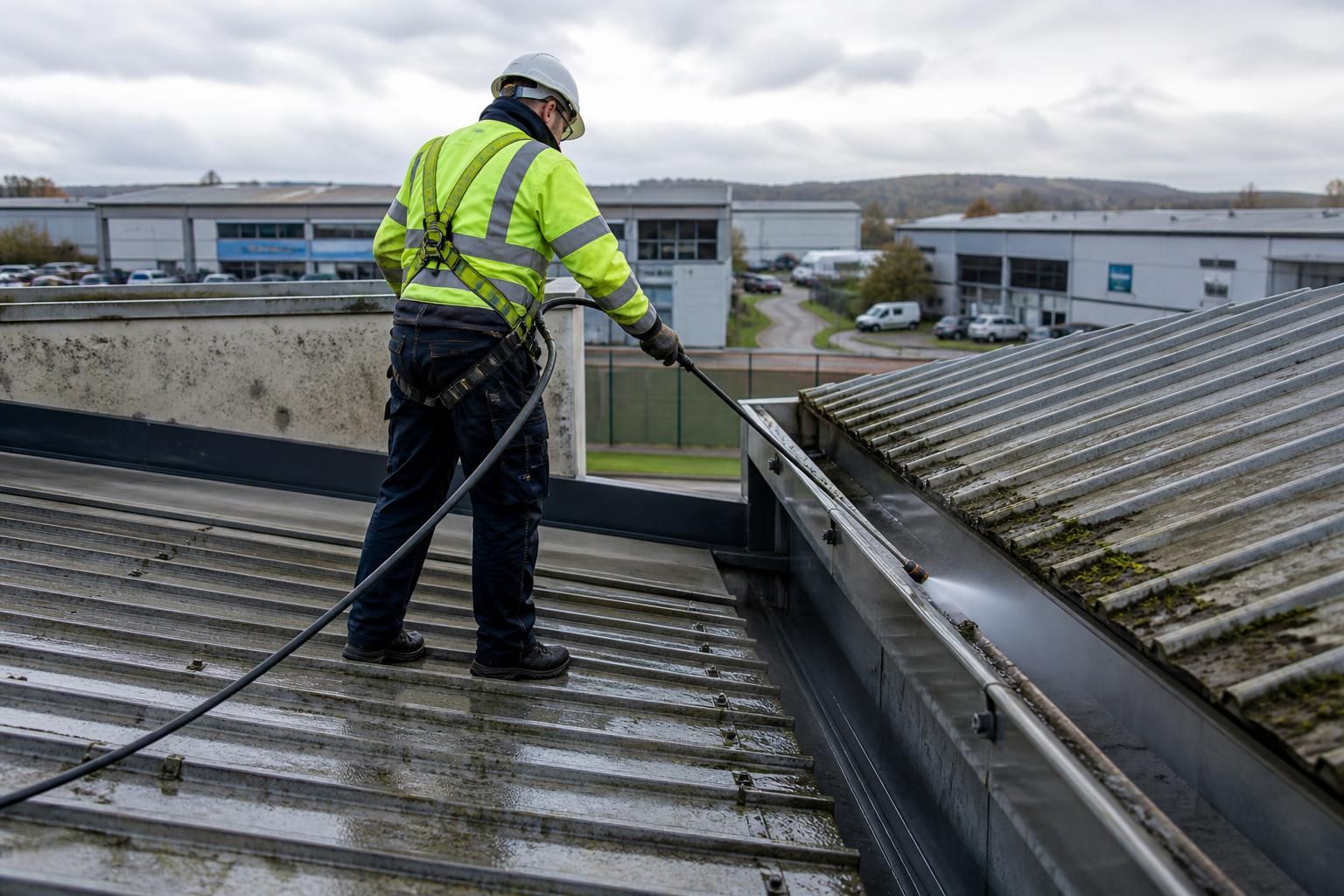
Roof type, material and pitch are also important. Concrete tiles, slate, metal, felt and coated roofing systems each have different cleaning tolerances. Some surfaces can withstand controlled pressure washing, while others require a lower-pressure approach, soft washing or steam cleaning. Steep or fragile roofs may need operatives to work from access equipment rather than walking directly on the surface. This adds preparation and equipment costs but reduces the risk of damage and improves site safety.
The condition of the roof and gutters has a direct effect on the amount of preparation and cleaning needed. Light surface dirt can usually be removed more efficiently than established moss, algae, lichen, bird fouling or compacted organic growth. Where contamination has been left for a prolonged period, it may need scraping, treatment and repeated rinsing. Blocked or heavily silted gutters also take longer to clear than gutters containing a small amount of loose debris.
Access and working height are among the most significant cost factors. A building that can be reached safely from ground level may need fewer resources than a high or restricted site. Costs can increase where the work requires scaffold towers, mobile elevated work platforms, roof access systems, edge protection, traffic management or specialist lifting equipment. Narrow entrances, enclosed courtyards, busy car parks and limited parking can make equipment delivery and set-up more complex.
Access requirements are assessed alongside the condition of the roof. A high roof with suitable access may be straightforward to clean, whereas a lower roof with fragile coverings, unprotected edges or difficult ground conditions may require more extensive controls. The quotation should reflect the safest practical method rather than assuming that operatives can simply work from ladders.
The selected cleaning method influences both labour and equipment costs. Soft washing uses controlled application of cleaning products and low-pressure rinsing, making it suitable for many roofs where aggressive pressure could dislodge coverings or damage coatings. Pressure washing may be appropriate for certain robust surfaces when carried out at a controlled pressure. Steam cleaning can be useful where heat and lower water volumes are preferred, but it requires specialist equipment and careful management of the surface and surrounding areas.
The cleaning method is selected according to the roof material, contamination, drainage arrangements and the client’s requirements. A lower initial price is not necessarily the most economical option if an unsuitable method causes damaged tiles, stripped coatings, water ingress or premature deterioration.
Gutter access and configuration can change the scope of the work. Long runs, multiple roof levels, box gutters, internal gutters and gutters positioned above extensions may require additional access equipment. The presence of gutter guards, downpipe restrictions or concealed outlets can also increase the time needed to check that the system is clear and draining correctly.
Gutter washing may include removing loose debris, flushing channels, checking outlets and testing downpipes where appropriate. Clearing the visible gutter line alone may not resolve a blockage further down a downpipe, so any additional investigation or clearance should be identified in the quotation.
Debris handling and environmental controls can affect the final price. Moss, silt and other material removed from a roof or gutter must be collected or controlled so that it does not enter drains, contaminate nearby surfaces or create a slip hazard. Some sites require protective sheeting, drain covers, debris nets, collection systems or additional rinsing. Disposal arrangements may also be required, particularly on larger commercial premises or sites with strict waste procedures.
Water, power and site facilities may influence the work plan. If a suitable water supply or electrical connection is unavailable, the contractor may need to bring additional tanks, generators, pumps or other equipment. The distance between the service connection and the working area can also affect hose runs, set-up time and safe movement around the site.
Health and safety requirements are included in a professional assessment of the work. Roof cleaning involves work at height, wet surfaces, chemical handling and the potential for falling debris. Commercial sites may require risk assessments, method statements, permits, inductions, exclusion zones or coordination with other contractors. These requirements do not simply represent administration; they allow the work to be planned and carried out without creating avoidable risks to staff, visitors, vehicles or the building.
The location and site circumstances can affect mobilisation and scheduling. Travel distance, parking restrictions, congestion, restricted delivery times and the need to work outside normal operating hours may all influence the resources required. On occupied premises, cleaning may need to be phased around tenants, customers, vehicles, loading areas or other site activities.
Additional services should be separated clearly from the basic roof and gutter wash. These may include:
- moss and lichen treatment;
- gutter and downpipe clearance;
- roof, gutter or cladding rinsing;
- protective or biocidal treatment where suitable;
- cleaning of fascias, soffits and external walls;
- removal of bird fouling or other difficult contamination;
- debris collection and disposal;
- minor access-related preparation; and
- post-cleaning inspections or photographic reporting.
These items may be included in a comprehensive service or priced separately. They should be confirmed before work begins so that the quotation matches the required outcome and there are no assumptions about what is covered.
Frequency and contract arrangements can also influence pricing. A one-off clean may involve heavier build-up and more preparation than routine maintenance. Planned cleaning allows contamination, blocked outlets and early drainage problems to be identified sooner, which can make each visit more predictable. For commercial and industrial properties, an ongoing schedule may also allow access, equipment and site controls to be planned efficiently, although the exact price still depends on the scope of each visit.
A reliable quotation should be based on a site assessment, photographs or sufficiently detailed site information rather than roof area alone. The assessment should establish the roof and gutter construction, contamination levels, access arrangements, cleaning method, water and power availability, protection required for surrounding areas and how waste will be handled. It should also state whether the price includes gutter testing, treatments, access equipment, travel, waste disposal and any applicable tax.
Before approving the work, check that the quotation explains the proposed method and identifies exclusions such as roof repairs, replacement tiles, damaged guttering or remedial work. Cleaning can reveal pre-existing defects, but it does not normally include repairing them unless this has been agreed separately. Providing current photographs, access restrictions and details of any previous cleaning or roof treatments can help produce a more accurate assessment and reduce the likelihood of additional charges.
For an accurate cost, arrange an assessment of the property and explain the required standard of cleaning, operating constraints and any reporting or compliance requirements. The resulting quotation should reflect the actual roof condition and safest access method, rather than offering a price based only on the building’s footprint.
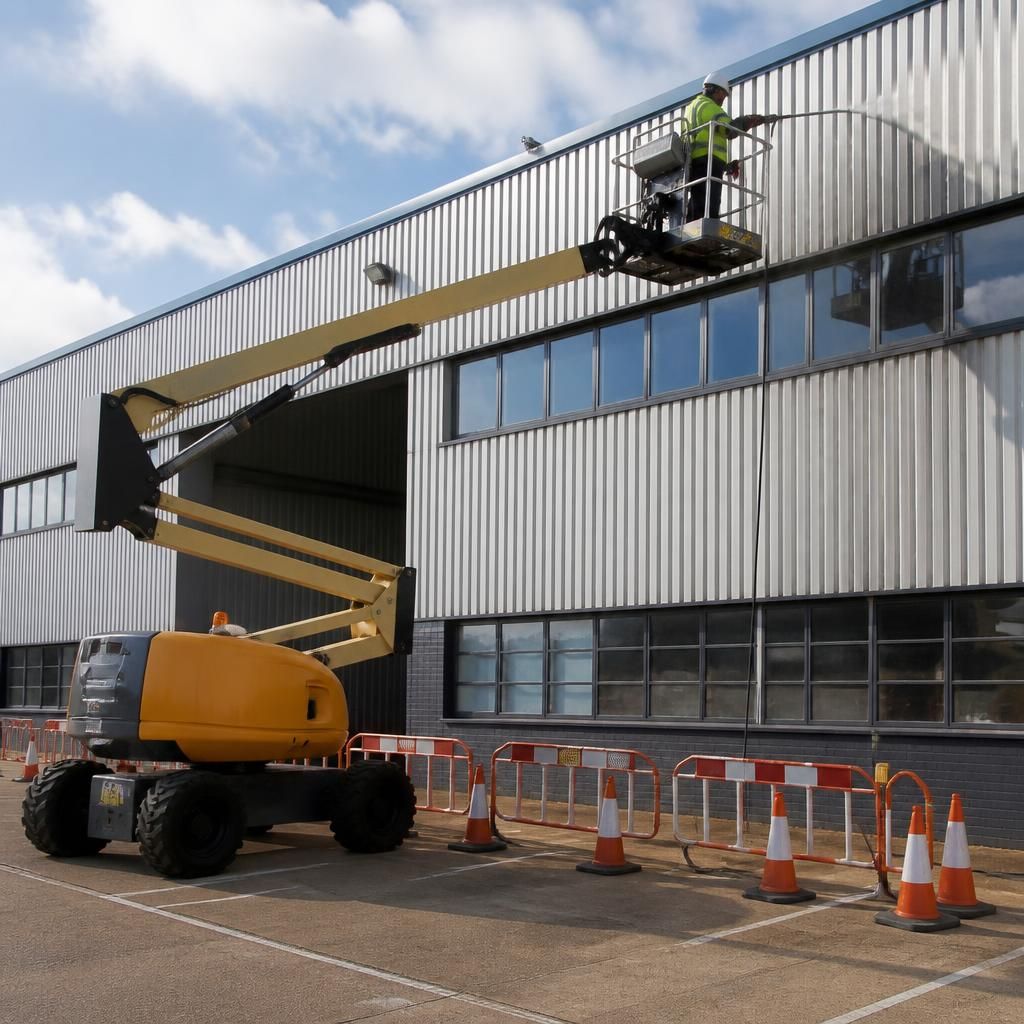
Access requirements are often one of the biggest influences on the cost of roof and gutter washing services because they determine how operatives can reach the work safely. A low roof with clear ground access may be cleaned using straightforward equipment, while a high, fragile or restricted roof may require a mobile elevated work platform, scaffold tower, edge protection or specialist roof access system.
The quotation should also account for narrow entrances, occupied car parks, traffic management, limited parking and the need to protect people, vehicles and surrounding surfaces from falling debris or cleaning solution. A site assessment confirms the safest practical method and helps ensure that access equipment, preparation and associated controls are included clearly rather than added as unexpected charges.