
What are the most effective methods for removing algae and moss from roofs and gutters?
The most effective approach combines manual removal of moss, low-pressure soft washing and an appropriate biocidal treatment to eliminate algae and moss without damaging roof coverings. Gutters should then be cleared by hand or with specialist equipment, inspected for blockages and flushed to confirm effective drainage.
The most effective method is a controlled combination of manual moss removal, low-pressure soft washing and a suitable biocidal treatment, followed by thorough gutter clearance and testing. This approach removes established growth, treats the residual spores and organic film, and reduces the risk of damage to roof coverings, pointing, seals and guttering.
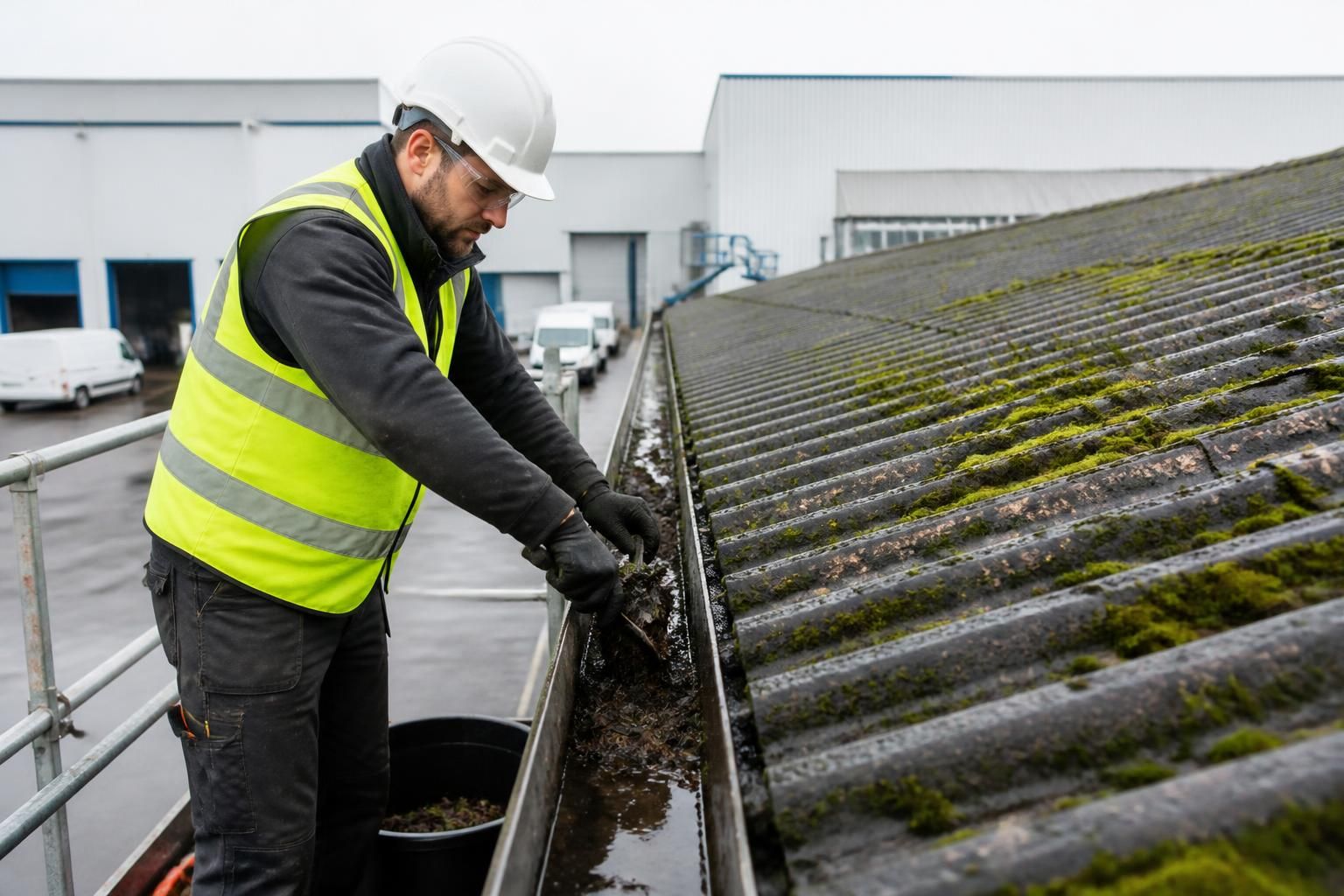
Manual removal comes first. Larger moss growth should be carefully lifted or brushed from the roof rather than forcibly blasted away. Removing the bulk of the growth allows the cleaning solution to contact the underlying algae and lichen more effectively. It also prevents loose moss from being washed into gutters, downpipes and drainage systems. The work should be carried out using suitable access equipment and safe working practices, as wet roof surfaces are particularly hazardous.
Soft washing is generally the preferred treatment for algae and moss. A low-pressure application distributes a purpose-selected cleaning solution across the affected surface without relying on high mechanical force. The solution breaks down organic growth and staining over a controlled dwell period before being rinsed or allowed to continue working, depending on the roof material and the product instructions. This is usually safer than high-pressure cleaning, which can dislodge protective surface finishes, force water beneath overlapping tiles, damage fragile coverings or spread contamination across adjoining areas.
The cleaning product must be compatible with the roof covering and applied at an appropriate concentration. Treatments used on concrete tiles, clay tiles, slate, metal roofing and membrane systems are not necessarily interchangeable. A professional assessment should consider the condition, age, coating and construction of the roof, as well as nearby windows, painted surfaces, landscaping and rainwater goods. Run-off should be controlled so that cleaning residues do not damage vegetation, contaminate drainage or mark surrounding surfaces.
Algae and moss require slightly different treatment. Algae commonly appears as green, dark or black discolouration and may form a thin film over a wide area. Moss is a thicker plant growth that retains moisture and can lift or obscure the edges of roof coverings. Brushing alone may remove visible moss but will not reliably deal with algae or remaining organic spores. Conversely, applying chemicals without first removing heavy moss can leave the treatment unable to reach the roof surface. Combining physical removal with soft washing provides a more complete result.
Gutters should be cleaned as part of the same process. Moss, algae, leaves and roof debris can collect in gutters and restrict the flow of rainwater. The material may be removed by hand, with suitable vacuum equipment or using other specialist gutter-cleaning methods selected for the building and access conditions. Downpipes should be checked for obstructions, and the gutters should be flushed or otherwise tested to confirm that water flows towards the outlets without overflowing or backing up.
- Inspect the roof, gutters, outlets, downpipes, flashings and visible seals before cleaning.
- Protect or control nearby surfaces, vegetation and rainwater discharge points where required.
- Remove substantial moss and debris using controlled manual methods.
- Apply a compatible soft-wash or biocidal treatment at the correct strength and with suitable dwell time.
- Rinse or finish the roof in accordance with the covering and treatment requirements.
- Clear gutters, check outlets and test drainage after the roof work is complete.
- Inspect the finished area for remaining growth, damaged components and points requiring repair.
High-pressure washing should not be treated as the default solution. It may be appropriate for some robust, sound surfaces when carried out by an experienced operator, but excessive pressure can cause more damage than the original growth. Particular care is needed around aged tiles, slate, coatings, mortar joints, roof penetrations and areas where water could enter the building. A suitable method should be selected after inspection rather than applying the same pressure or chemical treatment to every roof.
Cleaning can reveal defects that were previously concealed by moss or staining, including cracked or slipped tiles, deteriorated pointing, blocked outlets, failed sealant and corrosion. These issues should be recorded and referred for repair where necessary. Cleaning alone cannot correct a defective roof or prevent water ingress if the underlying construction requires maintenance.
After removal, keeping the roof and gutters free from accumulated debris helps slow the return of organic growth. Overhanging vegetation, shaded damp areas and persistent moisture should be addressed where practical, while gutters should be monitored for renewed blockage. A planned inspection and cleaning programme is particularly useful for commercial premises, managed properties and buildings where overflowing rainwater could affect façades, entrances, tenants or public areas.
For large or complex properties, the method should be documented in the cleaning proposal. It should identify the roof and gutter materials, proposed access equipment, treatment type, pressure controls, protection measures, waste and run-off arrangements, inspection requirements and any limitations caused by the condition of the roof. This provides a safer, more predictable method of removing algae and moss while protecting the building and its surrounding areas.
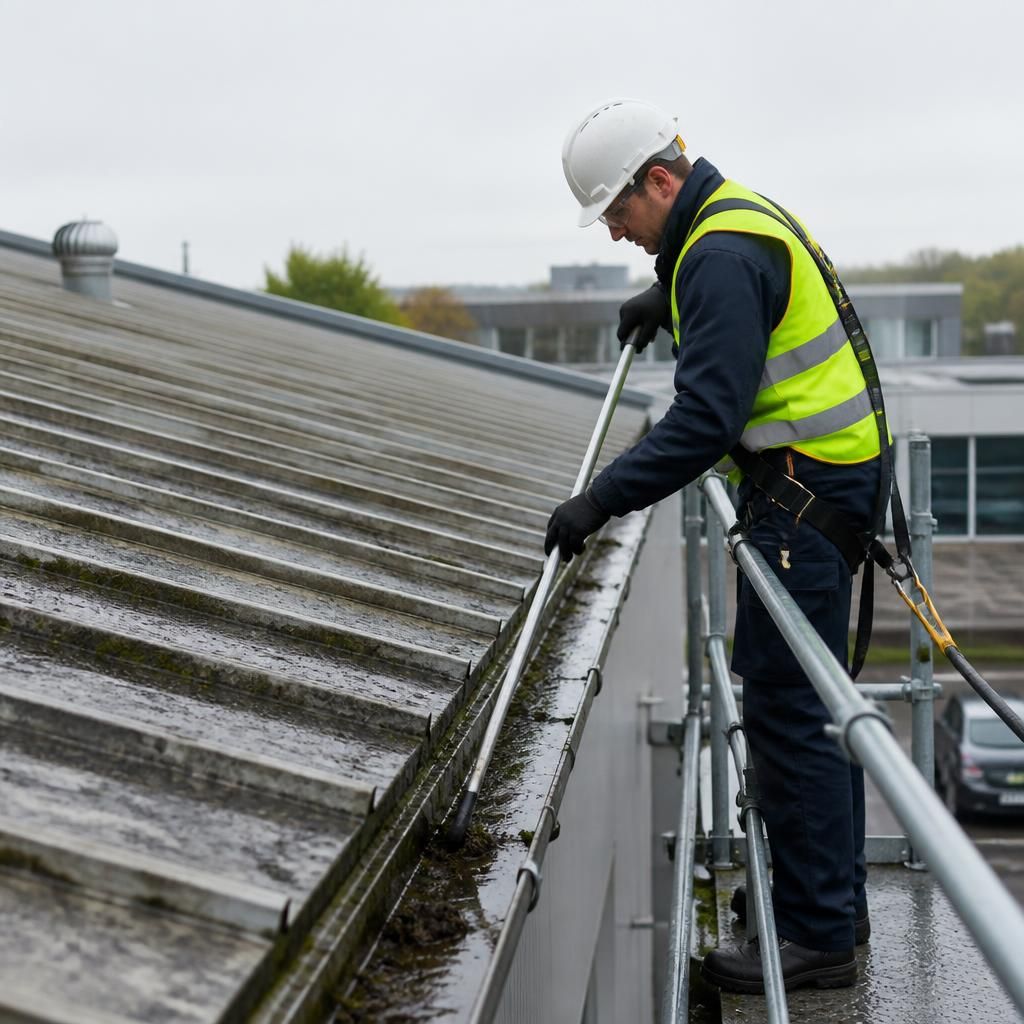
The most effective way to remove algae and moss from a roof is to combine controlled manual removal with low-pressure soft washing and a compatible biocidal treatment. Manual methods lift thicker moss without forcing water beneath tiles, while the treatment targets remaining algae, organic film and spores on the roof surface.
Gutters should then be cleared of moss and roof debris, with outlets and downpipes checked for blockages and water flow tested. This combined process is safer and more thorough than relying on high-pressure washing, particularly on ageing tiles, slate, coatings, pointing and roof penetrations.