
What are the key benefits of professional roof and gutter washing services?
Professional roof and gutter washing removes moss, algae, dirt and blockages that can contribute to roof deterioration, leaks and overflowing gutters. It helps protect the building, improve drainage and safety, maintain a professional appearance, and identify developing defects before they become more costly to repair.
Professional roof and gutter washing helps protect a building from water ingress, blocked drainage, premature material deterioration and avoidable maintenance costs. By removing moss, algae, lichen, leaves, silt, bird fouling and other accumulated debris using a method suited to the roof and gutter materials, a planned service can improve drainage, support safer premises and identify defects before they develop into more disruptive problems.
Preventing water damage and leaks
Debris and organic growth can retain moisture against roof coverings, joints, fixings and flashings. Moss may also lift or disturb some roofing materials as it becomes established. In gutters and outlets, accumulated material restricts the flow of rainwater and can cause water to spill over the edge of the building or back up beneath roof details.
Cleaning removes these obstructions and allows rainwater to follow its intended route into gutters, downpipes and drainage systems. This reduces the risk of staining, damp patches, saturated insulation, damaged fascias and water entering occupied areas. Washing does not repair failed membranes, cracked tiles, defective flashings or damaged seals, but it makes those issues easier to identify and address.
Maintaining effective roof drainage
Gutters perform properly only when they have sufficient capacity and unobstructed outlets. Leaves, moss, sediment and nesting material can reduce that capacity, particularly around outlets and internal corners. Professional cleaning clears the channels and checks whether water can discharge correctly through connected downpipes.
Effective drainage is particularly important on commercial and industrial premises, where overflowing water can affect entrances, loading areas, walkways, stock, vehicles and neighbouring property. A suitable service may also include checking for loose joints, damaged brackets, poor falls and downpipes that are partially blocked or disconnected.
Reducing premature deterioration
Persistent moisture, biological growth and deposits can accelerate the deterioration of roof coverings, coatings, sealants, metal components and guttering. On some roofs, roots from established growth can work into laps or joints. On metal systems, retained moisture and contaminated deposits may contribute to corrosion where protective coatings have been damaged.
Removing contamination helps the roof and rainwater goods dry more effectively and allows maintenance teams to monitor their condition. The cleaning method must be controlled: excessive pressure, unsuitable chemicals or careless access can damage coatings, dislodge materials and force water into vulnerable details. Professional contractors assess the surface before choosing pressure washing, steam cleaning, soft washing or manual removal.
Improving health and safety around the building
Blocked gutters and downpipes can create wet surfaces, slippery paths and falling debris. Moss and algae on accessible roof areas, canopies or external walkways may also present a slip risk. Regular removal of contamination helps reduce these hazards, although roof cleaning itself involves work at height and must be properly planned.
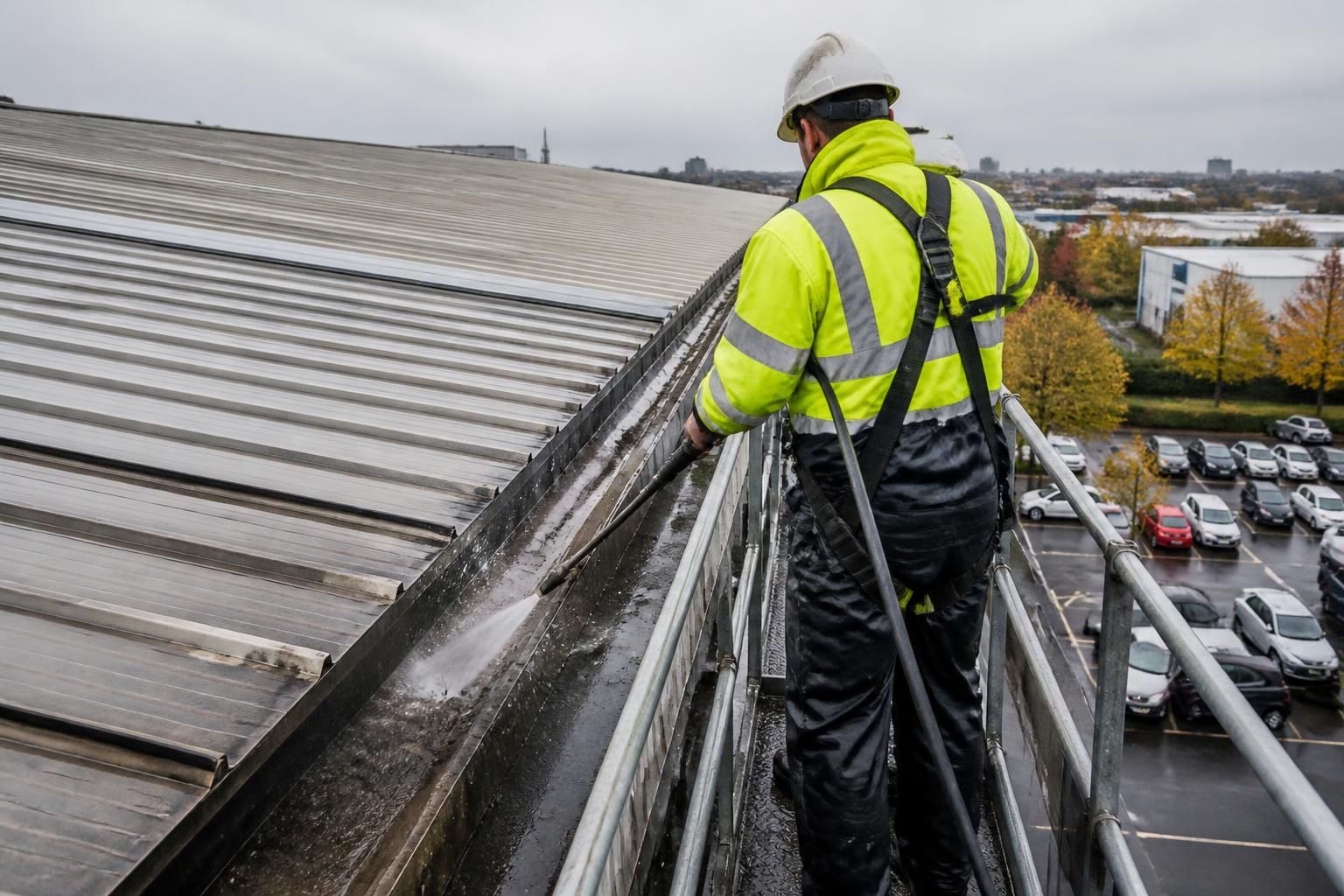
Professional work should account for access, edge protection, fragile surfaces, weather conditions, water management and the protection of people and vehicles below. Where access equipment is required, it should be selected for the building and working area rather than relying on unsafe ladders or improvised access.
Supporting early defect detection
A roof is easier to inspect when its surfaces, outlets and gutter channels are not concealed by moss or debris. During a properly managed cleaning visit, developing issues may become visible, including cracked or displaced coverings, open joints, blocked outlets, corroded fixings, damaged coatings, failed sealant and sections of standing water.
Cleaning does not replace a formal roof survey, but it can provide useful maintenance information. Recording visible defects and referring significant findings for repair helps prevent a minor issue from becoming a leak, internal damage or an urgent call-out.
Preserving the appearance of commercial premises
Algae, lichen, moss, bird fouling and atmospheric grime can leave roofs and gutters looking neglected. This can affect the appearance of offices, retail premises, industrial units, managed estates and public buildings. Removing visible contamination provides a cleaner, more consistent finish and helps maintain the standard expected by occupants, visitors, tenants and customers.
For coated or painted roofs, cleaning should be carried out with a process that removes contamination without stripping the finish. Where staining has penetrated or a coating has failed, washing may improve the appearance but may not restore the original finish without additional treatment or refurbishment.
Extending maintenance intervals and controlling costs
Planned roof and gutter washing allows cleaning and minor maintenance needs to be dealt with before they become reactive problems. Preventing blockages and monitoring defects can reduce the likelihood of emergency attendance, internal water damage and premature replacement of roof or drainage components.
The financial benefit depends on the building, roof type, surrounding trees, exposure, contamination levels and existing condition. Cleaning should therefore form part of a wider planned maintenance programme rather than being treated as a guarantee that repairs will never be required. A contractor should clearly distinguish between cleaning, inspection and remedial work in its recommendations.
Helping meet site management responsibilities
Commercial property owners, facilities teams, managing agents and landlords need to demonstrate that foreseeable maintenance risks are being managed. Documented cleaning visits, site risk assessments, photographs and records of defects can support internal maintenance systems and contractor oversight.
These records do not replace statutory inspections, building surveys or the organisation’s own health and safety procedures. They do, however, provide evidence of a planned approach to roof and rainwater-goods maintenance and help coordinate follow-up repairs.
Reducing disruption to operations
Professional contractors can plan the work around access restrictions, delivery schedules, occupied areas and site-specific safety requirements. Appropriate equipment and controlled water use can make it possible to clean larger or more complex premises without unnecessarily closing areas of the site.
Before work starts, the cleaning plan should address where removed debris and dirty water will go, how sensitive surfaces will be protected, whether access equipment can be positioned safely and how staff, visitors and vehicles will be kept clear. These details are especially important on active commercial and industrial sites.
Overall, professional roof and gutter washing is most valuable when it is carried out as part of a planned maintenance programme. The best service combines a suitable cleaning method with safe access, careful protection of the building and clear reporting of defects. This maintains drainage performance, protects the roof system and gives the responsible property team practical information for future maintenance.
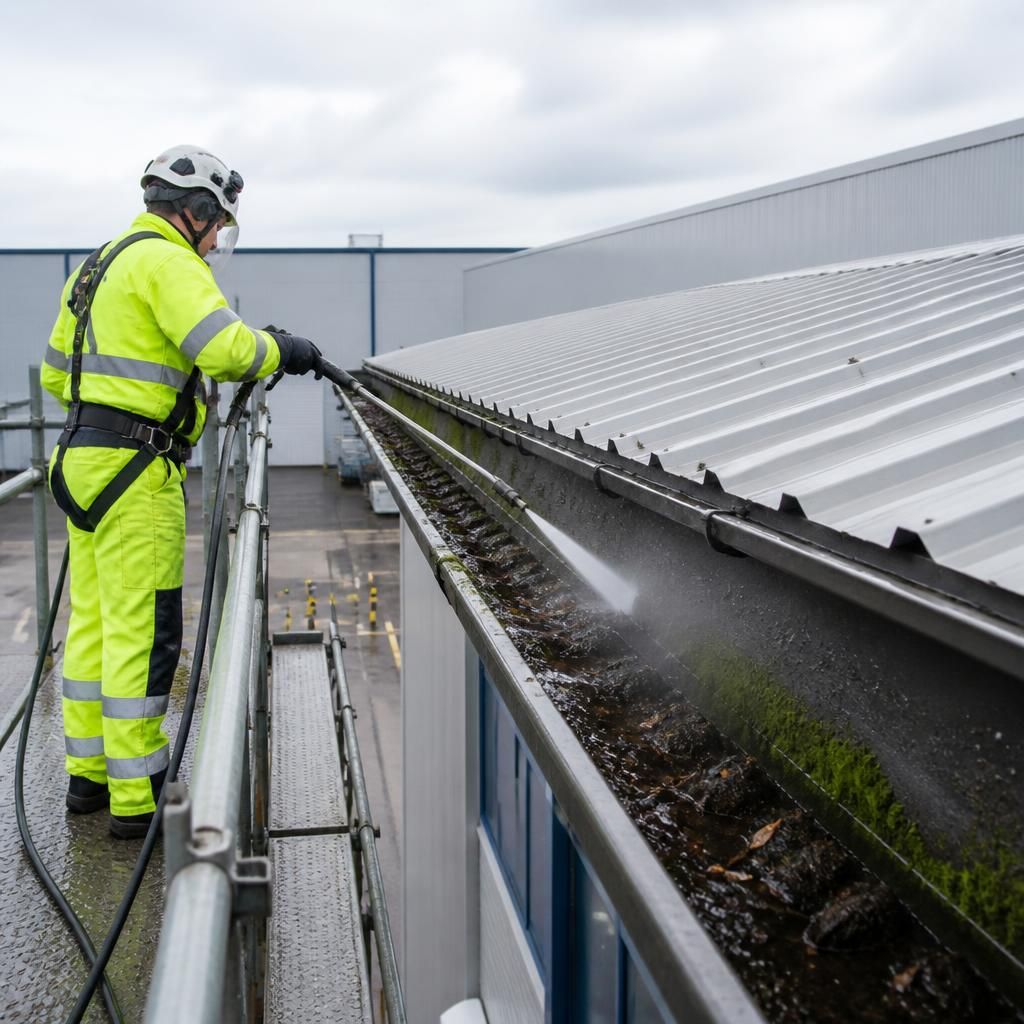
One of the main benefits of professional roof and gutter washing is the prevention of water damage. Moss, leaves, silt and other debris can restrict gutter channels and downpipe outlets, causing rainwater to overflow against fascias, walls, entrances and other vulnerable areas of a commercial property.
Removing these obstructions allows water to drain as intended and makes defects such as loose joints, damaged brackets, cracked roof coverings and failed sealant easier to identify. Professional cleaning also ensures that the method and access arrangements are suitable for the roof materials, reducing the risk of damage caused by excessive pressure or unsuitable chemicals. Washing does not replace roof repairs, but it helps the responsible property team identify and address problems before they lead to leaks, damp or more disruptive remedial work.