
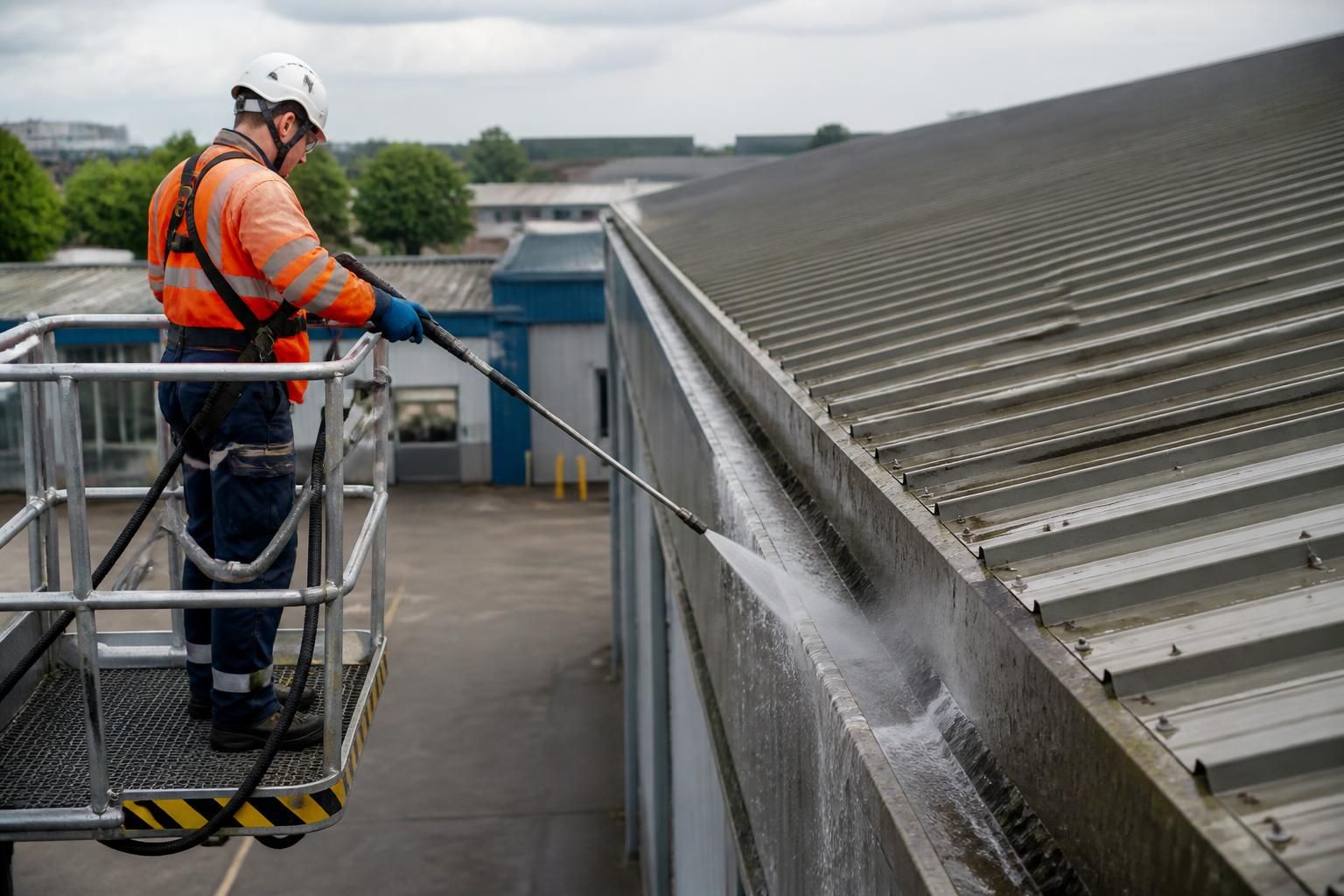
What are the advantages of using specialised equipment for roof and gutter washing?
Specialised roof and gutter washing equipment provides safer access, controlled cleaning pressure and more thorough removal of moss, algae, dirt and blockages than general-purpose tools. It helps protect roof materials and guttering while improving drainage, reducing the risk of damage and producing consistent results across commercial and industrial properties.
Specialised roof and gutter washing equipment improves safety, cleaning control and the quality of the finished work. Purpose-built systems allow operatives to reach roof areas and gutters more safely, remove organic growth and debris more thoroughly, and match the cleaning method to the roof covering, façade materials and condition of the building. This is particularly important on commercial and industrial premises, where blocked drainage, surface damage or uncontrolled runoff can affect occupants, stock, vehicles and building operations.
Safer access to difficult areas
Roofs and gutters are often positioned above occupied buildings, loading areas, entrances and pedestrian routes. Specialised access equipment, including suitable platforms, towers, mobile access systems and other approved equipment, reduces the need to work from unstable ladders or place unnecessary weight on fragile roof surfaces. It also helps operatives maintain a controlled working position when cleaning roof edges, valleys, outlets, parapets and concealed gutter runs.
Access arrangements must be selected after considering the building height, ground conditions, roof design, surrounding obstacles and the risk of falling materials or water. Equipment is not a substitute for planning: a competent contractor should assess the work area, protect people below and use appropriate fall-prevention measures. Where access is restricted, specialist gutter vacuum systems can often clean from ground level, reducing work at height and limiting disruption around the building.
More controlled cleaning pressure
General-purpose pressure washers can deliver excessive force for some roof coverings, coatings, pointing, seals and gutter components. Specialist washing equipment provides better control over pressure, flow, temperature and application distance. This makes it possible to remove dirt, algae, moss residue and staining without treating every surface in the same way.
Soft washing is commonly used where a low-pressure approach is needed. A suitable cleaning solution is applied to break down biological growth and soiling, then rinsed carefully with controlled water flow. Steam cleaning may be appropriate for selected hard surfaces or stubborn deposits, while pressure washing can be useful on durable areas when the surface and surrounding details have been assessed. The objective is effective cleaning without forcing water beneath tiles, dislodging protective finishes or damaging vulnerable materials.
Thorough removal of moss, algae and debris
Specialist equipment can reach areas that are difficult to clean with hand tools alone. Gutter vacuums with long-reach poles can remove leaves, silt, moss and nesting debris from elevated channels. Adjustable nozzles and extension systems help clean roof sections, valleys and drainage points while reducing the need to walk across the roof.
Removing the visible growth is only part of the process. Moss and organic debris can retain moisture, obstruct outlets and encourage further deterioration. A professional clean should also identify areas where growth is recurring, check that water can flow towards outlets and distinguish between loose contamination and defects that require separate repair. Washing will not correct cracked tiles, failed joints, defective membranes or incorrectly positioned guttering.
Better protection for roof coverings and guttering
Specialised equipment supports a material-specific cleaning method. Operators can adjust the treatment for concrete or clay tiles, slate, coated metal, sheet roofing, plastic guttering and painted surfaces. Soft brushes, controlled rinsing and low-pressure application can reduce abrasion, while appropriate collection and rinsing procedures help prevent removed debris from entering the drainage system.
This control is valuable on older or weathered roofs. Excessive pressure, aggressive scraping and unsuitable chemicals can remove coatings, expose porous surfaces, damage seals or accelerate corrosion. Before work begins, the roof should be inspected for fragile areas, previous repairs, loose coverings and sensitive details such as rooflights, flashings and solar equipment. Any limitations should be recorded and explained before cleaning starts.
Improved gutter performance and drainage
Gutter cleaning equipment is designed to remove both loose and compacted obstruction from channels, hoppers, downpipes and outlets. Cameras or inspection attachments may help confirm the condition of concealed sections where a blockage cannot be assessed from ground level. Once the debris has been removed, controlled water testing can help establish whether water is reaching the outlets and discharging correctly.
Effective drainage reduces the likelihood of overflowing gutters, damp staining, localised water ingress and erosion around the building perimeter. It also helps prevent standing water from remaining against roof edges and façade materials. Where a blockage is caused by a damaged or displaced component rather than debris alone, the issue should be reported instead of repeatedly washing the same area.
More consistent results on larger properties
Commercial roofs and gutter systems can cover extensive areas with different levels of soiling and several types of surface material. Specialised equipment makes it easier to apply a consistent process across the site while adapting treatment where conditions change. This is more reliable than using a single general-purpose tool for every section.
For planned maintenance, equipment also supports repeatable inspections and cleaning procedures. Site teams can document access arrangements, areas treated, defects observed, waste removed and any locations requiring follow-up. This creates a clearer maintenance record and helps property managers plan future work around occupancy, production schedules and other site activities.
Reduced disruption and better control of runoff
Ground-level gutter vacuum systems, targeted application methods and suitable water recovery or containment measures can reduce disruption to entrances, car parks and service yards. Specialist equipment may also help control where dirty water, moss and chemical residues travel during the cleaning process. The correct approach depends on the site drainage system, the contaminants present and local environmental requirements.
Cleaning should be planned so that loosened material does not block downpipes or enter sensitive drainage channels. Operatives should protect nearby vehicles, equipment, landscaping and pedestrian areas, and dispose of collected waste responsibly. Any cleaning solution must be selected and used in accordance with the surface manufacturer’s guidance, product instructions and site controls.
Why equipment selection still requires professional judgement
Specialist equipment is beneficial only when it is correctly matched to the building and used by trained operatives. The most powerful system is not automatically the most suitable. A competent roof and gutter washing contractor should consider the roof construction, age, condition, access limitations, contamination, weather, water supply and the consequences of runoff before choosing a method.
For commercial and industrial premises, the best outcome usually combines specialist access, controlled washing, gutter extraction, inspection and appropriate aftercare. This approach removes contamination while limiting avoidable damage, improving drainage and providing a clearer basis for ongoing maintenance.
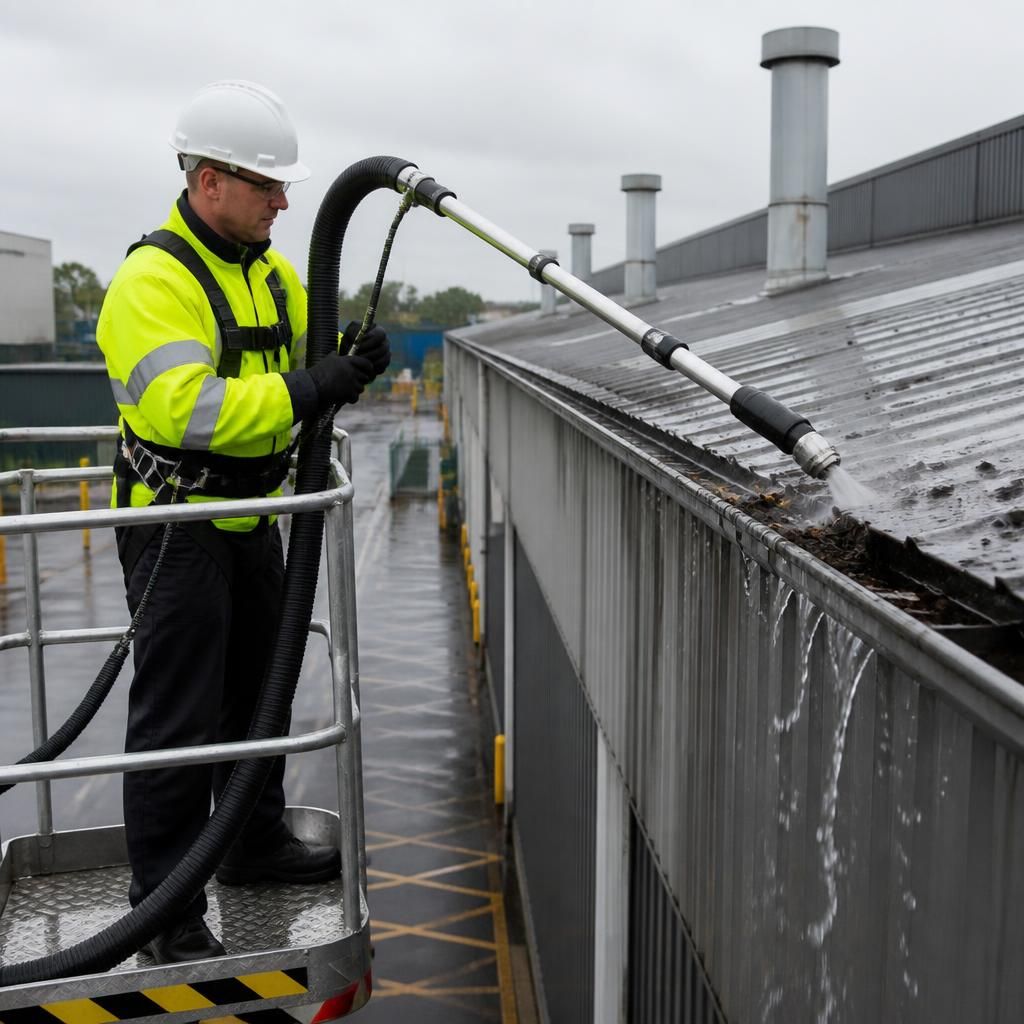
Specialised roof and gutter washing equipment improves safety by helping operatives reach difficult areas without placing unnecessary weight on fragile roof coverings. Suitable access systems, long-reach poles and gutter vacuum equipment can provide a more stable working position and, in some cases, allow gutters to be cleaned from ground level.
This is particularly useful above entrances, loading areas, car parks and pedestrian routes. Before work begins, access equipment should be matched to the building height, roof condition, ground conditions and surrounding obstacles. Operatives must also control falling debris and dirty water, protect people below and use appropriate fall-prevention measures. Equipment supports safe working, but it does not replace a proper site assessment or competent operation.