
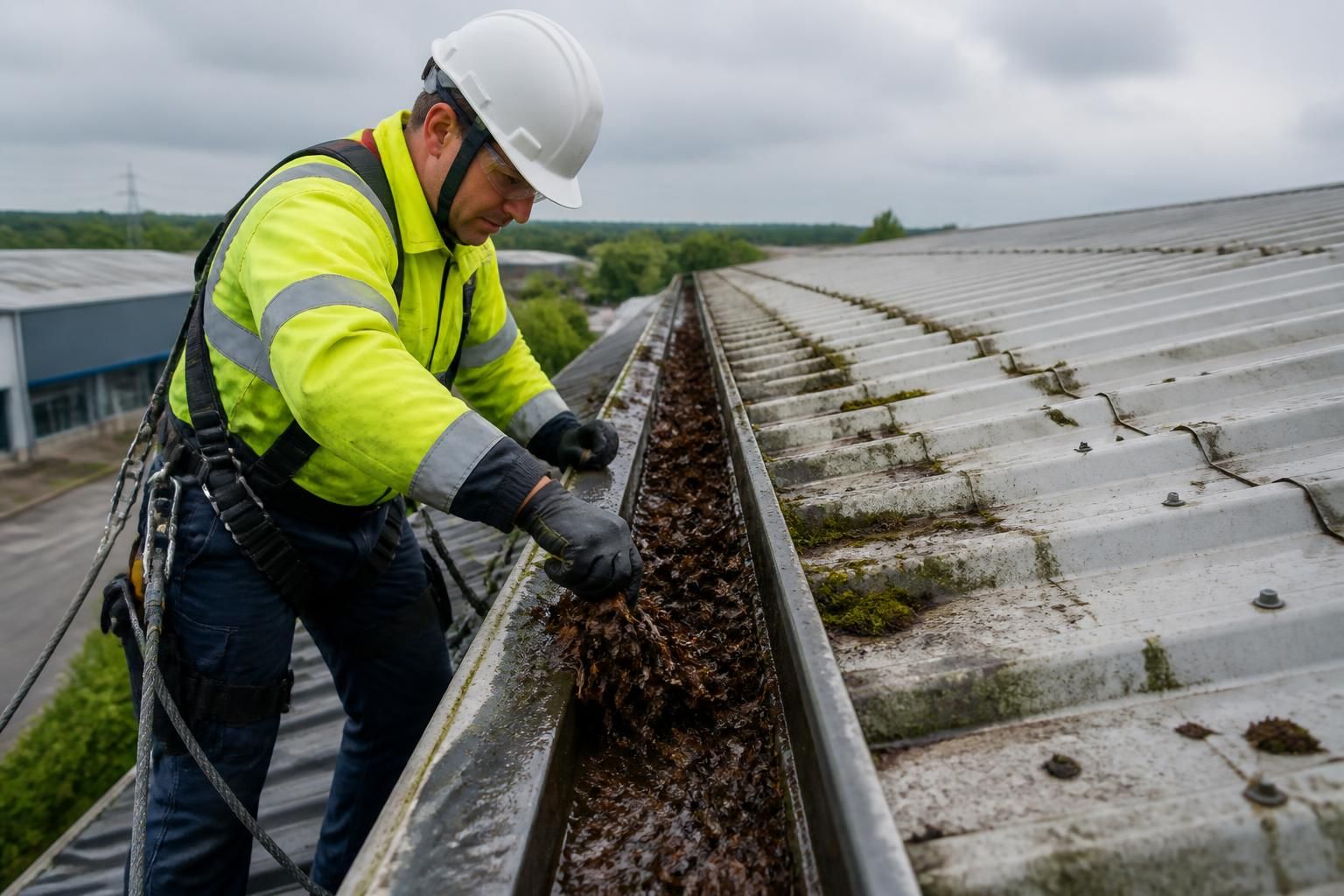
How often should roofs and gutters be professionally cleaned to ensure optimal performance?
Roofs and gutters should generally be professionally inspected and cleaned at least annually, with gutter cleaning scheduled more frequently where trees, heavy debris, moss or difficult access increase the risk of blockages. The appropriate interval depends on the roof material, surrounding environment, building use and previous maintenance history.
For most commercial and industrial properties, roofs should be professionally inspected and cleaned at least annually, while gutters may need cleaning more frequently where trees, heavy debris, moss, bird activity or difficult access increase the risk of blockages. The correct schedule depends on the roof and gutter materials, the surrounding environment, the building’s use, drainage requirements and the property’s previous maintenance history.
Roof cleaning and gutter cleaning should be planned as separate but related maintenance tasks. A roof may only require periodic cleaning if its surface remains clear and drainage is unaffected, whereas gutters can accumulate leaves, sediment and nesting material quickly. A blocked gutter can cause water to overflow onto façades, access routes, loading areas and building entrances, even when the roof covering itself appears to be in reasonable condition.
An annual professional inspection is the minimum sensible starting point. This allows the condition of the roof covering, flashings, outlets, gutters, downpipes and associated drainage points to be assessed before minor defects develop into water ingress or more extensive deterioration. Cleaning can then be carried out where required, rather than relying on a fixed schedule that may not suit the site.
Properties surrounded by mature trees, woodland or dense vegetation commonly need more frequent gutter attention. The same applies to buildings exposed to windblown debris, construction dust, airborne pollution or bird activity. Moss, algae and organic matter can retain moisture against roof surfaces and may migrate into gutters and outlets. On these sites, gutter inspections between planned cleans can help identify blockages before they affect the building.
Roof pitch and surface type also influence the appropriate interval. Low-slope roofs can retain water and debris for longer, particularly where outlets are limited or drainage falls are poor. Pitched roofs may shed loose material into gutters, while older tiles, slates, coated metal and cladding require different cleaning methods. Aggressive pressure washing is not suitable for every surface, so the cleaning frequency should be considered alongside the condition and vulnerability of the material.
Seasonal planning is particularly useful for commercial premises. A clean before periods of heavier leaf fall can reduce the likelihood of blocked gutters, while an inspection after autumn and winter conditions can identify displaced materials, damaged joints, standing water and accumulated debris. Sites with persistent vegetation or high debris levels may benefit from a spring and autumn maintenance review, with additional visits when site conditions indicate a need.
More frequent professional cleaning may be appropriate where:
- the building is beneath or close to mature trees;
- gutters contain recurring leaves, silt, moss or nesting material;
- the roof has a low pitch, concealed drainage or limited falls;
- the property is exposed to heavy wind, industrial dust or construction debris;
- previous blockages, leaks or overflow have been recorded;
- the premises contain sensitive areas such as warehouses, offices, retail units or public access routes below the roofline;
- access is difficult and early defects may otherwise remain unnoticed; or
- the site forms part of a planned property management or compliance programme.
Warning signs that a roof or gutter system needs attention include overflowing gutters during rain, damp staining on façades or internal ceilings, vegetation growing from gutter channels, sagging sections, separated joints, standing water, blocked outlets and visible moss or algae. These symptoms should not be treated as purely cosmetic. Persistent moisture can contribute to corrosion, damaged coatings, degraded seals, frost-related deterioration and water ingress.
Professional cleaning is preferable to relying solely on visual checks from ground level. A trained contractor can assess areas that are not easily visible, use suitable access equipment, protect the roof surface and manage debris safely. The work should include removal of loose organic matter, inspection of gutters and downpipes, checks around outlets and flashings, and reporting of defects that require repair rather than cleaning alone.
Cleaning methods should be matched to the surface and the type of contamination. Soft washing or controlled low-pressure cleaning is often more appropriate for roofs affected by algae, moss and biological growth because it reduces the risk of dislodging tiles, damaging coatings or forcing water beneath laps and seals. Gutters may require manual removal of compacted debris followed by controlled rinsing, with downpipes checked to confirm that water can discharge correctly.
For commercial and industrial properties, the most effective approach is usually a planned maintenance schedule rather than reactive call-outs. The schedule should record the roof type, drainage layout, access arrangements, known problem areas, previous cleaning dates and any repairs identified. It should also account for operational constraints, so work can be completed with appropriate controls around staff, visitors, vehicles, plant and public areas.
In practical terms, arrange a professional roof and gutter inspection at least annually, increase gutter cleaning where the site regularly collects debris, and bring forward the next visit whenever overflow, biological growth or water-related defects appear. A site-specific assessment is the most reliable way to establish whether annual cleaning is sufficient or whether the property needs a more frequent maintenance programme.
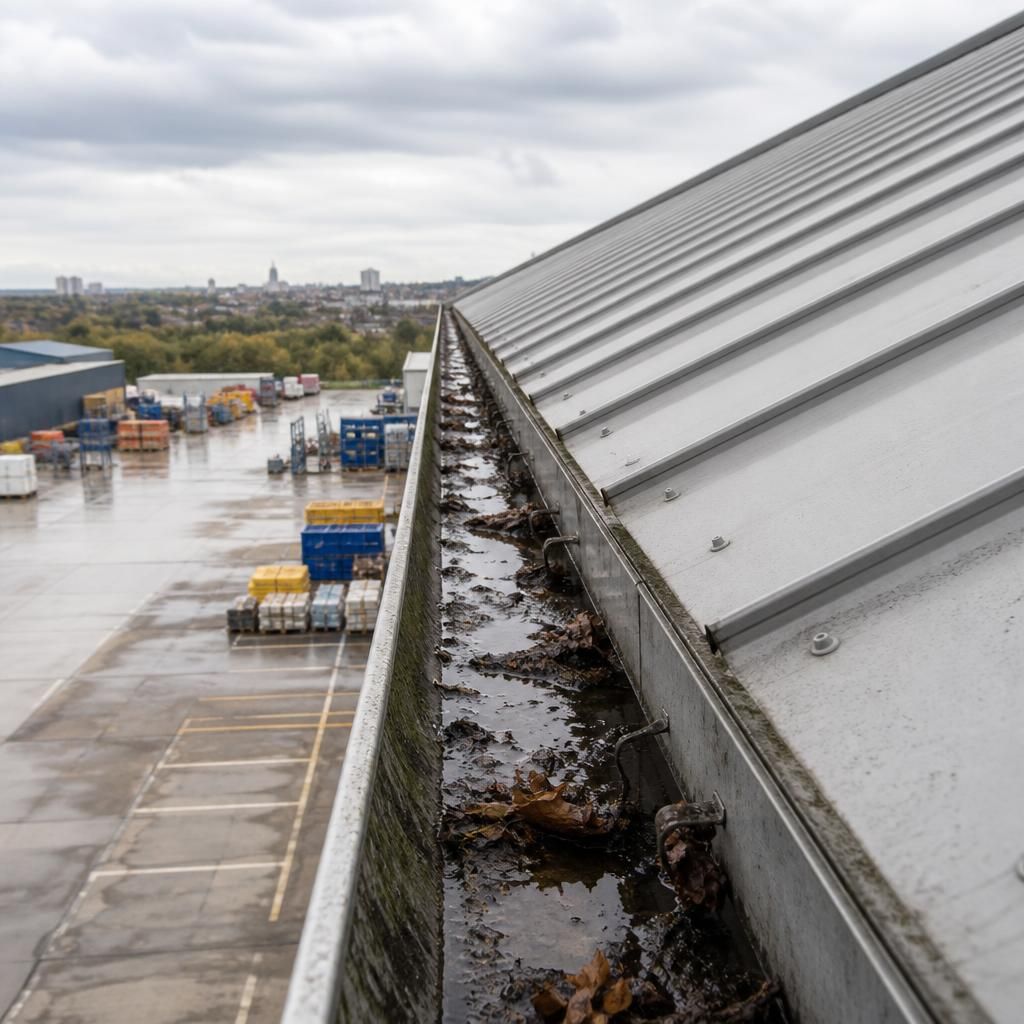
Professional roof and gutter cleaning should normally be scheduled at least annually, with more frequent gutter checks where trees, moss, bird activity or windblown debris create a recurring blockage risk. A roof may not need cleaning at every visit, but its covering, gutters, outlets and downpipes should be assessed together.
For commercial properties, arranging inspections before and after periods of heavy leaf fall can help identify overflowing gutters, standing water, loose materials and damaged joints early. If the site has a history of blockages, difficult access or water ingress, a planned maintenance schedule with additional gutter cleaning is usually more appropriate than waiting for visible problems.
Arrange Your Professional Roof and Gutter Cleaning Assessment
Arrange a professional roof and gutter cleaning assessment to establish a suitable maintenance schedule for your property. We can review the roof covering, gutters, outlets and access requirements, then recommend cleaning intervals based on site conditions.