
How can regular roof and gutter washing prevent long-term damage?
Regular roof and gutter washing removes moss, algae, dirt and debris before they retain moisture, block drainage or accelerate surface deterioration. This helps prevent leaks, corrosion, damaged roof coverings, façade staining and water-related damage to the building, while keeping commercial premises safe and presentable.
Regular roof and gutter washing prevents long-term damage by removing moss, algae, silt, leaves and other debris before they retain moisture, obstruct drainage or accelerate deterioration. Keeping these areas clean helps protect roof coverings, flashings, cladding, fascias, gutters and the building’s internal spaces from avoidable water ingress and surface damage.
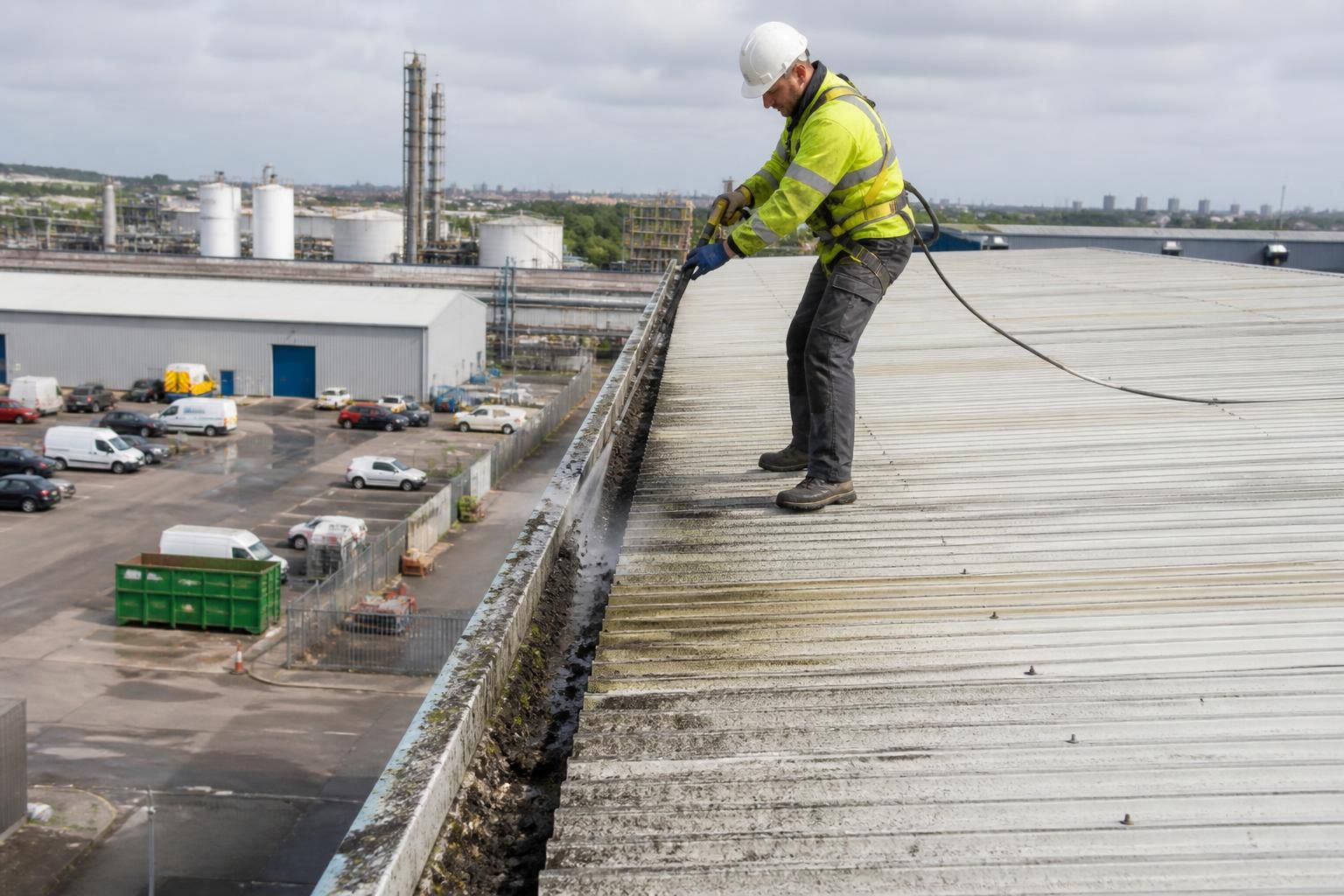
It reduces moisture retention on the roof. Moss and organic growth can hold water against tiles, slates, membranes and coated metal surfaces. On porous materials, repeated wetting can encourage surface breakdown, while freezing conditions can cause trapped moisture to expand within small defects. Washing removes the growth and exposes areas where deterioration, displaced coverings or failed seals may need attention.
Algae and dirt can also create a persistently damp surface. This may lead to staining, biological growth and gradual degradation of protective coatings. Cleaning does not repair an already damaged roof, but it removes the conditions that allow minor defects to become more serious and makes inspections more effective.
It keeps rainwater drainage working correctly. Gutters, outlets and downpipes must carry water away from the roof and the building’s walls. Leaves, moss, nesting material and silt can restrict the flow or cause blockages. When water cannot drain freely, it may overflow onto fascias, cladding, brickwork, paving and entrances. Persistent overflow can saturate masonry, stain façades and contribute to damp within the building.
Blocked or poorly draining gutters can also leave water standing against joints and fixings. Over time, this may cause corrosion, joint failure and distortion, particularly where gutters are made from coated steel or other metal. Cleaning and checking the drainage system helps identify loose brackets, damaged seals, cracked sections and poorly aligned outlets before they result in a larger failure.
It helps prevent leaks and internal water damage. Roof debris can conceal defective flashing, open laps, cracked tiles, damaged membranes and failing penetrations around plant, vents or rooflights. During heavy rain, blocked drainage and existing defects can combine to direct water into roof voids and occupied areas. The resulting damage may affect insulation, ceilings, electrical systems, stock, equipment and internal finishes.
For commercial premises, early cleaning and condition reporting can also support planned maintenance. Identifying a small defect while the roof is accessible is generally more manageable than responding to water ingress after it has affected several parts of the building.
It protects associated building elements. Overflowing or contaminated roof water can damage:
- fascias, soffits and bargeboards;
- wall coatings, brickwork and rendered surfaces;
- metal cladding, trims and fixings;
- loading bays, walkways and hardstanding;
- signage, external lighting and building services mounted near drainage routes.
Removing organic deposits and directing water through clear outlets reduces staining and limits the spread of contamination across these surfaces. It also helps maintain a professional appearance around offices, retail units, industrial premises and managed property portfolios.
The cleaning method must suit the roof and its condition. A professional assessment should consider the roof covering, age, coatings, fixings, access arrangements and the type of contamination present. Soft washing may be appropriate for delicate or coated surfaces where aggressive pressure could dislodge coverings or force water beneath laps. Steam cleaning can be useful for controlled removal of organic growth, while pressure washing may be suitable for robust surfaces when carried out at a safe pressure and with suitable water management.
Cleaning should not be undertaken in a way that damages protective coatings, blocks drainage further or spreads contaminated water across the façade. Commercial work may also require suitable access equipment, exclusion zones and measures to protect staff, visitors, vehicles and neighbouring property.
Regular washing is most effective when combined with inspection. A service should not simply remove visible dirt. The roof and gutter system should be checked for signs of blocked outlets, corrosion, failed joints, loose coverings, damaged flashing, vegetation regrowth and areas where water is not draining correctly. Any defects should be recorded and reported separately from cleaning work so that maintenance decisions are based on the actual condition of the building.
The appropriate cleaning interval depends on the roof design, surrounding trees, exposure, building use, local conditions and the amount of organic growth. Properties near mature trees or in shaded, damp locations may require more frequent attention than exposed buildings with clear drainage. A planned maintenance schedule is usually more reliable than waiting for visible overflow, staining or an internal leak.
Regular roof and gutter washing therefore acts as preventative maintenance rather than a cure for structural defects. It removes damaging deposits, supports effective rainwater management, improves access for inspections and helps extend the serviceable condition of the roof and surrounding building fabric. Where damage is already present, cleaning should be followed by appropriate repair or specialist roof maintenance.
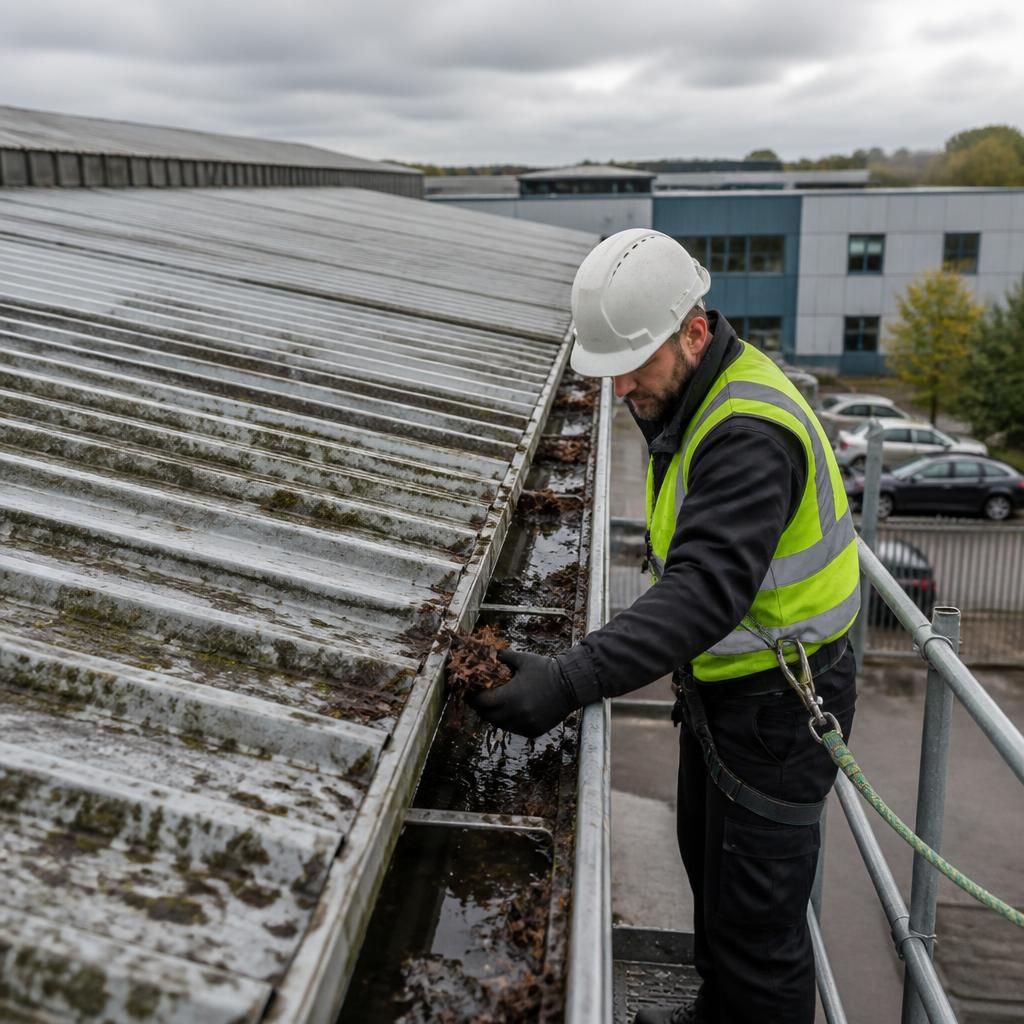
Regular roof and gutter washing prevents long-term damage by keeping rainwater moving away from the roof and building without obstruction. Removing leaves, moss, silt and other debris reduces the risk of blocked outlets and overflowing gutters, which can otherwise saturate fascias, cladding, brickwork and areas around entrances.
Clear drainage also limits standing water around gutter joints, brackets and fixings, helping reduce corrosion and premature failure. During cleaning, signs of cracked sections, loose brackets, failed seals or poor alignment can be identified before they contribute to leaks or internal water damage. This makes roof and gutter washing a practical part of planned commercial property maintenance, rather than simply an appearance-led service.