
What types of surfaces can benefit from industrial steam cleaning?
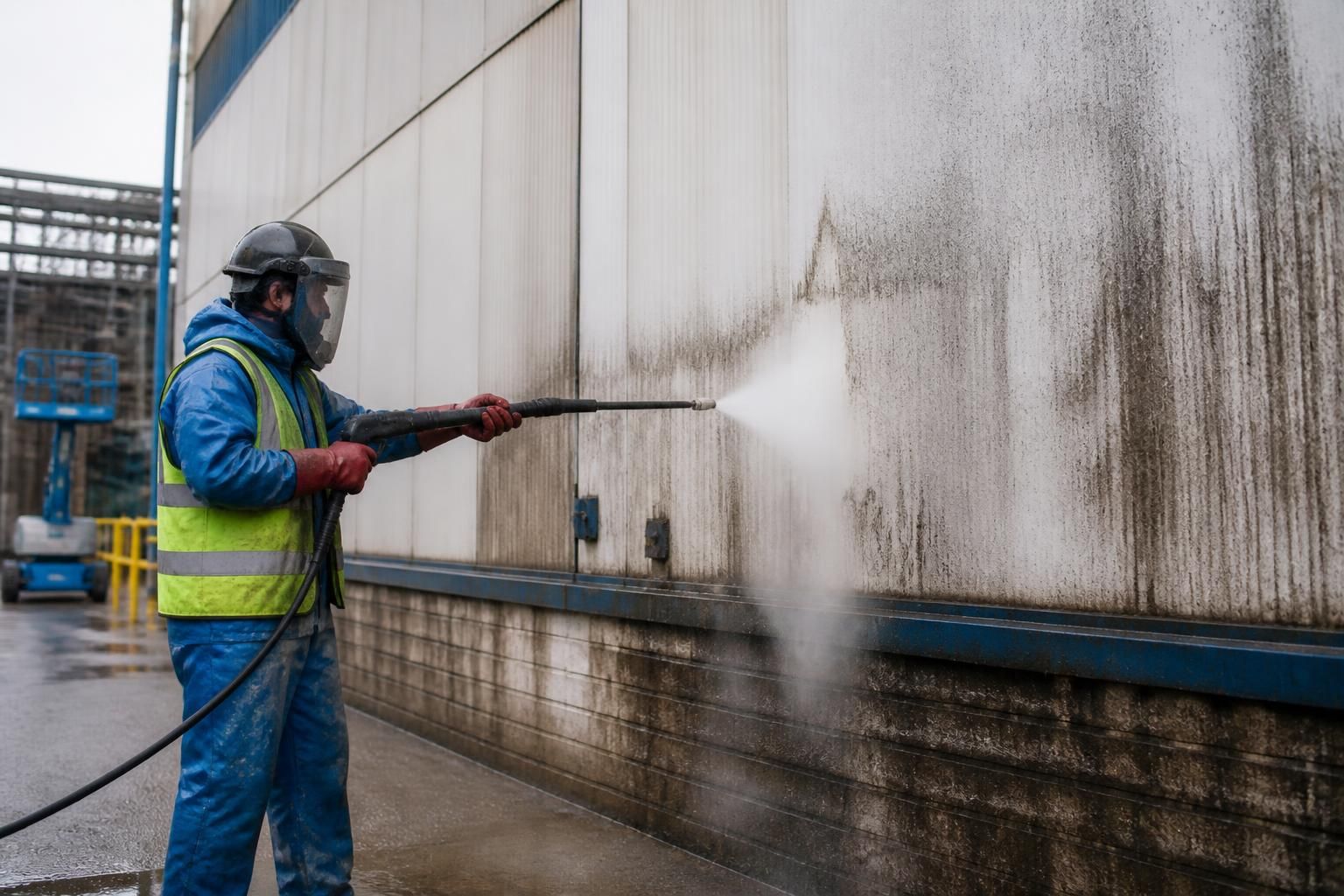
Industrial steam cleaning can benefit façades, brickwork, stone, concrete, render, cladding, roofs, paving, car parks, machinery and other hard external surfaces. The controlled heat helps loosen oil, grease, algae, moss, dirt and some coatings with less water and lower mechanical impact than conventional pressure washing, when the method is suitable for the material.
Industrial steam cleaning is suitable for many hard, heat-tolerant surfaces where dirt, grease, oil, organic growth or surface deposits need to be removed with controlled water use and limited mechanical impact. Common applications include building façades, brickwork, natural stone, concrete, paving, cladding, roofs, car parks, industrial floors, plant, machinery and some external fixtures. Suitability depends on the condition, porosity, coatings and construction of the surface, so the cleaning method should always be assessed before work begins.
Steam cleaning equipment uses heated water, often delivered at a controlled pressure. The heat helps soften oils, grease, chewing gum, traffic film, algae, moss and ingrained dirt, allowing the operator to remove contamination without relying solely on abrasive pressure. This can be particularly useful on commercial and industrial sites where excessive water, aggressive pressure or harsh chemicals could damage the substrate or create difficult wastewater-management issues.
Brickwork and masonry
Brick façades, boundary walls, retaining walls and other masonry features can often benefit from steam cleaning. Heat can loosen soot, atmospheric dirt, algae and biological staining from the face of the brick and mortar joints. It is also useful where a softer cleaning approach is needed to avoid eroding the brick surface or forcing water deeply into the wall.
The condition of the mortar is important. Open, friable or heavily weathered joints may not withstand cleaning, even when the brick itself is sound. Older or historically important masonry may also contain softer bricks that require particularly careful pressure and temperature control. A test area should be used to confirm that the process removes the contamination without causing spalling, surface loss or colour change.
Natural and manufactured stone
Granite, some types of sandstone, limestone, slate and manufactured stone can be cleaned with steam where the material and finish are suitable. Typical applications include façades, entrance areas, steps, paving, monuments, loading areas and stone features around commercial premises. Steam can remove organic growth, general soiling and certain oily deposits while reducing the amount of water entering porous stone.
Stone is not a single, uniform material. Limestone and some sandstones can be absorbent or chemically sensitive, while polished, honed, sealed or resin-treated finishes may react differently to heat. The cleaning process must account for mineral composition, surface finish, previous treatments and existing defects. Acidic deposits, rust staining, paint and deeply embedded contamination may require a separate treatment rather than steam alone.
Concrete, paving and car parks
Concrete yards, pedestrian walkways, loading bays, forecourts, car parks and block paving commonly accumulate tyre marks, oil, grease, algae, moss, chewing gum and general traffic film. Industrial steam cleaning can soften these deposits and help lift them from the surface. It is particularly useful for targeted treatment around entrances, service areas, fuel or oil contamination and heavily trafficked sections.
Concrete can be porous, and oil that has penetrated below the surface may not be removed completely in a single treatment. Block paving may also contain jointing sand that can be displaced by unsuitable pressure or poor technique. The operator should consider drainage, runoff, nearby landscaping and the risk of contaminated water entering surface-water systems. Where required, recovered wastewater should be managed in accordance with the site’s environmental controls.
Metal cladding and architectural panels
Steel, aluminium and other metal cladding systems can benefit from controlled steam cleaning to remove atmospheric grime, bird deposits, algae and light oily films. It may be appropriate for warehouse façades, retail units, canopies, shutters, service enclosures and architectural metalwork. Using less abrasive action can help preserve the finish on coated panels, provided the coating is stable and the equipment is correctly adjusted.
Painted, powder-coated, anodised and lacquered surfaces should be inspected before cleaning. Flaking finishes, exposed corrosion, oxidised coatings and damaged sealants may be worsened by heat or water pressure. The cleaning plan should include a small test area and should avoid forcing water behind panel joints, trims, vents or electrical components.
Render, façades and roof surfaces
Rendered walls and external façades can often be treated for algae, moss, lichen, atmospheric dirt and bird fouling. Steam may be useful where a low-water approach is preferred or where aggressive pressure could mark the render. It can also support the preparation of surfaces before repair, repainting or the application of a suitable protective treatment.
Roof tiles, slate and some metal roofing systems may be suitable when the roof covering is sound and the method is matched to its profile and condition. Cleaning can remove moss, algae, lichen and accumulated dirt, but it should not compromise laps, flashings, membranes, pointing or roof coatings. Access, fall protection and the risk of slippery surfaces must be addressed before any roof work starts. Fragile, cracked or deteriorated coverings may require a different approach or repair before cleaning.
Industrial floors, plant and machinery
Steam cleaning is not limited to building exteriors. It can be effective on robust industrial floors, workshop areas, production equipment, vehicle bays, plant housings, conveyors and machinery components that can safely tolerate heat and moisture. The process can help break down grease, oil, food residues, carbon deposits and general industrial soiling, particularly where chemical use needs to be reduced or where residue must be loosened before rinsing or recovery.
Electrical cabinets, bearings, motors, sensors, control panels and sealed assemblies must be protected unless the manufacturer specifically permits steam cleaning. Machinery should be isolated, cooled and made safe before treatment. Any cleaning plan should consider trapped moisture, lubrication points, sensitive seals and the need to dry or recommission equipment afterwards.
Glass, signage and external fixtures
Some glass, glazed surfaces, signs, street furniture, shutters, gates and external fixtures can be steam cleaned to remove bird fouling, grease, adhesive residue or general dirt. However, heat and moisture may affect films, graphics, edge seals, silicone joints, electrical signage and delicate coatings. The condition and construction of the item should be checked rather than assuming that glass or metal is automatically suitable.
Surfaces requiring additional caution
Steam cleaning is not appropriate for every material or every type of contamination. Particular care is needed with:
- Unsealed timber, veneered materials and surfaces that may warp or absorb moisture.
- Soft, friable or heavily weathered stone and brickwork.
- Delaminating paint, render, powder coatings or protective films.
- Plastic, rubber, acrylic and composite materials that may soften or distort with heat.
- Membranes, sealants, roof details and joints that could be damaged or penetrated.
- Surfaces containing asbestos or other hazardous materials, which require specialist assessment and controls.
Before cleaning, the surface should be inspected for cracks, loose material, failed joints, corrosion, previous repairs and existing staining. A competent operator can then select the appropriate temperature, pressure, nozzle, distance and cleaning pattern. A test patch helps establish whether the surface will tolerate the treatment and whether the desired result can be achieved without discolouration or damage.
The type of contamination also affects the result. Steam is effective against many organic deposits and softens grease and oils, but it may not remove every paint, rust, mineral or chemical stain. Some deposits need a compatible detergent, poultice, specialist stain treatment or mechanical preparation. On commercial and industrial premises, the cleaning method should also account for pedestrian and vehicle segregation, drainage, wastewater recovery and the protection of nearby equipment.
In practice, the surfaces that benefit most are durable external materials with contamination that can be softened or lifted by heat. A professional assessment ensures that steam cleaning is used where it offers a genuine advantage and that more sensitive materials receive a safer alternative.
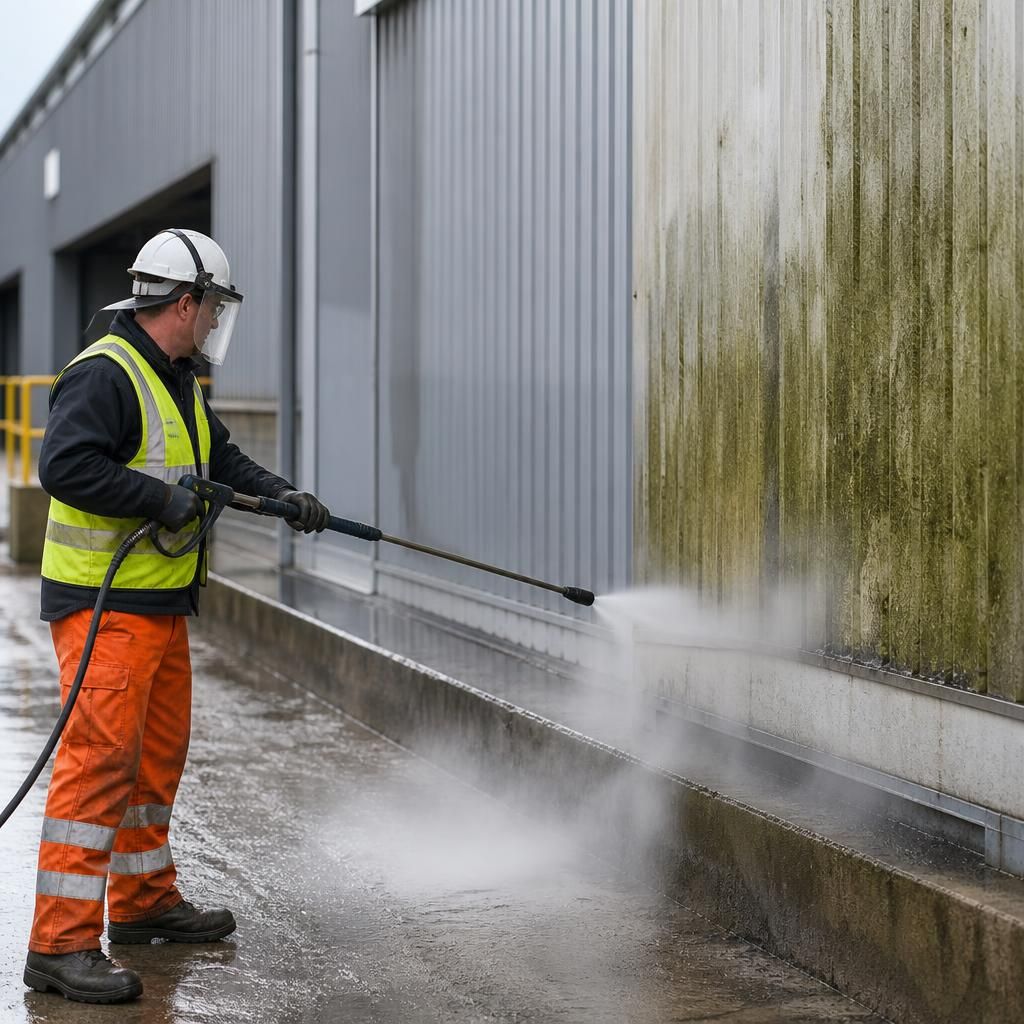
Industrial steam cleaning is particularly effective on durable, heat-tolerant surfaces where grease, oil, algae, moss, traffic film or ingrained dirt has built up. Common examples include brick and stone façades, concrete yards, paving, car parks, metal cladding, roof coverings, industrial floors, plant and machinery housings. Heat softens contamination so it can be removed with controlled pressure and less water than some conventional cleaning methods.
Suitability still depends on the material’s condition, porosity, coatings and construction. A competent operator should inspect the surface and complete a test area before cleaning, taking extra care around fragile masonry, damaged coatings, roof details, electrical components, sealants and joints.