
What considerations should be made regarding the environmental impact of industrial steam cleaning?
The environmental impact of industrial steam cleaning depends on water consumption, energy use, chemical selection and the management of contaminated wastewater. Choose a method that uses water efficiently, limits detergents where practical, operates equipment responsibly and captures or disposes of runoff in accordance with local requirements.
The environmental impact of industrial steam cleaning depends on how the equipment is powered, how much water and detergent it uses, and how contaminated runoff is controlled. Steam cleaning can reduce water consumption and the need for aggressive chemicals, but it is not automatically impact-free: generating steam requires energy, and the cleaning process can mobilise oil, heavy metals, paint residues, biological matter and other pollutants from the surface.
Water consumption and recovery should be assessed before work begins. Steam systems generally use less water than conventional high-pressure washing because water is heated and delivered as vapour or low-volume hot water. The actual saving depends on the equipment, operating temperature, cleaning duration, surface condition and whether rinsing is required afterwards. A suitable method should avoid unnecessary pre-rinsing and use controlled application rather than continuous water flow.
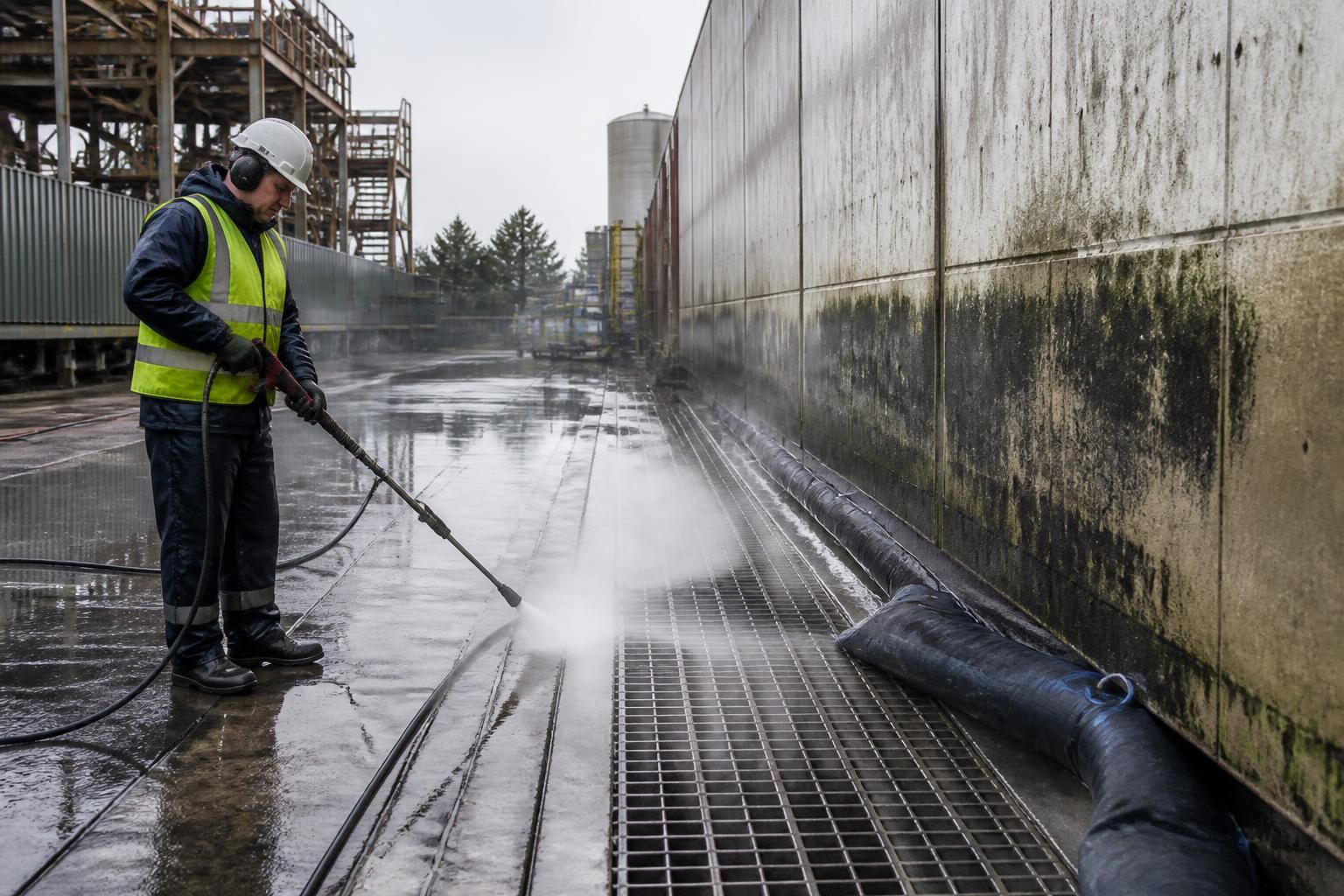
Reduced water use does not remove the need to manage wastewater. Steam can loosen contaminants that are then carried into drains, soil or nearby watercourses with condensation and rinse water. Before cleaning, the contractor should identify drainage routes, check whether the surface contains hazardous substances and determine whether runoff needs to be contained, filtered, collected or removed from site. Wastewater should never be allowed to enter a surface-water drain unless it is suitable for discharge and the relevant requirements have been satisfied.
Energy use is another important consideration. Steam-cleaning equipment requires energy to heat water and maintain the operating temperature. The environmental effect will vary according to the energy source, equipment efficiency, standby time and the length of the cleaning operation. Practical controls include:
- selecting equipment that is correctly sized for the surface and level of soiling;
- maintaining boilers, hoses, nozzles and seals so that heat and water are not wasted;
- switching equipment off during extended pauses rather than leaving it idling;
- planning work to reduce unnecessary travel, repeated set-up and avoidable re-cleaning; and
- considering the available power source and its emissions when comparing cleaning methods.
Detergents and other chemicals should be used only where they provide a clear cleaning benefit. Steam and heat can remove many types of dirt, grease, algae, chewing gum and biological growth without relying on strong chemical products. However, some industrial contamination requires a suitable detergent or treatment. The product should be selected for the material and contaminant, used at the lowest effective concentration and handled in accordance with its safety data sheet. Biodegradable wording alone does not mean that a product is safe to discharge, particularly if it alters water chemistry or carries loosened pollutants into drainage systems.
Runoff controls should reflect the condition of the building or hardstanding, not just the cleaning method. Oil-stained areas, loading bays, car parks, industrial façades and surfaces affected by historic coatings may produce more environmentally significant wastewater than lightly soiled masonry. Useful measures can include drain covers, temporary bunding, wet vacuum recovery, silt filtration, settlement, controlled collection and licensed disposal where required. The approach should also prevent dirty water from spreading beyond the work area during rain or high winds.
Surface coatings and hazardous residues need particular care. Steam may loosen flaking paint, sealants, bitumen, lead-containing coatings or other residues. Cleaning can therefore create solid waste as well as wastewater. The surface should be inspected beforehand, and any suspect coating or contamination should be assessed before work starts. Removed residues, absorbent materials, filters and contaminated sludge should be segregated and disposed of through the appropriate waste route rather than mixed with general waste.
Air quality, noise and disturbance are also part of the environmental assessment. Steam cleaning can create visible vapour, aerosolised droplets or odours, especially in enclosed areas or where chemicals are applied. Operators should consider nearby pedestrians, occupants, ventilation intakes and sensitive activities. Equipment should be positioned and operated to limit noise, and suitable controls should be used where vapour or spray could affect neighbouring premises, road users or the public.
Ecological and drainage sensitivities should be checked when cleaning near rivers, ponds, planted areas, trees or habitats. Hot water, detergents, sediment and contaminated runoff can harm aquatic life or vegetation if they are discharged or allowed to infiltrate uncontrolled. Work may need additional containment, a different cleaning product, a lower operating temperature or timing that avoids adverse weather and sensitive periods.
A responsible method statement should record the main environmental risks and the controls to be used. It should cover water and energy requirements, chemicals, drainage, runoff recovery, waste storage, emergency action for spills and the final disposal route. After cleaning, the area should be inspected for standing contaminated water, blocked drains, damaged vegetation and remaining waste. This documentation helps demonstrate that environmental considerations were built into the work rather than addressed only after a problem occurs.
For a commercial or industrial site, the most suitable option is usually the cleaning process that achieves the required result with the least overall resource use and pollution risk. Comparing steam cleaning with pressure washing should therefore include water demand, energy consumption, chemical use, wastewater controls, surface sensitivity and the distance and equipment required. A lower-water method may be preferable in one location, while a less energy-intensive method with effective runoff control may be more appropriate in another.
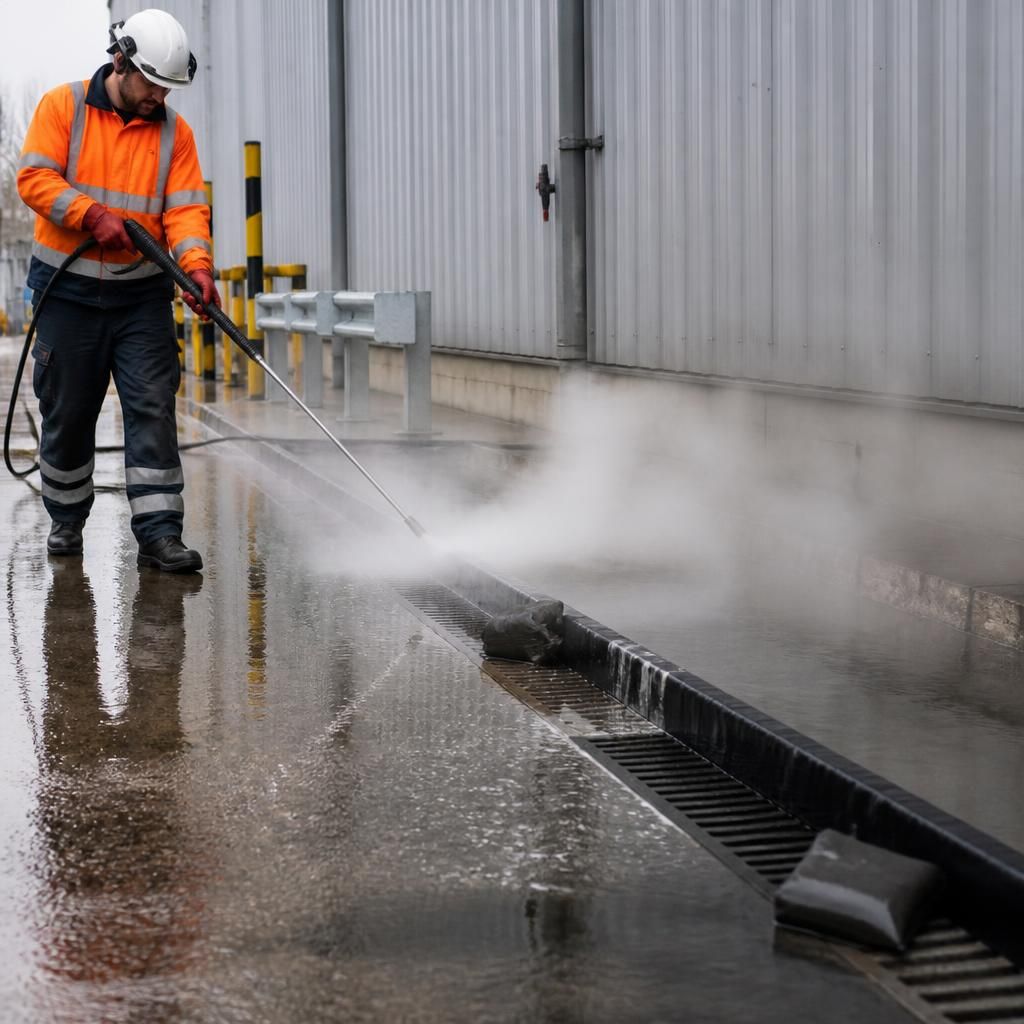
Managing contaminated runoff is a central environmental consideration in industrial steam cleaning. Although steam systems typically use less water than conventional pressure washing, the water and condensation produced can still carry oil, sediment, chemical residues, paint particles and other pollutants into drainage systems or surrounding ground.
Before work starts, the cleaning area should be inspected to identify drain routes, nearby watercourses, planted areas and sensitive surfaces. Where contamination is likely, suitable controls may include drain covers, temporary bunding, wet-vacuum recovery, filtration, settlement and collection for appropriate disposal. The method statement should also explain how spills, contaminated sludge, used filters and removed coatings will be contained and handled. This ensures that lower water consumption does not lead to uncontrolled pollution elsewhere on the site.
Discuss the environmental considerations for your industrial steam cleaning project
Discuss the environmental considerations for your industrial steam cleaning project with our team, including water use, energy requirements, chemical selection and runoff controls. We can help assess suitable methods and site-specific environmental measures before work begins.