
What are the safety considerations when using industrial steam cleaning for building exteriors?
Industrial steam cleaning of building exteriors requires a documented risk assessment, trained operatives, suitable personal protective equipment and controlled use of access equipment. Operators must also manage hot surfaces and vapour, protect vulnerable materials, control overspray and run-off, and keep pedestrians, vehicles and other site users clear of the work area.
Safe industrial steam cleaning of building exteriors depends on controlling heat, pressure, vapour, access equipment, run-off and public exposure through a documented risk assessment and method statement. Trained operatives must select suitable equipment, wear task-specific personal protective equipment (PPE), protect vulnerable surfaces and maintain an effective exclusion zone throughout the work.
Complete a site-specific risk assessment
Before work starts, the cleaning contractor should assess the building, surrounding area and proposed method. The assessment should consider the height and condition of the façade, access requirements, nearby roads and footpaths, weather conditions, electrical services, drainage, fragile materials and the presence of occupants or members of the public. It should identify hazards, set out control measures and define what happens if conditions change.
A method statement should explain the equipment and cleaning temperatures to be used, how operatives will access each area, how water and contaminants will be controlled, and how the site will be left safe. The assessment should be reviewed during the work if the building condition, weather, access arrangement or level of public activity changes.
Use trained and competent operatives
Industrial steam cleaning is not simply a higher-temperature version of domestic cleaning. Operatives need to understand the equipment controls, hot-water and steam hazards, pressure reactions, surface limitations, chemical information where applicable and emergency procedures. They should also be competent to use any access equipment required for the task.
Equipment must be operated in accordance with the manufacturer’s instructions and kept in good condition. Hoses, lance assemblies, couplings, guards, electrical leads and safety controls should be checked before use. Faults, damaged components or leaking connections should be taken out of service rather than managed informally on site.
Control hot surfaces, steam and pressure
Steam, condensate and heated equipment can cause serious burns. Operatives should avoid directing the lance towards people, unprotected skin, glazing, ventilation openings or areas where hot water could collect. They should release pressure before disconnecting hoses and use appropriate procedures when clearing blockages or carrying out maintenance.
Steam and hot vapour can reduce visibility, create slippery surfaces and affect breathing, particularly in enclosed courtyards, service areas or partially enclosed structures. Adequate ventilation is necessary, and work should stop if vapour prevents the operator from seeing the surface, access route or exclusion zone clearly. Respiratory protection may be required following a suitable assessment, especially where contaminants or cleaning products could become airborne.
Wear task-appropriate PPE
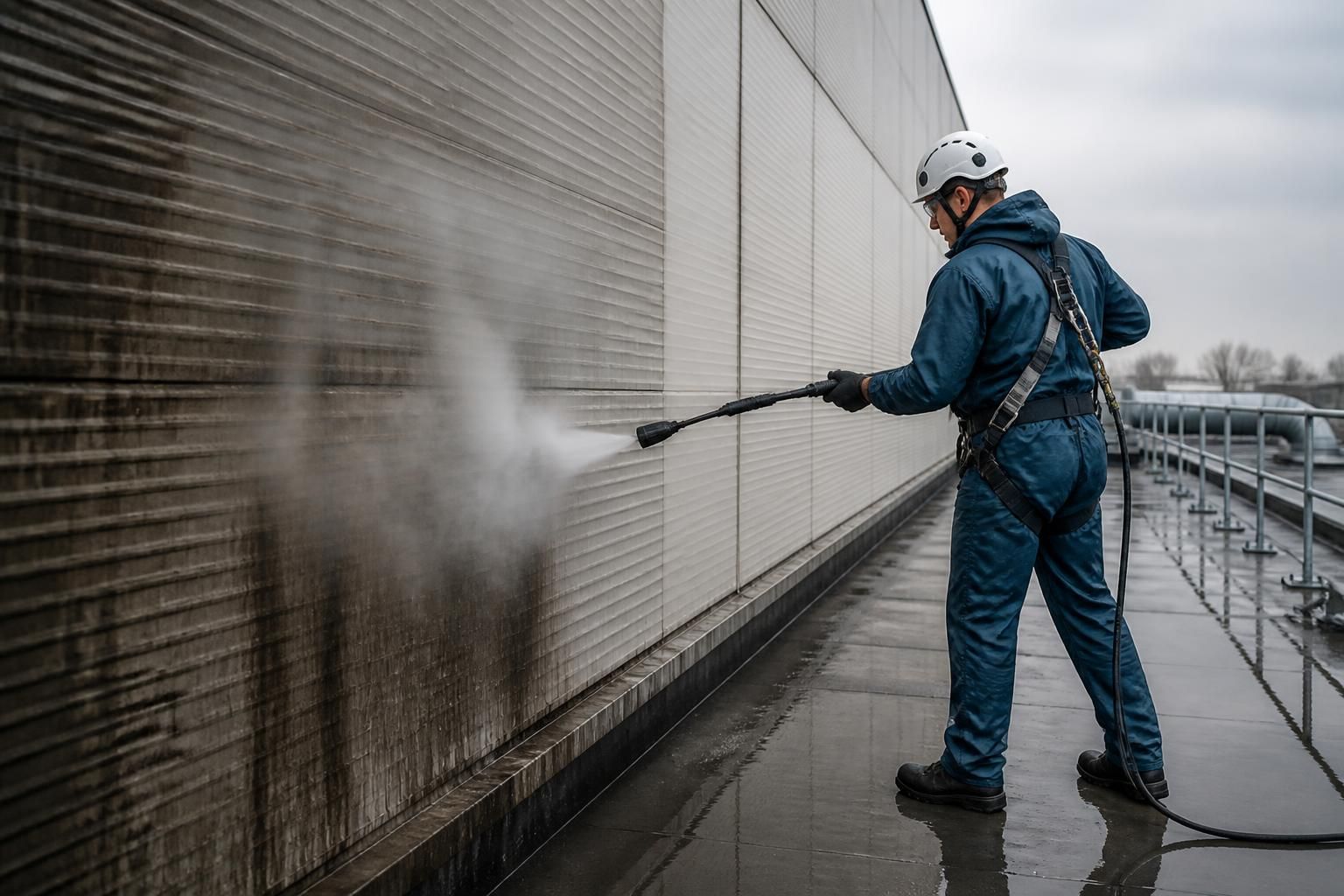
PPE should be selected for the actual equipment and surface being cleaned. This commonly includes waterproof protective clothing, heat-resistant gloves, suitable safety footwear with slip-resistant soles, eye protection and face protection where splash or rebound is possible. Head protection and hearing protection may also be necessary depending on the site and machinery.
PPE does not replace safe operating controls. Gloves and clothing must not compromise the operator’s grip or movement, and wet or damaged PPE should be replaced. Where chemicals are used alongside steam, the relevant safety data and COSHH assessment should determine additional protection and handling requirements.
Manage work at height and access equipment
Façades, roofs and high-level cladding should be cleaned from the safest practicable position, with ground-level methods considered before work at height. Where access equipment is necessary, the contractor should select equipment suitable for the building, ground conditions, reach, load and cleaning forces involved.
Mobile elevating work platforms, scaffolding, towers, cradles and suspended access systems must be used by competent people, inspected as required and positioned on stable ground. Operators should account for hose drag, reaction forces, wind loading and the possibility of water making platforms or access routes slippery. Harnesses, guardrails, gates, anchor points and other fall-protection measures must be used in accordance with the equipment and site assessment.
Access equipment should not be repositioned while occupied unless it is specifically designed and approved for that use. A rescue plan is also essential, particularly where an operative could become suspended, trapped or unable to descend without assistance.
Protect the building and nearby assets
Safety includes preventing damage that could create a later hazard. Before cleaning, the operative should identify loose masonry, failed sealants, damaged render, cracked glazing, open joints, vents, lighting fittings and other vulnerable details. Steam or hot water should not be directed into openings, behind cladding panels or towards electrical components.
A small test area helps confirm that the selected temperature, pressure, dwell time and working distance are suitable. This is particularly important for historic masonry, painted surfaces, timber, soft stone, mortar joints, coatings and materials with existing defects. If the surface reacts unexpectedly, work should stop and the method should be reassessed rather than increasing the operating force.
Keep people, vehicles and property outside the work area
Steam cleaning can create splash, rebound, noise, reduced visibility and slippery ground. Barriers, cones, warning signs and, where needed, a trained banksman should separate the work from pedestrians, staff, visitors and vehicles. The exclusion zone should account for the height of the work and the potential direction of spray or falling debris, not just the immediate position of the operator.
Doors, entrances, fire exits, loading areas and emergency routes must remain usable or be managed through an agreed alternative arrangement. Cleaning should be coordinated with the building occupier so that vulnerable occupants, deliveries and other contractors are not exposed to the work.
Control water, contaminants and run-off
Run-off may contain dirt, biological growth, paint residues, oils, salts or cleaning agents. It should not be allowed to enter surface-water drains, neighbouring property, watercourses or areas where it could create a slip or environmental hazard. Drain covers, temporary bunding, collection systems or other controls may be needed, subject to the site assessment and local requirements.
Where contaminated water is collected, it should be stored, handled and disposed of through an appropriate route. Operatives should also prevent hoses from crossing unprotected walkways or becoming trip hazards. Any unavoidable crossings should be protected and clearly marked.
Check weather and electrical conditions
Wind can carry hot spray and vapour beyond the planned work area, while rain, frost and low temperatures can make surfaces and access equipment unsafe. High winds can also affect work platforms and suspended access systems. Work should be postponed or adapted when weather conditions prevent stable access, clear visibility or effective control of spray and run-off.
Electrical equipment, temporary supplies and building-mounted fittings need protection from water and steam. Leads should be routed away from wet areas where practicable, and electrical systems should be suitable for the site conditions. Any exposed or damaged electrical installation should be reported and isolated by a qualified person rather than sprayed.
Have emergency arrangements in place
The site team should know how to stop the machine quickly, isolate energy supplies, deal with a hose failure and summon assistance. First-aid arrangements must account for burns, eye injuries, slips and falls. If hot water or steam contacts the skin, the affected area should be cooled with clean running water and medical assistance sought in line with the site’s emergency procedure; contaminated clothing should be removed carefully unless it is stuck to the skin.
Near misses, equipment defects, surface damage and changes in site conditions should be recorded and reviewed. Clear communication between the cleaning team, site contact and other contractors helps ensure that controls remain effective from set-up through to final inspection.
For commercial and industrial premises, the safest approach is a controlled system of work rather than relying on operator experience alone. A competent contractor should be able to provide the relevant risk assessment, method statement, equipment checks, access arrangements and run-off controls before cleaning begins, and should stop work when the identified controls can no longer be maintained.
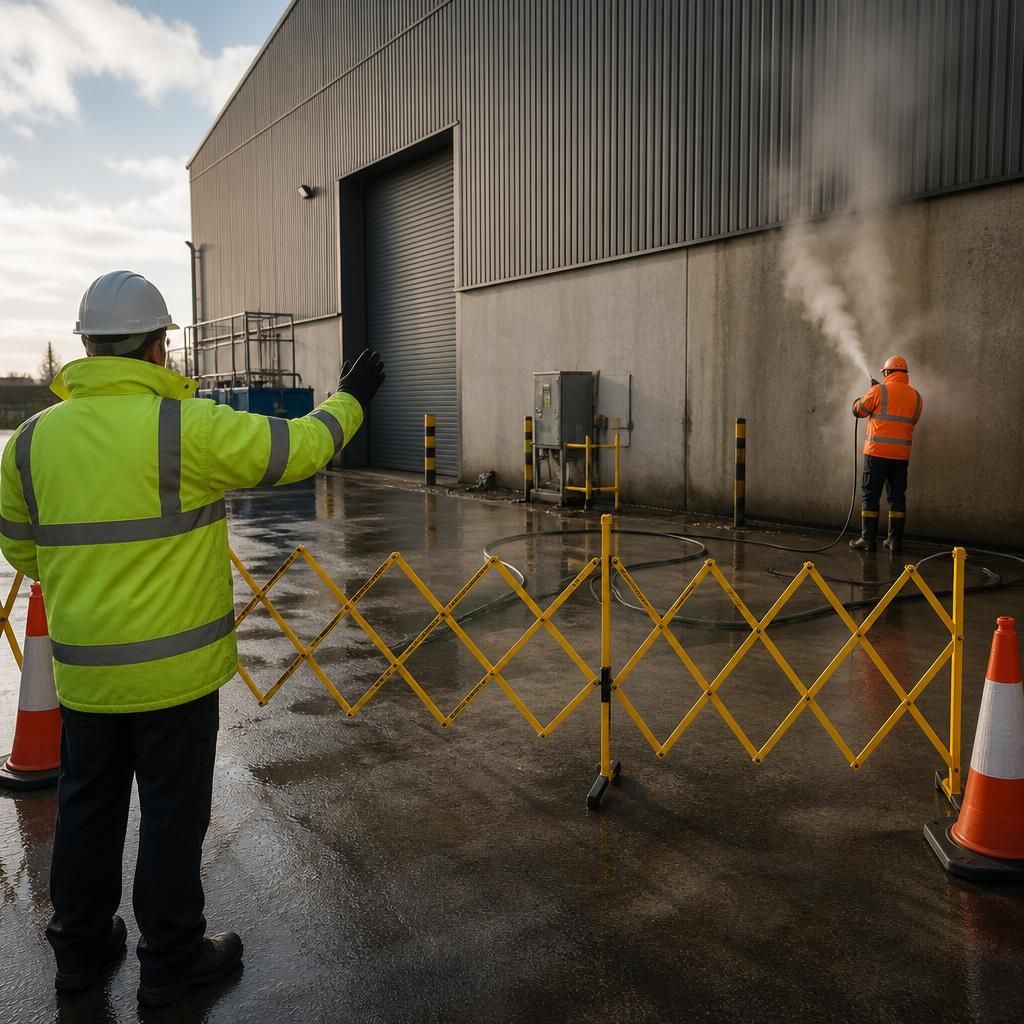
Exclusion zones are a critical safety control during industrial steam cleaning because hot vapour, pressurised water, splash, falling debris and slippery run-off can affect people beyond the operator’s immediate working position.
Barriers, warning signs and, where necessary, a trained banksman should keep pedestrians, vehicles, building occupants and other contractors away from the cleaning area. The controlled zone must include entrances, footpaths, loading areas and the area below high-level work, while emergency routes and fire exits remain accessible or are managed through an agreed alternative arrangement.