
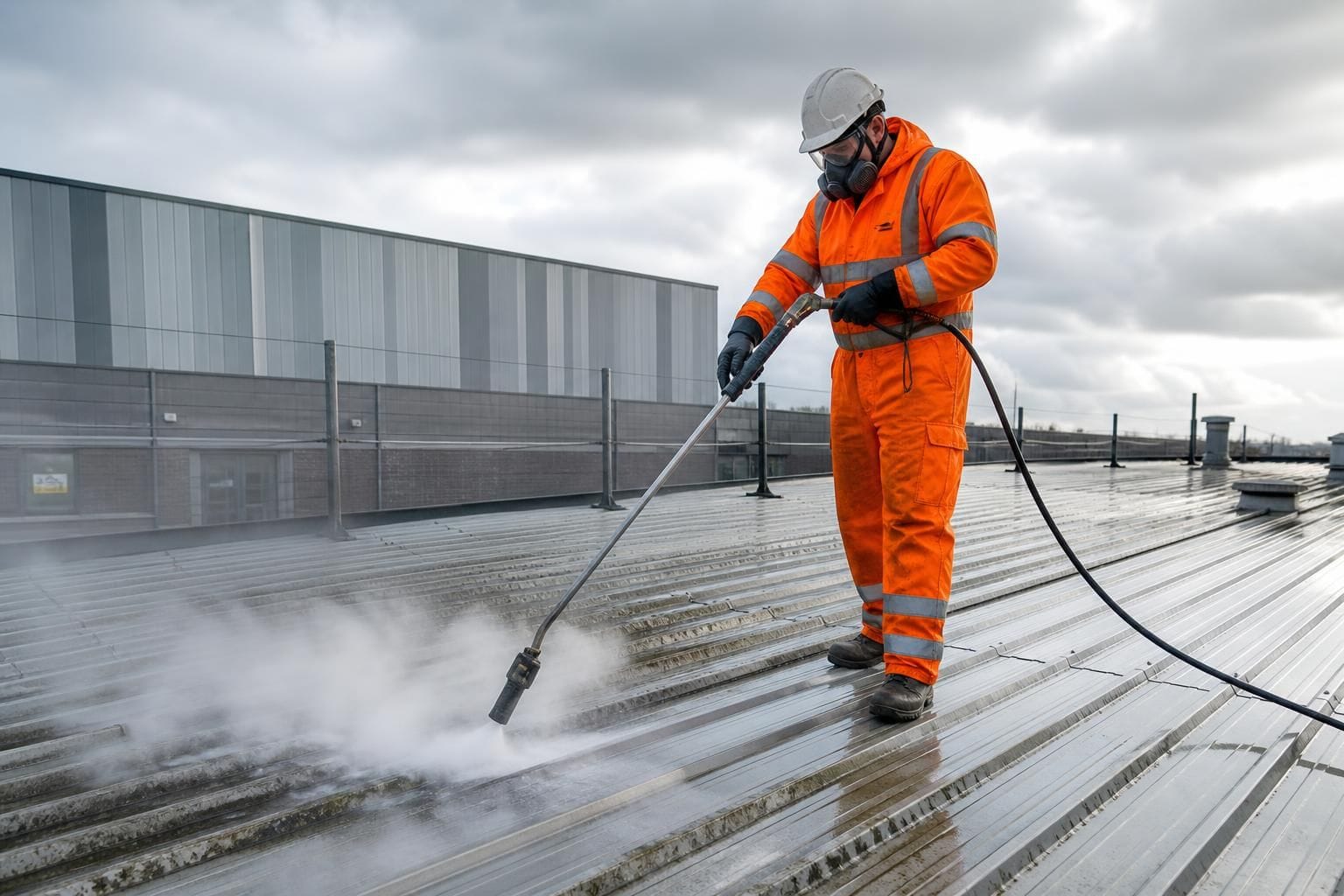
What are the key factors to consider when choosing an industrial steam cleaning service for a commercial property?
Choose an industrial steam cleaning service based on relevant commercial experience, suitable equipment, trained operatives, robust health and safety procedures, environmental controls, insurance and clear pricing. The contractor should also understand your property’s materials, access requirements, operational constraints and maintenance objectives before recommending a cleaning method.
Choosing an industrial steam cleaning service for a commercial property means assessing more than the contractor’s ability to produce high-temperature steam. The right provider should have relevant commercial experience, suitable equipment, trained operatives, robust health and safety procedures, appropriate insurance and a clear method for protecting the building, its occupants and the surrounding environment. Their recommendation should be based on the property’s materials, access arrangements, contamination, operating requirements and maintenance objectives.
Relevant commercial and industrial experience
Start by checking whether the contractor regularly works on properties similar to yours. Commercial and industrial cleaning can involve large façades, cladding, roofs, loading areas, plant facilities, car parks and difficult-to-access elevations. These environments require careful planning around tenants, staff, visitors, vehicles, deliveries and other contractors.
Ask for examples of comparable work and establish whether the contractor understands the practical requirements of your sector. A property manager may need planned maintenance with minimal disruption, while a construction firm may require removal of construction residues before handover. Local authorities and public-facing organisations may also require strict control of access, pedestrian routes, noise, runoff and working hours.
A proper site survey before work begins
A responsible contractor should inspect the property or obtain sufficiently detailed information before confirming the cleaning method and price. The survey should consider:
- the types and condition of the surfaces to be cleaned;
- the nature of the dirt, staining, biological growth, grease, atmospheric deposits or graffiti;
- access for operatives, hoses, steam equipment and vehicles;
- working-at-height requirements and the need for access equipment;
- nearby electrical equipment, ventilation openings, sensitive finishes and drainage points;
- water supply, wastewater handling and suitable areas for equipment;
- the presence of staff, members of the public, tenants, vehicles or vulnerable building users; and
- any restrictions on noise, working hours, parking, loading or site security.
Be cautious of a quotation based only on photographs if the work involves complex access, fragile materials or significant contamination. A survey allows the contractor to identify risks and explain where steam cleaning is appropriate, where a lower-impact approach is needed and whether testing should take place before full cleaning.
Knowledge of building materials and suitable cleaning methods
Steam cleaning is not a universal solution for every surface or every type of contamination. The contractor should be able to explain how the proposed process will affect brickwork, stone, concrete, render, metal cladding, coated surfaces, painted areas, glass surrounds, seals and other building components. They should also identify materials that may be damaged by heat, moisture, pressure or aggressive agitation.
Ask whether a small, inconspicuous test area will be carried out where the surface or coating is uncertain. A test should assess cleaning performance as well as changes to colour, texture, gloss, jointing, coatings and water absorption. The contractor should agree the test area and acceptance criteria with you before proceeding, particularly where the building has a sensitive or decorative finish.
An experienced provider will select the least aggressive effective process rather than treating maximum heat or pressure as the measure of quality. They should also be prepared to combine steam cleaning with controlled rinsing, manual treatment or another suitable technique where this gives better protection to the substrate.
Appropriate equipment and access capability
Review whether the contractor has equipment suitable for the scale and location of the work. Industrial steam systems differ in their operating characteristics, output and control. The provider should understand how to regulate heat, pressure, flow and distance from the surface to achieve the required result without causing unnecessary damage or water use.
Equipment must also be practical for the site. Consider whether the contractor can work from ground level, mobile access equipment, scaffolding or other access systems, and whether they can manage hoses and cables without creating trip hazards or obstructing emergency routes. Where access equipment is required, confirm that it is suitable for the ground conditions and working area and that it will be operated by competent personnel.
Ask how the equipment will be maintained and what contingency arrangements apply if a machine fails. Reliable planning is particularly important for larger projects, programmed maintenance and work scheduled around tenants or trading hours.
Health and safety arrangements
The contractor should provide suitable risk assessments and method statements that reflect the actual property and proposed work. These documents should cover steam and hot surfaces, slips, trips, pressure, electrical hazards, work at height, access equipment, traffic movements, falling debris, exposure to contaminants and the protection of people who are not part of the cleaning team.
Operatives should be trained for the equipment and tasks involved, with appropriate personal protective equipment and clear procedures for isolating or protecting vulnerable services. Where cleaning chemicals, biocides or other substances are used alongside steam, the contractor should provide relevant COSHH information and explain how products will be stored, handled and controlled.
For occupied premises, the method statement should explain how work areas will be segregated, how pedestrians and vehicles will be managed and how the site will be left safe at the end of each shift. Check that the contractor has suitable public liability and employers’ liability insurance, together with any additional cover relevant to the work being undertaken.
Environmental controls and wastewater management
Steam cleaning can reduce the volume of water required for some cleaning applications, but environmental performance still depends on how the work is planned and managed. Ask how the contractor will prevent contaminated water, residues and cleaning products from entering surface-water drains or surrounding ground. The answer should cover drain protection, collection or controlled discharge, waste storage and disposal.
The contractor should also explain how they will manage removed paint, biological material, oil, grease, construction residue or other contaminants. Any chemicals should be used only where necessary and in a way that is compatible with the surface and the site’s environmental requirements. If your organisation has sustainability policies, procurement standards or environmental management procedures, provide these before the work is planned so the contractor can demonstrate compliance.
Clear scope, quotation and expected outcome
A useful quotation should describe the areas included, the proposed cleaning process, preparation and protection requirements, access arrangements, waste handling, reinstatement and any exclusions. It should also state whether the price covers testing, repeat treatment, traffic management, out-of-hours working and access equipment.
Do not compare quotations on price alone. A low initial price may exclude necessary preparation, difficult access, wastewater controls or additional treatment. Ask what standard of cleanliness is expected and how it will be checked. For example, the requirement may be removal of loose deposits, improvement of appearance, preparation for coating or reduction of contamination rather than restoration to a new condition. Agreeing the objective in advance helps prevent disputes about staining that is embedded, permanent or caused by substrate deterioration.
References, communication and ongoing support
Relevant references can help confirm the contractor’s reliability, site discipline and ability to complete comparable work. Where possible, seek evidence from clients with similar property types or operational constraints. You should also establish who will manage the project, how progress and issues will be reported, and how changes to the agreed scope will be authorised.
For premises requiring recurring maintenance, ask whether the contractor can provide a planned cleaning schedule and condition reports with photographs or other suitable records. Regular inspections can identify the build-up of atmospheric deposits, organic growth, graffiti and other contamination before more intensive cleaning is required. The programme should be based on the building’s exposure, materials, usage and appearance requirements rather than an arbitrary timetable.
Questions to ask before appointing a contractor
- Have you cleaned comparable commercial or industrial properties?
- What findings from the site survey determine the proposed steam cleaning method?
- How will you test and protect the building materials and existing coatings?
- What access equipment, isolation arrangements and site controls are required?
- Which risk assessments, method statements and COSHH documents will be provided?
- How will runoff, residues and waste be contained and disposed of?
- What insurance and operator training are in place?
- What exactly is included in the quotation, and what could lead to additional charges?
- How will the finished result be inspected and documented?
- Can you work around occupants, deliveries, trading hours and other contractors?
For a commercial property, the best industrial steam cleaning service is the one that combines cleaning capability with disciplined project management. Compare contractors on relevant experience, material knowledge, equipment, access planning, safety, environmental controls, insurance, communication and clearly defined value. A thorough pre-work assessment and an agreed specification provide the strongest basis for safe cleaning and a result that supports the property’s appearance, condition and ongoing maintenance plan.
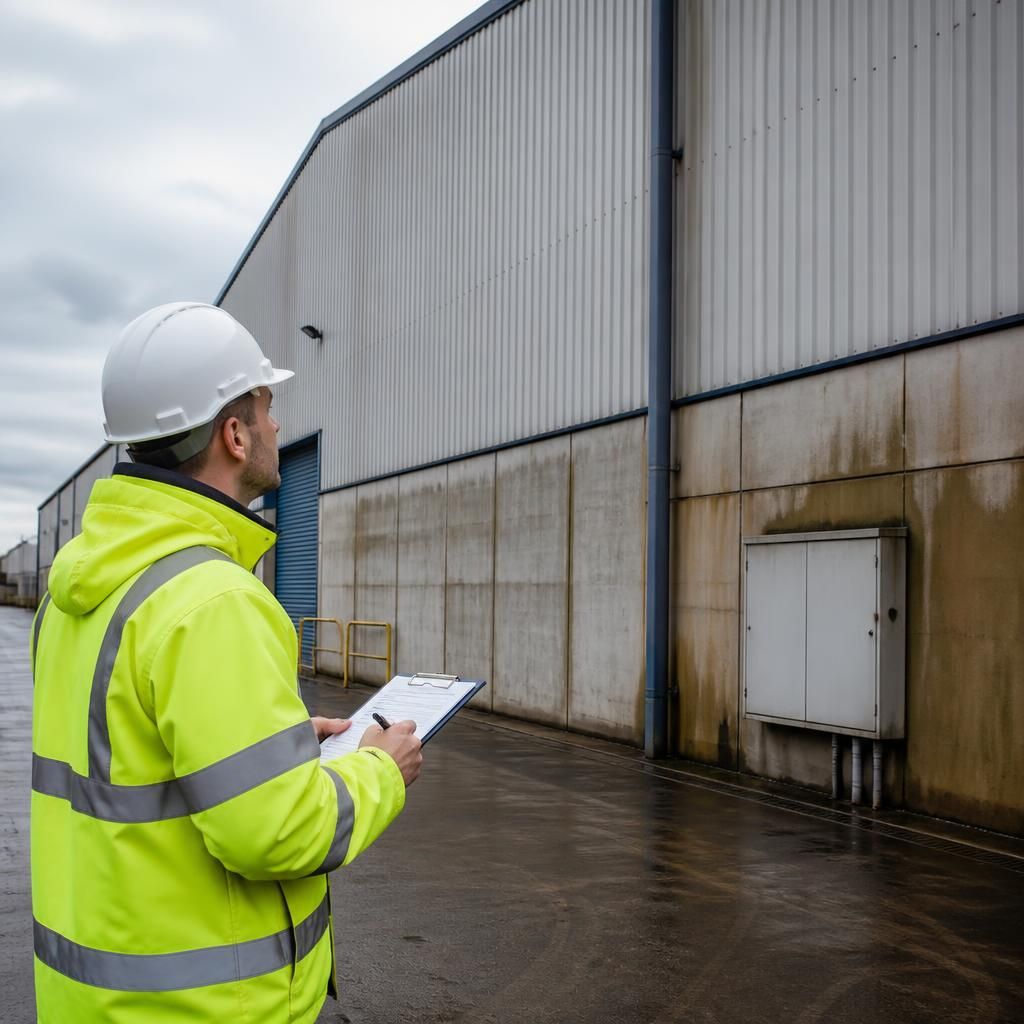
A pre-work site survey is a key factor when choosing an industrial steam cleaning service because it determines whether the proposed process is suitable for the building, contamination and access conditions. The contractor should inspect the surfaces, identify sensitive materials and coatings, assess working-at-height requirements, and plan controls for occupants, vehicles, drainage and nearby equipment.
Where the substrate or finish is uncertain, the contractor should carry out a small test area before full cleaning. This confirms the required heat, pressure and cleaning technique while checking for changes to colour, texture, gloss or jointing. A suitable provider will use the least aggressive effective method and agree the expected result with you before work begins.