
What are the essential safety precautions to take when using industrial steam cleaning for building maintenance?
Essential precautions include completing a site-specific risk assessment, checking the steam-cleaning equipment before use, wearing suitable PPE, controlling hot water and steam hazards, and securing safe access to the building. Operators should also protect nearby people and surfaces, manage runoff and electrical risks, and follow the manufacturer’s instructions and applicable UK health and safety requirements.
Safe industrial steam cleaning for building maintenance depends on controlling heat, pressure, access, water, electrical equipment and public exposure before work begins. The essential precautions are a site-specific risk assessment, competent operators, thorough equipment checks, suitable personal protective equipment (PPE), secure access arrangements, controlled work zones, and clear procedures for emergencies, runoff and equipment isolation.
Complete a site-specific risk assessment
The risk assessment should consider the building, the cleaning method, the equipment being used and everyone who could be affected. It should identify hazards such as hot steam, pressurised hoses, falling objects, slips, traffic, fragile surfaces, overhead services, electrical installations and exposure to contaminants.
A written method statement should explain the planned sequence of work, access arrangements, exclusion zones, equipment settings, surface protection, waste and water management, and emergency procedures. Conditions may need to be reviewed during the work if the weather changes, the building condition is different from expected, or members of the public cannot be kept away from the area.
Use trained and competent operators
Industrial steam-cleaning equipment should only be operated by people who understand its controls, limitations and hazards. Operators should be familiar with the manufacturer’s instructions and know how to select appropriate temperature, pressure, nozzle and cleaning settings for the surface.
Training should also cover hose management, safe start-up and shutdown, manual handling, PPE, first aid for burns, spill response and the safe use of access equipment. Where the work involves height, traffic management, hazardous substances or contaminated deposits, the team should have the relevant additional competence.
Inspect the equipment before use
Before work starts, check the steam cleaner, boiler, hoses, lance, trigger, couplings, gauges, guards and pressure-relief devices. Look for cuts, kinks, abrasion, leaks, loose fittings or signs of overheating. Confirm that safety controls and emergency shut-offs work correctly, and that fuel, water, electrical leads and plugs are suitable for the equipment and site.
Defective equipment should be taken out of service rather than repaired temporarily on site. Never disconnect a hose, nozzle or coupling while the system is pressurised. The equipment should be shut down, isolated and allowed to cool in accordance with the manufacturer’s procedure before maintenance, clearing blockages or changing attachments.
Wear task-appropriate PPE
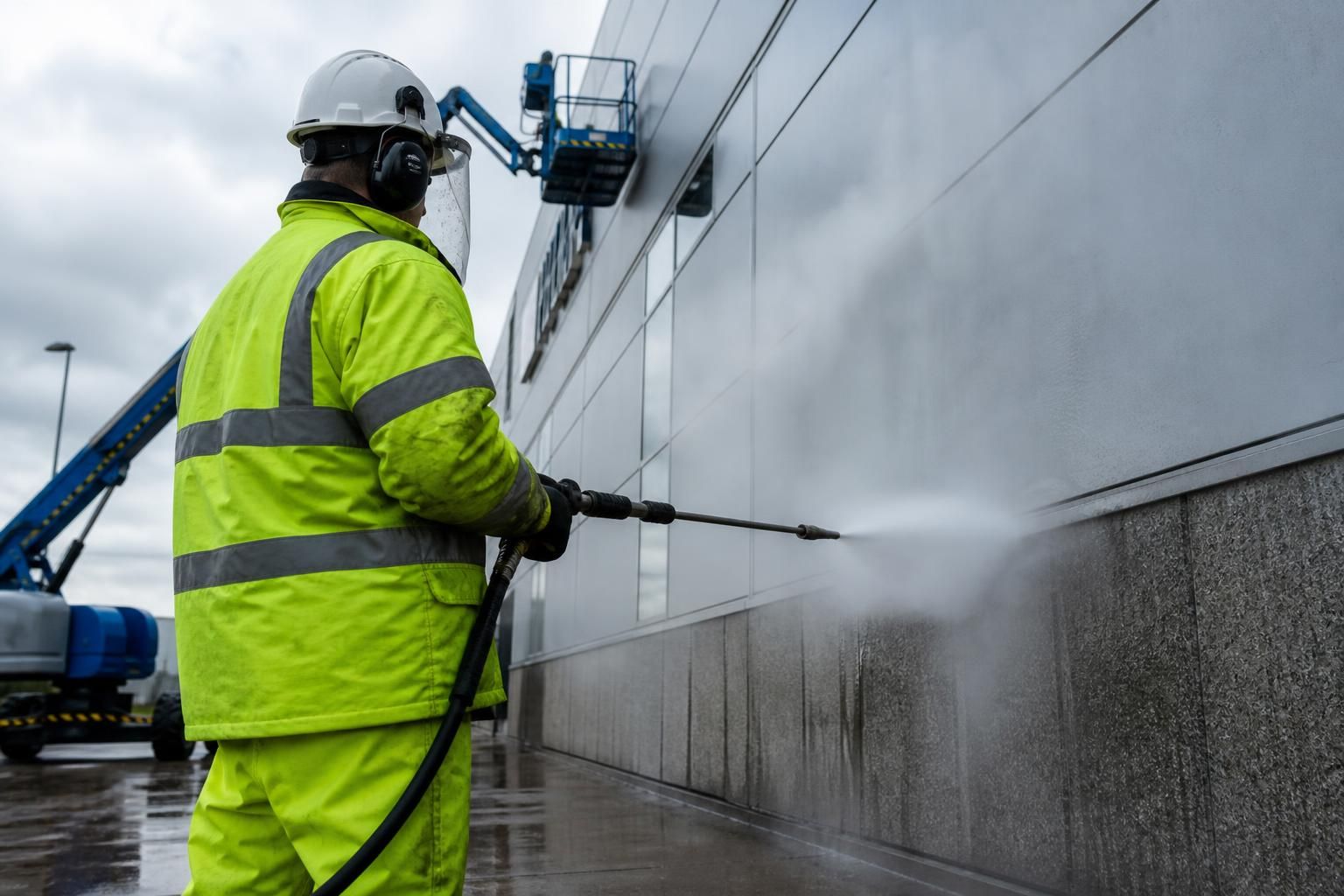
Steam-cleaning PPE normally includes protective footwear with slip-resistant soles, waterproof protective clothing, suitable gloves, eye protection and hearing protection where noise levels require it. A face shield may be necessary when there is a risk of hot spray, splashback or debris.
Respiratory protection is not automatically required for every steam-cleaning task, but it may be needed where cleaning can release mould, bird fouling, chemical residues, dust or other airborne contaminants. The choice of respirator should follow the risk assessment and any relevant COSHH assessment. Tight-fitting respiratory equipment must be properly selected, maintained and fit-tested.
PPE must be kept clean and inspected regularly. It should not be treated as a substitute for controlling the hazard at source, such as using isolation, ventilation, containment or a safer cleaning method.
Control hot water, steam and pressure hazards
Hot steam and condensate can cause serious burns even when the plume is not visibly dense. Keep the lance directed away from people, animals, unprotected skin, glazing and vulnerable building elements. Do not reach around corners or behind obstructions while the trigger is engaged, and do not leave an operating lance unattended.
Operators should maintain a stable stance and keep both hands in the correct position when handling the lance. Hoses should be routed to prevent kinks, trip hazards and contact with hot surfaces. Use the lowest effective pressure and temperature for the required result, rather than assuming that a more aggressive setting is safer or more efficient.
Be aware of rebound from hard surfaces and unexpected movement when a trigger is released or a nozzle becomes obstructed. Stop the equipment immediately if a hose, fitting or pressure control behaves abnormally.
Plan safe access and work at height
Building maintenance often involves façades, roofs, canopies and other elevated areas. Access equipment, scaffolds, mobile platforms and fall-protection systems must be suitable for the task, inspected and used by trained personnel. The cleaning process can make platforms, roofs and walkways wet and slippery, so the risk assessment should address footing, drainage and safe movement during and after cleaning.
Where work at height is unavoidable, use collective protection where practicable and provide a suitable rescue plan. Do not rely on a harness without considering how a suspended worker would be recovered. Keep steam hoses and electrical leads secured so they cannot pull operators off balance or interfere with access equipment.
Protect workers, occupants and the public
Set up a clearly marked exclusion zone around the work area. Barriers and warning signs should prevent unauthorised access and should be positioned far enough away to account for spray, falling debris, hose movement and vehicle activity. A banksman or supervisor may be needed where pedestrians, deliveries or traffic pass close to the operation.
Coordinate the work with building occupants and other contractors. Agree access restrictions, fire exits, alarm arrangements and any necessary isolation of ventilation or air-intake systems. Do not direct steam towards open windows, doors or ventilation inlets where it could affect people inside the building.
Manage electrical and fuel-related risks
Keep electrical connections, control units and generators away from spray, standing water and runoff. Use suitable protection against moisture, route leads safely and inspect them before use. Electrical supplies may need to be isolated or protected by appropriate residual-current protection, depending on the installation and risk assessment.
Where fuel-fired equipment is used, provide adequate ventilation and keep fuel away from ignition sources. Never use combustion equipment in an enclosed or poorly ventilated area unless it is specifically designed and controlled for that environment.
Check surfaces and protect the building
Steam can affect coatings, sealants, timber, painted finishes, historic fabric, jointing materials and vulnerable glazing. Inspect the surface first and carry out a small test area where there is uncertainty. Protect openings, sensors, signage, cables, lighting, vents and other components that could be damaged by heat, moisture or loosened deposits.
Do not use steam to disturb suspected asbestos-containing materials or unknown hazardous coatings. Stop work and seek specialist advice if the building fabric or deposited material may contain asbestos, lead-based paint, aggressive chemicals or biological contamination.
Control water, runoff and slip hazards
Steam cleaning uses less water than many conventional pressure-washing methods, but it still creates condensate, loosened dirt and contaminated runoff. Prevent water from entering electrical areas, basements, occupied spaces or drainage systems where it could cause damage or pollution.
Use drain protection, collection, temporary bunding or other containment measures where appropriate. Dispose of contaminated water and debris in accordance with the site requirements and applicable environmental controls. Keep walkways clean and dry where possible, and provide alternative routes if surfaces remain wet.
Follow emergency and shutdown procedures
A suitable first-aid arrangement should be available, including a means of dealing with burns and immediate access to emergency communication. Everyone on site should know how to stop and isolate the equipment, summon assistance, report an incident and evacuate if required.
After cleaning, shut down the machine correctly, release pressure as instructed, allow hot components to cool, disconnect supplies safely and inspect the work area for residual heat, standing water, damaged surfaces or unsecured equipment. Record defects and incidents so that controls can be improved before the next maintenance visit.
These precautions should be applied alongside the equipment manufacturer’s instructions, the site’s health and safety arrangements and relevant UK requirements, including those covering work equipment, work at height, hazardous substances and environmental protection. For complex façades, high-level cleaning or contaminated surfaces, a competent specialist contractor should confirm the method before work begins.
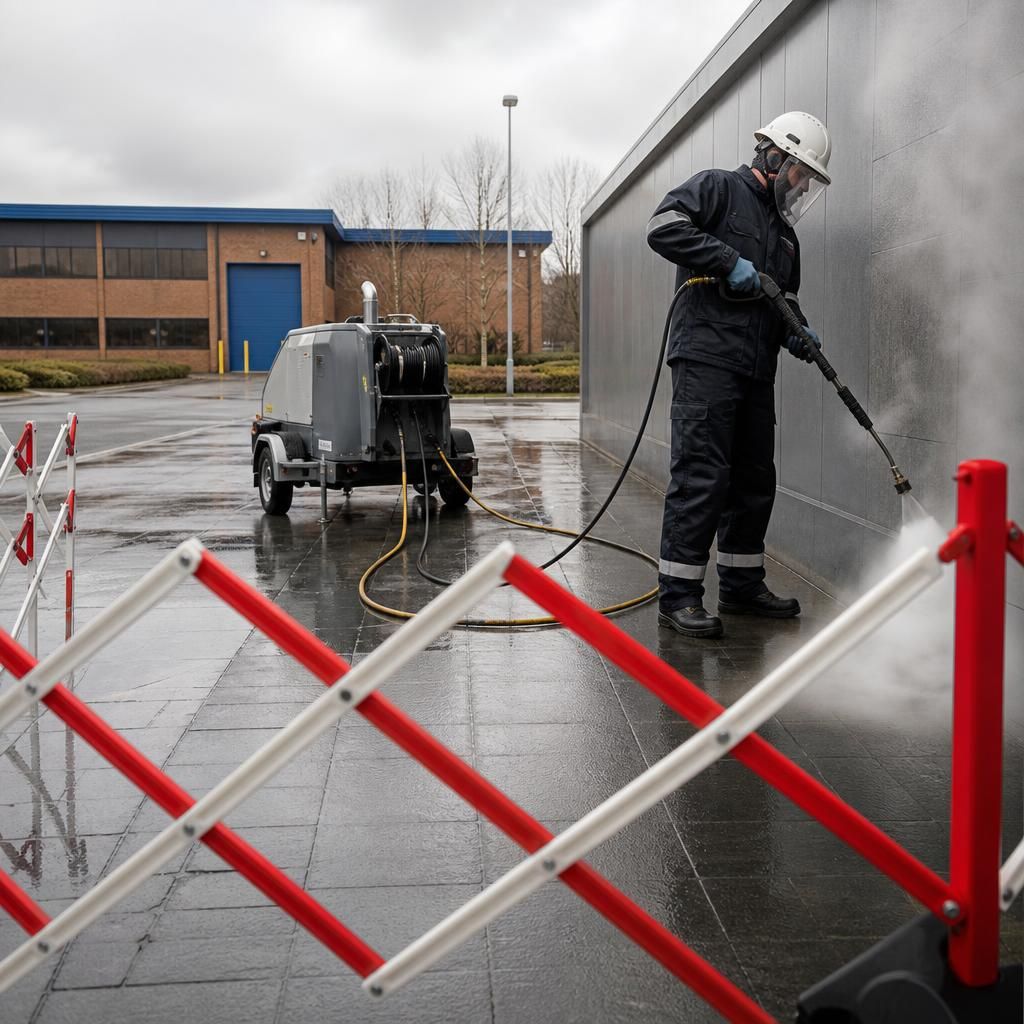
A controlled exclusion zone is essential when industrial steam cleaning, because hot steam, pressurised hoses, splashback and loosened debris can injure people outside the operator’s immediate view. Use barriers and clear warning signs to keep pedestrians, occupants and other contractors away from the cleaning area.
Position the boundary to account for spray, falling material, hose movement and nearby vehicles. Keep windows, doors and ventilation inlets closed or protected where necessary, and use a banksman when work takes place near entrances, deliveries or public routes. If the area cannot be kept clear, stop the work and revise the controls before restarting.