
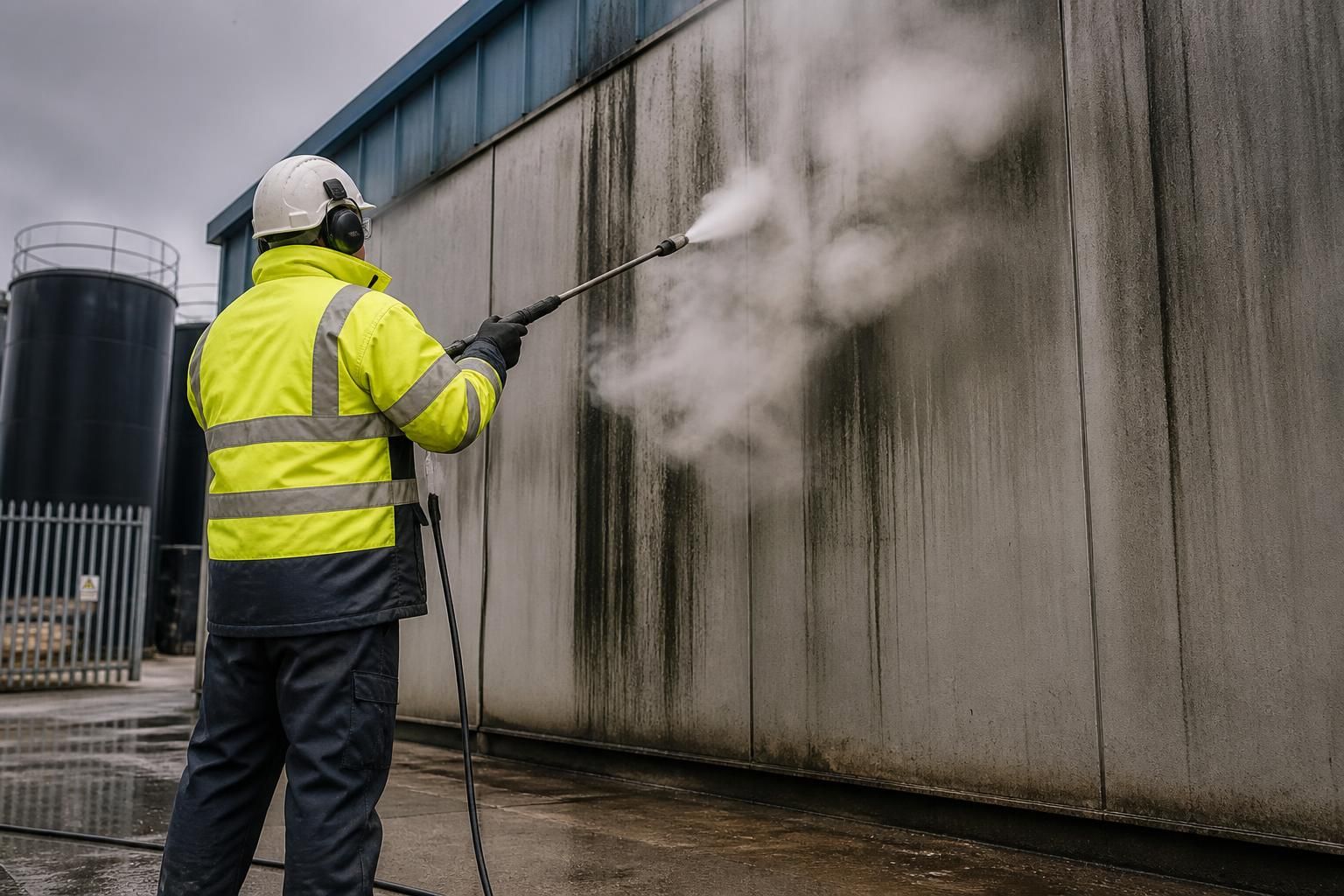
What are the environmental benefits of using industrial steam cleaning for exterior building maintenance?
Industrial steam cleaning can reduce the environmental impact of exterior building maintenance by using significantly less water and fewer chemical detergents than conventional pressure washing. The process also helps limit contaminated runoff, chemical residues and waste, provided wastewater is collected and disposed of in line with site and environmental requirements.
Industrial steam cleaning can reduce the environmental impact of exterior building maintenance by using low-flow heated water to remove dirt, oil, biological growth, traffic film and some surface contaminants. Compared with conventional high-pressure washing, it can reduce water consumption, limit the need for chemical detergents and produce less contaminated runoff. These benefits depend on suitable equipment, responsible operating methods and proper collection and disposal of wastewater.
Reduced water consumption
Steam cleaning uses water at a high temperature and in a controlled flow, rather than relying mainly on large volumes of water to provide cleaning force. This makes it suitable where water use needs to be restricted, including commercial premises, transport facilities, retail areas and sites with limited drainage capacity.
Lower water use can reduce demand on the mains supply and decrease the volume of wastewater requiring collection, treatment or disposal. It may also make cleaning more practical in areas where excessive water could enter service ducts, loading bays, landscaped areas or neighbouring properties.
Less reliance on chemical detergents
The heat of the steam helps soften grease, oils, organic deposits and ingrained dirt, allowing them to be removed with little or no detergent in some applications. Reducing chemical use can lower the risk of residues being left on façades, paving, cladding and other exterior surfaces.
This is particularly relevant when cleaning near planting, watercourses, storm drains or public areas. However, steam does not make every contaminant harmless. Certain oils, coatings, biocides, paint residues and graffiti products may still require a controlled treatment. The product selection should be based on the surface, the contaminant and the site’s environmental controls, with the minimum effective chemical application used where necessary.
Reduced risk of uncontrolled runoff
Runoff from exterior cleaning can carry suspended dirt, oils, heavy deposits, chemical residues and fragments of deteriorated coatings into drainage systems. Steam cleaning produces less wash water than many pressure-washing methods, which can make containment and recovery more manageable.
That does not mean runoff can automatically be discharged to a surface drain or watercourse. Drainage arrangements should be assessed before work begins. Where wastewater could be contaminated, it should be contained, recovered and disposed of through an appropriate route in accordance with the site’s requirements and applicable environmental regulations. Drain covers, collection mats, wet vacuums, bunding and temporary drainage controls may be appropriate depending on the location and the substance being removed.
Lower production of cleaning waste
Using fewer detergents can reduce the amount of chemical packaging and spent cleaning solution generated during a project. More controlled application can also reduce overspray and prevent cleaning products from spreading beyond the work area. Waste materials such as removed paint, heavy oil deposits, graffiti residues and contaminated absorbents still need to be handled responsibly rather than washed into the drainage system.
Potentially lower local pollution
Steam cleaning can help reduce the release of detergents and contaminated water around occupied buildings. This is useful on sites where cleaning takes place near entrances, pedestrian routes, car parks, planted areas or neighbouring businesses. Controlled cleaning can also reduce the risk of residues being tracked across a site after the work is complete.
The method may be useful for removing chewing gum, food deposits, algae, moss, bird fouling and certain graffiti residues without applying aggressive chemical treatments across a large area. A site assessment is still needed, because the temperature and cleaning method must be suitable for the substrate and any nearby sensitive materials.
Support for longer-lasting building materials
Regular removal of corrosive deposits, oils, biological growth and trapped moisture can help maintain the condition of façades, cladding, roofing materials, paving and other external elements. Preventing avoidable deterioration may reduce the need for premature repairs, replacement materials and associated construction waste.
This is an indirect environmental benefit rather than a guarantee. Steam pressure, temperature and distance must be controlled carefully. Poorly applied heat or moisture can damage sealants, coatings, timber, plastics, joints or delicate masonry. Appropriate settings and a test clean help protect the material while achieving the required result.
Energy use should be considered
Steam equipment heats water, so its environmental performance also depends on the energy source, equipment efficiency, operating time, transport and the way the work is planned. A reduction in water and chemical use does not automatically mean that every steam-cleaning project has a lower total carbon footprint than every alternative.
Environmental performance can be improved by selecting efficient equipment, avoiding unnecessary idle time, planning work to reduce repeat visits, using suitable energy supplies and matching the cleaning method to the level of contamination. Cleaning only the areas that require attention, rather than routinely treating unaffected surfaces, also reduces resource use.
How to maximise the environmental benefit
- Assess the surface, contamination, drainage and surrounding environment before cleaning.
- Use steam where its low-flow, high-temperature cleaning action is appropriate.
- Minimise detergents and use products suitable for the surface and site conditions.
- Prevent contaminated water from entering surface-water drains or nearby ground.
- Recover, filter or dispose of wastewater and removed residues through an approved route.
- Use controlled pressure and temperature settings to avoid damaging materials and creating additional waste.
- Plan access, equipment movement and cleaning areas efficiently to reduce unnecessary fuel use and repeat visits.
For commercial and industrial premises, the main environmental advantages of steam cleaning are reduced water demand, less chemical dependence, more manageable runoff and the potential to extend the service life of external materials. A responsible method statement and wastewater plan are essential to ensure those advantages are achieved in practice.
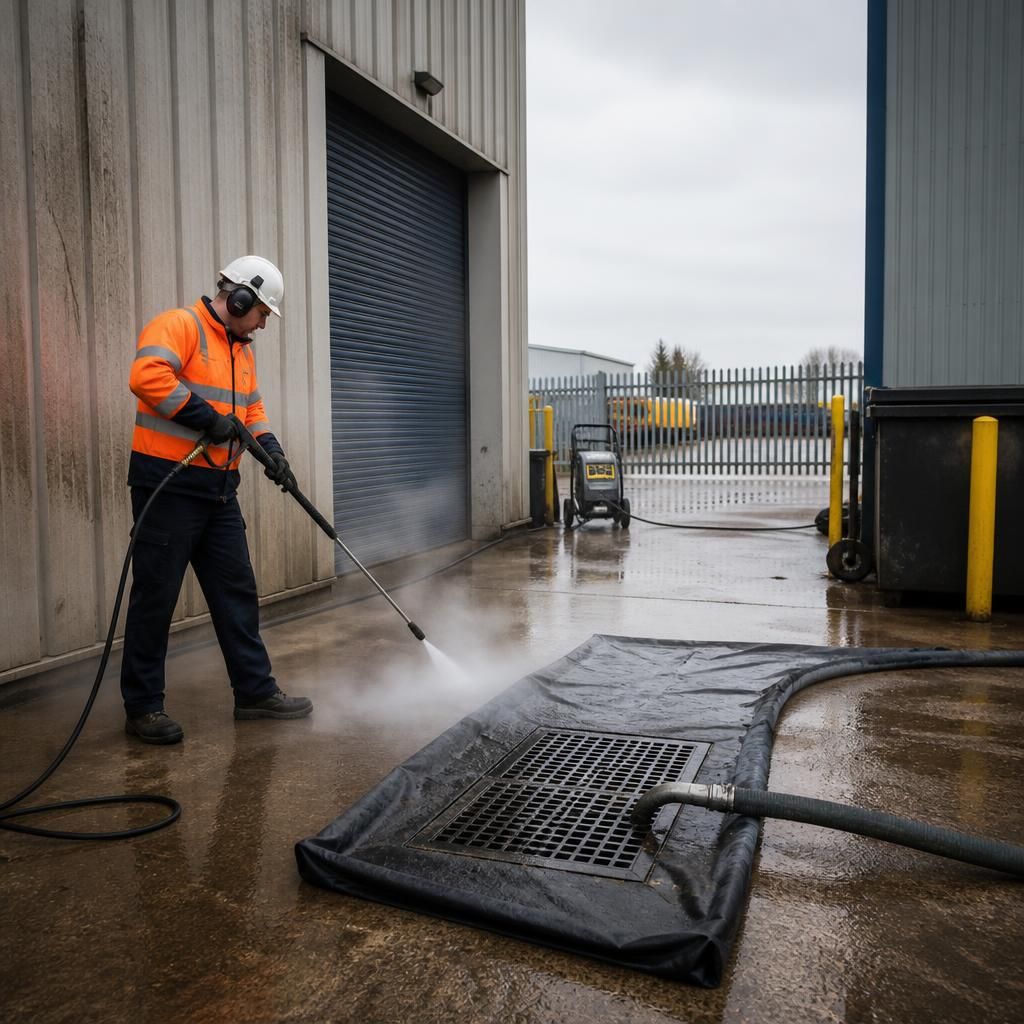
One of the main environmental benefits of industrial steam cleaning is the reduced volume of wastewater produced during exterior maintenance. Steam uses a controlled flow of heated water to loosen dirt, oils, biological growth and other deposits, making runoff easier to contain and recover than water from many conventional pressure-washing methods.
Reduced runoff does not mean wastewater can be released without assessment. Contaminated water, removed coatings, oil residues and cleaning chemicals must be prevented from entering surface-water drains, soil or nearby watercourses. Drain covers, collection mats, wet vacuums and suitable disposal arrangements can help ensure the environmental benefit is achieved in practice.