
How does industrial steam cleaning improve the lifespan of building materials?
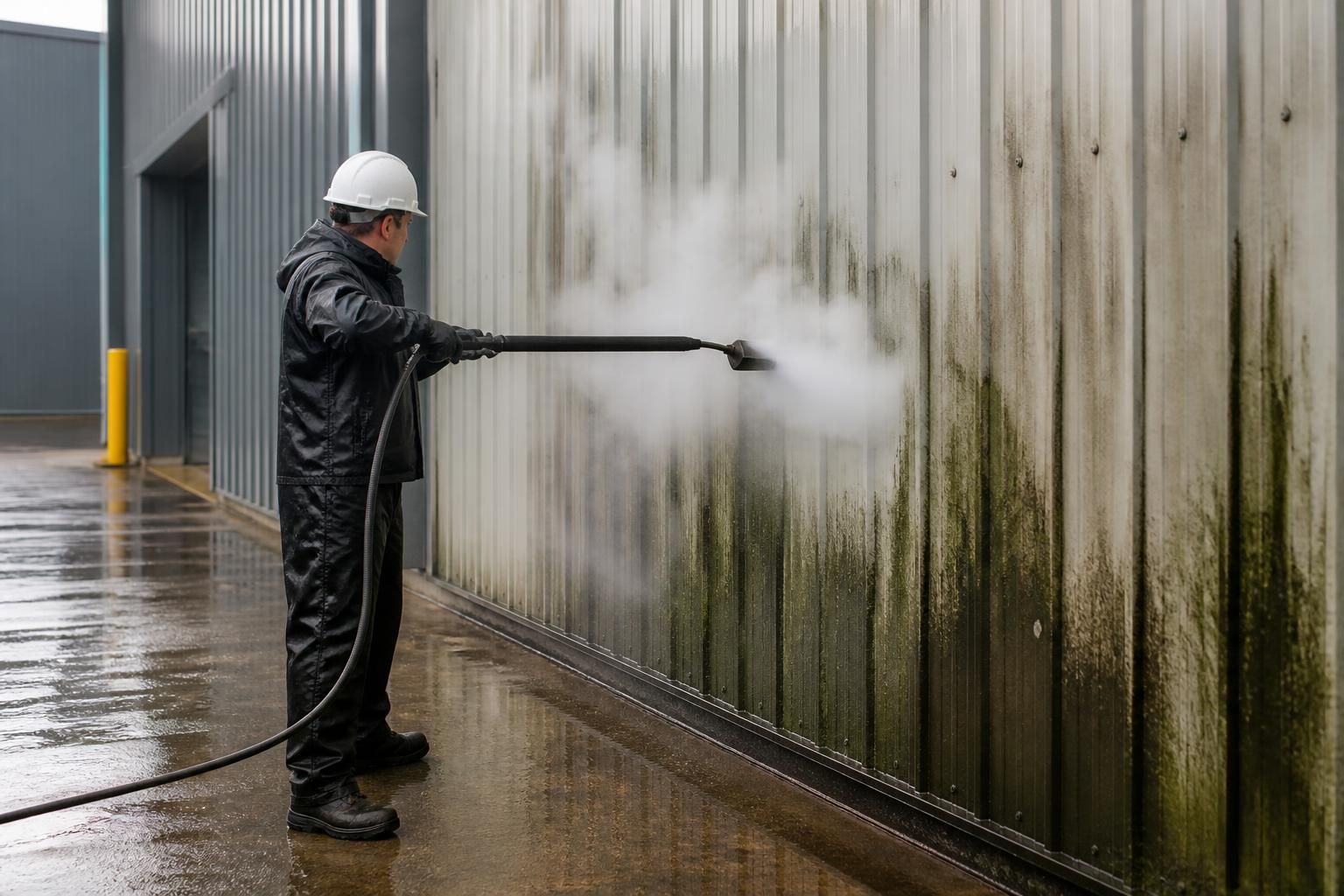
Industrial steam cleaning extends the lifespan of building materials by removing dirt, organic growth, oils and pollutants with controlled heat and low moisture, reducing abrasion and the need for harsh chemicals. This helps limit staining, corrosion, surface deterioration and moisture-related damage across façades, cladding, roofs and other exterior surfaces.
Industrial steam cleaning can extend the service life of building materials by removing damaging contaminants with controlled heat, low water usage and limited mechanical abrasion. By eliminating oils, pollutants, organic growth, bird fouling and embedded dirt before they cause further deterioration, it helps reduce staining, corrosion, blocked drainage, coating failure and moisture-related damage across façades, cladding, roofs, paving and other external surfaces.
The main lifespan benefits come from the way steam cleaning treats contamination. Conventional high-pressure cleaning relies heavily on water impact to dislodge deposits, whereas steam cleaning uses heated water vapour to soften and break down them. This allows many surfaces to be cleaned at a lower pressure, reducing the risk of scarring, pitting, erosion and damage to joints, sealants or decorative finishes. Lower water use also means less moisture is driven into porous materials and building details.
Regular removal of contamination is particularly important because deposits can become more damaging over time:
- Algae, moss, mould and lichen retain moisture against the surface and may penetrate or disturb coatings, mortar joints and roofing materials.
- Oils, grease and traffic film can hold abrasive grit against paving, concrete and cladding, accelerating surface wear.
- Atmospheric pollutants and acidic deposits can discolour façades and contribute to the breakdown of stone, concrete and protective coatings.
- Bird fouling contains corrosive compounds and can damage painted metalwork, stone and roof finishes if it is allowed to remain in place.
- General dirt can conceal cracks, failed sealant, blocked outlets, corrosion and other defects, delaying necessary repairs.
On brickwork, stone and concrete, controlled steam can lift biological growth and surface soiling without the aggressive impact that may remove the face of softer masonry. Protecting the outer surface helps reduce water penetration and limits the effects of freeze-thaw weathering, salt contamination and repeated wetting. The cleaning method must still be matched to the material: historic stone, friable brick, lime mortar and weathered concrete may require reduced pressure, lower heat or a different process altogether.
Steam cleaning also supports the condition of metal façades and cladding. Removing road film, grease, salts and pollutants reduces the time that corrosive substances remain in contact with the finish. This is helpful for coated steel, aluminium and other metal components, particularly around joints, fixings, loading areas and locations exposed to traffic emissions. Cleaning cannot reverse existing rust or coating failure, but it can make deterioration easier to identify and prevent contamination from masking defects that need repair.
For roofs, the removal of moss, algae, lichen and accumulated dirt helps keep drainage routes, laps, gutters and outlets clear. This reduces the risk of standing water and prolonged damp conditions, which can contribute to deterioration of roof coverings, flashings, sealants and supporting details. Steam cleaning should be carried out with a process suitable for the roof type and should not dislodge granules, force water beneath laps or damage membranes and coatings.
Painted and powder-coated surfaces benefit when cleaning removes contaminants without unnecessary abrasion. A well-controlled process helps preserve the appearance and protective function of the coating, while avoiding harsh chemicals that could cause fading, softening or residue. Where a surface has already chalked, blistered or become detached, cleaning should be preceded by an inspection so that the method does not worsen the failure.
Low moisture is another important factor. Excess water can enter porous masonry, insulation interfaces, joints and cavities, potentially increasing drying times and creating conditions for damp-related deterioration. Steam cleaning uses comparatively little water, although surfaces are not completely dry immediately after treatment. Good practice includes assessing drainage, protecting vulnerable openings, controlling runoff and allowing adequate ventilation and drying before the building is sealed or recoated.
Cleaning can also reduce long-term maintenance costs by preserving finishes and making planned maintenance more effective. A clean surface provides a better basis for inspection, repairs, joint replacement, painting, waterproofing and the application of protective treatments. It also prevents dirt and biological growth from becoming so established that more intensive methods are later required. The greatest benefit is normally achieved when cleaning forms part of a planned maintenance programme rather than being reserved for heavily deteriorated surfaces.
Steam cleaning is not automatically suitable for every material or every condition. Heat and moisture can affect certain plastics, adhesives, membranes, resin coatings, timber, sealants and delicate historic finishes. The contractor should assess the substrate, coating, contamination, access conditions and nearby sensitive areas before work begins. A small test area can confirm the appropriate temperature, pressure, distance, dwell time and cleaning technique without exposing the whole elevation to unnecessary risk.
For the best lifespan outcome, cleaning should be followed by a condition check. Any cracks, open joints, corrosion, failed coatings, damaged roofing details or persistent sources of contamination should be recorded and addressed. Industrial steam cleaning preserves building materials by reducing the causes of deterioration; it does not replace repairs, waterproofing, repainting or structural maintenance where those are required.
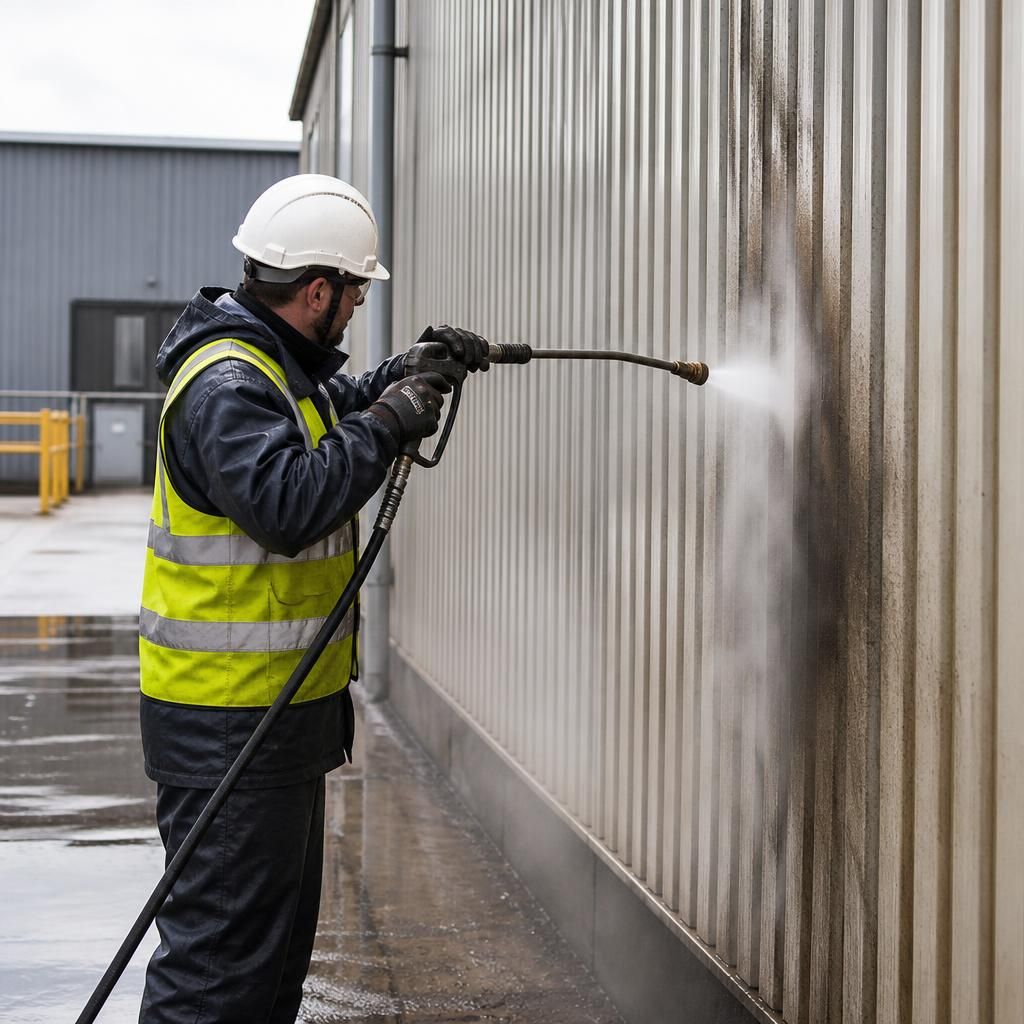
Industrial steam cleaning can extend the service life of building materials by removing damaging contamination with controlled heat and comparatively low water pressure. Steam softens oils, biological growth, traffic film and embedded dirt, allowing these deposits to be lifted with less mechanical abrasion than conventional high-pressure washing.
This helps protect masonry faces, coatings, cladding, paving and roof finishes from scarring, pitting, erosion and premature wear. Removing moss, algae and lichen also reduces moisture retention against the surface, while clearing oils, salts and pollutants limits the time corrosive or abrasive substances remain in contact with metalwork and painted finishes.
The process must still be matched to the substrate and its condition. A competent assessment and test area can establish suitable heat, pressure, distance and dwell time, particularly for weathered masonry, historic materials, membranes, sealants and failed coatings. Cleaning preserves materials by reducing the causes of deterioration; it does not replace repairs to cracks, corrosion, open joints or damaged finishes.
Arrange an Industrial Steam Cleaning Assessment
Arrange an industrial steam cleaning assessment with Encanto Exterior Cleaning to review your building materials, contamination and access requirements. We can recommend a suitable cleaning method that helps protect the condition and service life of your external surfaces.