
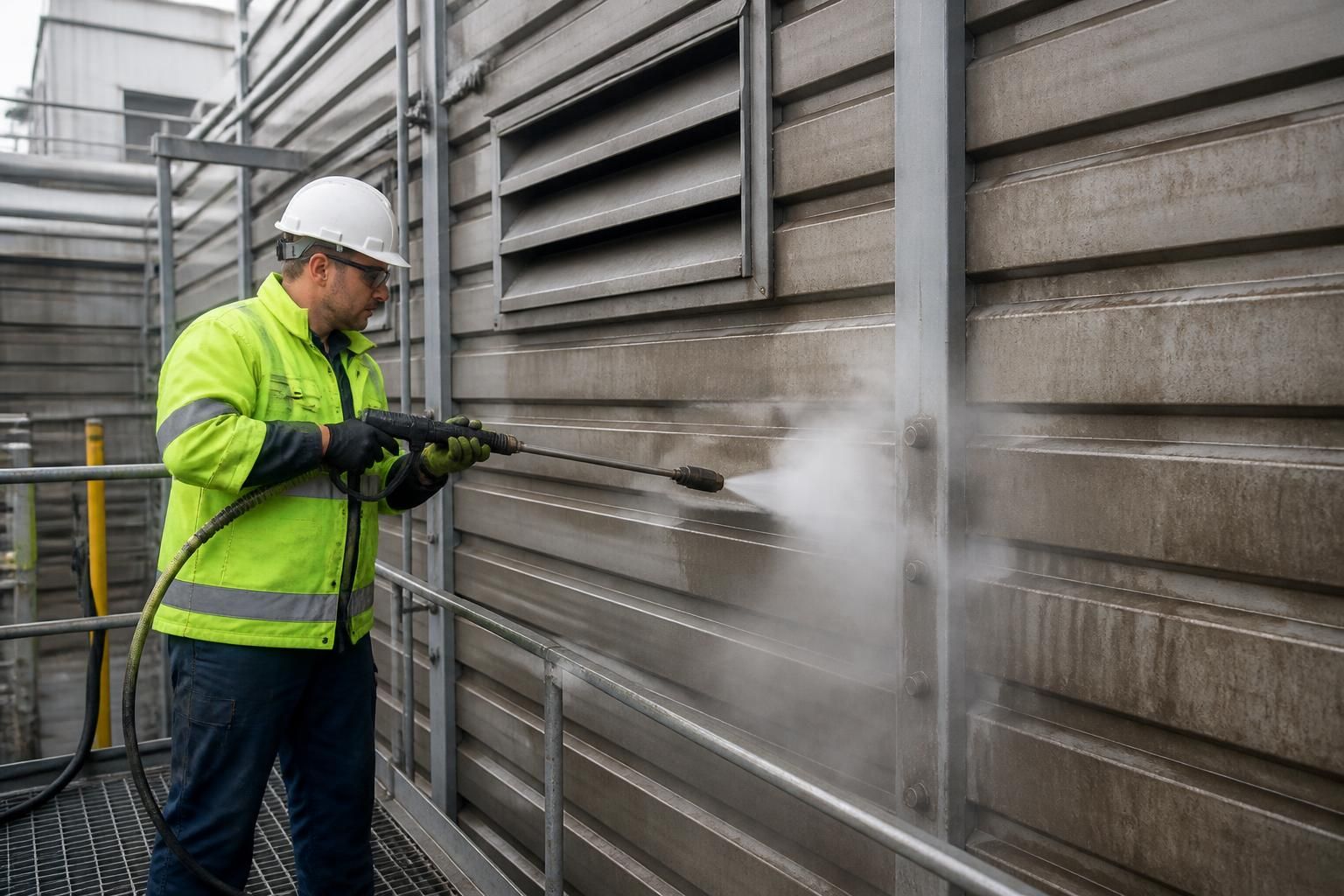
How does industrial steam cleaning ensure the preservation of various building materials during the cleaning process?
Industrial steam cleaning preserves building materials by using controlled heat and low water volume to loosen grime, oils, algae and biological growth without the aggressive force associated with conventional pressure washing. By selecting the correct temperature, pressure, nozzle and cleaning method for each surface, trained operatives can clean brick, stone, glass, metal and cladding while reducing the risk of erosion, staining, water ingress and surface damage.
Industrial steam cleaning preserves building materials by combining controlled heat with relatively low water volume and carefully managed pressure. The heat softens and lifts oils, dirt, algae, biological growth and other bonded contamination, while the reduced water demand and lower mechanical force help limit erosion, surface abrasion, staining and water ingress. A competent operative adjusts the temperature, pressure, nozzle, working distance and dwell time to suit the material rather than applying one cleaning method to every surface.
Preservation depends on controlling the cleaning process at every stage. Before work begins, the surface should be inspected for cracks, failed joints, loose coatings, corrosion, previous repairs and areas where water could enter. The operative should also identify the type of contamination and establish whether the material is sound enough to withstand heat and moisture. Small test areas are used where the substrate, coating or stain is uncertain. This confirms the appropriate settings and helps reveal changes in colour, texture or finish before wider cleaning takes place.
Steam cleaning is often gentler than conventional high-pressure washing because it relies more on heat and dwell time than on force. Dirt and biological deposits are loosened at the surface, reducing the need for aggressive impact. However, steam is not automatically risk-free. Excessive heat can affect some coatings, sealants, plastics and synthetic finishes, while prolonged application can drive moisture into defects or vulnerable joints. Preservation therefore relies on measured application, suitable equipment and trained judgement.
Different building materials require different controls:
- Brickwork: Controlled steam can remove soot, algae, traffic film and general atmospheric soiling while reducing the risk of removing the brick’s surface layer. Care is needed with soft, weathered or historic brick, open mortar joints and areas affected by frost damage. The nozzle should not be held too close or in one position for too long.
- Natural stone: Limestone, sandstone, granite and other stones vary considerably in porosity, hardness and sensitivity to heat or chemicals. Low-impact steam can be suitable for surface deposits, but fragile stone, friable faces and eroded joints need particular caution. Cleaning should avoid forcing water into pores, existing cracks or unstable areas, and any chemical treatment should be selected for the specific stone.
- Concrete: Steam can remove oils, organic growth and accumulated grime without relying solely on abrasive pressure. Sound concrete generally tolerates controlled cleaning, but exposed aggregate, spalled areas and poorly bonded repairs may be vulnerable to surface loss. Defects should be repaired or protected as part of the wider maintenance plan.
- Glass: Heat helps dissolve greasy films and loosen dirt around frames and seals. Operators must avoid thermal shock by not applying high heat suddenly to cold, cracked or damaged glass. The condition of sealants, gaskets and adjacent coatings should also be checked, with suitable tools used to prevent scratching during the removal of softened deposits.
- Metal: Steam can clean painted and unpainted metalwork, cladding, railings and architectural features with limited chemical use. The main concerns are damage to protective coatings, corrosion at exposed edges and moisture remaining in joints or concealed cavities. Cleaned metal should be dried appropriately and any failed coating or rust treated through the relevant maintenance process.
- Cladding and composite panels: Controlled steam is useful for removing atmospheric film, algae and localised staining from many cladding systems. The exact finish, panel material, coating and fixing arrangement must be established first. Excessive heat or pressure can mark delicate finishes, open defective joints or affect bonded components, so the method should be tested and kept within the manufacturer’s or coating supplier’s guidance where available.
- Roofing materials: Steam may assist with moss, algae and grime on suitable roof surfaces, but roof condition, membrane type, insulation, laps and drainage details must be assessed. The process should not disturb protective granules, force water beneath laps or damage fragile tiles and ageing membranes. Run-off must be controlled so loosened contamination does not block gutters or enter drainage systems.
The equipment settings are central to material protection. Temperature should be high enough to soften the contamination but not so high that it damages the substrate or finish. Pressure should be kept to the lowest effective level, and the nozzle should be moved consistently rather than paused over one area. A wider spray pattern may be appropriate for delicate surfaces, while detailed features and joints may need a different attachment. Operatives should avoid concentrating heat around glazing seals, expansion joints, electrical fittings and other vulnerable details.
Water management also supports preservation. Although steam cleaning uses less water than many pressure-washing methods, the loosened material and condensed moisture still need to be collected, diverted or allowed to drain safely. This is particularly important where contaminated run-off could stain adjacent surfaces, enter watercourses or penetrate the building through openings. Openings, vents and sensitive fixtures should be protected before work starts, and the cleaned area should be inspected for trapped moisture.
Cleaning technique must also account for existing coatings and repairs. Paint, render, sealants, waterproofing treatments and protective finishes may respond differently from the underlying material. A surface can appear sound while its coating is already poorly bonded, meaning that even moderate heat or moisture could cause lifting. Testing helps distinguish a cleaning issue from a maintenance defect and prevents unnecessary removal of a finish that still protects the building.
After cleaning, the surface should be checked for residual contamination, disturbed joints, coating failure, moisture retention and changes in appearance. Sensitive materials may require a gradual drying period, improved ventilation or follow-up repairs. Removing the cause of soiling, such as defective rainwater goods, leaking joints or persistent organic growth, is equally important; otherwise repeated cleaning can place unnecessary stress on the material.
For commercial and industrial premises, the safest approach is to specify the substrate, contamination, access arrangements and known defects before work begins. A suitable method statement should record the proposed test area, equipment settings, protection measures, run-off controls and inspection requirements. Where the building is listed, historically significant or covered by a material warranty, specialist conservation or manufacturer guidance should be obtained before cleaning.
In practice, industrial steam cleaning protects building materials not through heat alone, but through accurate assessment and controlled application. Matching the process to each substrate removes contamination with less abrasion and less water, while testing, careful access, surface protection and post-cleaning inspection reduce the risk of avoidable damage.
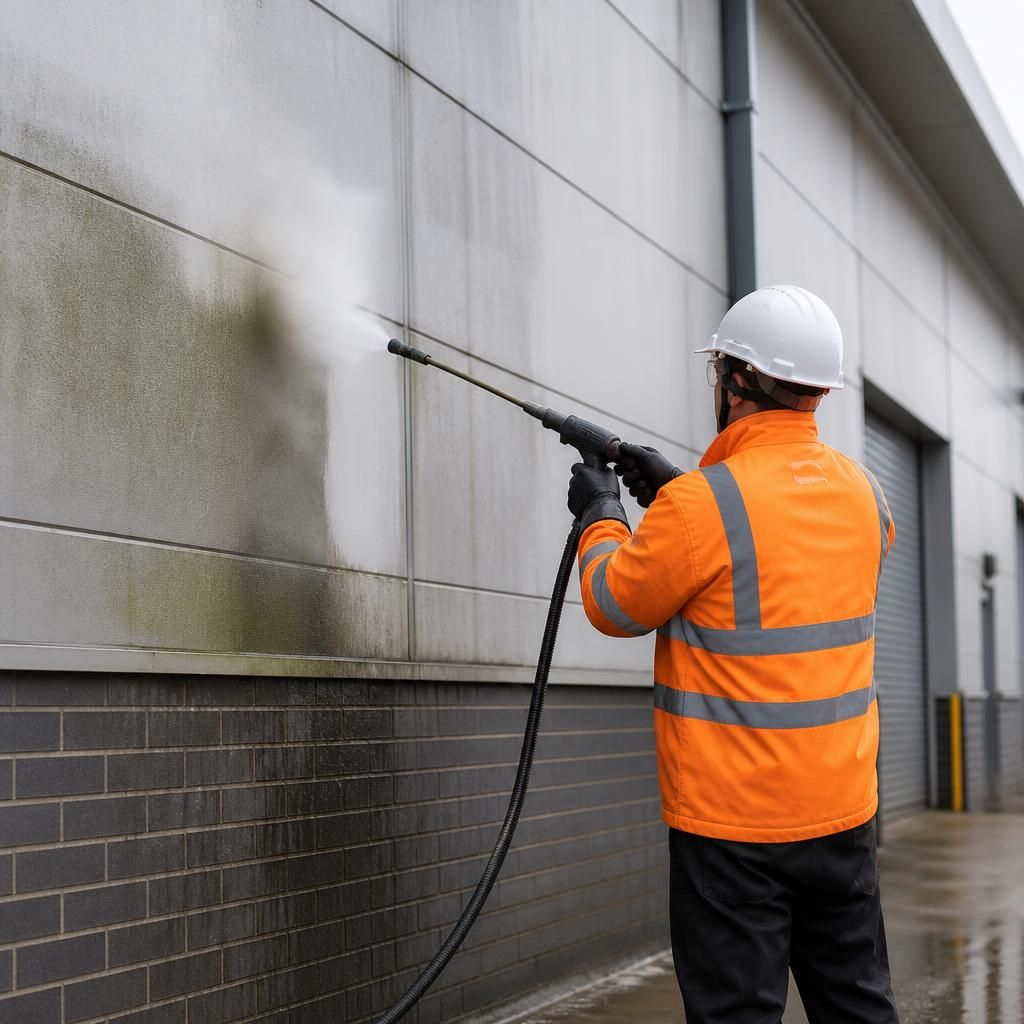
Material preservation during industrial steam cleaning depends on testing and controlled application, rather than heat alone. Before full-scale work begins, the operative should inspect the substrate for cracks, loose coatings, open joints, corrosion and previous repairs, then clean a small representative area using carefully selected temperature, pressure, nozzle and working distance.
This test confirms whether the surface and its existing finish can tolerate the process without changes to colour, texture or adhesion. It also helps identify the most effective technique for removing the specific contamination while using the lowest practical pressure and heat. During the work, the nozzle should remain in steady motion and sensitive details such as glazing seals, expansion joints, electrical fittings and defective cladding joints should receive additional protection. This measured approach reduces the risk of erosion, thermal damage, water ingress and unnecessary coating loss across brick, stone, glass, metal and composite surfaces.
Discuss industrial steam cleaning for your building materials
Discuss your building materials, existing coatings and cleaning requirements with Encanto Exterior Cleaning so we can recommend a tested, controlled steam-cleaning method. Contact our team to arrange a site assessment for your commercial or industrial property.