
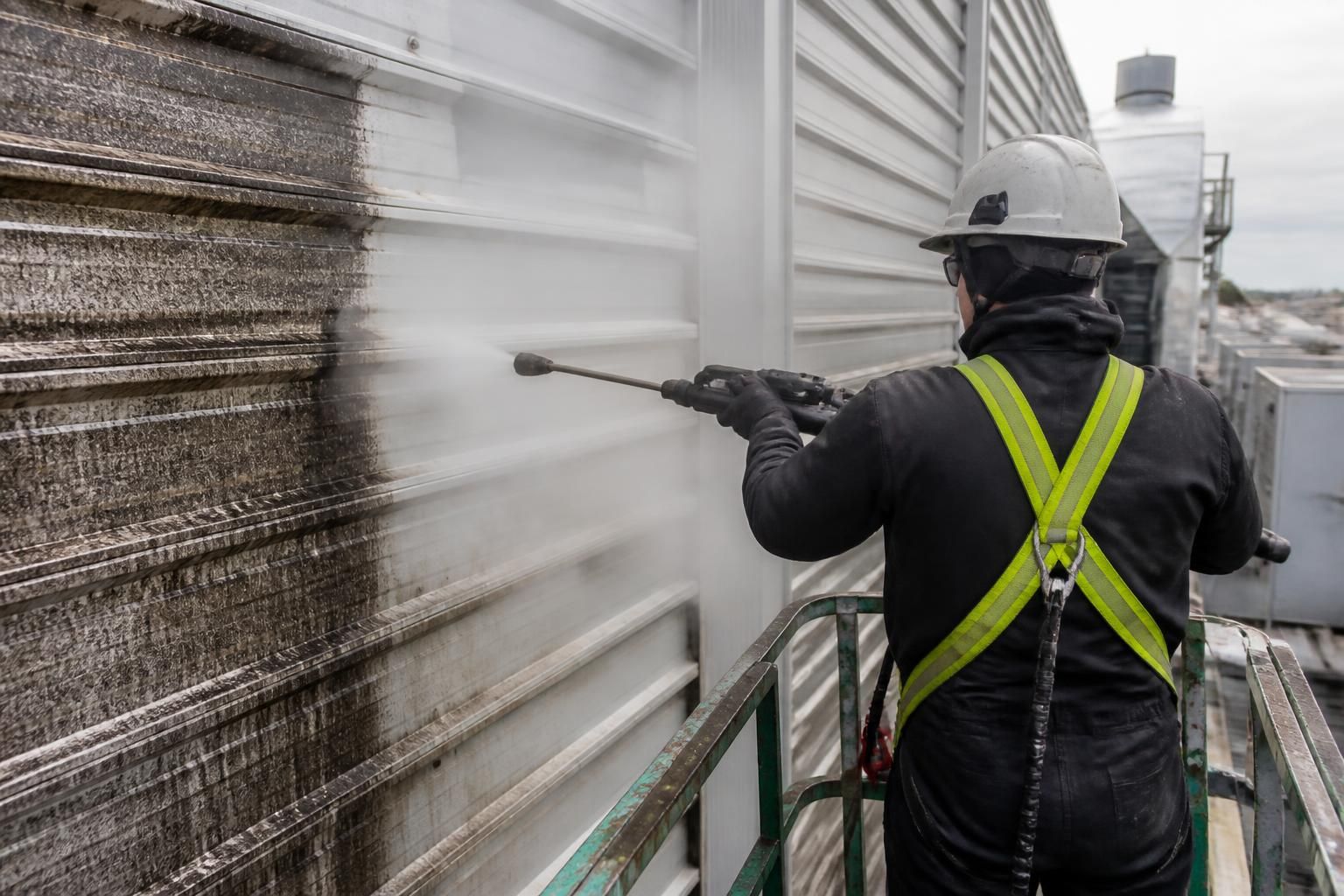
How does industrial steam cleaning differ from traditional pressure washing?
Industrial steam cleaning uses high-temperature steam with relatively low water volume to loosen and remove grime, oils, biological growth and some coatings. Traditional pressure washing relies primarily on forceful water jets, making it faster for rinsing and removing heavy, loose deposits but potentially less suitable for delicate surfaces, sensitive joints or areas where water use and run-off must be controlled.
Industrial steam cleaning and traditional pressure washing remove dirt in different ways. Steam cleaning uses high-temperature water vapour, usually with comparatively low water consumption and gentler surface pressure, to soften and break down grease, oil, biological growth and ingrained deposits. Traditional pressure washing relies mainly on the mechanical force of a high-volume water jet to dislodge and rinse away contamination. The most suitable method depends on the surface, the type of soiling, the required finish and how run-off must be managed.
The main difference is heat versus pressure. Steam transfers heat into the contamination, helping to loosen substances that are difficult to remove with cold or warm water alone. Pressure washing uses kinetic energy: the water jet strikes the surface and lifts away dirt, loose coatings, algae, moss and other deposits. Pressure washing can be highly effective for robust surfaces and large areas, while steam is often better suited to sensitive materials, greasy contamination and locations where water use needs to be controlled.
Industrial steam cleaning typically involves:
- High-temperature steam or very hot water vapour to soften oils, grease, chewing gum, biological growth and embedded grime.
- Lower water volumes than many conventional pressure-washing applications, which can reduce the amount of wastewater generated.
- Reduced reliance on aggressive mechanical force, helping limit the risk of surface erosion, damage to joints or disturbance of fragile coatings.
- A cleaning process that can sanitise or reduce biological contamination through heat, although the result depends on the temperature, dwell time, contamination and surface condition.
- More controlled cleaning around façades, cladding, entrances, plant areas and other locations where excessive spray or run-off would be undesirable.
Traditional pressure washing typically involves:
- A pump delivering water through a nozzle at controlled pressure to remove loose or firmly attached deposits.
- Fast rinsing of dirt, dust, mud, moss, algae and other surface contamination from durable materials.
- Greater water movement across the surface, which can be useful when a large area needs to be cleared and flushed efficiently.
- A higher risk of water penetration, splashback or damage if the pressure, nozzle, distance or technique is unsuitable for the material.
- More attention to drainage, collection and disposal where dirty water could enter surface-water systems or affect surrounding areas.
Cleaning performance varies by contamination. Pressure washing is often effective against loose soil, traffic film and surface deposits on concrete, block paving, hard landscaping and other robust substrates. Steam is particularly useful where contamination contains oils, grease, chewing gum, carbon deposits or biological growth that has bonded to the surface. Heat can soften the deposit before it is rinsed or removed, reducing the need for excessive pressure or harsh chemical treatment.
Neither method is automatically superior for every application. A pressure washer may be the more productive option for open car parks, yards or heavily soiled concrete where the substrate can tolerate the selected pressure. Steam may be preferable for façades, painted or coated surfaces, sensitive masonry, detailed architectural features, around entrances and in areas where overspray must be kept under control. Some projects require a combination: steam to break down stubborn or greasy contamination, followed by carefully controlled rinsing to remove the loosened residue.
Surface condition is a key consideration. Excessive pressure can strip paint, remove protective coatings, open weak joints, erode softer masonry and force water behind cladding or into building fabric. Heat can also affect certain paints, sealants, plastics, membranes and composite materials if it is applied incorrectly. Before work begins, the cleaning method should therefore be selected according to the material, age, coating, existing defects and manufacturer or site requirements. A competent contractor will normally carry out an assessment and, where appropriate, test a discreet area before proceeding.
Water and run-off are also handled differently. Pressure washing can produce substantial volumes of dirty water, particularly when broad areas are rinsed continuously. That run-off may contain silt, oils, detergents, paint residue or other contaminants and must be controlled rather than allowed to enter an unsuitable drain or watercourse. Steam cleaning generally produces less liquid run-off, but it does not eliminate the need for environmental controls. Loosened contamination still has to be collected, contained or directed to an appropriate drainage arrangement, and any cleaning agents must be selected and managed responsibly.
Steam cleaning is not the same as dry cleaning. Industrial steam equipment still uses water, and the amount of visible vapour or residual moisture depends on the equipment and operating conditions. The term describes a heat-led process rather than a completely water-free one. Similarly, pressure washing equipment can be operated at different pressures and flow rates, so the label alone does not determine whether a method is suitable. Nozzle selection, working distance, temperature, flow, dwell time and operator control all affect the result.
Steam can offer practical advantages where the site needs a controlled process with limited overspray, lower water use or reduced chemical dependence. It can also be useful for hygiene-sensitive areas and for removing residues that smear or spread when treated only with cold water. However, it may not be the fastest choice for every large, open surface, and it may not remove thick, loose or deeply rooted material without preparation, agitation or supplementary rinsing.
Pressure washing remains appropriate when the surface is sound and the primary requirement is rapid removal and rinsing of substantial loose contamination. It must be used with particular care around windows, vents, electrical equipment, joints, pointing, roof coverings and areas where water could enter the building. Lowering the pressure, increasing the working distance or changing the nozzle may be necessary; using maximum pressure is not a substitute for correct technique.
For a commercial or industrial property, the decision should consider:
- The substrate and any paint, sealant, coating or protective treatment.
- The type, thickness and age of the contamination.
- Whether the area is open and robust or detailed, fragile and difficult to access.
- Water availability, drainage capacity and the requirements for containing dirty run-off.
- Nearby pedestrians, vehicles, plant, entrances and sensitive equipment.
- Whether heat, pressure, detergents or a combination could affect the building fabric.
- The access equipment, working height and isolation arrangements needed to complete the work safely.
- The finish required and whether a follow-up treatment is needed to reduce recurring biological growth or staining.
In practice, the best approach is based on a site assessment rather than a fixed preference for steam or pressure washing. Industrial steam cleaning is generally the more controlled, heat-led option for grease, biological deposits, sensitive surfaces and restricted run-off conditions. Traditional pressure washing is generally the more force-led option for robust surfaces with substantial loose contamination and a need for efficient rinsing. Selecting the correct settings and method protects the substrate, improves the consistency of the clean and helps ensure that wastewater and site safety are managed properly.
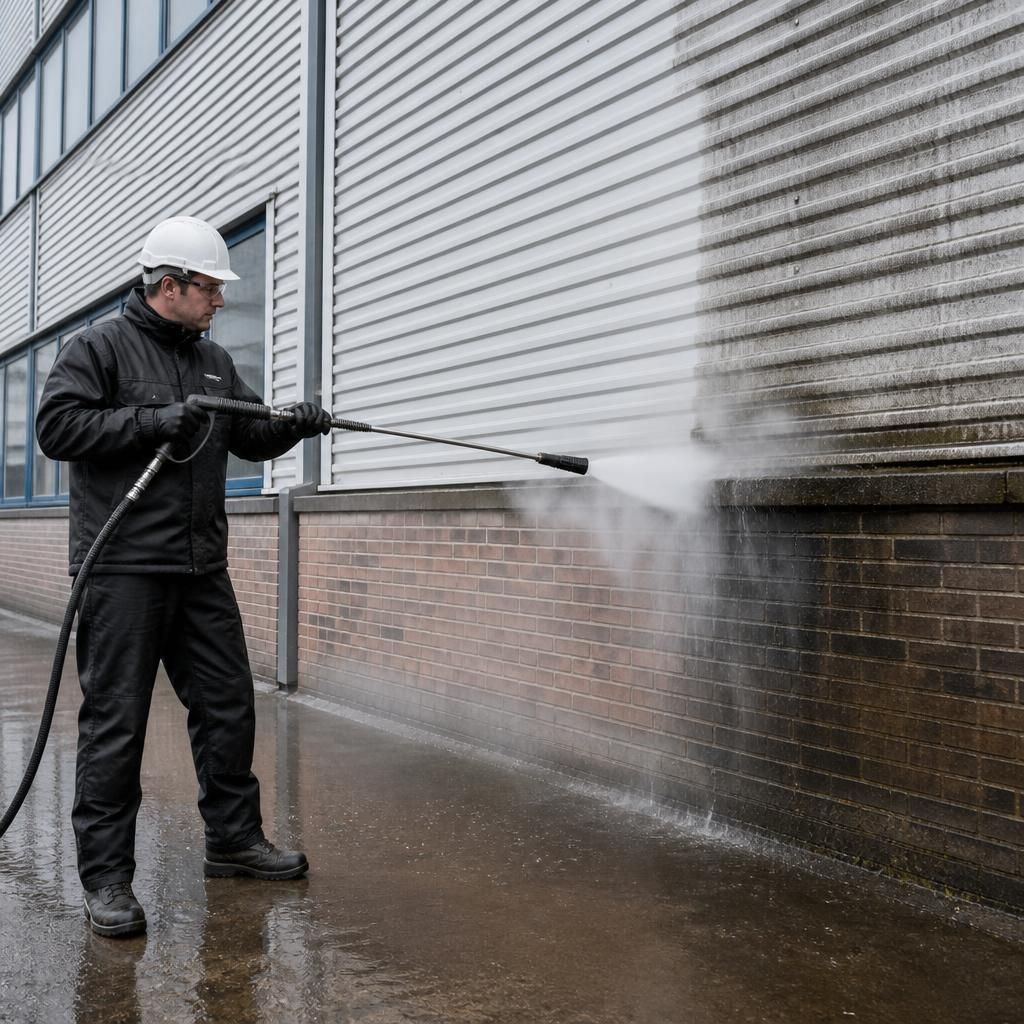
Industrial steam cleaning removes contamination mainly through heat, while traditional pressure washing relies on the force of a water jet. Steam softens grease, oil, chewing gum, biological growth and ingrained grime, allowing these deposits to be removed with less mechanical pressure and generally less water.
This distinction is important when cleaning façades, coated surfaces, detailed masonry, entrances or areas where overspray and dirty run-off must be controlled. Pressure washing can be highly effective on sound concrete, paving, yards and car parks with substantial loose contamination, but excessive pressure may damage pointing, coatings, sealants or vulnerable building materials.
The correct method depends on the substrate, the type of soiling and the required finish. A competent cleaning assessment should consider temperature, pressure, flow rate, nozzle selection, working distance and drainage arrangements. In some cases, steam is used to break down stubborn deposits before controlled rinsing removes the loosened residue.
Discuss the right cleaning method for your property
Discuss the right cleaning method for your property with our team, considering the surface, contamination, access requirements and run-off controls. We can assess whether industrial steam cleaning, pressure washing or a combination is most appropriate.