
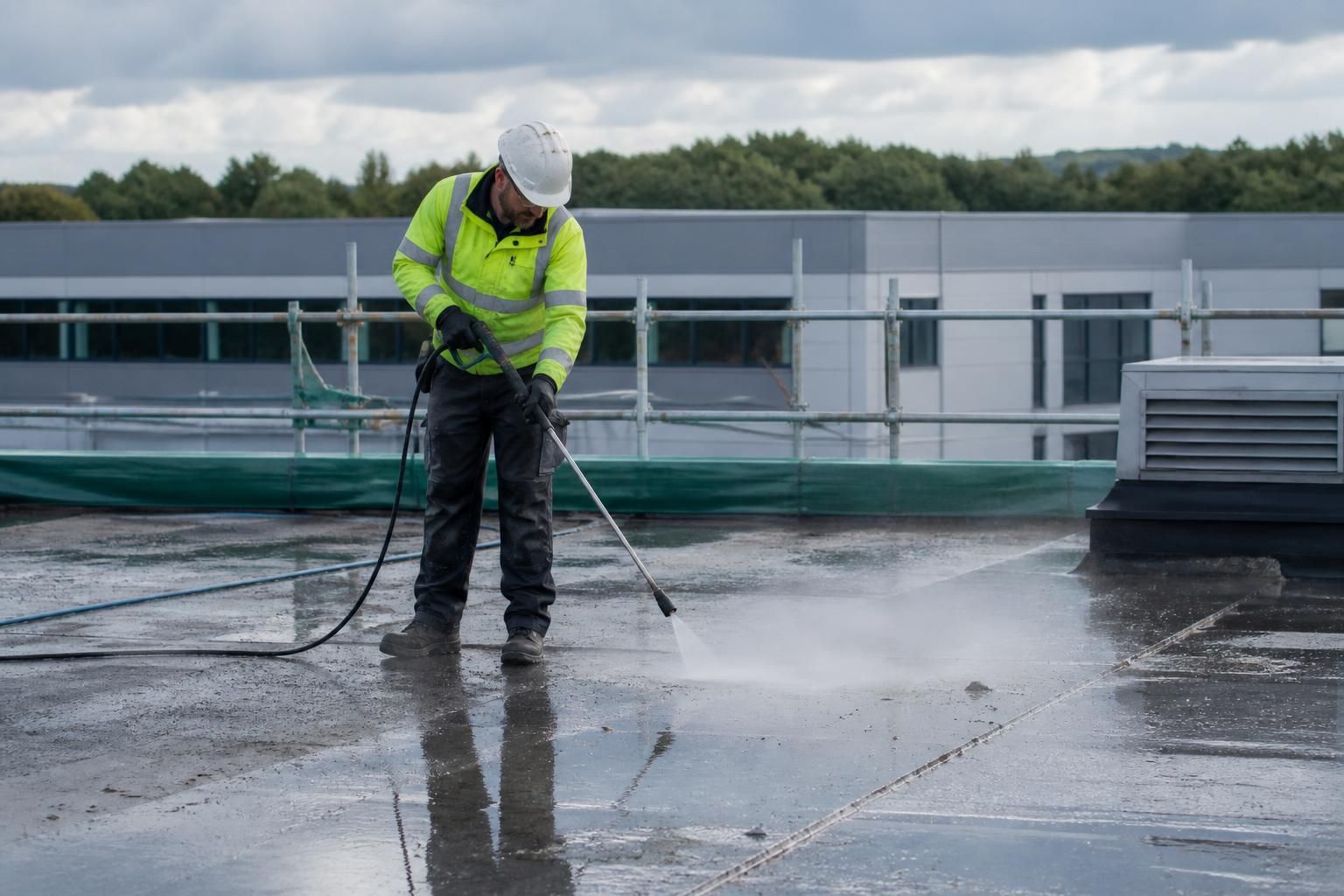
How does the choice of cleaning solution affect the environmental impact and safety of roof, stone, and gutter maintenance?
The cleaning solution affects environmental impact and safety through its chemical strength, toxicity, biodegradability, runoff risks and suitability for the surface being treated. Using the mildest effective product, applying it in a controlled way and containing or recovering contaminated runoff helps protect building materials, workers, occupants, drainage systems and the wider environment.
The choice of cleaning solution directly affects the environmental impact and safety of roof, stone and gutter maintenance. A suitable product should remove the contaminant effectively at the lowest practical concentration, while minimising toxicity, surface damage, worker exposure and polluted runoff. The correct choice depends on the material, the type of soiling, the drainage arrangements and how the wastewater will be controlled.
Why the cleaning solution matters
Cleaning products can vary significantly in alkalinity, acidity, solvent content, oxidising strength and biodegradability. A product that is appropriate for a robust, heavily soiled surface may be unsuitable for porous stone, coated metal or roof components. Using an unnecessarily strong chemical can increase the risk of discolouration, etching, corrosion, coating failure and damage to pointing or sealants. It can also create more hazardous residues and make wastewater harder to manage.
The safest approach is to use the mildest effective solution, applied in a controlled manner and supported by mechanical cleaning, low-pressure rinsing or steam where appropriate. Chemical treatment should not replace careful assessment of the surface. It should be selected to address the specific contamination, such as algae, moss, organic staining, oil, atmospheric deposits, mortar residue or graffiti.
Environmental effects of different cleaning solutions
- Biocidal and antimicrobial treatments: These can control algae, moss, mould and lichen, including contamination that may remain in pores or joints after visible cleaning. However, they must be used strictly in accordance with the product instructions. Uncontrolled application or runoff can affect soil, plants, aquatic life and drainage systems.
- Acidic products: Acid cleaners may dissolve mineral deposits, cement residues and some weathering products, but they can attack carbonate-based stone, metals, concrete surfaces and mortar. Acidic wastewater may also require containment and appropriate treatment before disposal.
- Alkaline cleaners and degreasers: These are often useful for oils, grease and organic deposits, particularly on hard surfaces. If over-applied or discharged without control, they can adversely affect drainage systems and receiving environments.
- Solvent-containing products: Solvents may be effective against particular coatings, oils or graffiti, but can create additional risks through vapour, flammability, worker exposure and contaminated residues. They should only be used where necessary and where the substrate and surrounding environment can be protected.
- Detergent-based products: These may improve the removal of general dirt, but the presence of surfactants does not automatically make a product environmentally harmless. The full safety data and disposal requirements still need to be considered.
Biodegradable labelling should not be treated as the only selection criterion. A biodegradable product can still be harmful if it is concentrated, discharged in large quantities, applied near sensitive planting or allowed to enter surface-water drains. The volume used, the dilution, the contamination removed and the method of wastewater disposal all influence the overall environmental impact.
Surface compatibility is a safety issue
Correct chemical selection protects the building as well as the people carrying out the work. Porous sandstone, limestone and historic masonry can absorb solutions deeply, making staining, salt movement or chemical attack difficult to reverse. Some roof coatings, membranes, sealants and painted finishes can soften or lose adhesion when exposed to unsuitable detergents, solvents or oxidising agents. Gutters and downpipes may be manufactured from aluminium, galvanised steel, coated steel, copper, uPVC or other materials, each with different chemical tolerances.
Before treatment, the substrate should be identified and its condition assessed. A small test area can confirm whether the product causes colour change, surface marking, coating failure or excessive absorption. Testing should include dwell time and rinsing, because a product that appears safe when immediately removed may cause damage if allowed to dry on the surface. Particular care is needed around joints, flashings, roof edges, electrical equipment, planted areas and adjacent façades.
How the solution affects worker and occupant safety
Chemical exposure can occur through skin contact, splashes to the eyes, inhalation of vapour or aerosol and contaminated clothing. Risk increases when products are sprayed at pressure, used in poorly ventilated areas or mixed incorrectly. A professional method should be based on the product label and safety data sheet, with suitable gloves, eye or face protection, protective clothing, respiratory protection where required and controlled access to the work area.
Cleaning products should never be mixed unless the manufacturer specifically permits it. Combining acids with hypochlorite-based products, for example, can release dangerous gases. Chemicals should be stored securely, clearly labelled and kept away from incompatible substances. Occupants, pedestrians and other contractors should be protected from overspray, vapour, splashes and wet treated surfaces. Roof and gutter work also involves work-at-height risks, so chemical selection must support, rather than complicate, safe access and handling.
Runoff control is essential
The environmental risk of a cleaning solution is often determined by what happens after application. Wash water may contain the cleaning product together with concentrated algae, heavy deposits, oils, paint particles, metals or other contaminants removed from the building. It should not be allowed to flow uncontrolled into surface-water drains, watercourses, planted areas or neighbouring property.
Before work starts, drainage routes should be identified and vulnerable outlets protected or isolated where practicable. Depending on the site, controls may include drain covers, bunding, temporary collection, wet vacuum recovery, filtration, settlement or transfer to a suitable foul drainage connection with permission. Collected wastewater must be handled in accordance with the site arrangements, product instructions and applicable environmental requirements. A foul-water drain is not automatically suitable for every chemical or contaminated discharge.
On roofs and gutters, particular attention is needed at downpipes and outlets. Downpipes may carry treatment residue directly into drains or onto ground-level planting. Gutter cleaning should therefore include removal of solid waste, controlled rinsing and inspection of discharge points. Where a biocide or other treatment is applied, the area should be managed so that rainfall does not immediately wash concentrated product into an uncontrolled drainage route.
Choosing between chemical, steam and low-pressure methods
Cleaning solutions are only one part of the method. Steam cleaning can reduce the need for chemical products when heat and controlled agitation are sufficient to remove organic growth, dirt or some staining. It still produces wastewater, and the temperature and moisture must be suitable for the substrate, coatings, membranes and adjacent materials.
Low-pressure washing with a compatible detergent may be appropriate for general soiling where the surface can tolerate moisture. High pressure should not be used to compensate for an unsuitable chemical, as it can drive contamination into porous materials, strip protective finishes and increase spray drift. Mechanical brushing or specialist abrasive techniques may be suitable for limited areas, but their effect on the surface and the resulting dust or residue must be controlled.
Cryogenic cleaning can be useful in specific applications because the media evaporates, reducing secondary solid waste. It does not eliminate the need for containment: removed coatings, dirt and hazardous residues still require collection and appropriate disposal. The method can also create noise, dislodge fragments and affect delicate finishes if used without a proper assessment.
A practical selection process
- Identify the substrate, its finish and its condition, including any fragile, historic or previously repaired areas.
- Identify the contaminant rather than selecting a product solely by the appearance of the stain.
- Check the product label and safety data sheet for surface restrictions, dilution, dwell time, PPE, storage and disposal requirements.
- Consider whether steam, brushing, low-pressure water or another non-chemical method could achieve the required result.
- Test the proposed method on a discreet area and inspect the result after rinsing and drying.
- Plan access, ventilation, overspray protection, weather conditions and the protection of people, plants, vehicles and neighbouring surfaces.
- Confirm how solid waste and contaminated water will be contained, recovered, treated or disposed of before application begins.
- Apply only the required amount, prevent the product from drying where this could cause damage, and rinse or recover residues as specified.
Weather conditions are also relevant. Wind can spread spray beyond the work area, while heavy rain can dilute the product and increase uncontrolled runoff. Very hot or rapidly drying conditions may shorten the working time and leave residues on the surface. Work should be postponed or adapted when conditions prevent reliable control of the solution and wastewater.
What a responsible maintenance specification should include
A clear specification should name the surface and contamination, describe the proposed solution or treatment type, set out any testing requirements and identify the runoff controls. It should also define the required finish without requiring aggressive cleaning that could shorten the life of the material. Records of products used, dilution, treated areas, waste arrangements and any test results can support future maintenance and help avoid repeating an unsuitable treatment.
For roofs, stonework and gutters, the most environmentally responsible solution is not necessarily the product described as the strongest, most natural or most biodegradable. It is the option that achieves the required clean with the least chemical exposure, the least surface damage and the greatest control over residues and runoff. Matching the solution to the material, combining it with an appropriate cleaning method and planning disposal before work begins provides the best balance between effectiveness, safety and environmental protection.
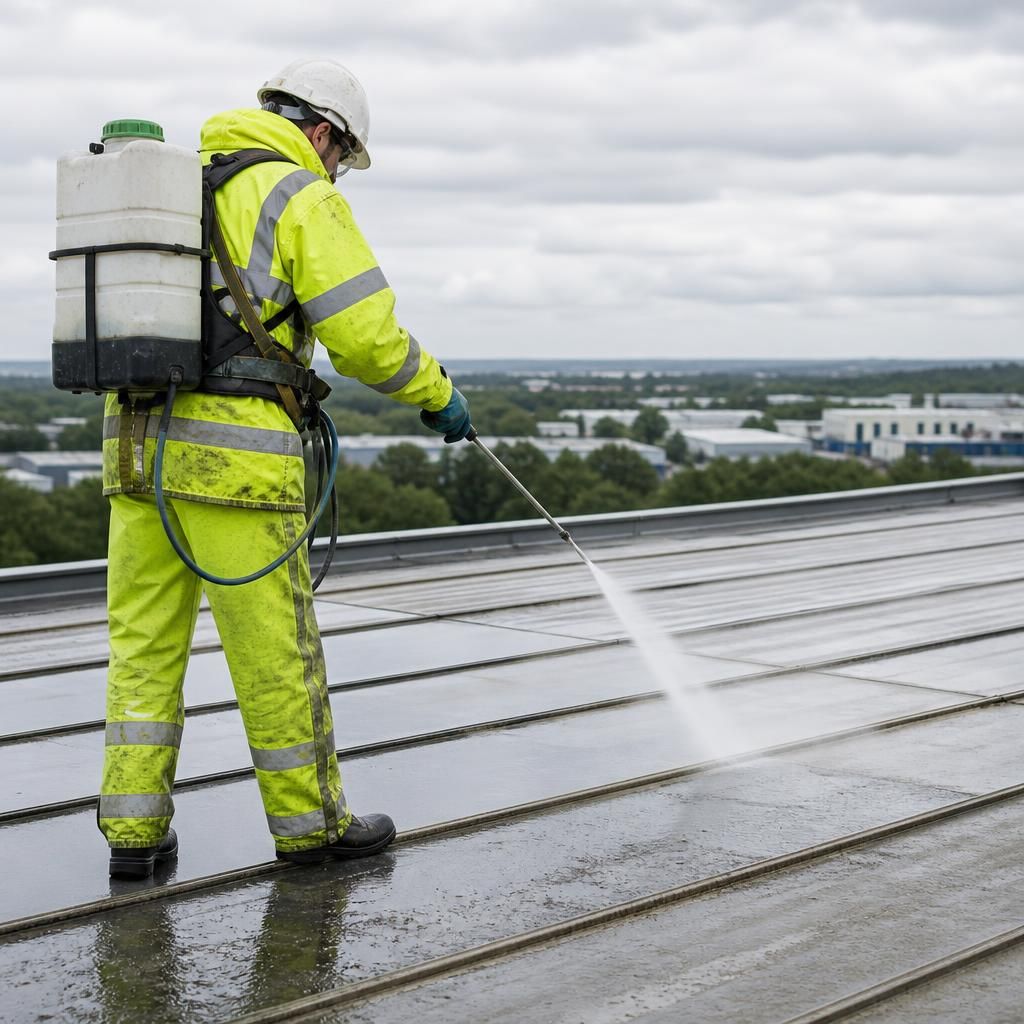
The environmental and safety impact of a roof, stone or gutter cleaning solution depends on its chemical strength, compatibility with the surface and how residues and wash water are controlled. The most suitable option is usually the mildest effective treatment, rather than the strongest or one marketed as biodegradable.
Before application, the substrate and contamination should be assessed and a discreet test area checked after rinsing and drying. Porous stone, roof coatings, metals, sealants and uPVC can all react differently to acids, alkalis, solvents and biocides. Drainage outlets, planted areas and neighbouring surfaces should also be protected, with contaminated runoff collected or managed through an approved disposal route. This reduces chemical exposure, prevents avoidable surface damage and limits the risk of pollutants entering soil or surface-water systems.
Discuss Your Eco-Friendly Roof, Stone & Gutter Cleaning Plan
Discuss your eco-friendly roof, stone and gutter cleaning plan with our team to identify suitable methods, surface-safe solutions and effective runoff controls. We can help you plan maintenance that protects your building, occupants and the surrounding environment.