
How do regular maintenance schedules for roof, stone, and gutter cleaning impact the longevity and performance of building materials?
Regular roof, stone and gutter cleaning removes moss, algae, dirt and debris that can retain moisture, obstruct drainage and accelerate the deterioration of building materials. A planned maintenance schedule also enables early identification of defects, helping preserve structural performance, reduce water-related damage and extend service life.
Regular, correctly specified roof, stone and gutter cleaning extends the service life and preserves the performance of building materials by controlling moisture, organic growth, staining, blocked drainage and contaminant build-up. A planned schedule also creates opportunities to identify defects early, so minor issues can be assessed before they develop into water ingress, surface failure or more extensive repairs.
The benefit does not come from cleaning as frequently or aggressively as possible. It comes from matching the timing, method and cleaning solution to the material, site conditions and type of contamination. Excessive pressure, unsuitable chemicals or cleaning when surfaces are vulnerable can cause damage. Maintenance should therefore be condition-led, documented and carried out by operatives who understand the construction and weathering characteristics of the building.
How cleaning protects roof materials
Moss, algae, lichen, leaf debris, bird fouling and airborne pollutants can retain moisture against roof coverings. Repeated wetting and drying encourages weathering and can contribute to surface deterioration, particularly where contamination remains undisturbed for long periods. Moss may also lift at edges, hold debris against tiles or interfere with the free flow of rainwater. On some roofs, roots and organic matter can work into joints and small defects, making existing weaknesses more difficult to identify.
Removing contamination helps the roof shed water as intended and makes defects such as slipped tiles, damaged pointing, open laps, failed sealant and corrosion more visible. Cleaning can also improve the performance of roof drainage by preventing material from being washed into outlets and gutters. Where a biocidal treatment is appropriate, it can reduce the return of biological growth after cleaning, although treatment selection and application must be suitable for the roof covering and surrounding environment.
Different roof materials require different controls. Clay and concrete tiles, slate, coated metal, membrane systems and built-up roofing do not respond in the same way to pressure, heat or chemical treatment. A method suitable for a robust, non-porous surface may damage a weathered coating, drive water beneath laps or remove protective surface material from an older covering. For this reason, roof cleaning should begin with an inspection, identification of the covering and assessment of its condition. Test areas can help confirm that the proposed method removes contamination without causing unacceptable change to the surface.
How cleaning preserves stone and masonry
Stone façades, steps, paving, walls and architectural details are affected by biological growth, atmospheric soiling, salts, staining and moisture. Contamination can obscure cracking, open joints, spalling and localised erosion, while persistent dampness may increase freeze-thaw stress in exposed areas. On porous stone, retained moisture can also carry soluble salts through the material. As the moisture evaporates, salts may crystallise at or below the surface and contribute to powdering, flaking or loss of detail.
Routine cleaning removes deposits before they become firmly bonded or penetrate more deeply into porous surfaces. It maintains the appearance and legibility of the masonry, but its performance benefit is equally important: clean surfaces are easier to inspect, drainage paths remain clearer and defects can be recorded more accurately. Cleaning should not be treated as a substitute for repairing failed joints, defective flashings, cracked stone or persistent damp. Those underlying causes need to be addressed if the surface is to remain sound.
Stone cleaning must be particularly controlled because sandstone, limestone, granite, concrete and reconstituted stone have different levels of porosity, hardness and chemical sensitivity. Low-pressure washing, controlled steam, specialist detergents, biocidal treatment or other techniques may be appropriate depending on the deposit and substrate. Abrasive methods or excessive pressure can remove the weathered surface, open the pores, alter the appearance or damage carved and jointed details. A suitable approach removes the contaminant while retaining as much of the original material and surface character as possible.
How regular gutter cleaning supports building performance
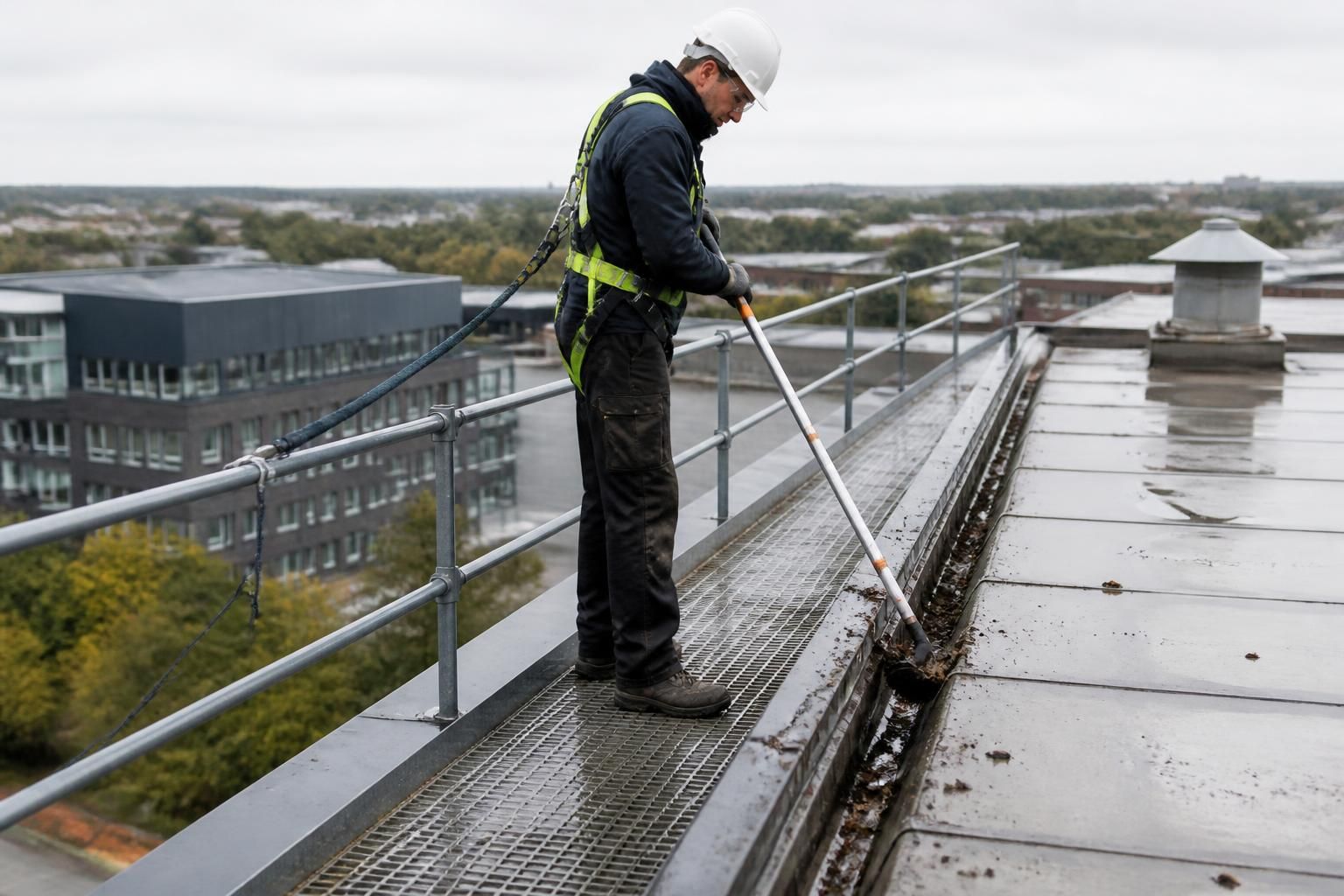
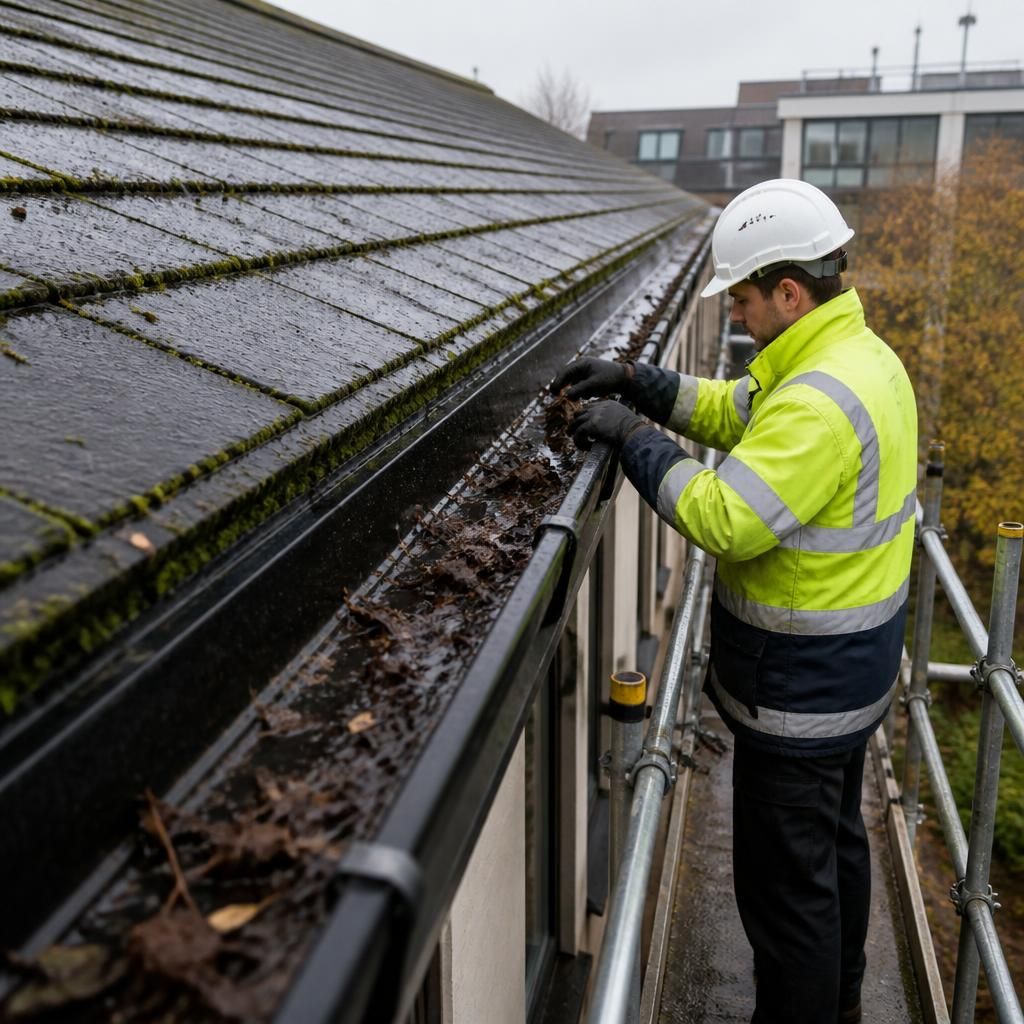
Gutters and downpipes are part of the building’s rainwater management system. When leaves, moss, silt or other debris restrict the flow, water can overflow onto roof edges, fascias, soffits, walls and foundations. Repeated overflow may stain masonry, saturate timber, damage coatings and increase the likelihood of damp-related deterioration. In cold conditions, retained water and wet debris can also freeze, expand and place additional stress on joints and fittings.
Keeping gutters and outlets clear allows rainfall to reach the intended discharge point and makes leaks, loose brackets, corrosion, split joints and defective downpipes easier to detect. Cleaning should include checking the condition and alignment of the system rather than simply removing visible debris. Downpipe blockages, damaged outlets and inadequate discharge arrangements can continue to cause water damage even when the gutter itself appears clean.
Why planned maintenance is more effective than reactive cleaning
A planned schedule allows cleaning to be based on the building’s exposure, surrounding vegetation, roof design, material condition and history of contamination. A site beneath mature trees may need more frequent gutter attention than an exposed industrial roof, while a shaded elevation may require closer monitoring for algae and mould. Buildings near roads, construction activity or industrial processes may also accumulate soiling more quickly than sites in less exposed locations.
Reactive cleaning often takes place after an overflow, visible staining or significant biological growth has already developed. At that point, contamination may be harder to remove and associated damage may have progressed. Planned visits allow the condition of roofs, stone and drainage components to be compared over time. This supports better decisions about cleaning, repairs, protective treatments and access arrangements, and can help reduce disruption to occupants or site operations.
A useful maintenance plan normally records:
- the materials and construction details present on the roof, façade and drainage system;
- areas affected by moss, algae, mould, staining, debris or biological growth;
- visible defects, including cracked or displaced units, open joints, corrosion, failed sealants and damaged coatings;
- the cleaning method, pressure, temperature and solution used, where relevant;
- any test areas, precautions, runoff controls and access requirements;
- the condition after cleaning and any recommendations for repair, treatment or further inspection; and
- the proposed review period, adjusted for seasonal conditions and the rate at which contamination returns.
Cleaning methods must be controlled
The wrong technique can shorten rather than extend material life. High pressure may dislodge roof coverings, force water into joints, erode stone or remove protective coatings. Excessive heat can affect sensitive finishes and sealants. Strong or poorly selected chemicals may bleach surfaces, corrode metalwork, harm adjacent planting or leave residues. Uncontrolled runoff can also transfer contamination to lower façades, drainage systems or neighbouring areas.
Before work starts, the cleaning specification should consider the substrate, contamination, condition, access, weather, water management and environmental controls. Operators should protect vulnerable features, contain or manage runoff where required and avoid working in conditions that prevent safe access or controlled application. Cleaning should be followed by a visual check of the treated areas, gutters, outlets and surrounding surfaces.
The long-term effect on cost and reliability
Regular maintenance does not remove the need for renewal or repair when materials have reached the end of their serviceable life. It can, however, reduce avoidable deterioration and help defects receive attention earlier. Preserving roof coverings, stone surfaces and rainwater goods supports the building envelope, reduces the likelihood of moisture entering the structure and helps maintain a safer, more presentable site.
For commercial and industrial properties, the most effective approach is an asset-specific programme rather than a fixed routine applied to every building. Inspection findings should determine whether a surface needs washing, steam cleaning, biocidal treatment, localised stain removal, gutter clearance or specialist assessment. When the method and timing are appropriate, regular roof, stone and gutter maintenance protects the materials’ function as well as their appearance and provides a clearer basis for managing the building over its working life.
Regular roof, stone and gutter cleaning protects building materials by controlling moisture, organic growth and blocked drainage before they contribute to deterioration. Cleaning also provides a planned opportunity to identify defects such as slipped roof coverings, open joints, damaged coatings, corrosion, leaking outlets and localised stone damage.
Maintenance should be based on material condition and site exposure rather than an identical timetable for every property. Removing contamination with a suitable low-impact method helps surfaces remain easier to inspect, while clear gutters and downpipes allow rainwater to discharge correctly. Recording findings after each visit supports timely repairs and helps prevent minor defects developing into water ingress, surface failure or more extensive building work.