
What safety precautions should be taken during the cleaning of concrete, stone, and sandstone surfaces?
Cleaning concrete, stone and sandstone safely requires a site risk assessment, suitable PPE, controlled access and equipment matched to the surface and working environment. Protect workers, visitors and adjacent materials by managing pressure, water run-off, chemicals, electrical hazards and work at height before cleaning begins.
Safe cleaning of concrete, stone and sandstone requires a documented risk assessment, suitable personal protective equipment, controlled access, correctly selected equipment and protection for the building, workers, visitors and surrounding environment. The cleaning method must be matched to the surface condition, nearby hazards and access arrangements before work starts.
Complete a site-specific risk assessment. Before cleaning, inspect the area and record hazards such as uneven ground, fragile surfaces, loose masonry, overhead services, traffic, pedestrians, drainage routes and restricted access. The assessment should cover the proposed pressure, temperature, cleaning agents, access equipment, water supply, run-off and waste handling. A method statement should explain the sequence of work, exclusion zones, emergency arrangements and who is responsible for each control. Where several contractors share the site, the cleaning plan should be coordinated with the principal contractor or site manager.
Check the surface before applying water or chemicals. Concrete, natural stone and sandstone do not all respond in the same way to cleaning. Inspect for cracks, open joints, delamination, spalling, friable areas, failed repairs, damaged pointing and previous coatings. Sandstone can be porous and comparatively soft, while historic stone may have weathered surfaces that are easily eroded. Carry out a discreet test area using the lowest effective pressure, temperature and chemical concentration. Check the result after drying, as staining, lightening, salt movement or surface damage may not be immediately visible. Do not proceed with full-scale cleaning if the test indicates unacceptable damage.
Use equipment only at settings suitable for the material. High pressure can remove the surface of softer stone, widen joints, force water behind cladding or damage concrete edges. Operators should keep the lance moving, avoid concentrating the jet on one point and maintain a safe, consistent distance from the surface. Rotary tools, abrasive methods and concentrated jetting require particular care around arrises, decorative details, joints and repaired areas. Steam cleaning still involves hot water and pressure, so it is not risk-free; operators must control both the heat and the discharge direction.
Equipment should be inspected before use, including hoses, couplings, lances, trigger mechanisms, guards, electrical leads and access platforms. Defective equipment must be isolated and repaired by a competent person. Hoses should be routed to prevent trip hazards, crushing and contact with hot surfaces or moving vehicles. Operators should never point a pressure lance at another person, use damaged accessories or leave pressurised equipment unattended.
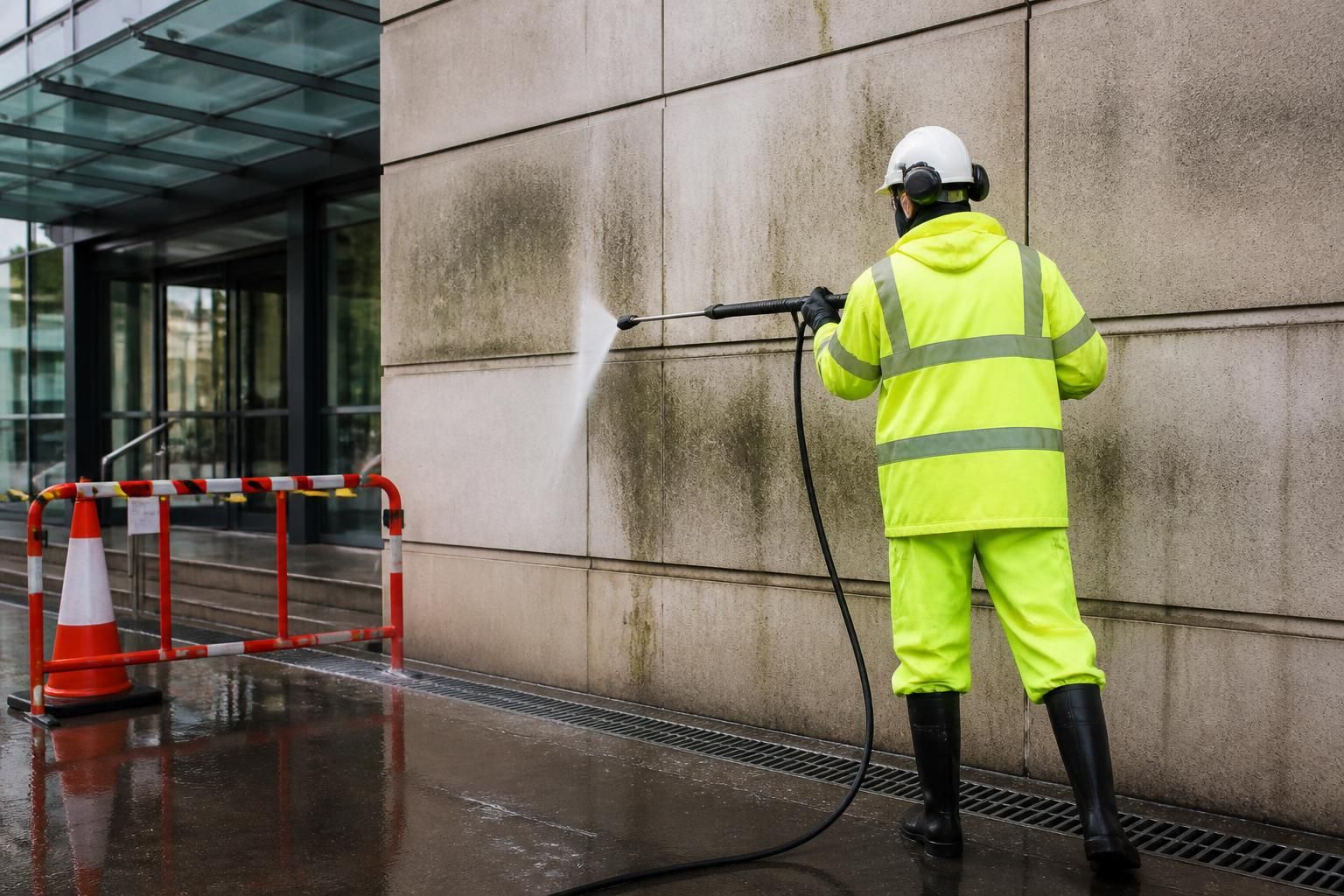
Wear task-appropriate PPE. The exact selection depends on the cleaning method and site assessment, but may include waterproof protective clothing, gloves suitable for the chemicals in use, safety footwear with effective slip resistance, eye protection or a full-face visor, hearing protection and head protection. Pressure-washing spray can contain loosened dirt, biological contaminants and chemical residues, so ordinary clothing and casual footwear are not adequate. PPE must be compatible with other items, correctly fitted, maintained and replaced when damaged or contaminated.
Respiratory protection may be needed where cleaning agents, dust, aerosols or biological contamination create an inhalation risk. This should follow the relevant COSHH assessment and must not be treated as a substitute for controlling the hazard at source. Dust-producing methods should be avoided or controlled wherever possible, with suitable ventilation and respiratory protection selected by a competent person.
Control cleaning chemicals under COSHH. Read the product label and safety data sheet before use, and assess storage, dilution, application, contact time, compatibility and disposal. Never mix cleaning products unless the manufacturer specifically permits it, as incompatible products can create toxic gases or dangerous reactions. Use measured dilution and suitable containers, label decanted products and keep chemicals secure from unauthorised access. Operators should know how to respond to skin or eye contact and have access to clean water and the required first-aid arrangements.
Protect adjacent glass, painted surfaces, metals, plants, sealants, expansion joints, drainage components and sensitive façades from splashes and vapour. Some acidic or alkaline products can etch, discolour or corrode nearby materials even when the primary surface is unaffected. Chemical residues should be removed or neutralised only where the product instructions require it, and contaminated water must be managed in accordance with the site’s drainage and environmental controls.
Prevent slips, trips and uncontrolled run-off. Cleaning creates wet surfaces, spray mist and hoses across access routes. Establish a clearly marked exclusion zone using barriers and warning signs, provide a safe alternative route and keep unauthorised people away from the work area. Remove standing water where practicable and do not allow pedestrians to walk through contaminated or slippery areas before they are safe.
Before releasing water, identify where it will flow. Prevent silt, oil, paint residue, detergents, biological contamination and chemical run-off from entering surface-water drains, watercourses or neighbouring property. Use drain covers, bunding, collection systems or temporary diversion measures where appropriate. Dispose of recovered sludge and contaminated water through an approved route rather than assuming it can be discharged to the drainage system.
Manage electrical and utility hazards. Water and electricity present a serious risk, particularly around external sockets, lighting, distribution boards, temporary supplies and damaged cables. Isolate or protect electrical equipment before washing, keep connections out of wet areas and use suitable equipment for the environment. Electrical supplies and residual-current protection should be checked by a competent person. Also identify gas services, telecoms equipment, fire alarm components, ventilation openings and other building services that could be affected by water or chemicals.
Plan work at height carefully. Façades, upper-level stonework and roofs may require towers, mobile elevating work platforms, scaffolds or other access systems. Select access equipment based on the height, reach, ground conditions, loading and duration of the task. It must be inspected, positioned on stable ground and used by trained operators. Secure tools and hoses, prevent falling objects and maintain suitable exclusion zones below. Do not use a pressure-washing lance from an unstable ladder or overreach from a platform. Where a fall-arrest system is required, it must be properly selected, anchored, inspected and supported by a rescue plan.
Wind and weather conditions also affect work at height and chemical application. Stop or adapt the work if wind carries spray towards people, roads, occupied buildings or electrical equipment, or if rain makes access surfaces unsafe. Heat, cold and poor visibility can affect operator concentration, grip and equipment performance.
Protect workers and the public from spray, noise and falling debris. Pressure and steam cleaning can create airborne droplets, noise and fragments of loose material. Keep people outside the work zone and consider nearby offices, residents, vehicles, road users and other contractors. Use screening where it can safely contain spray, but do not obstruct ventilation or create an unsafe pressure environment. Notify affected occupants in advance where noise, access restrictions or temporary water supplies will affect their work.
Loose render, masonry, paint and biological growth should be assessed before cleaning. If material may fall, establish a larger exclusion zone and remove unstable debris using a controlled method before washing. Hearing protection may be necessary for operators and other workers exposed to sustained equipment noise, with exposure managed through suitable working practices and breaks.
Use trained and competent operatives. Safe results depend on understanding pressure-washing, steam-cleaning, chemical handling, access equipment and the characteristics of the substrate. Operators should be briefed on the risk assessment and method statement, know the equipment limits and be able to recognise surface damage, unsafe run-off or changing site conditions. They should stop work and report unexpected cracking, movement, electrical faults, chemical reactions, blocked drainage or public access rather than trying to work around the problem.
Have emergency and completion checks in place. The site should have arrangements for first aid, eye or skin contamination, burns, chemical spills, electric shock, falls from height, equipment failure and uncontrolled flooding. Once cleaning is complete, inspect the surface and surrounding areas for damage, residue, standing water and exposed hazards. Remove barriers only when the area is safe, dry where necessary and fit for normal use. Record any defects or limitations identified during the work so they can be addressed through repairs or future maintenance.
For commercial and industrial premises, the safest approach is to combine these controls in a written cleaning plan and review them when the surface, access method, weather or site use changes. This protects people while also preventing avoidable damage to concrete, stone and sandstone.
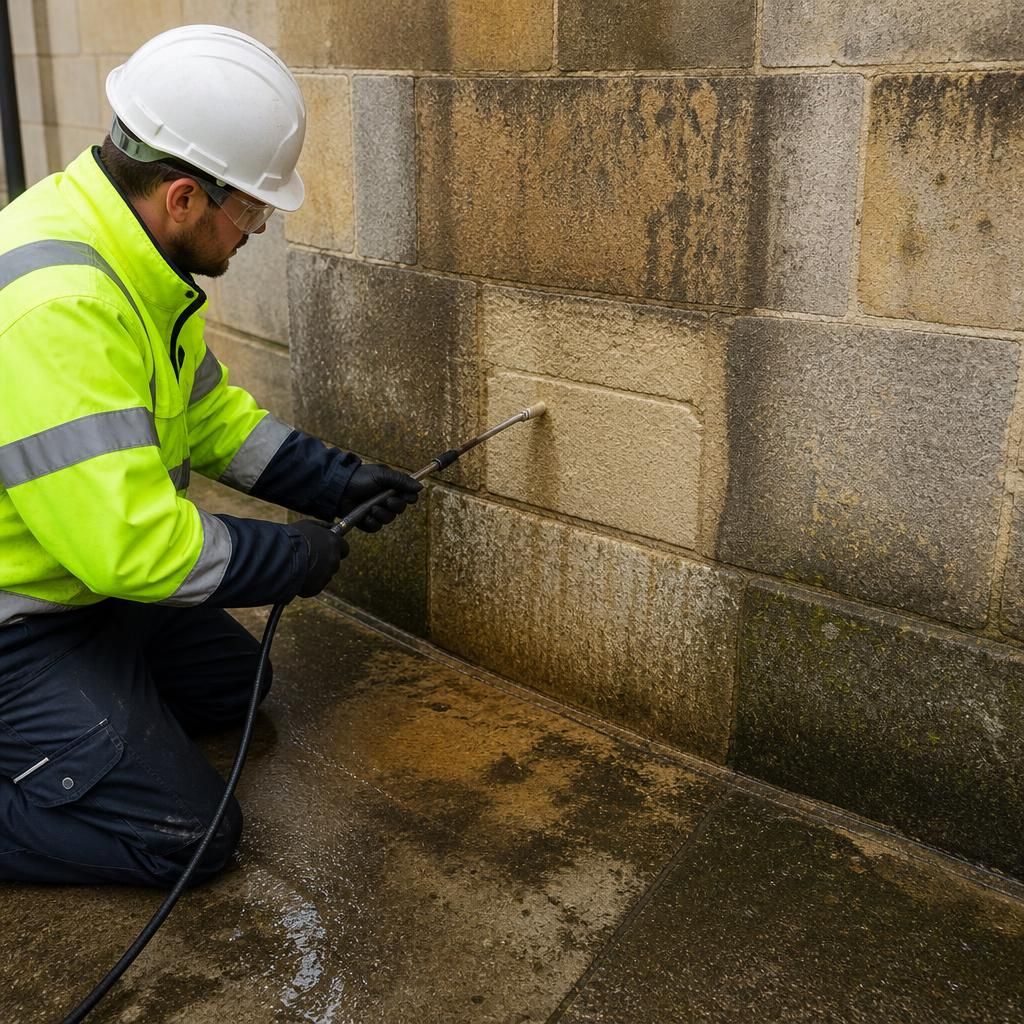
Test the surface before cleaning the full area. Concrete, stone and sandstone can vary significantly in porosity, hardness, condition and previous treatment. Apply the proposed pressure, temperature and cleaning solution to a discreet section first, using the lowest effective setting.
Allow the test area to dry before assessing the result. Look for erosion, etching, colour change, staining, salt movement, open joints or damage to repairs and coatings. If the outcome is unsuitable, stop and adjust the method rather than proceeding across the whole surface.