
What factors influence the choice of cleaning method for concrete, stone, and sandstone surfaces?
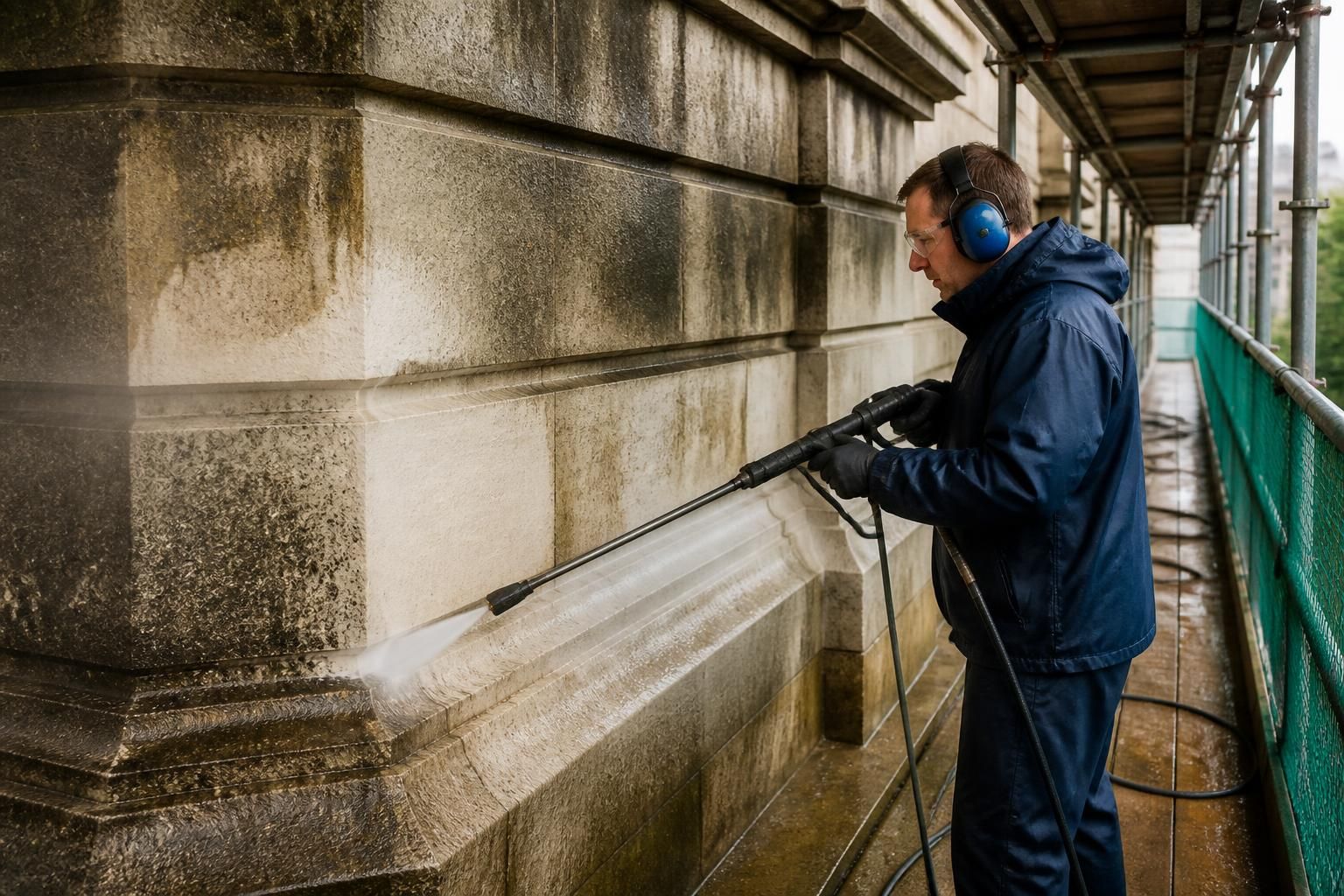
The choice of cleaning method for concrete, stone and sandstone depends on the surface’s porosity, age, condition and finish, as well as the type of staining, surrounding environment and available access. Pressure, steam, chemical treatment or a combination may be selected to remove contamination effectively while avoiding erosion, surface marking, water penetration or damage to historic materials.
The choice of cleaning method for concrete, stone and sandstone is determined by the material’s porosity, strength, age, finish and current condition, together with the type of contamination and the practical conditions on site. Pressure washing, steam cleaning, chemical treatment, manual cleaning or a combination of methods may be appropriate, but the safest option is the least aggressive method that can remove the contamination without eroding the surface, driving water into the substrate or affecting its appearance.
Surface type and porosity
Concrete is generally hard-wearing, but its exposed surface can contain pores, small voids and areas of weak laitance. Dense, well-finished concrete may tolerate controlled pressure cleaning, whereas aged, weathered or poorly compacted concrete may suffer from surface loss if excessive pressure is used.
Natural stone varies considerably. Granite and some dense limestones are less absorbent, while many sandstones are relatively porous and can absorb water and cleaning chemicals. Sandstone may also contain softer layers or friable grains that are loosened by aggressive pressure, abrasive cleaning or repeated treatment. The stone’s mineral composition, bedding direction and previous repairs therefore need to be considered before selecting equipment or products.
Type and severity of contamination
The deposit itself is a major influence on method selection. Surface dust, loose soil and general traffic film may be removed with low- to moderate-pressure water cleaning. Oil, grease, tyre marks and embedded traffic dirt may require a suitable detergent or degreasing treatment, followed by controlled rinsing. Organic growth such as algae, moss and lichen may need a biocidal or other specialist treatment, particularly where roots have entered joints or textured surfaces.
Rust staining, efflorescence, paint, cement residue, chewing gum and graffiti each require different approaches. An acidic product, for example, may affect calcareous stone, cement joints or metal fittings, while an unsuitable solvent can spread a stain or alter the colour of the surface. Cleaning is therefore based on identifying the deposit rather than simply increasing water pressure.
Age, condition and existing defects
Older surfaces usually require more caution because weathering can reduce cohesion between grains and expose cracks, open joints or previous repairs. Concrete may have spalled areas, exposed reinforcement, delamination or failed sealants. Stone façades can have cracked pointing, open bedding joints, displaced fragments or patches of incompatible repair material.
Water and pressure can enter these defects, causing further deterioration or dislodging weak material. Before cleaning, the surface should be inspected for cracking, loose sections, hollow-sounding areas, unstable mortar and water ingress routes. Cleaning may need to be limited around vulnerable details, with repairs or protection completed before the main work begins.
Surface finish and appearance
Polished, honed, textured, flamed, tumbled and bush-hammered finishes respond differently to cleaning. Textured concrete and rough stone can retain contamination in their profile, while polished surfaces may show scratches, dulling or uneven colour if abrasive methods are used. A method that removes dirt from one area may leave a visible difference if adjacent sections have weathered differently.
Pressure, nozzle selection, water temperature, dwell time and the distance between the equipment and surface all affect the result. The objective is not simply to make the surface look cleaner immediately, but to avoid creating etching, striping, raised grain, exposed aggregate or patchy colour.
Historical or architecturally significant material
Historic stone and concrete require particular care because their original finish, weathering and repair materials may be part of the building’s character. Aggressive cleaning can remove a protective weathered layer, soften carved details or expose fresh material to future weathering. Sandstone façades and older masonry may also be more sensitive to saturation and salt movement.
For heritage or sensitive structures, the proposed method should be agreed after close inspection and a discreet test area. Low-pressure techniques, controlled steam or carefully selected non-abrasive treatments are often considered before stronger processes. Any conservation requirements, listed-building controls or guidance from the responsible building professional should be taken into account.
Water sensitivity and surrounding materials
The amount of water used depends on the substrate and the building’s construction. Highly absorbent stone, open joints and deteriorated concrete can retain water, which may contribute to staining, frost-related damage or damp problems if drainage and drying are inadequate. Internal finishes, insulation, electrical equipment and occupied areas may also be vulnerable to water penetration.
Nearby glass, painted surfaces, powder-coated metal, timber, sealants, plants and drainage channels must be protected from pressure, heat and cleaning chemicals. Run-off needs to be controlled so that contaminated water does not enter surface-water drains or affect adjoining property.
Access, scale and working conditions
Access influences both the equipment and the method that can be used safely. Open car parks and ground-level slabs may allow efficient pressure cleaning and recovery of run-off. High façades, roofs, atriums and restricted courtyards may require water-fed equipment, telescopic systems, scaffold, mobile elevating work platforms or rope-access arrangements, subject to a suitable risk assessment.
Limited drainage, nearby pedestrians, vehicle movements, noise restrictions, electrical services and weather conditions can also affect the programme. Steam cleaning may be useful where reduced water volume is important, while controlled pressure cleaning may be more efficient for broad areas of robust concrete. The selected process must remain safe for operatives, occupants and the surrounding site.
Cleaning agents and environmental requirements
Chemical treatment is selected according to the contaminant and the surface’s chemical resistance. The product’s concentration, contact time and rinsing requirements are as important as the product itself. Over-application can cause discolouration, salt deposits or damage to cement-based materials, and mixing products can create hazardous reactions.
Where chemicals are needed, the assessment should cover biodegradability, storage, personal protective equipment, run-off collection and disposal. In some locations, a mechanical or steam-based method may reduce the amount of chemical treatment required. Local drainage arrangements and site-specific environmental controls must be followed.
Testing and method selection
A small, representative test area is an essential part of selecting a cleaning method. The test should assess not only whether the contamination is removed, but also whether the surface changes colour, texture, absorbency or gloss. It should include vulnerable details and, where possible, be allowed to dry before the result is judged.
The final method may combine techniques. For example, loose debris can be removed mechanically, a compatible cleaning agent can be applied to soften ingrained contamination, and the area can then be rinsed using controlled pressure. On delicate sandstone, a lower-impact process may be used on the main surface while stubborn isolated marks are treated separately. Nozzle type, pressure, temperature, chemical strength and working distance should be recorded so that the approach remains consistent across the project.
In practice, the correct decision balances cleaning performance with material preservation, safety, access, run-off control and future maintenance. A professional assessment should identify the substrate and contamination, inspect defects and adjacent materials, complete a test clean, and specify the method and controls before full-scale work begins. This approach helps achieve a consistent finish while reducing the risk of erosion, staining, water penetration and avoidable damage to concrete, stone and sandstone surfaces.
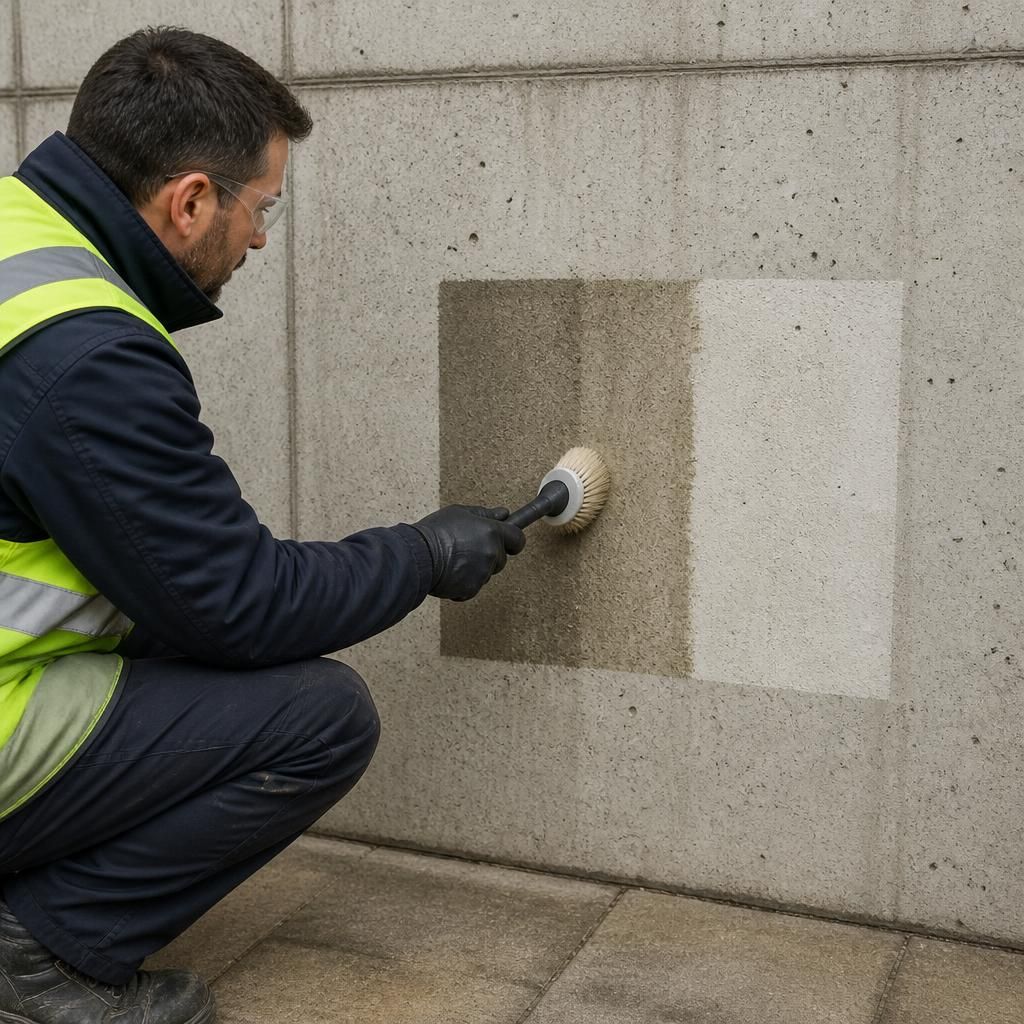
A small, representative test area is the most reliable way to confirm which cleaning method is suitable for concrete, stone or sandstone. It shows how the surface responds to pressure, heat, water and any proposed cleaning agent before the process is applied across the full area.
The test should include typical soiling and vulnerable details such as joints, edges, repairs or textured sections. Once dry, the area should be checked for changes in colour, texture, surface grain, absorbency and staining. This is particularly important for porous sandstone and weathered concrete, where damage may not be obvious while the surface is wet.
Test results can then be used to set the working pressure, nozzle type, temperature, chemical strength, contact time and rinsing approach. If one method is unsuitable, a lower-impact alternative or a combination of treatments can be selected before the main cleaning begins.
Request a professional surface cleaning assessment
Arrange a professional surface cleaning assessment to identify the safest and most effective method for your concrete, stone or sandstone surfaces. We can inspect the substrate, contamination, access and drainage requirements before recommending a suitable treatment.