

What are the environmental considerations when choosing cleaning agents for concrete and stone surfaces?
When choosing cleaning agents for concrete and stone surfaces, consider their biodegradability, pH, toxicity, runoff risk and compatibility with the particular material. Prefer the least aggressive effective solution, use controlled application and collection methods, and ensure wastewater is handled responsibly to protect surrounding soil, drainage systems, vegetation and waterways.
Environmental considerations when choosing cleaning agents for concrete and stone surfaces include biodegradability, toxicity, pH, runoff risk, water use and compatibility with the material being cleaned. The most responsible approach is to select the least aggressive product that will remove the contaminant, apply it in a controlled way, and prevent dirty solution from entering soil, vegetation, surface-water drains or watercourses.
Biodegradability is important, but it is not the only measure of environmental safety. A biodegradable detergent may still cause short-term harm if it is used at a high concentration or discharged directly into a watercourse. Some products break down into substances that continue to affect aquatic life, while others may contain surfactants, solvents, chelating agents or biocides that require careful control. Product information and safety data sheets should therefore be checked for environmental hazards, recommended dilution, disposal requirements and restrictions on discharge.
Where a detergent is necessary, a readily biodegradable, low-toxicity formulation with limited aquatic impact is generally preferable. Products containing unnecessary phosphates, aggressive solvents, persistent compounds or high levels of volatile organic compounds should be avoided where a suitable alternative is available. This does not mean that every product described as “eco-friendly” is automatically appropriate. The full formulation, intended use and disposal route matter more than a marketing description.
pH must be matched to both the deposit and the surface. Strong acids can dissolve calcareous stone, attack cement components and increase the risk of staining or surface loss. Strong alkaline products can damage sensitive finishes, affect some sealers and create highly alkaline wastewater. Neutral or near-neutral detergents are often the safest starting point for general dirt, but they may not remove heavy oil, biological growth, cement residue or atmospheric staining on their own. A specialist may need to use a more targeted product, with additional controls to limit exposure and runoff.
The stone type is particularly important. Sandstone is porous and can absorb cleaning solutions, allowing residues to remain below the surface or migrate into the masonry. Limestone and other calcareous stones are vulnerable to acidic products, even where the acid appears to remove staining quickly. Concrete can tolerate some alkaline cleaning products better than sensitive natural stone, but its pores, joints, surface treatments and aggregate can still be affected. Painted, sealed, polished or historically significant surfaces may require an even more conservative approach.
Biocides require specific care. Algae, moss, lichen and other biological growth may be treated with a biocidal product where low-pressure cleaning or steam alone will not provide an adequate result. However, biocides can harm aquatic organisms and vegetation if they are allowed to drift or run into drainage systems. They should be used only where justified, applied at the correct dilution and kept away from planting, ponds, open water and surface-water drainage. Residues and dead growth should be managed so that they do not simply wash into the surrounding environment.
Environmental risk is also influenced by how the product is applied. Applying a concentrated chemical across a large area and allowing it to spread uncontrolled creates a greater risk than using a measured, targeted application with appropriate dwell time and recovery. Low-pressure application, steam cleaning, brushing and localised treatment can reduce overspray and may allow less chemical to be used. A test patch helps confirm whether the chosen agent is effective and whether it causes colour change, etching, whitening or other damage before the full area is treated.
Wastewater management is a central part of environmentally responsible cleaning. Water containing detergent, oil, silt, paint, biological residues, heavy metals or other contaminants should not be allowed to enter surface-water drains or nearby watercourses. Depending on the site and the contaminants present, wastewater may need to be contained, vacuumed, filtered, treated or removed for appropriate disposal. Discharge to the foul drainage system may require permission or trade effluent consent from the relevant water company. Site-specific requirements should be confirmed before work begins rather than relying on assumptions about where a drain leads.
Good site controls can include drain covers, bunding, temporary barriers, wet vacuums, recovery tanks and filtration equipment. Sludge and solids should be collected rather than pushed into drainage channels. Any recovered water should be assessed before disposal, particularly where the cleaning has involved oils, graffiti coatings, metals, strong acids, strong alkalis or biocides. The correct procedure depends on the substance and the site drainage arrangement.
Water consumption should be considered alongside chemical selection. A product that reduces scrubbing or dwell time may lower total water use, but only if its environmental risks are controlled. Conversely, using large volumes of water to avoid a suitable mild detergent can increase runoff and recovery requirements. Pressure washing, steam cleaning and manual methods each produce different amounts of wastewater and have different effects on the surface. The method should be selected as part of the overall environmental assessment, not separately from the choice of cleaning agent.
Other practical considerations include packaging, storage and transport. Concentrated products can reduce packaging and transport demands compared with ready-to-use solutions, provided they are diluted accurately and stored securely. Containers should be kept upright, labelled and protected from damage, with spill controls available. Unused chemicals and empty containers should be handled in accordance with the product instructions and applicable waste requirements; they should not be poured onto the ground or into drains.
Before cleaning, the responsible process is to identify the surface and contaminant, inspect nearby drains and sensitive areas, review the product information, carry out a small test area and establish how wastewater will be controlled. During the work, use the minimum effective concentration, avoid unnecessary overspray, protect vegetation and monitor runoff. Afterward, collect residues, inspect the surface and confirm that no contaminated water has escaped beyond the controlled work area.
For commercial and industrial premises, the cleaning plan should also record the products used, dilution instructions, control measures and disposal arrangements. This provides a clear basis for site management and helps ensure that contractors follow the same environmental controls on future maintenance visits. Where the surface is historic, highly porous, contaminated or close to a sensitive water environment, a specialist assessment should be completed before any chemical treatment is approved.
In practice, the best environmental choice is not always the product labelled as the mildest or the one that produces the fastest visual result. It is the option that removes the deposit effectively while causing the least harm to the substrate, people, vegetation, drainage infrastructure and aquatic environment. Controlled application, responsible wastewater handling and careful selection of pressure washing, steam cleaning or chemical treatment are equally important.
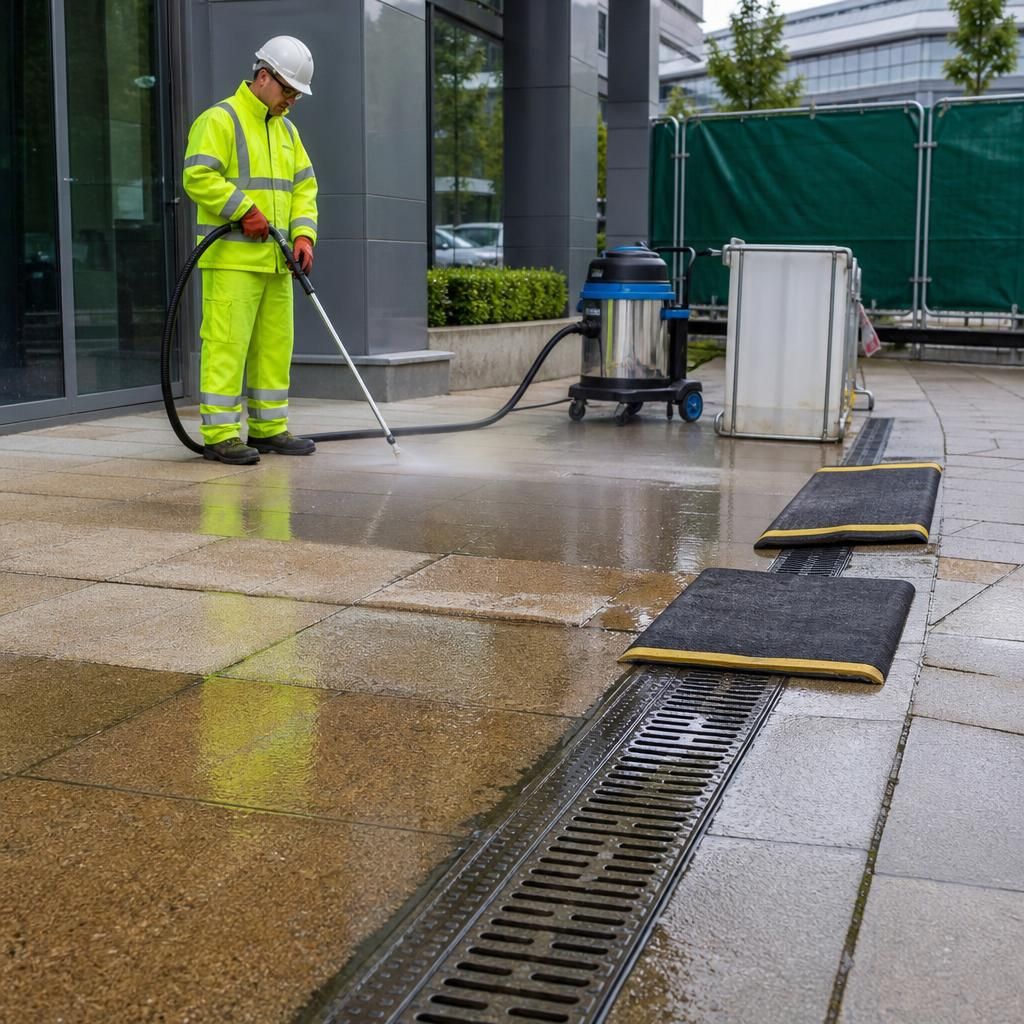
Responsible wastewater control is a key environmental consideration when cleaning concrete and stone surfaces. Water containing detergents, oil, silt, biocides, paint residue or other contaminants should not be allowed to enter surface-water drains, soil or nearby watercourses.
Before work begins, identify the drainage layout and protect vulnerable outlets with suitable covers or barriers. During cleaning, use controlled application and recover runoff with wet vacuums, temporary containment or filtration equipment where required. Collected water and solids should be assessed and disposed of through an appropriate route, particularly after chemical, oil or graffiti removal. This prevents a product that may be suitable for the surface from creating an environmental risk during disposal.
Discuss environmentally responsible concrete and stone cleaning
Contact Encanto Exterior Cleaning to discuss the surface, deposits, drainage arrangements and most suitable low-impact cleaning approach for your site. We can help plan controlled application and responsible wastewater management before work begins.