
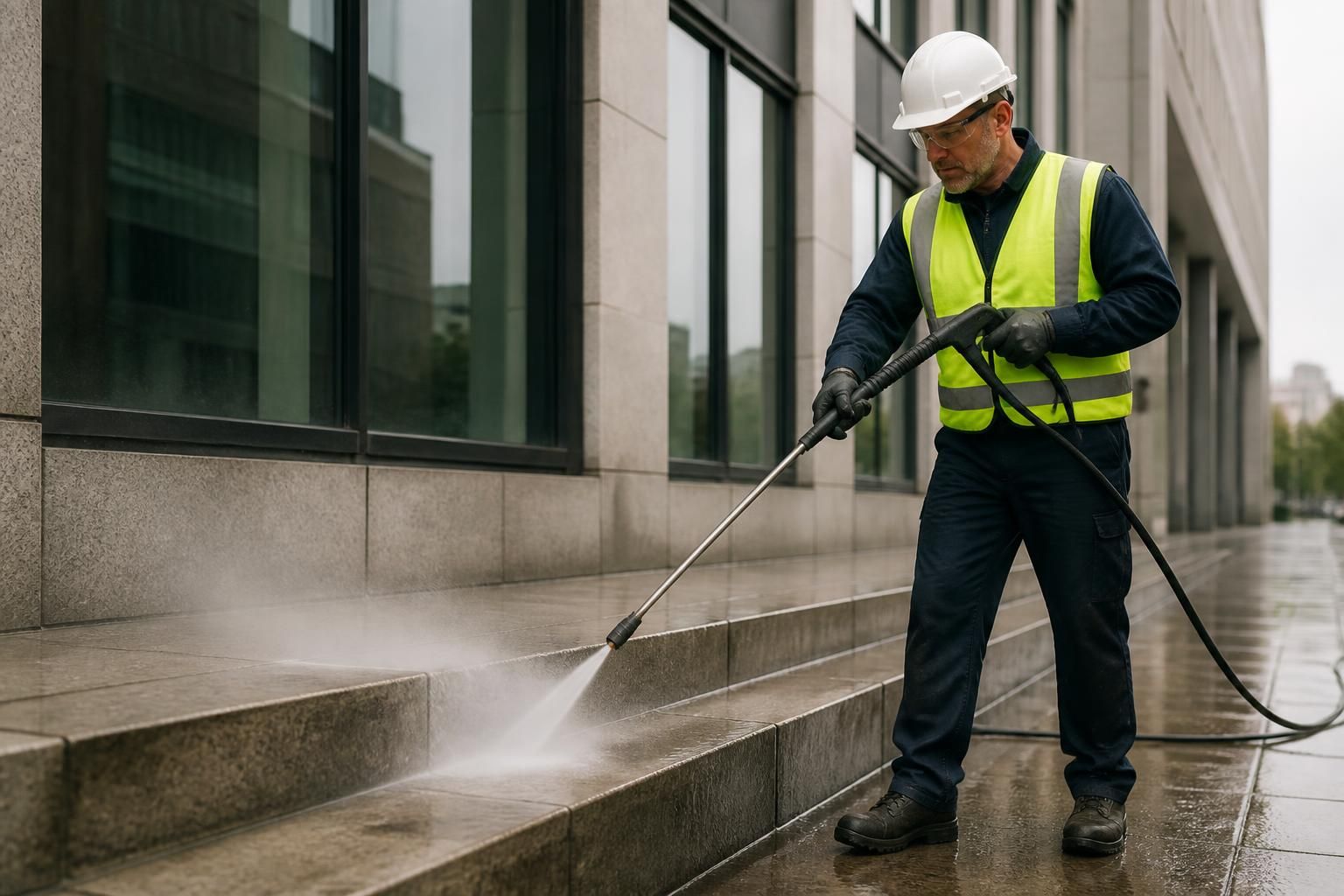
What are the cost implications and potential savings associated with professional concrete and stone cleaning services?
Professional concrete and stone cleaning costs depend on the surface area, material, contamination, access requirements and cleaning method, with specialist treatment often costing more initially than basic pressure washing. Potential savings come from removing damaging contaminants, reducing repair and replacement needs, extending surface life and supporting planned maintenance rather than expensive remedial work.
Professional concrete and stone cleaning costs are determined by the size and condition of the surface, the type of material, the contamination present, site access, environmental controls and the cleaning method required. Although specialist cleaning can cost more initially than basic pressure washing or in-house labour, it can reduce repair, replacement and disruption costs by removing contaminants before they cause lasting damage.
The main cost factors
- Surface area and layout: Larger areas can often be cleaned more efficiently, but complex layouts, multiple elevations, steps, loading bays and detailed stonework increase preparation and working time.
- Material and condition: Concrete is generally robust, whereas sandstone, limestone and other porous or weathered materials may need lower pressure, steam cleaning, specialist detergents or gradual treatment. Fragile surfaces require more controlled work and closer inspection.
- Type and severity of contamination: Routine dirt and organic growth are usually more straightforward to remove than oil, ingrained traffic film, cement residue, rust staining, paint or graffiti. Several contaminants may require different treatments during the same project.
- Access requirements: Work at height, restricted areas, uneven ground and difficult-to-reach façades may require access equipment, traffic management, additional operatives or carefully sequenced working. These requirements affect both labour and mobilisation costs.
- Cleaning method: Pressure washing can be efficient on suitable, durable concrete and stone. Steam cleaning or lower-impact methods may be more appropriate where there is a risk of surface erosion, staining spread or damage to joints. The most economical method is not always the one with the lowest hourly rate; it is the method that achieves the required result without creating remedial work.
- Water, waste and environmental controls: Commercial projects may need water management, slurry collection, filtration, wastewater disposal and suitable cleaning agents. These controls add to the quotation but help protect drainage systems, surrounding land and compliance obligations.
Why the initial cost can vary
A professional quotation should reflect the complete scope rather than only the cleaning time. Site assessment, testing, protection of adjacent materials, mobilisation, equipment, access, rinsing, waste handling and final inspection may all form part of the cost. A low-cost quote that excludes these requirements may not represent the final expenditure if additional work becomes necessary.
Test cleaning is particularly important for sandstone and other porous or historic surfaces. It confirms whether staining can be removed safely, identifies any colour change or surface weakness and helps establish the appropriate pressure, temperature and cleaning solution. Allowing for this assessment at the planning stage can prevent the greater cost of correcting damage caused by an unsuitable method.
Potential savings from professional cleaning
The principal financial benefit is the protection of the existing surface. Dirt, algae, moss, oil, de-icing residues and atmospheric pollutants can hold moisture against concrete and stone. Over time, this may contribute to staining, biological growth, joint deterioration, surface scaling, slip risks or corrosion around embedded metalwork. Removing these contaminants supports earlier identification of defects and can reduce the likelihood of extensive remedial work.
- Lower repair and replacement exposure: Maintaining an existing slab, façade, paving area or retaining feature is usually less disruptive than replacing damaged sections. Cleaning does not repair structural defects, but it can help prevent contamination from worsening surface deterioration.
- Longer service life: Regular cleaning removes substances that accelerate weathering and makes it easier to carry out sealing, joint repairs and other maintenance at the right time.
- Reduced disruption: Planned cleaning can be scheduled around tenants, staff, vehicles and customers. Emergency remedial work may require closures, temporary access arrangements or changes to normal operations.
- Improved safety: Removing moss, algae, oil and other slippery deposits can reduce avoidable slip hazards. This may also support site management and help demonstrate that foreseeable maintenance issues are being addressed.
- More efficient future maintenance: A clean surface is easier to inspect, treat and maintain. Recurring contamination can also be identified, allowing drainage, landscaping, leaks or traffic patterns to be addressed rather than repeatedly paying for the same symptom.
- Protection of presentation and asset value: Clean entrances, façades, paving and external service areas help maintain the condition and professional appearance of commercial premises, which can be important for property management, inspections and handovers.
Planned maintenance versus one-off cleaning
One-off cleaning may be appropriate before a property handover, refurbishment, inspection or public event. However, a planned maintenance schedule can offer better cost control where surfaces are exposed to heavy footfall, vehicle traffic, pollution, shade or persistent moisture. More frequent, lighter treatments may avoid the need for aggressive restoration later, while the correct interval depends on the material, exposure and type of contamination.
Maintenance planning should distinguish between cleaning and repairs. Cracked concrete, failed joints, loose masonry, damaged pointing, subsidence, leaking drainage and deeply etched staining need separate assessment. Cleaning a defective surface without resolving the underlying cause may provide only a temporary improvement and can lead to repeated expenditure.
How to assess value when comparing quotations
- Confirm that the quotation identifies the surfaces, approximate areas and types of contamination included.
- Check which cleaning method is proposed and why it is suitable for the concrete, stone or sandstone involved.
- Ask whether test areas, protection, access equipment, water management and waste disposal are included.
- Clarify any exclusions, such as repairs, sealing, stain removal that requires separate treatment or work made necessary by concealed defects.
- Consider the expected finish, surface risk and future maintenance requirement rather than comparing only the headline price.
- Plan the work to minimise disruption and make sure the site is ready, including access, parking, vehicle movements and tenant or contractor coordination.
For an accurate assessment, provide details of the surface material, contamination, access restrictions, operating hours and any previous treatments. A site survey and controlled test area allow the scope to be priced more reliably and ensure that potential savings are based on protecting the surface, not simply reducing the initial cleaning cost.
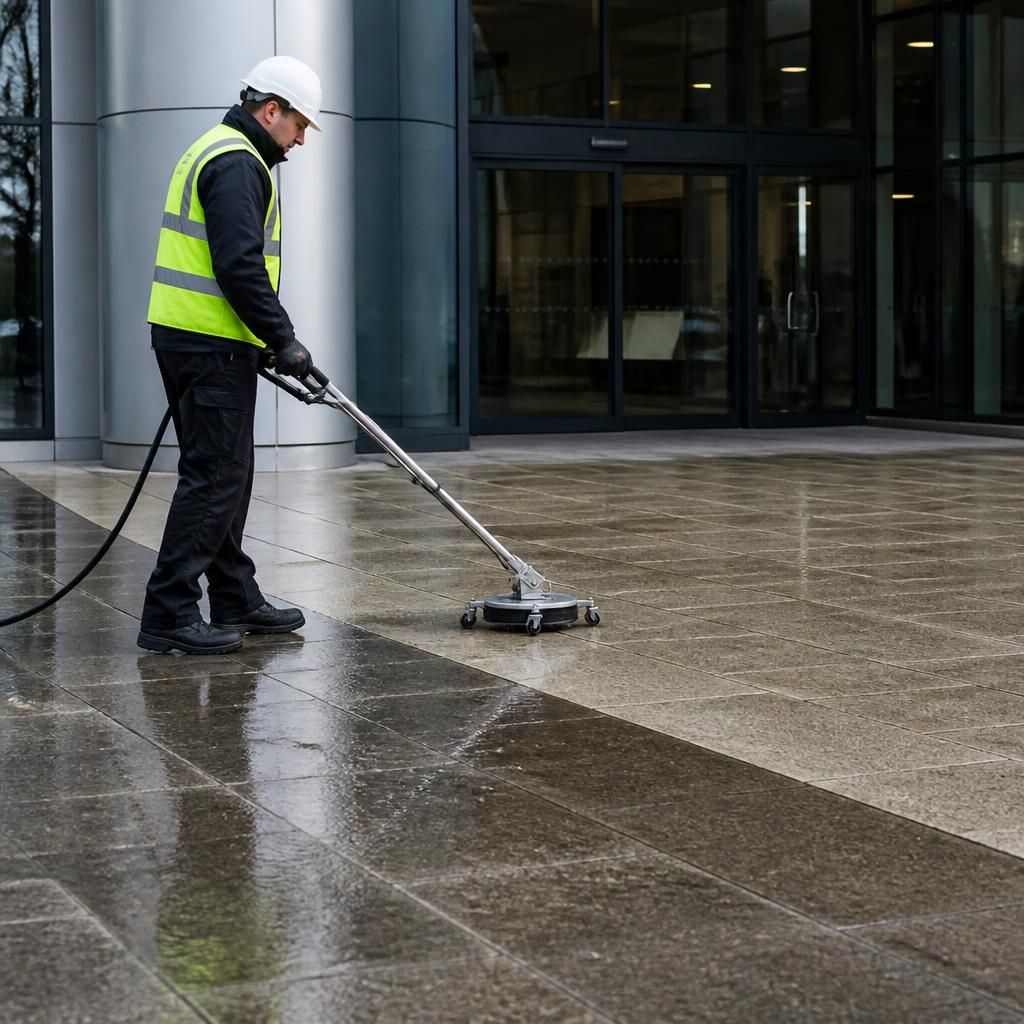
Professional concrete and stone cleaning can reduce total maintenance costs by removing contaminants before they contribute to surface deterioration, staining, biological growth or slip hazards. The value lies not only in the immediate appearance but in protecting the existing surface and making defects easier to identify.
A planned cleaning programme may also be more economical than waiting for heavy contamination or weathering to require intensive restoration. It allows work to be scheduled around site operations, while giving our team the opportunity to identify drainage problems, failed joints, damaged pointing or recurring sources of staining before they lead to more disruptive repairs. The appropriate frequency depends on the material, exposure and use of the area, so maintenance should be based on site condition rather than a fixed timetable.