
What are the benefits of using eco-friendly cleaning solutions for concrete, stone, and sandstone surfaces?
Eco-friendly cleaning solutions can remove dirt, algae, oil and atmospheric staining from concrete, stone and sandstone while reducing the use of harsh chemicals and limiting harm to surrounding soil, plants and drainage systems. When selected and applied correctly, they also help preserve delicate surfaces and support safer, more responsible exterior cleaning.
Eco-friendly cleaning solutions are products and application methods designed to remove contamination from concrete, stone and sandstone while reducing avoidable harm to people, vegetation, soil, drainage systems and surrounding watercourses. Their main benefits are lower environmental impact, improved protection for porous or weathered surfaces, safer working conditions and more responsible management of cleaning runoff. They are not automatically suitable for every stain, so the product must still be matched to the material, contamination and cleaning method.
They help preserve the surface. Concrete, natural stone and sandstone vary considerably in porosity, hardness, mineral composition and condition. Sandstone is often particularly absorbent and may contain softer layers that can be damaged by aggressive chemicals, excessive pressure or prolonged treatment. A carefully selected, biodegradable or lower-impact cleaning solution can loosen organic growth, atmospheric soiling and surface staining without relying on unnecessarily harsh formulations. This reduces the risk of etching, discolouration, friability or premature surface wear when the treatment is applied correctly.
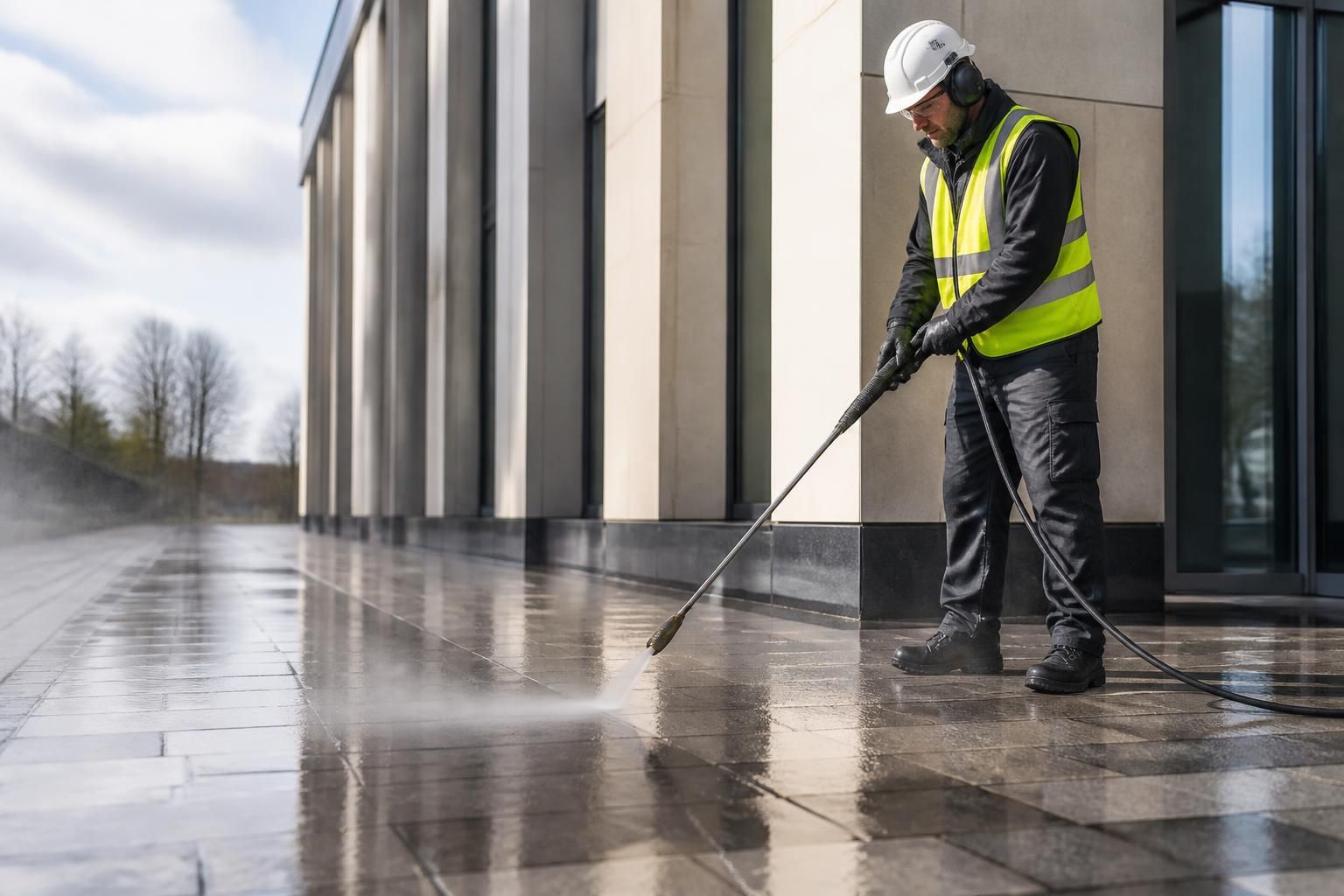
Eco-friendly does not mean that a solution is simply mild or ineffective. Professional cleaning still requires sufficient dwell time, agitation, steam or controlled pressure to remove contamination. The appropriate approach may involve a low-impact detergent for general soiling, a targeted treatment for algae and lichen, or a specialist product for oil, rust or construction residue. Using the least aggressive effective treatment is generally more appropriate than applying a strong chemical across the entire surface.
They reduce the risk to surrounding vegetation and ground. Runoff from façade, paving, car park and hard-standing cleaning can reach planted areas, soil and surface-water drainage. Conventional treatments may contain substances that harm plants, disturb soil organisms or affect water quality if they are allowed to enter the environment uncontrolled. A suitable eco-conscious product, combined with containment and responsible recovery of wastewater, helps limit these risks. The cleaning solution should still be prevented from entering watercourses or unsuitable drains; biodegradable does not mean harmless in every concentration.
They support safer working conditions. Lower-hazard products can reduce exposure to strong fumes, corrosive splashes and residues for operatives, customers and members of the public. This is especially relevant when cleaning occupied commercial premises, schools, residential developments, public areas or enclosed service yards. Appropriate personal protective equipment, ventilation, signage and access controls remain essential, because even environmentally preferable products can irritate skin or eyes or become hazardous when misused.
They can assist with responsible wastewater management. Before work begins, the likely path of runoff should be assessed. This includes identifying storm drains, foul-water connections, landscaped areas, watercourses and low points where contaminated water could collect. Depending on the site and the nature of the soiling, measures may include drain covers, bunding, wet vacuum recovery, filtration, controlled discharge and disposal through an approved route. These controls are as important as the cleaning agent itself and should be planned in accordance with site requirements and applicable environmental obligations.
They are useful for heritage and sensitive surfaces. Historic concrete, stone and sandstone may have weathered finishes, previous repairs, lime-based pointing or areas of biological decay. Harsh treatments can remove more than the unwanted dirt, including delicate surface detail or protective patina. An eco-friendly, conservation-led approach normally starts with a survey and a small inconspicuous test area. The result is assessed for cleaning effectiveness, colour change, surface loss and residue before the method is extended across the structure. Where a building has heritage significance, the cleaning specification may also need to follow conservation guidance and any site-specific approvals.
They can reduce unnecessary chemical use during routine maintenance. Regular removal of algae, moss, traffic film and atmospheric deposits often prevents contamination from becoming deeply embedded. This may allow subsequent maintenance cleans to use less intensive treatment, shorter dwell times or lower mechanical force. Routine cleaning also makes it easier to identify damaged joints, cracking, spalling, failed sealants or drainage defects before they contribute to more serious deterioration. Eco-friendly cleaning therefore works best as part of a planned maintenance programme rather than as a replacement for repairs or surface management.
Product selection should consider the following:
- Surface type and condition: identify whether the material is dense concrete, exposed aggregate, limestone, granite, sandstone or a previously sealed surface, and check for cracks, weak joints, friable areas and repairs.
- Contamination: distinguish between algae, lichen, general dirt, oil, grease, rust, paint, efflorescence and construction residues. Each may require a different treatment, and an unsuitable product can set or spread the stain.
- Product chemistry: review the safety data sheet, dilution guidance, pH, biodegradability claims, aquatic hazard information and any restrictions on use near vegetation or drainage.
- Application method: determine whether the solution will be rinsed, removed using steam, recovered by vacuum or left for a controlled biological treatment. The method affects both surface risk and wastewater management.
- Site controls: plan protection for planting, vehicles, pedestrians, neighbouring properties, drainage and watercourses before chemicals or wash water are introduced.
- Testing: carry out a controlled test patch to confirm that the selected treatment removes the contamination without altering the colour, texture or finish.
There are practical limits to eco-friendly cleaning. A product described as natural, biodegradable or non-toxic may still be unsuitable for a particular stone, harmful at excessive concentration or ineffective against oil, paint or deeply established growth. Similarly, replacing a strong chemical with very high pressure can create a different form of damage, including loss of jointing, surface scarring and increased water penetration. The lowest-impact solution is the one that achieves the required result with appropriate control, not necessarily the product with the most attractive environmental description.
For commercial and industrial sites, the most responsible specification combines a suitable lower-impact cleaning agent with controlled pressure or steam, protection of adjacent areas, wastewater planning and accurate application. A competent contractor should inspect the surface, identify the soiling, test the proposed method and explain any precautions before full-scale cleaning begins. This approach helps maintain the appearance and serviceability of concrete, stone and sandstone while reducing avoidable effects on the wider environment.
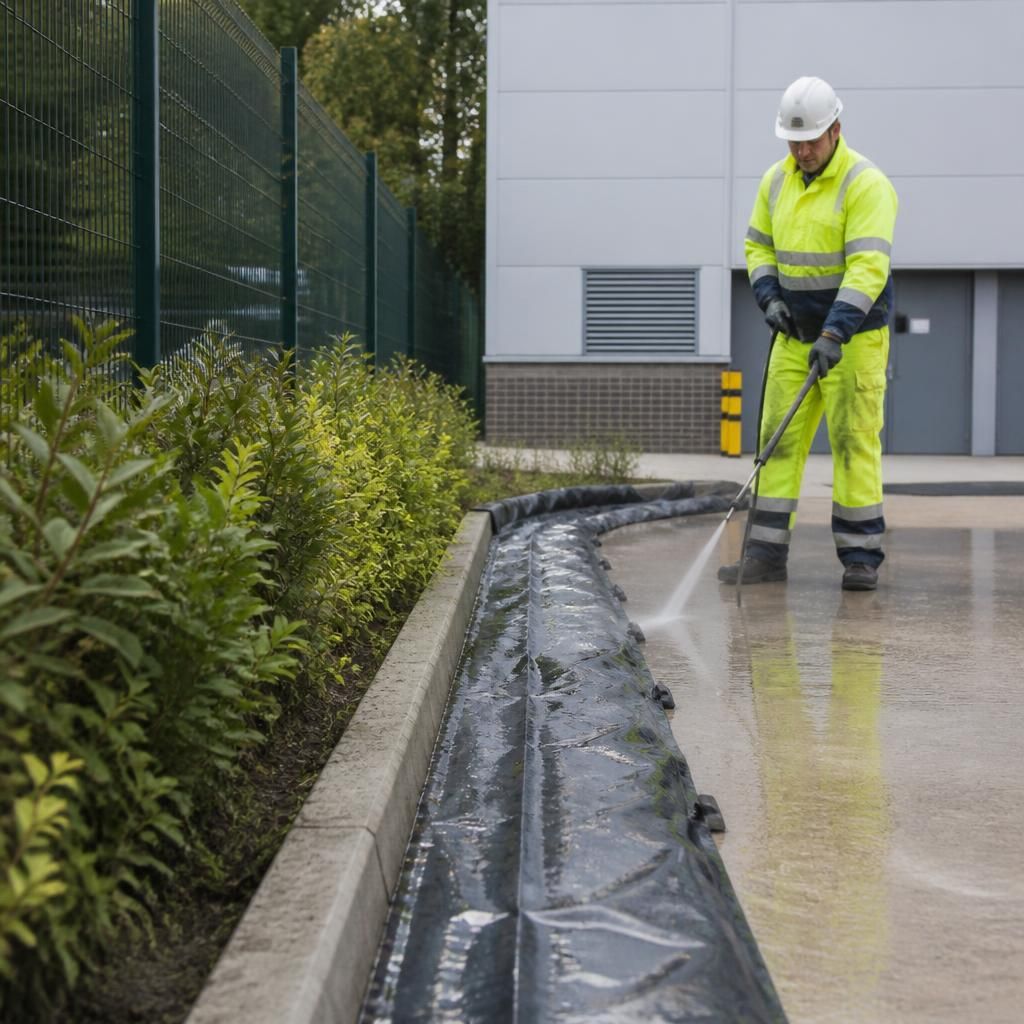
One important benefit of eco-friendly cleaning solutions is that they can reduce the potential impact of runoff on planting, soil and drainage systems. When algae, traffic film or atmospheric dirt is removed from concrete, stone or sandstone, the wash water may carry cleaning residues and loosened contamination away from the surface. A lower-impact product, used at the correct dilution, can help limit avoidable chemical loading while still loosening the soiling effectively.
This benefit depends on proper site controls. Drain covers, bunding, wet-vacuum recovery or filtration may be needed to prevent contaminated water entering unsuitable drains or nearby watercourses. Biodegradable does not mean harmless in every concentration, so the product must be assessed alongside the surface, contamination and disposal route. Responsible cleaning combines an appropriate eco-friendly solution with controlled application and managed wastewater.