
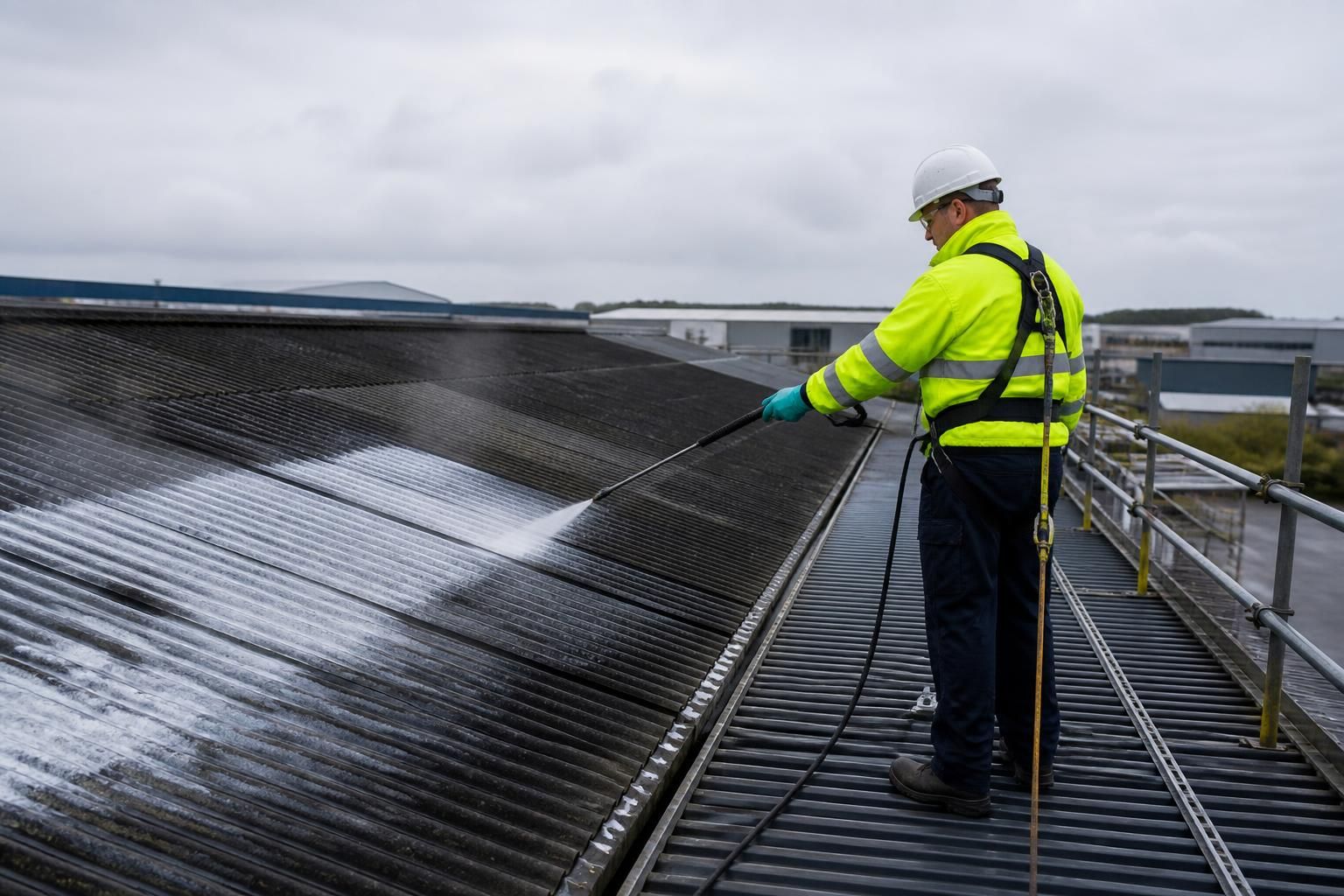
What safety measures should be considered when applying biocide treatments on roofs?
Applying biocide treatments to roofs requires a documented risk assessment, suitable personal protective equipment (PPE), secure roof access and controls to prevent contact with people, property and drainage systems. Check the product label and safety data sheet, assess weather and roof conditions, control run-off, and ensure the work is carried out by trained personnel using the correct application method.
Safe application of a biocide roof treatment depends on controlling chemical exposure, falls from height, roof damage, overspray and contaminated run-off. Before work starts, the contractor should complete a site-specific risk assessment and COSHH assessment, follow the product label and safety data sheet, and use trained personnel with suitable access equipment, PPE and spill controls.
Check the product and plan the work
- Confirm that the biocide is suitable for the roof covering, surrounding materials and intended use. The product label must specify the correct dilution, application method, contact requirements and disposal instructions.
- Review the current safety data sheet for hazards, first-aid measures, required PPE, storage requirements and action to take after a spill or accidental exposure.
- Identify nearby people, vehicles, air intakes, windows, doors, roof plant, watercourses, drains, ponds and sensitive landscaping. Include these in the method statement and control measures.
- Check whether the site requires permits, notification to occupants, isolation of ventilation systems or coordination with other contractors.
- Make sure all operatives understand the method statement, emergency arrangements and product-specific precautions. Chemical handling should not be delegated to untrained personnel.
Control the risk of falling
Roof treatment is work at height, even when the product can be applied from a low-level position. Access should be planned using the safest practical method, such as a suitable scaffold, access platform or other properly inspected equipment. A ladder should only be used where the risk assessment confirms that it is appropriate for the task and duration.
- Inspect the roof before access, looking for fragile sheets, damaged tiles, skylights, rooflights, unprotected edges, steep pitches and areas weakened by moss or water damage.
- Use designated access routes and roof walkways where available. Do not assume that a roof will support a person simply because it appears intact.
- Provide edge protection or another effective fall-prevention system wherever there is a fall risk. Where personal fall restraint or arrest equipment is required, it must be compatible with the anchor system, correctly fitted and supported by a rescue plan.
- Do not rely on a harness without suitable anchorage, training and a method for recovering a suspended worker.
- Keep hoses, cables, containers and tools organised so they cannot create trip hazards or pull an operative towards an edge.
Wear appropriate PPE
PPE should be selected from the product safety data sheet and the task risk assessment rather than treated as a substitute for safer work methods. Depending on the product and application method, this may include chemical-resistant gloves, suitable protective clothing or coveralls, eye or face protection and footwear with effective slip resistance. Respiratory protection may be necessary where the assessment identifies an inhalation risk, particularly during spraying or in poorly ventilated areas; it must be suitable, fit-tested where required and properly maintained.
Inspect PPE before use and replace items that are damaged, contaminated or no longer providing protection. Operatives should wash their hands after handling the product and before eating, drinking or smoking. Contaminated clothing should be removed safely and laundered or disposed of in line with the product instructions.
Assess weather and roof conditions
- Do not apply treatment in conditions that could cause loss of control, unsafe access or excessive drift. Strong wind can carry spray onto people, vehicles, neighbouring property or water.
- Postpone work during rain or when rain is expected to wash the product from the roof before it has worked as intended. Follow the product label for any required dry or weather window.
- Take account of ice, frost, wet moss, heat, glare and poor visibility. These conditions can make roof surfaces particularly slippery and affect the reliability of access equipment.
- Stop work if conditions change or if wind, rain or visibility makes the controls ineffective.
Prevent exposure and overspray
Establish an exclusion zone below and around the work area. Use clear signage and, where necessary, a banksman to prevent people entering while chemicals, hoses or equipment are being used. Protect or remove vehicles, outdoor furniture, signage and other vulnerable items, and keep windows, doors and air intakes closed where spray or vapour could enter.
Use the lowest-drift application method that will achieve the required result. Keep the nozzle directed at the roof surface, avoid spraying above the operator’s head, and never spray towards people, animals, electrical equipment or occupied areas. Do not mix products unless the manufacturer specifically permits it. Measure and dilute concentrates in a controlled area using the correct equipment, and never use unlabelled containers.
Protect drainage systems and the environment
Biocide solution and wash water must not be allowed to enter surface-water drains, watercourses, ponds or neighbouring land. Before application, identify the drainage layout and agree how contaminated run-off, residues and empty containers will be contained and managed. Use suitable drain protection, temporary bunding or collection measures where the assessment requires them, while ensuring that controls do not create additional trip or flood risks.
- Keep containers closed when not in use and store them upright in a secure, labelled area away from food, heat and incompatible substances.
- Use only the quantity required for the planned work and do not pour surplus solution onto the ground or into drains.
- Have a spill kit and an agreed spill response procedure immediately available. Prevent spread, keep people away and follow the safety data sheet and site emergency arrangements.
- Dispose of residues, contaminated absorbent material, packaging and wash water through an authorised route in accordance with the product instructions and applicable waste requirements.
Particular care is needed near rainwater harvesting systems, ponds, agricultural areas and sensitive planting. If the drainage route or environmental risk cannot be controlled confidently, the treatment should be postponed until a suitable method has been agreed.
Manage adjacent electrical and building risks
Keep liquid and access equipment away from overhead power lines and electrical installations. Identify roof-mounted electrical equipment, solar panels, cables and plant before starting. Any isolation must be arranged by a competent person and confirmed before treatment. Protect vents, membranes, seals, façade finishes and other materials that may be affected by the product, and avoid forcing solution beneath tiles, cladding or roof details.
Prepare for emergencies and complete the work safely
Workers should know the location of first-aid equipment, clean water or eyewash, emergency contacts and the site evacuation route. The plan should cover chemical splashes, inhalation, falls, damaged roof coverings, equipment failure and spills. If exposure occurs, follow the product first-aid instructions and obtain medical advice where required; the product label or safety data sheet should be available to emergency responders.
After application, inspect the area from a safe position, remove barriers only when there is no remaining exposure or slip risk, and check that no containers, hoses or contaminated materials have been left behind. Record the product used, batch or reference details where required, dilution, application area, weather conditions, controls, waste arrangements and any incidents. These records support future maintenance and help ensure that repeat treatments are carried out safely and consistently.
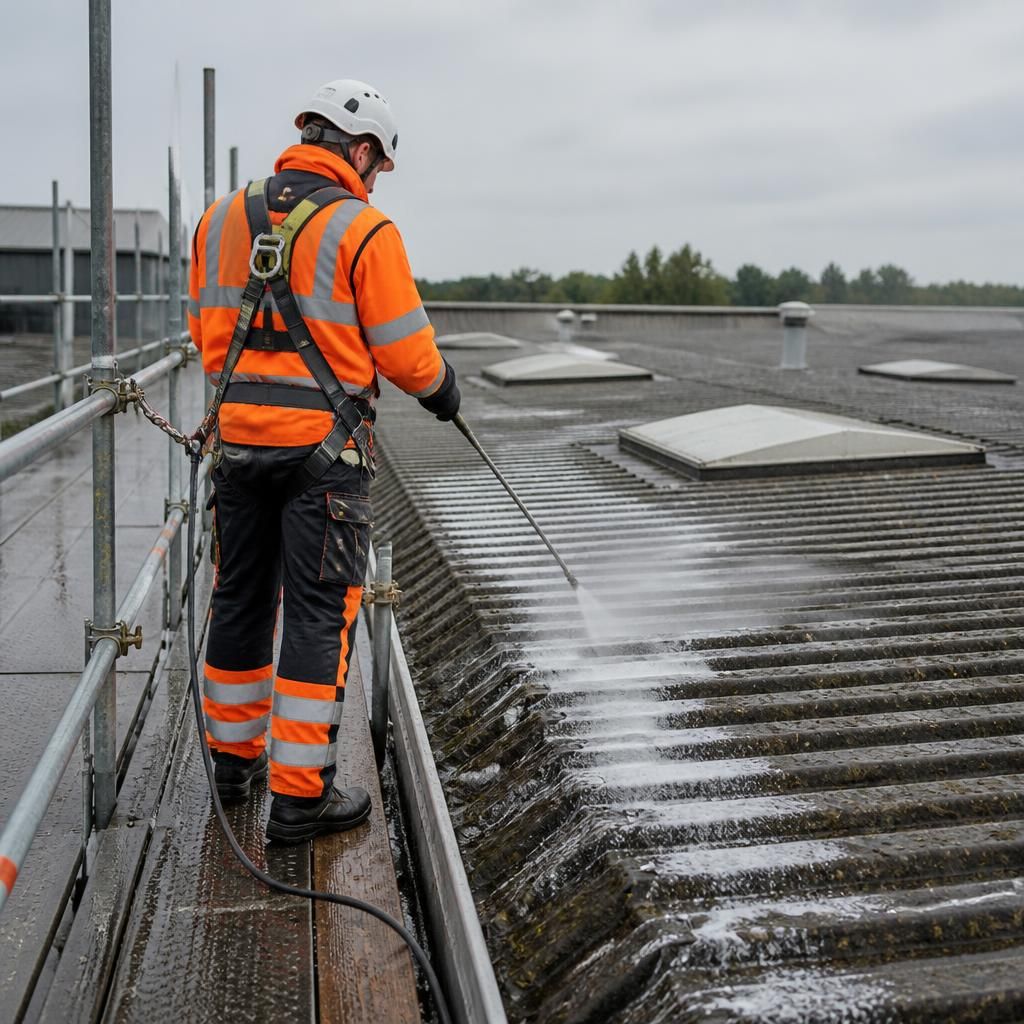
Safe roof access is a primary safety measure when applying biocide treatments, because wet surfaces, moss, fragile coverings and roof edges can create a serious fall risk. Before work begins, the roof should be inspected and the safest suitable access method selected, such as properly installed scaffolding, an access platform or designated roof walkway.
Operatives should not rely on ladders or harnesses without a documented risk assessment, suitable anchorage and a rescue plan. Edge protection, controlled access and organised hoses and equipment help prevent falls, while chemical-resistant gloves, protective clothing, eye protection and slip-resistant footwear reduce exposure and slipping risks. Work should be postponed if wind, rain, frost or poor visibility makes these controls ineffective.