
What factors should be considered when selecting a biocide treatment for roofs to ensure both effectiveness and safety?
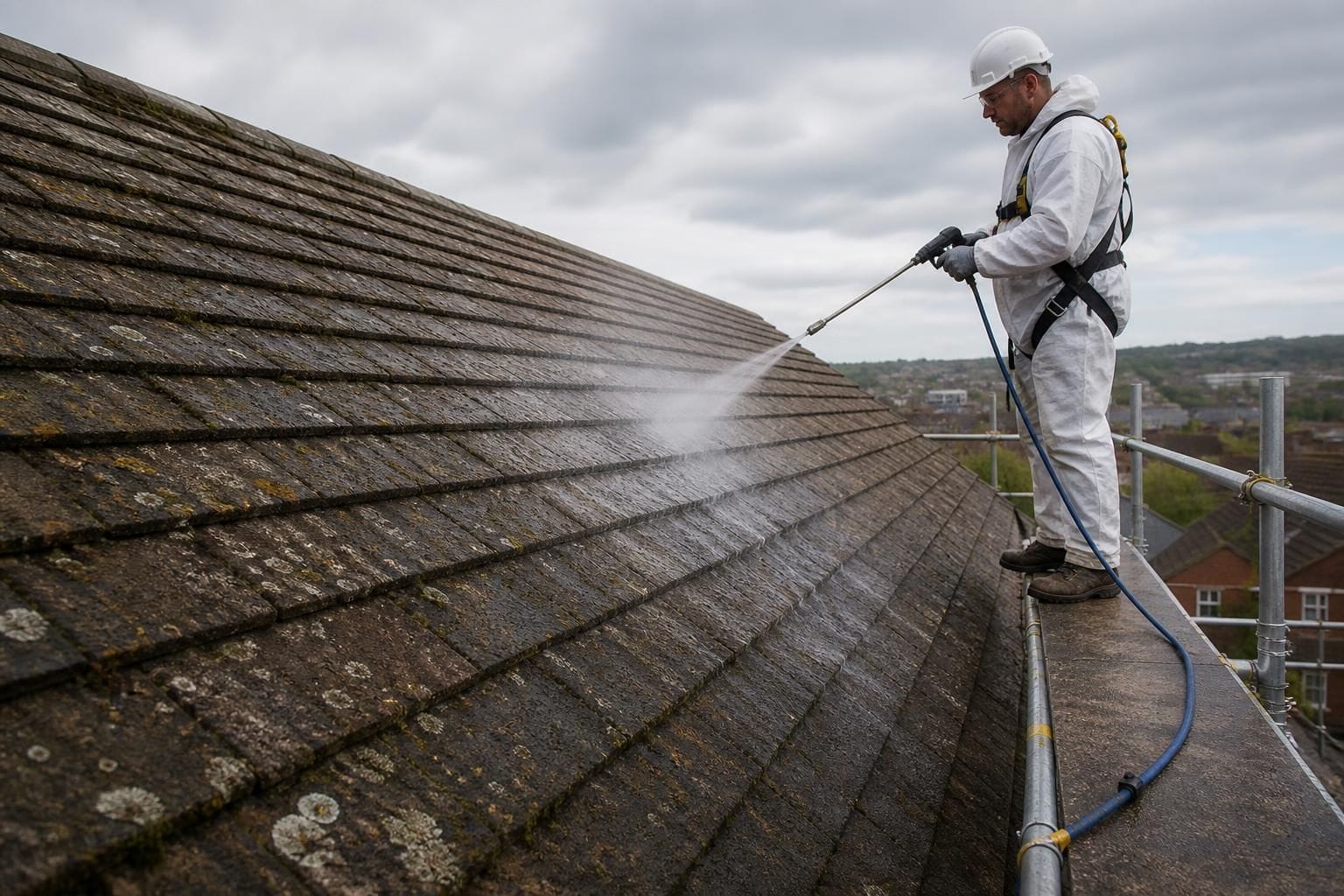
When selecting a biocide treatment for a roof, consider the roof material and condition, the type and severity of organic growth, the product’s proven effectiveness, and its compatibility with surrounding surfaces and drainage systems. Safety also depends on using an appropriately approved product, following the manufacturer’s instructions, assessing environmental risks, and ensuring application is carried out by trained professionals with suitable access and protective equipment.
Selecting a biocide treatment for a roof requires a balanced assessment of the roof material, its condition, the type of organic growth, the treatment’s proven performance, and the risks to people, surrounding surfaces and the environment. The product must be suitable for the substrate and used exactly as specified by the manufacturer. A treatment that is effective against moss, algae or lichen may still be unsuitable if it can damage the roof, enter sensitive drainage systems or be applied safely only under conditions that cannot be achieved on site.
Assess the roof material and condition first. Concrete and clay tiles, natural slate, fibre cement, metal cladding, coated systems and membrane roofs do not have the same chemical resistance or surface characteristics. The assessment should identify cracked, loose, porous or delaminating materials, defective coatings, exposed fixings, failed sealants and areas where water may enter the building. A biocide should not be used to compensate for underlying defects. Where the roof is fragile or its composition is uncertain, a small compatibility test and advice from the manufacturer or a suitably qualified specialist may be necessary before wider application.
The condition of the roof also influences whether treatment is appropriate on its own. Light surface staining may respond to a low-impact application, while established moss with substantial root attachment may require controlled removal before treatment. Aggressive scraping or high-pressure cleaning can damage some roof coverings, so the preparation method should be selected alongside the biocide rather than treating them as separate decisions.
Identify the growth accurately. Moss, algae, lichen and general organic staining can require different treatment approaches and contact times. Moss often forms a thicker layer that retains moisture and may need physical removal after it has been treated. Algae can present as green, black or slippery surface films, whereas lichen may be firmly attached and slow to break down. The extent of coverage, thickness, location and likely source of recolonisation should be recorded during the survey. A treatment selected without identifying the growth may produce limited results or encourage unnecessary repeat applications.
Check the product’s suitability and evidence of performance. The product label and technical information should state the surfaces for which it is intended, the organisms it controls, the required dilution or application method, contact requirements, weather limitations and any restrictions on rinsing or discharge. Select a product with a clear, relevant use case for the roof rather than relying on a general-purpose cleaner. Evidence may include manufacturer testing, technical data and experience of use on comparable roof materials, but it should not replace a site-specific assessment.
In the UK, the product must be supplied and used in accordance with the applicable biocidal product requirements, label conditions and other relevant legal controls. The operator should verify that the intended use is permitted in the relevant part of the UK, particularly where regulatory arrangements differ between Great Britain and Northern Ireland. Using a product outside its approved purpose, changing its concentration or mixing it with another chemical can create safety, legal and performance problems.
Consider compatibility with the roof and adjoining materials. Before selecting a treatment, assess possible contact with:
- painted or powder-coated metalwork;
- roof membranes, waterproofing layers and protective coatings;
- flashings, gutters, downpipes and drainage outlets;
- roof lights, glazing, seals and plastics;
- brickwork, render, stone and other façade materials;
- vehicles, plant, landscaping and external fixtures below the work area.
Some products can stain, dull, corrode or otherwise affect adjacent materials, particularly where residues are allowed to dry. A controlled test area should be considered where the surface is valuable, coated, aged or unfamiliar. The test should be inspected after the relevant reaction and drying period, not only immediately after application.
Evaluate environmental and drainage risks before work begins. Run-off can carry active chemicals, loosened organic matter and contaminated residue into gutters, surface-water drains, watercourses, soil or planted areas. The survey should identify the direction of drainage, nearby ponds or watercourses, rainwater harvesting systems, sensitive planting and areas used by the public. The chosen method should minimise uncontrolled discharge and include suitable containment, diversion, collection or neutralisation measures where required by the product instructions and site conditions.
Weather is part of the environmental assessment. Rain soon after application may dilute the treatment, move it beyond the intended area or increase the risk of polluted run-off. Strong wind can cause spray drift, while very hot or rapidly drying conditions may affect coverage and increase exposure to operatives and nearby surfaces. Work should be postponed when the forecast or site conditions prevent the manufacturer’s application requirements from being met.
Confirm that the treatment can be applied safely. Roof work combines chemical exposure with work-at-height hazards. The selection process should therefore consider whether the product can be applied using the available access equipment, whether a low-pressure or controlled application is possible, and how operatives will move without damaging the roof. A method statement and risk assessment should address access, fragile areas, falling materials, exclusion zones, public protection and emergency arrangements.
Before use, the responsible contractor should review the product safety data sheet and carry out a suitable COSHH assessment. Controls may include protective gloves and clothing, eye or face protection, respiratory protection where specified, secure storage, correct labelling, spill procedures and facilities for washing or decontamination. Personal protective equipment is only one part of the control system; preventing drift, splash and unnecessary contact through the application method is equally important.
Review the surrounding building and its occupants. Windows, air-intake systems, balconies, entrances, plant rooms and occupied areas may need to be closed, protected or temporarily isolated. The site team should agree how members of the public, building users, vehicles and other contractors will be kept away from the treatment area. On commercial or industrial premises, the work should be coordinated with the site’s permit, access and environmental procedures.
Match the treatment to the intended outcome and maintenance plan. A biocide may be selected to kill or suppress organic growth, delay recolonisation, improve the result of a subsequent clean or support routine roof maintenance. It is not necessarily a repair product, a waterproofing treatment or a substitute for removing defective materials. The specification should state whether growth will be left to weather away, removed after treatment or managed through a planned follow-up visit. Any expected change in appearance should be explained, as treated growth may not disappear immediately.
For larger commercial roofs, selection should also take account of access time, application uniformity, drainage controls, site disruption, inspection requirements and the ability to document the work. A suitable treatment is one that can be applied consistently across the roof while maintaining control of exposure and run-off, not simply one that appears strong in isolation.
Use a competent, trained operator. The operator should understand the roof system, the selected product, work-at-height controls, chemical handling and environmental protection. They should retain the product instructions, safety data, risk assessment, weather conditions, batch or product details where relevant, treated areas and any restrictions communicated to the client. This information supports safe follow-up work and helps identify whether further treatment is needed.
In practice, the safest and most effective selection normally follows a site survey: identify the roof and growth, inspect defects and drainage, check product approval and compatibility, assess weather and environmental constraints, then choose an application method that trained operatives can control. If any of these checks cannot be satisfied, the work should be amended, deferred or referred for further technical advice rather than proceeding with an unsuitable biocide.
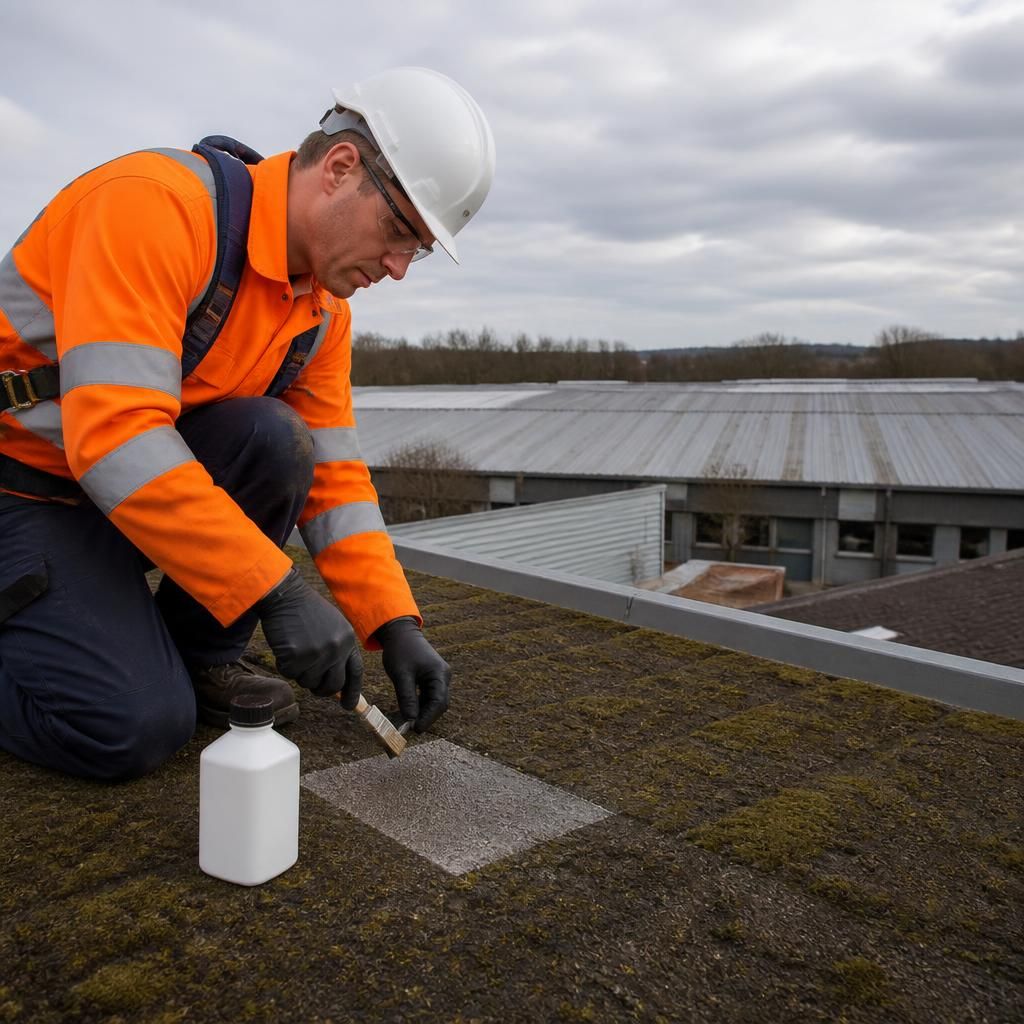
Choosing a roof biocide safely starts with confirming that the treatment is compatible with the roof covering and adjacent materials. Concrete and clay tiles, slate, metal coatings, membranes, flashings, plastics and sealants can react differently to chemical products, so the product label and technical information should be checked before application.
A small test area can help identify staining, dulling, corrosion or coating damage, particularly on aged or unfamiliar surfaces. The assessment should also consider gutters, downpipes, roof lights, glazing, planted areas and drainage outlets. Only use the product for its approved purpose, follow the stated dilution and application requirements, and ensure trained operatives can control run-off, spray drift, access and chemical exposure throughout the work.
Discuss Your Roof Biocide Treatment Requirements
Contact Encanto Exterior Cleaning to discuss your roof biocide treatment requirements and arrange a site assessment. We can review the roof covering, organic growth, access, drainage and environmental controls before recommending a suitable treatment approach.