
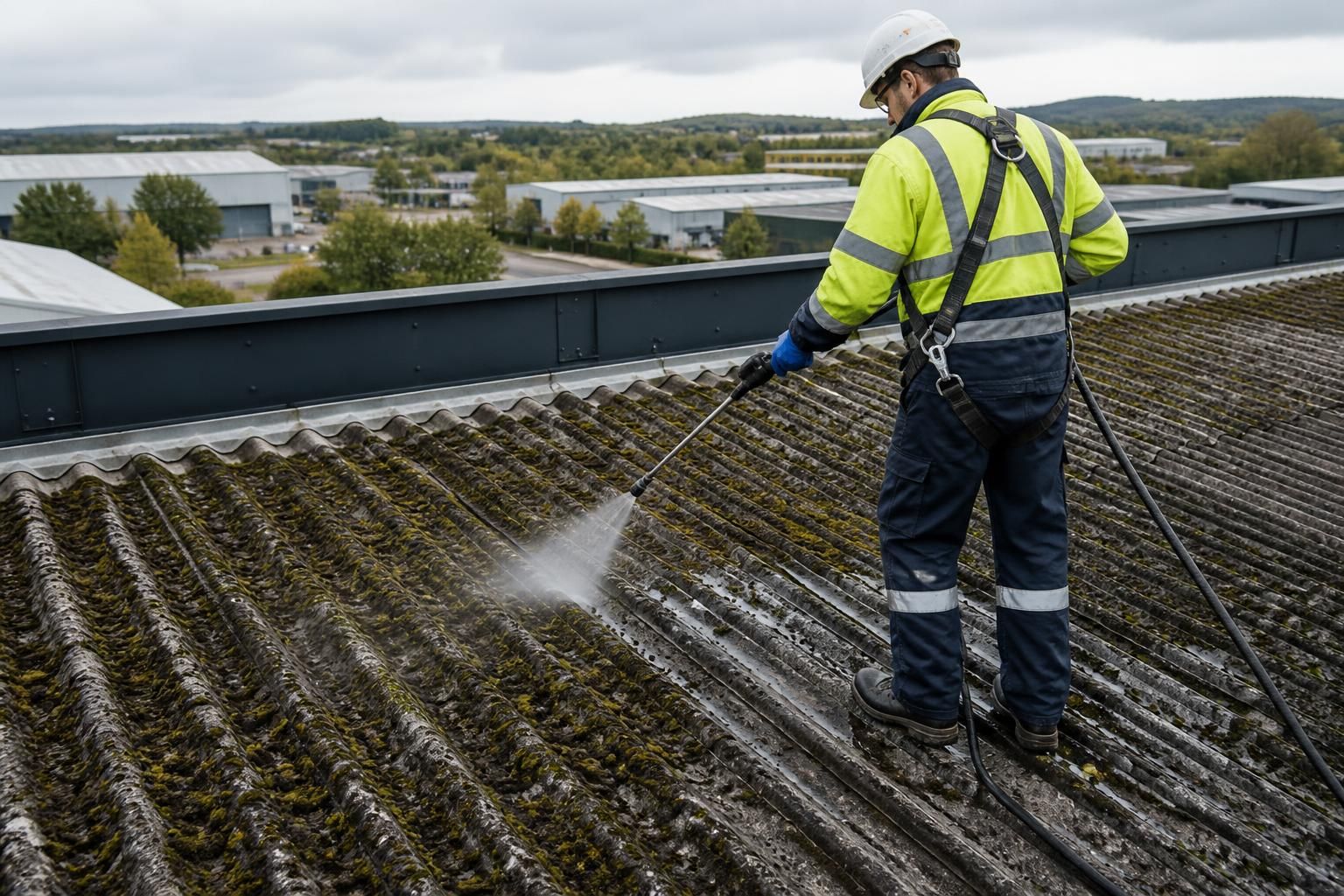
What environmental considerations should be taken into account when choosing a biocide roof treatment?
When choosing a biocide roof treatment, consider its effect on watercourses, soil, plants and wildlife, as well as how safely it can be applied and disposed of. Select an appropriate, approved product and an experienced contractor who can control runoff, protect surrounding areas and follow the manufacturer’s instructions and relevant environmental regulations.
Environmental considerations when choosing a biocide roof treatment include the product’s potential effects on water, soil, plants and wildlife, as well as how safely it can be applied, contained and disposed of. The most suitable treatment is an appropriately authorised product used at the lowest effective application rate, by a competent contractor who follows the label, safety data sheet and relevant environmental requirements.
Check the product’s authorisation and environmental profile. Biocidal products placed on the UK market must comply with the applicable biocides legislation for the territory in which they are used. The product label and safety data sheet should be available for review before work starts. These documents provide important information about approved uses, application conditions, hazards, storage, spill response and disposal. Pay particular attention to warnings relating to aquatic life, soil organisms, plants and untreated surfaces.
A product should be selected for the roof material, type of biological growth and intended application method. Using a stronger product than necessary, applying excessive quantities or treating areas outside the approved use can increase environmental risk without improving the result. The contractor should be able to explain why the chosen treatment is appropriate and how the application will be controlled.
Prevent contaminated runoff from reaching water. Roof treatment residues and wash water must not be allowed to enter surface-water drains, watercourses, ponds, wetlands or groundwater. This is especially important on large commercial roofs, where rainfall or rinsing can carry treatment residues over a substantial area. Before work begins, the contractor should identify nearby drains, downpipes, gullies, open water and drainage routes.
Runoff controls may include temporarily protecting or isolating drainage points, diverting downpipes, using collection equipment and preventing overspray at roof edges. Any collected liquid, residue or contaminated absorbent material should be handled as required by the product information and applicable waste rules. It should never be discharged to a drain or watercourse simply because it appears diluted or clear.
Where a site has a separate surface-water drainage system, a sustainable drainage system, an oil interceptor or a connection to a sensitive receiving environment, additional precautions or advice from the relevant water or environmental authority may be necessary. A responsible contractor should identify these constraints during the site assessment rather than treating them as an afterthought.
Consider weather and site conditions. Application should be postponed when rain is likely to cause immediate runoff, when strong winds could create drift, or when conditions prevent the product from remaining on the treated surface for the period specified by the manufacturer. Wind direction is particularly important near neighbouring buildings, planted areas, water bodies, pedestrian routes and air-intake systems.
Temperature, frost, surface dampness and the likelihood of heavy rainfall can also affect treatment performance and environmental control. Planning the work during a suitable weather window reduces the need for repeat applications and lowers the risk of product being washed from the roof before it has acted.
Protect plants, wildlife and surrounding habitats. Roofs are often close to trees, planted borders, green walls, nesting areas and habitats used by birds or insects. Overspray, drift and uncontrolled runoff can damage vegetation or expose wildlife to substances intended only for the roof surface. The work plan should identify sensitive areas and specify suitable protection, exclusion zones or alternative methods where necessary.
Birds and other animals may use roof spaces, ledges, plant rooms or adjoining structures. The contractor should check for visible signs of nesting or protected species and follow applicable wildlife legislation. Work should be paused and appropriate advice obtained if protected wildlife could be disturbed or exposed. This is separate from the question of whether a roof is technically suitable for treatment.
Assess whether treatment is necessary and proportionate. Biocide treatment is intended to control biological growth, not to replace every form of roof maintenance. If growth is limited, localised or easily removed by a lower-impact method, spot treatment or mechanical cleaning may reduce the amount of chemical required. In other cases, a biocide may provide a practical way to control regrowth without aggressive pressure washing that could damage the roof or release large quantities of contaminated wash water.
The comparison should consider the full environmental impact of each option, including water consumption, runoff, noise, access requirements, repeat visits, roof damage and waste. The least environmentally harmful method is not automatically the method using the least chemical; it is the method that achieves the required outcome with appropriate control of all relevant impacts.
Review application methods and quantities. Low-pressure application, accurate dosing and careful targeting can reduce drift and waste compared with uncontrolled spraying. The contractor should use equipment that can apply the product evenly and should avoid treating roof areas where the product is not required. Nearby façades, glazing, vehicles, air-conditioning equipment, rainwater harvesting systems and other assets may need to be isolated or protected.
Rainwater harvesting systems require particular attention. They should be disconnected, isolated or otherwise managed in accordance with the product instructions before treatment. Collected rainwater should not be used until the relevant precautions and any stated waiting requirements have been satisfied.
Check storage, spill response and waste arrangements. Environmental protection continues after application. Products should be transported and stored securely, in their original labelled containers, away from drains, watercourses, food areas and incompatible materials. The contractor should have a spill procedure, suitable containment materials and a clear method for reporting and managing any incident.
Empty containers, unused product, contaminated sheeting, absorbents and removed biological material should be managed in line with the label, safety data sheet and waste legislation. They should not be burned, poured away or placed in general waste unless this is specifically permitted. Records of the product used, areas treated, weather conditions, incidents and disposal arrangements can be useful for the building’s environmental and maintenance records.
Ask about contractor competence and environmental controls. Before approving the work, request the product name, intended use, safety data sheet, method statement and risk assessment. The method statement should explain how the contractor will protect drains and sensitive areas, control overspray, respond to rain or wind, manage access and deal with waste. It should also identify any permits, consents or site-specific restrictions that apply.
Competence includes more than knowing how to apply a roof treatment. The contractor should understand roof drainage, access limitations, weather monitoring, chemical handling, spill prevention and the environmental features of the site. For commercial and industrial premises, coordination with the facilities team, site manager and environmental representative helps ensure that drainage systems, tenants, vehicles and operational areas are protected.
When comparing quotations, do not assess environmental performance solely by the product description or by the promise of a long-lasting result. Compare the proposed chemical, application rate, runoff controls, protection measures, weather criteria, waste arrangements and follow-up inspection. A properly planned treatment should leave a clear record of what was used and demonstrate that the work was carried out in accordance with the manufacturer’s instructions and applicable UK requirements.
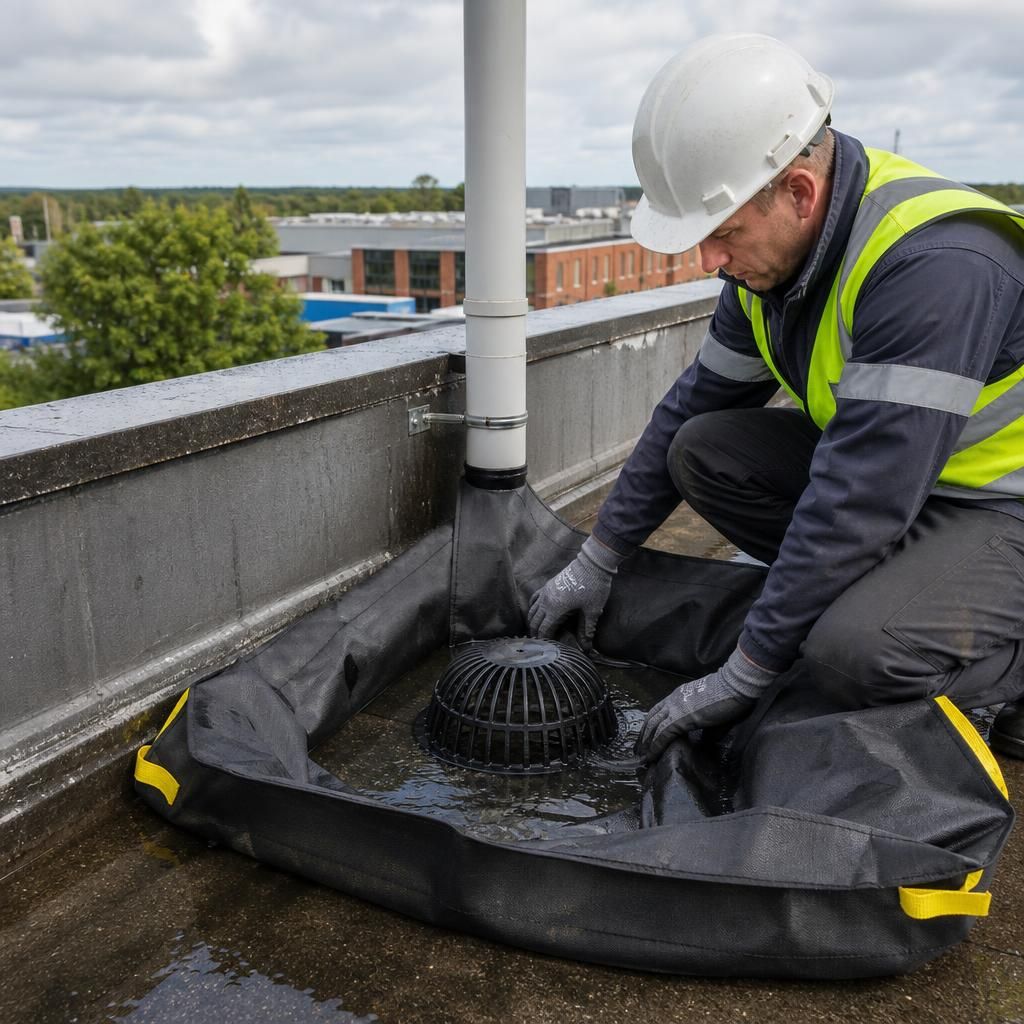
Runoff control is one of the most important environmental considerations when applying a biocide roof treatment. Treatment residues and contaminated rainwater must be prevented from entering surface-water drains, ponds, streams, soil, planted areas or rainwater harvesting systems.
Before work starts, the contractor should inspect the roof drainage layout and identify downpipes, gullies, nearby watercourses and sensitive landscaping. Suitable controls may include isolating or diverting downpipes, protecting drains, limiting overspray at roof edges and collecting contaminated liquid where necessary. Application should also be planned around suitable weather conditions, avoiding rain or strong winds that could carry the product away from the roof.
Ask for these controls to be included in the method statement, together with arrangements for spill response and disposal of collected residues. A responsible application protects the surrounding environment without using more product than the roof requires.