
What are the environmental impacts of using biocide treatments on roofs?
Biocide treatments can affect the environment if contaminated runoff reaches drains, soil, ponds or watercourses, potentially harming aquatic life, plants and non-target wildlife. Their impact is reduced by selecting an appropriate product, controlling application and runoff, protecting drainage systems, and following the label and relevant UK environmental requirements.
Biocide treatments can affect the environment when active ingredients or contaminated deposits are carried from a roof into gutters, drains, soil, ponds or watercourses. The main risks are toxicity to aquatic organisms, damage to non-target plants and harm to wildlife exposed to concentrated product or contaminated runoff. These risks can usually be reduced substantially through appropriate product selection, controlled application, runoff management and compliance with the product label and relevant UK environmental requirements.
How environmental harm can occur
Biocides are designed to control living organisms such as algae, moss, lichen, fungi and bacteria. That biological activity is useful on a roof, but it means the treatment may also affect organisms that were not intended to be treated if the product escapes from the application area. Risk depends on the active ingredient, concentration, formulation, application method, roof material, weather conditions and the sensitivity of nearby habitats.
- Runoff to water: Rainfall can wash residual treatment, loosened organic matter and contaminated roof deposits into gutters, surface-water drains, ponds, streams or other watercourses. Even relatively small quantities of some substances can be harmful to aquatic plants, invertebrates and fish.
- Contamination of soil: Discharge at the edge of a building can concentrate biocide in soil, affecting soil organisms, vegetation and planted areas. Repeated uncontrolled applications may increase the likelihood of accumulation or localised damage.
- Damage to non-target plants: Overspray, splashes and runoff can scorch or kill grass, ornamental planting, hedges and other vegetation. Plants may be particularly vulnerable where treatment is applied in windy conditions or where runoff is allowed to collect around roots.
- Exposure of wildlife: Birds, insects, amphibians, pets and other animals may come into contact with wet product, treated deposits or contaminated water. Roofs near nesting areas, ponds, green spaces or habitats therefore require additional planning.
- Airborne drift: Spray mist can move beyond the roof and reach adjacent buildings, gardens, ventilation openings or water bodies. The risk increases with unsuitable equipment, excessive pressure and windy weather.
The treatment itself is not the only consideration
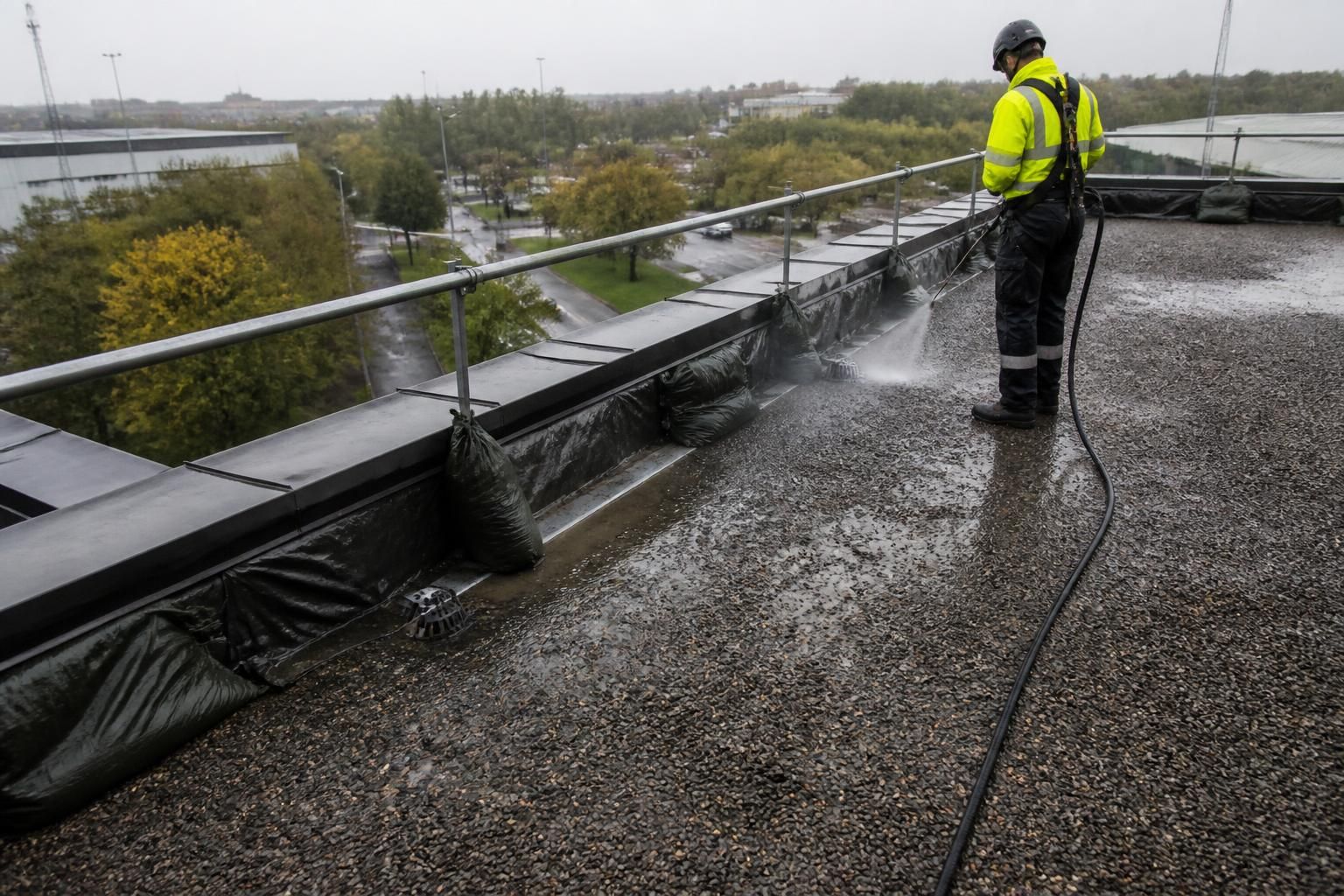
Environmental impact is influenced by the whole cleaning process. Removing moss, algae and lichen can release organic material into gutters and drainage systems, while pressure washing can transport sediment, fragments and treatment residues across hard surfaces. A product with a comparatively favourable environmental profile can still cause pollution if it is over-applied, allowed to enter a drain or used during rainfall.
Some roof treatments are intended to remain on the surface and work gradually, whereas others are applied before rinsing or further cleaning. These approaches create different runoff risks. The product label and safety data sheet should be checked for permitted uses, dilution, application rate, environmental hazards, storage, disposal and restrictions around drains and water. A treatment should never be selected solely because it is described as strong, long-lasting or suitable for a particular type of growth.
How responsible application reduces the impact
- Carry out a site assessment before work begins, identifying surface-water drains, foul drains, gullies, ponds, streams, planted areas, vulnerable surfaces and nearby occupants or wildlife.
- Choose a product authorised or permitted for the intended use in the relevant part of the UK, and follow the current label, technical information and safety data sheet.
- Use the lowest effective concentration and application volume specified by the manufacturer. Do not mix products or increase the strength in an attempt to accelerate results.
- Apply with controlled, low-drift equipment rather than allowing fine spray to travel beyond the roof. Avoid windy conditions and protect adjoining surfaces and planting.
- Do not apply when rain is expected to wash the product from the roof before it has had the required contact time. Weather conditions should also be suitable for preventing spray drift.
- Prevent contaminated water from entering surface-water drainage. Where rinsing or pressure washing is required, collect, contain and dispose of wastewater through an appropriate route rather than allowing it to flow into a road drain or watercourse.
- Use drain covers, temporary bunding, collection systems or other suitable controls where they are compatible with the site and the cleaning method. Controls must not create an additional flood or slip hazard.
- Protect or temporarily remove items such as water butts, outdoor furniture, plant containers and equipment that could collect contaminated water.
- Keep unused product, containers and contaminated materials secure. Follow the label and waste requirements for storage, transport and disposal, and never pour residues into drains, soil or surface water.
- Inspect gutters, downpipes and surrounding ground after treatment so that retained residues, blockages or signs of unintended discharge can be dealt with promptly.
Choosing a lower-risk approach
Where environmental sensitivity is high, the most suitable option may be targeted mechanical removal, soft washing with controlled collection, steam cleaning or a maintenance programme that limits the need for intensive treatment. These methods are not automatically impact-free: mechanical cleaning can create sediment, pressure washing can generate contaminated wastewater, and steam cleaning still requires control of loosened material and water. The appropriate method depends on the roof covering, condition, extent of biological growth, access arrangements and drainage layout.
For some roofs, treating only affected areas rather than the entire surface reduces product use and limits the area from which residues can run off. Regular inspection and removal of leaves and other organic debris can also reduce moisture retention and slow regrowth. Any maintenance plan should balance cleaning effectiveness, roof protection, worker safety and control of wastewater.
UK environmental responsibilities
Commercial and industrial work must be planned in accordance with the product label, applicable biocidal product controls, waste requirements and pollution-prevention obligations. Requirements can vary across England, Wales, Scotland and Northern Ireland, particularly where a site is close to a protected habitat, watercourse or drinking-water source. If there is uncertainty about discharge, disposal or a sensitive location, advice should be obtained from the relevant environmental regulator before work starts.
Records of the product used, application conditions, treated areas, controls and waste arrangements can help demonstrate that the work was planned responsibly. They also provide useful information for future roof maintenance and for investigating any unexpected impact.
In practical terms, a biocide roof treatment is most environmentally responsible when it is necessary, correctly selected, accurately dosed and applied in suitable weather with runoff fully controlled. A site-specific assessment is essential: roofs beside planting, open drains, ponds or watercourses require stricter precautions than isolated roofs with contained drainage. Where those controls cannot be achieved, a different cleaning method or a postponement of the work may be the safer environmental decision.
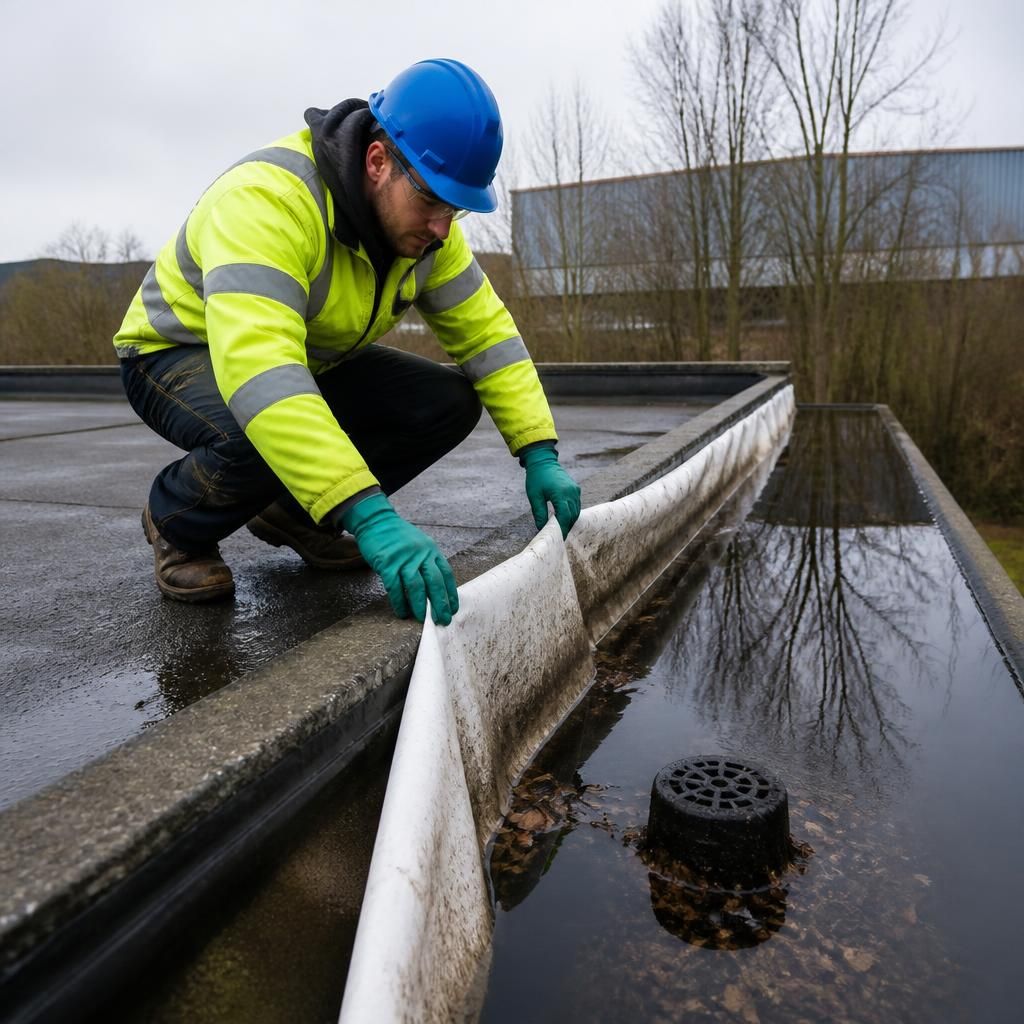
Runoff control is one of the most important ways to reduce the environmental impact of a biocide roof treatment. Rainwater or rinsing water can carry active ingredients, loosened moss and contaminated deposits into gutters, surface-water drains, soil and nearby watercourses, where they may harm aquatic organisms and non-target plants.
Before treatment, identify drainage points, planted areas, ponds and other sensitive locations. Use suitable drain protection, temporary bunding or collection equipment where necessary, and do not allow contaminated water to enter a surface-water drain. Application should be postponed in unsuitable weather, particularly when rain or strong wind could cause uncontrolled movement of the product. Any collected wastewater and contaminated materials must be handled in accordance with the product label and applicable waste requirements.
Arrange an environmentally responsible roof treatment assessment
Arrange an environmentally responsible roof treatment assessment with Encanto Exterior Cleaning to review the roof, drainage, nearby habitats and suitable runoff controls. We can recommend a practical cleaning approach that protects the building and reduces avoidable environmental risk.