
How long does it take for biocide treatments to show results on roofs?
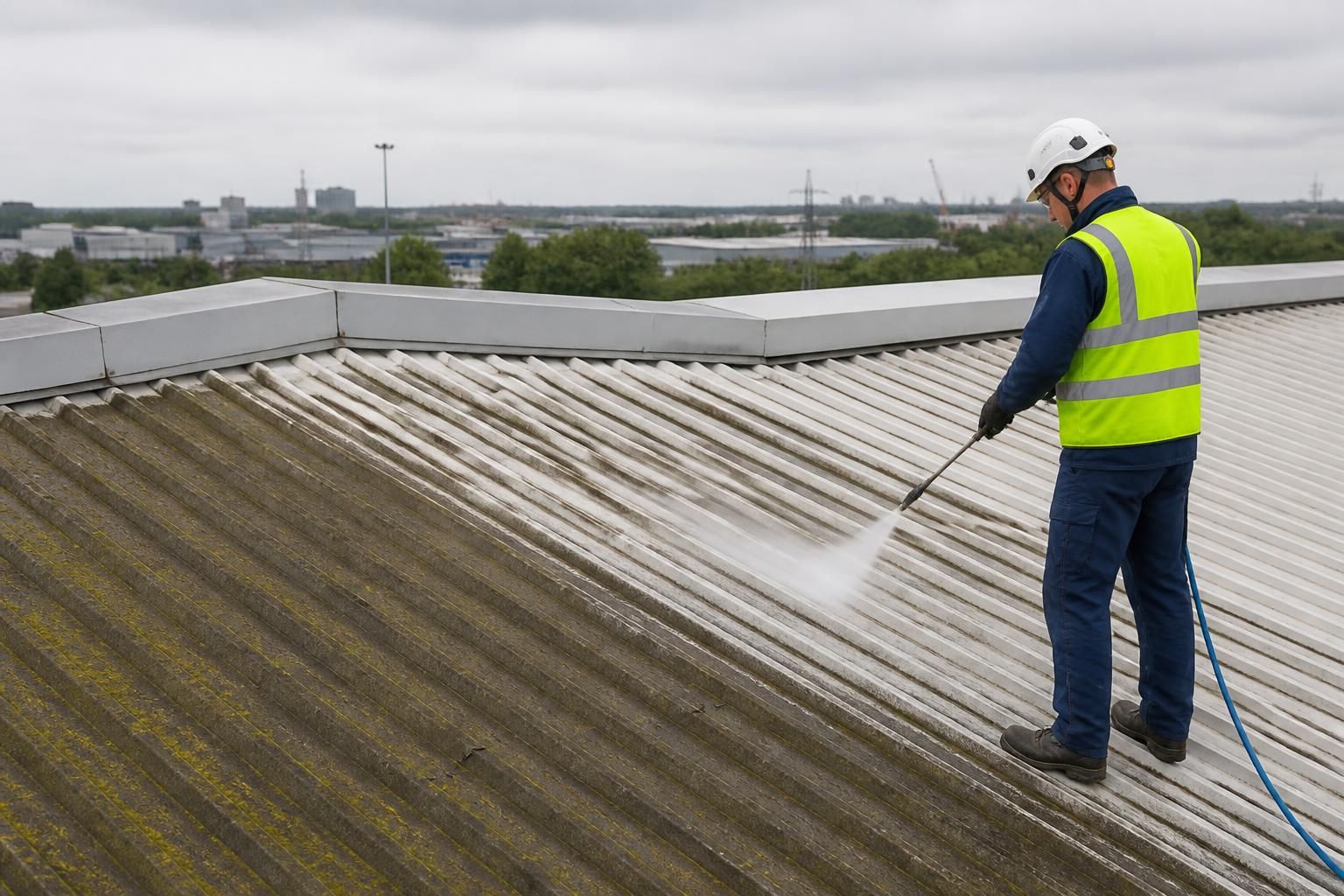
Biocide roof treatments can begin to show visible results within days, but the full effect usually develops over several weeks as moss, algae and lichen die back and weather away. The timescale depends on the treatment, roof condition, weather and severity of biological growth, with professional application helping ensure consistent coverage and safe results.
Biocide roof treatments can start showing visible results within a few days, but the complete effect normally develops over several weeks. Moss, algae and lichen do not usually disappear immediately after application; the treatment works progressively, allowing affected growth to die back and be removed naturally by rainfall and weathering. The exact timescale depends on the product, the roof surface, the amount and type of growth, weather conditions and the quality of application.
What to expect after treatment
Algae and other surface discolouration may begin to fade relatively soon, particularly where the growth is light and the treatment has been evenly applied. Moss can take longer because it is thicker and more established. Lichen is often the slowest to show a complete improvement, as it can be firmly attached to the roof surface and may weather away gradually after it has been killed.
It is normal for treated growth to remain visible for a period after application. A roof may look unchanged immediately afterwards, even though the biocide is already working. As the treatment takes effect, growth may lose its colour, dry out, loosen and gradually break down. Some dead material may need to be removed during a later maintenance visit, especially where heavy moss has accumulated or where the roof is being prepared for repair, coating or refurbishment.
Factors that affect the timescale
- Type of biological growth: algae and light surface staining generally respond more quickly than dense moss or established lichen.
- Severity and coverage: heavily colonised areas contain more material to break down and may require more time or a follow-up treatment.
- Roof material: tiles, concrete, slate, metal cladding and other surfaces differ in porosity, texture and water retention. These characteristics affect how biological growth develops and how the treatment performs.
- Weather after application: suitable dry conditions can help the product remain on the surface for the required contact time. Rain immediately after application may dilute or wash away treatment before it has had an opportunity to work effectively. Conversely, prolonged dry weather may delay the natural weathering of dead growth.
- Application quality: consistent coverage, correct dilution and appropriate control of run-off are essential. Areas that are missed, shielded or insufficiently treated may continue to show growth.
- Roof condition: damaged, porous or poorly drained areas can retain moisture and support faster regrowth, even after an otherwise successful treatment.
Why the roof may not look clean straight away
Biocide treatment is a controlled process rather than an instant cosmetic clean. Its purpose is to kill or inhibit biological growth while limiting unnecessary abrasion or pressure on the roof. Immediate high-pressure removal can sometimes disturb tiles, dislodge protective surface finishes or force water beneath laps and joints, particularly on older or fragile roofs. For this reason, a treatment may be left to work before any gentle removal or follow-up cleaning is considered.
The visible improvement should therefore be assessed over time rather than on the day of application. A professional inspection can distinguish between active growth, dead residue, staining that has become embedded in the surface and unrelated defects such as weathering or corrosion. This helps determine whether further treatment is appropriate or whether the remaining appearance is not biological in origin.
When to review the result
The roof should normally be reviewed after the treatment has had sufficient time to work and weather conditions have allowed the dead material to loosen. The appropriate review point will vary according to the product instructions, roof type and site conditions. On larger commercial or industrial premises, the inspection may be planned as part of the wider maintenance schedule, with particular attention paid to roof edges, shaded elevations, drainage channels, north-facing areas and locations beneath overhanging vegetation.
If substantial live growth remains after the expected treatment period, the cause should be investigated before applying more product. Possible reasons include inadequate coverage, rain too soon after application, unusually dense growth, persistent dampness or a surface that was unsuitable for the selected treatment. Reapplication should only be carried out following a competent assessment and in accordance with the product instructions.
How professional application supports reliable results
Professional application helps establish realistic expectations and reduces the risk of inconsistent results. Before treatment, the roof should be assessed for its material, condition, access requirements, drainage arrangements and nearby surfaces that could be affected by run-off. The selected biocide must be suitable for the roof and used at the correct strength, with appropriate controls to protect people, vegetation, watercourses and building occupants.
Safe access equipment and suitable weather monitoring are also important on commercial sites. Treating a roof in unsuitable conditions can reduce performance and increase the risk of run-off, exposure or damage to surrounding areas. After application, records of the product, treated areas and any recommended follow-up work can support ongoing maintenance planning.
In practical terms, an early change in colour may be visible within days, while a meaningful reduction in moss, algae and lichen usually becomes clearer over the following weeks. The roof should not be judged solely on its immediate appearance. Allowing the treatment to work, monitoring the surface and arranging any necessary follow-up cleaning or inspection will provide a more accurate assessment of the result and help protect the roof over the longer term.
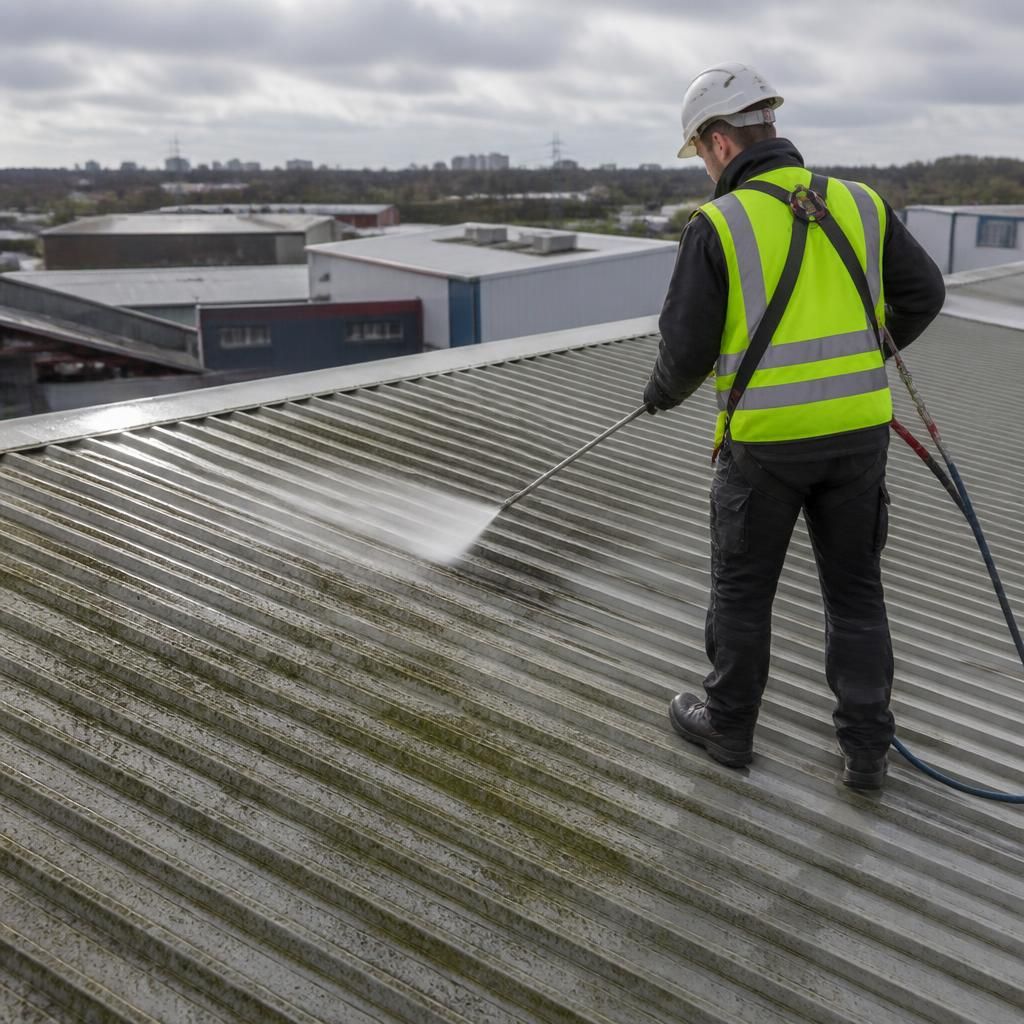
Biocide roof treatments often begin to show visible changes within a few days, but the full result usually develops over several weeks. The treatment kills or inhibits moss, algae and lichen; it does not instantly remove the dead growth from the roof surface.
Weather has a significant effect on how quickly the improvement becomes visible. Rain can help loosen and wash away treated material once the product has had sufficient contact time, while rain immediately after application may reduce its effectiveness. Dense moss and established lichen generally take longer to break down than light algae or surface staining, so the roof should be reviewed after the recommended treatment period rather than judged on its appearance immediately after application.