
How do biocide treatments compare to traditional roof cleaning methods?
Biocide treatments control moss, algae and lichen chemically, while traditional roof cleaning methods such as pressure washing or manual removal rely mainly on physical cleaning. Biocides are generally gentler on roof surfaces and can provide longer-lasting control, whereas mechanical methods may deliver faster visible results but can cause damage if used incorrectly and may not prevent regrowth.
Biocide treatments control moss, algae and lichen by treating the organisms at their source, while traditional roof cleaning methods mainly remove contamination through physical action. In practice, biocides are usually the gentler and more preventative option for sound roof surfaces, whereas pressure washing and manual cleaning can produce faster visible results but carry a greater risk of surface damage and may not stop regrowth.
How the methods work
A biocide is applied to areas affected by biological growth and allowed to work over time. It breaks down or kills moss, algae and lichen, after which weathering and carefully controlled rinsing or maintenance can remove the remaining residue. The treatment is not intended to act as an instant cosmetic wash; results may develop progressively, particularly where growth is established or dense.
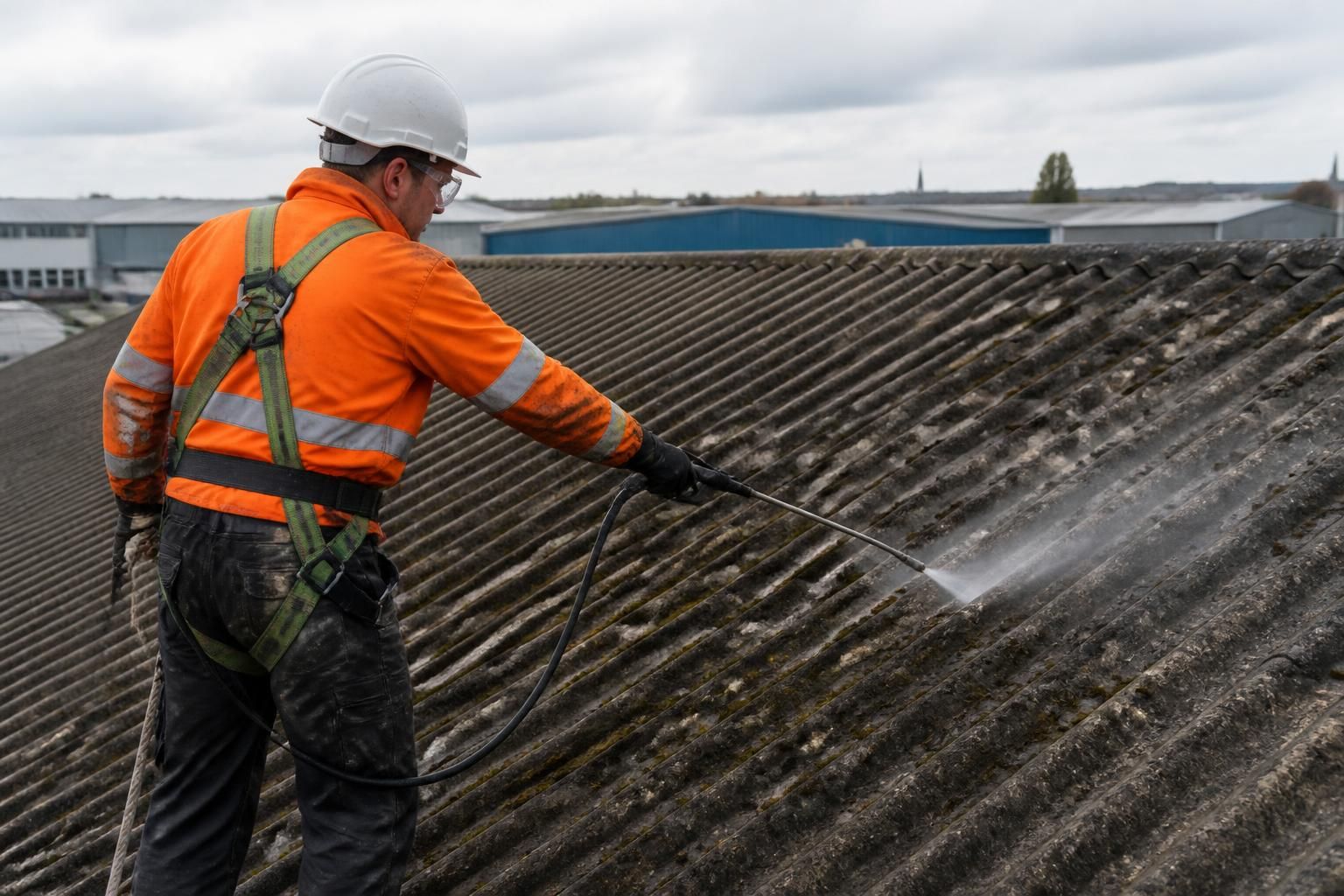
Traditional roof cleaning generally includes pressure washing, manual scraping, brushing or a combination of these methods. Manual removal physically lifts moss and other deposits from the roof, while pressure washing uses a concentrated water jet to dislodge dirt and organic growth. These approaches can be appropriate in specific circumstances, but the technique, pressure, equipment and operator experience must be matched to the roof covering.
Comparison of effectiveness
- Biocide treatments: Target the living growth and can help reduce regrowth when applied correctly and followed by suitable maintenance. They are particularly useful where the roof covering should not be subjected to aggressive mechanical cleaning.
- Pressure washing: Often delivers an immediate change in appearance by removing surface contamination quickly. It does not necessarily eliminate spores or biological growth embedded in the surface, so regrowth can occur if no follow-up treatment is used.
- Manual removal: Can remove thick moss and debris without using high-pressure water, but it may leave behind microscopic growth and can disturb tiles, coatings or weatherproofing if carried out carelessly.
- Combined methods: In some cases, controlled manual removal followed by an appropriate biocide provides a better balance between removing heavy growth and treating the remaining biological contamination.
No single method is suitable for every roof. The condition, age, material, pitch, previous repairs, level of contamination and access arrangements should be assessed before work begins.
Risk of roof and building damage
High-pressure cleaning can force water beneath tiles, into laps, around flashings or into vulnerable roof details. It may also strip protective finishes, damage fragile tiles, loosen pointing or affect coatings and membranes. The risk is higher when excessive pressure, unsuitable nozzles or incorrect cleaning angles are used. Pressure washing should therefore never be treated as a standard solution for every roof.
Manual scraping is less likely to cause water ingress, but tools can chip tiles, remove surface material or dislodge fittings. It can also disturb moss in a way that spreads debris into gutters and drainage systems. Biocide application normally uses less mechanical force, which can reduce the likelihood of damage to a sound covering. It is not risk-free, however: incorrect chemical selection, poor application or inadequate control of run-off can harm roof components, vegetation, drainage systems or nearby surfaces.
Speed versus long-term maintenance
Mechanical cleaning usually provides the quickest visible improvement because dirt and growth are removed during the cleaning visit. That apparent speed does not necessarily mean the roof has received longer-term protection. If biological contamination remains in joints, pores or shaded areas, it may return.
Biocide treatments may take longer to show their full effect because the treatment works progressively and the dead material may weather away naturally. Their main advantage is that they address the cause of moss, algae and lichen rather than relying solely on removal. A treatment plan may therefore support longer intervals between intensive cleaning, although no treatment can prevent all future growth where the roof remains damp, shaded or exposed to airborne spores.
Environmental and safety considerations
All methods require control measures. With pressure washing, contaminated water, moss and silt must be prevented from entering unsuitable drainage routes or neighbouring areas. Mechanical cleaning can also create airborne debris and slippery working conditions.
Biocides must be selected and applied in accordance with the product label, safety data and relevant UK requirements. The surrounding building, rainwater goods, plants, soil, watercourses and public areas should be protected. Run-off should be controlled, and operatives should use appropriate personal protective equipment and access systems. A responsible assessment considers weather conditions, wind, rainfall and the likelihood of treated solution reaching sensitive areas.
Which method is normally most appropriate?
Biocide treatment is often preferable where the roof is structurally sound but affected by algae, lichen or moderate moss growth, particularly when preserving the existing surface is a priority. Controlled manual removal may be added where growth is thick enough to prevent the treatment reaching the roof. Pressure washing should only be considered where the roof covering and its condition make it appropriate, and where the equipment can be used without compromising the building envelope.
A competent contractor should inspect the roof before recommending a method. The assessment should identify fragile or slipped tiles, damaged flashings, blocked gutters, roof lights, fragile areas, access limitations and any evidence of water ingress. It should also confirm whether the proposed treatment is compatible with the roof material and surrounding surfaces.
For commercial and industrial properties, the decision should include the effect of the work on occupants, tenants, vehicles, pedestrian routes and building operations. A method statement, risk assessment, access plan and arrangements for protecting drainage and landscaping help ensure that cleaning improves the roof without creating avoidable hazards.
In summary, traditional cleaning is primarily a removal process, while biocide treatment is a biological control process. The most durable approach is often a carefully assessed combination of low-impact physical removal and a compatible biocide, followed by inspection and planned maintenance rather than repeated aggressive pressure washing.
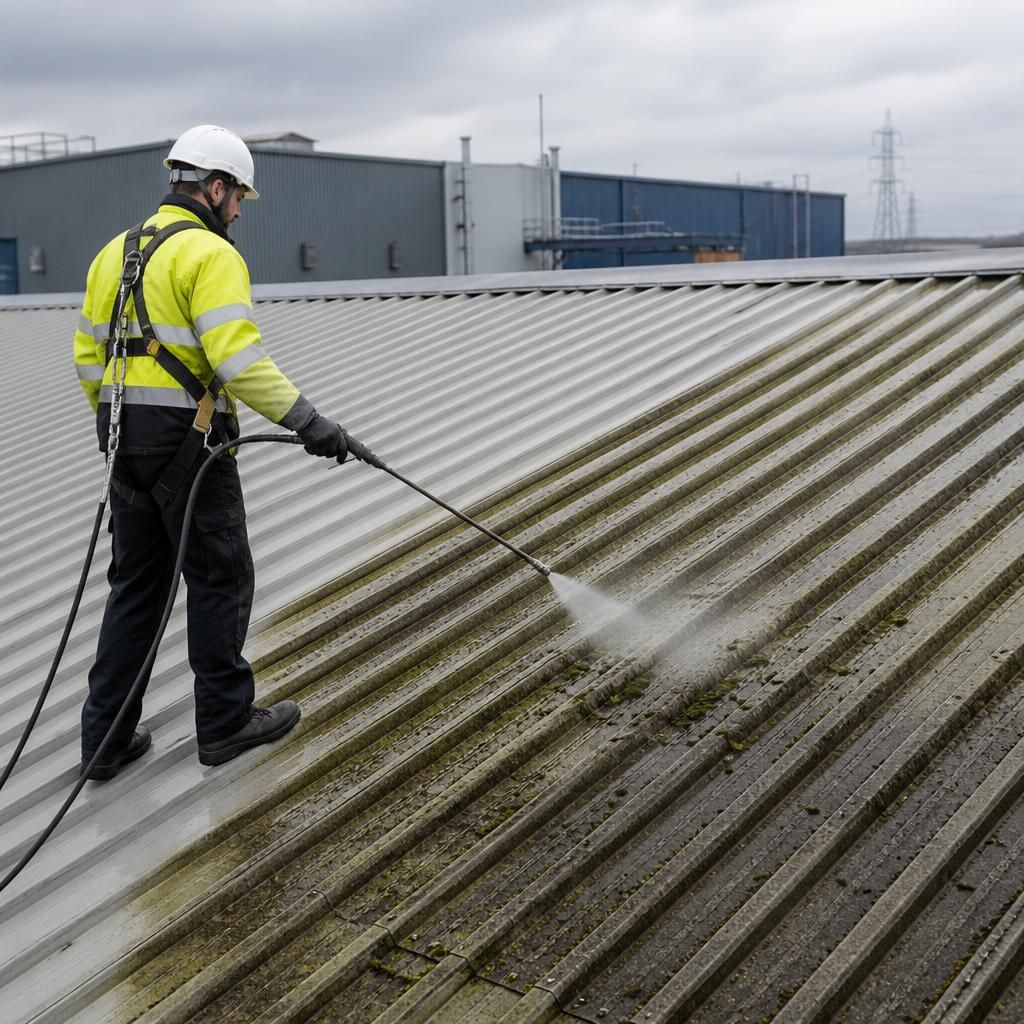
Biocide treatments control moss, algae and lichen without relying on aggressive mechanical force, making them a lower-impact option for many sound roof coverings. Unlike pressure washing, which can provide an immediate visual improvement but may drive water beneath tiles or damage fragile surfaces if used incorrectly, a biocide works progressively and helps limit regrowth after the initial contamination has been treated.
Where growth is heavy, controlled manual removal may be needed before applying the treatment. The correct approach depends on the roof material, condition, pitch, access and surrounding drainage. A suitable assessment should confirm that the product is compatible with the roof and that run-off, plants, rainwater goods and nearby surfaces can be protected during application.