
How can biocide treatments be integrated with regular roof maintenance to enhance longevity and performance?
Biocide treatments can be integrated into regular roof maintenance by applying them after suitable cleaning and including them within planned inspection and treatment schedules. This helps control moss, algae and lichen, reduce moisture retention and protect roof surfaces from premature deterioration, supporting longer service life and consistent performance.
Biocide treatments are most effective when incorporated into a planned roof maintenance programme rather than used as a one-off response to heavy moss, algae or lichen growth. Applied after an appropriate inspection and, where necessary, controlled cleaning, a suitable treatment can help suppress organic regrowth, reduce moisture retention and slow the surface deterioration that can affect roof performance.
A practical maintenance programme should combine inspection, cleaning, biocide application and follow-up review. Each stage has a distinct purpose, and the treatment should be selected and applied according to the roof covering, the type of growth present, site conditions and the manufacturer’s instructions.
Begin with a condition survey
Before any treatment is specified, the roof should be assessed for its construction, condition and access requirements. The inspection should identify:
- the roof covering, such as tiles, slate, metal, coated cladding, membrane or concrete;
- the extent and type of moss, algae, lichen or other organic contamination;
- cracked, loose, porous or otherwise defective materials;
- blocked gutters, outlets, valleys, gullies and drainage routes;
- areas where water is ponding or remaining trapped;
- nearby windows, air intakes, vehicles, planted areas and watercourses that may require protection; and
- safe access and the controls needed to prevent damage to the roof or surrounding property.
A biocide is not a substitute for repairing defective coverings, failed flashings, damaged pointing or inadequate drainage. These issues should be recorded and addressed as part of the maintenance plan, because persistent dampness or water retention can encourage renewed growth even after treatment.
Use cleaning and biocide treatment for different purposes
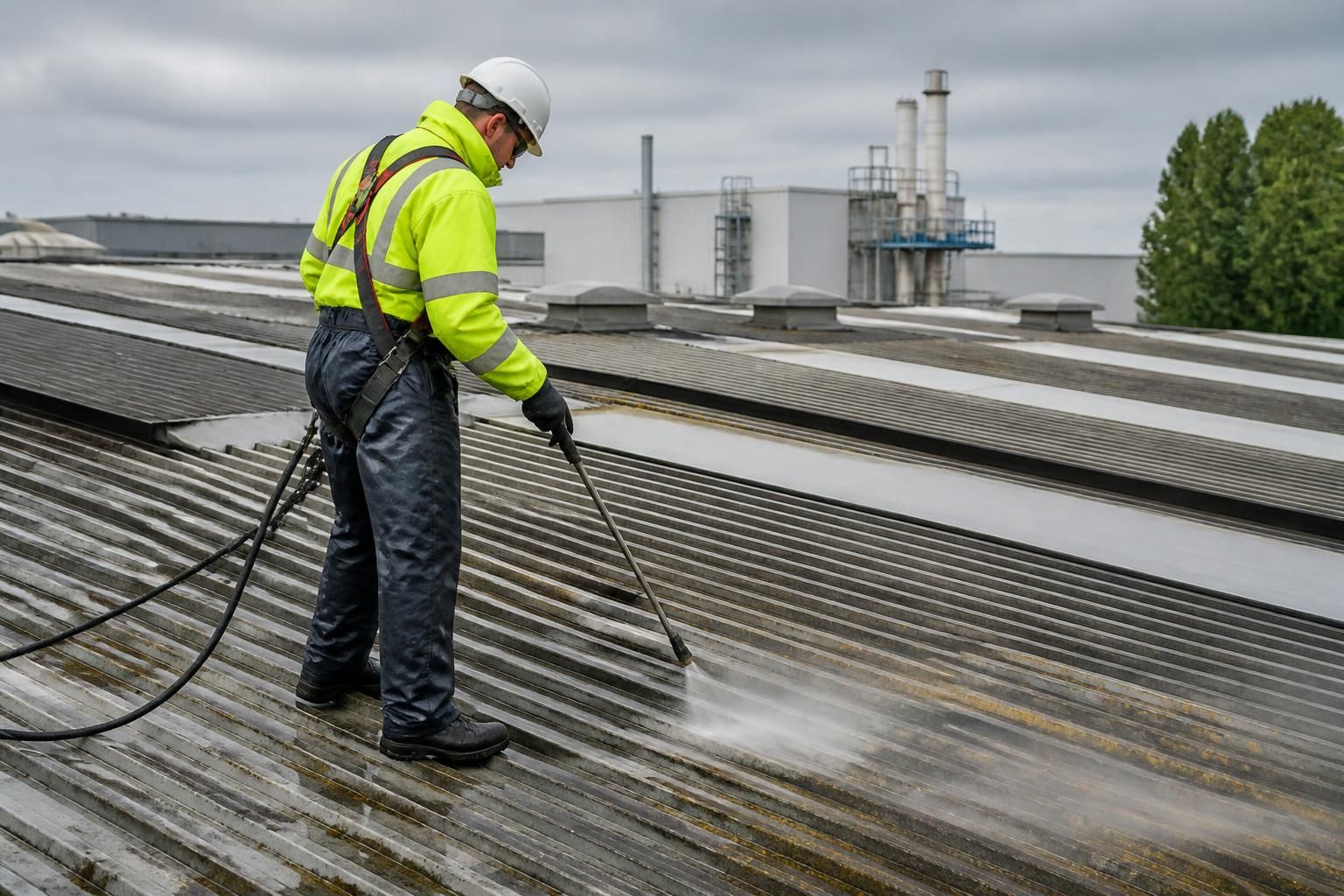
Where growth is loose, thick or obstructive, suitable physical cleaning may be required before treatment. Removing accumulated moss and debris exposes the roof surface and allows the biocide to contact the remaining biological contamination more evenly. The cleaning method must be appropriate to the material. Excessive pressure can dislodge tiles, drive water beneath laps, damage coatings or worsen existing defects, so softer washing, low-pressure application or steam cleaning may be more suitable in some situations.
Biocide treatment then deals with residual spores and organic contamination that may remain after cleaning. It is generally applied to a prepared, reasonably sound surface in accordance with the product instructions. Depending on the product and the roof material, visible improvement may occur gradually rather than immediately. A follow-up inspection can establish whether further treatment or light maintenance cleaning is appropriate.
Build treatment into planned inspections
Roof maintenance should be scheduled around the property’s exposure, the roof’s condition and the rate at which organic growth returns. Routine inspections can be used to check for early moss or lichen, blocked drainage, coating breakdown, biological staining and changes in water run-off. Treating limited regrowth at an early stage is usually less disruptive than waiting until growth becomes dense and firmly attached.
For commercial and industrial premises, the roof inspection can be coordinated with wider building maintenance. This may include façade and cladding checks, gutter clearance, external drainage inspections, roof access reviews and checks following severe weather. Keeping these tasks within one planned programme helps identify whether recurring growth is linked to shading, overhanging vegetation, defective drainage or another underlying condition.
Apply treatments under controlled conditions
Application should be carried out by trained personnel using the correct equipment, dilution and coverage for the selected product. Weather conditions are important: heavy rain soon after application can reduce contact time and increase the risk of run-off, while unsuitable wind conditions can carry spray beyond the intended treatment area. The operative should also consider temperature, surface dampness and the likelihood of public or vehicle movement below the work area.
Run-off must be controlled so that treated liquid does not enter watercourses, drainage systems or planted areas without appropriate safeguards. Gutters, downpipes, paved areas, vehicles, glazing and other vulnerable surfaces should be protected where necessary, and any collected residue should be managed in line with the product guidance and site controls. Work should be planned around the building’s operations, with suitable exclusion zones and communication for occupants, contractors and visitors.
Record the work and review the roof afterwards
A useful maintenance record should note the roof areas inspected, the condition found, the cleaning method used, the treatment applied, any restrictions or defects identified and recommendations for follow-up. Photographs can help compare changes over time, particularly on large roofs or multi-site property portfolios. The record also provides evidence that the roof has been managed systematically and helps future contractors understand the materials and treatments already used.
Follow-up should not focus only on whether the roof looks cleaner. The review should consider whether gutters and outlets remain clear, whether organic growth is returning, whether the surface is shedding water correctly and whether any defects have become more visible. If regrowth is rapid, the maintenance plan may need to address shading, nearby vegetation, poor ventilation or drainage rather than relying on repeated chemical application.
Plan around the roof’s material and intended service life
Not every biocide is suitable for every roof. Coated metal, older concrete tiles, natural slate, membranes and other specialist coverings may react differently to cleaning agents and application methods. Compatibility should be confirmed before work begins, particularly where the roof has a fragile finish, previous repairs, solar equipment, waterproofing layers or manufacturer-specific maintenance requirements.
Integrating treatment with regular maintenance helps preserve the roof’s functional condition, but it does not make the covering maintenance-free. Inspections, drainage clearance, minor repairs and safe access checks remain necessary. A site-specific programme that combines these measures can reduce the build-up of organic contamination, limit moisture-related problems and support more consistent roof performance over its working life.
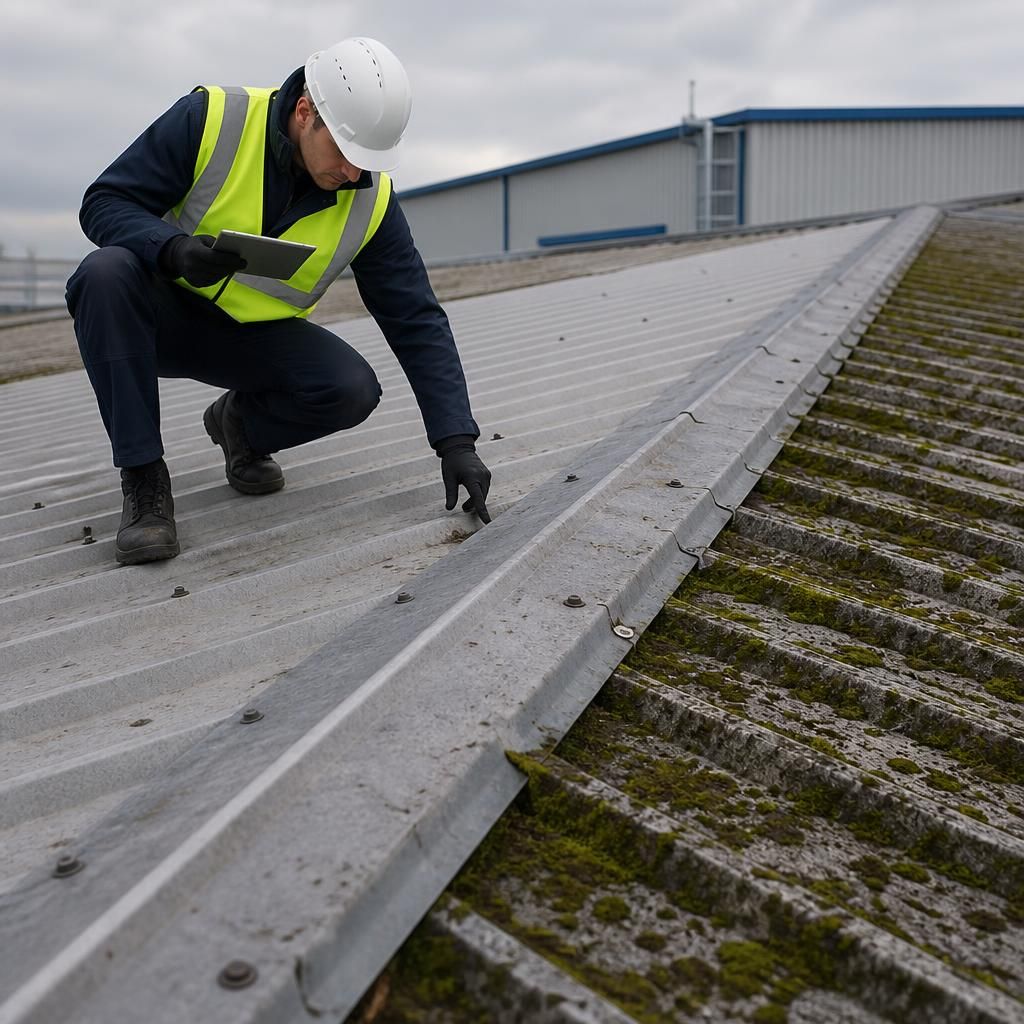
Integrating biocide treatment with scheduled roof inspections allows organic growth to be controlled before moss, algae or lichen contributes to moisture retention and surface deterioration. The treatment should form part of a wider maintenance process, rather than being used as a replacement for repairs, drainage clearance or safe access checks.
During each planned inspection, the roof should be checked for regrowth, blocked gutters, ponding water, damaged coverings and conditions that encourage contamination, such as heavy shading or overhanging vegetation. Where growth is established, suitable cleaning may be needed first so the biocide can reach the affected surface. The product and application method must be compatible with the roof material and used according to the manufacturer’s instructions.
- Inspect the roof and identify defects or drainage problems.
- Remove loose growth and debris using a suitable, non-damaging method.
- Apply the specified biocide under controlled weather and run-off conditions.
- Record the work and review the roof during future maintenance visits.
This approach helps maintain cleaner roof surfaces, supports effective water run-off and reduces the need for disruptive heavy cleaning. If organic growth returns quickly, the underlying cause should be investigated rather than relying on repeated treatment alone.
Plan Your Biocide Roof Maintenance Programme
Speak to Encanto Exterior Cleaning about incorporating biocide treatment into your planned roof inspections, cleaning and drainage maintenance programme. We can assess the roof covering and site conditions, then recommend a suitable, controlled approach for ongoing protection.