
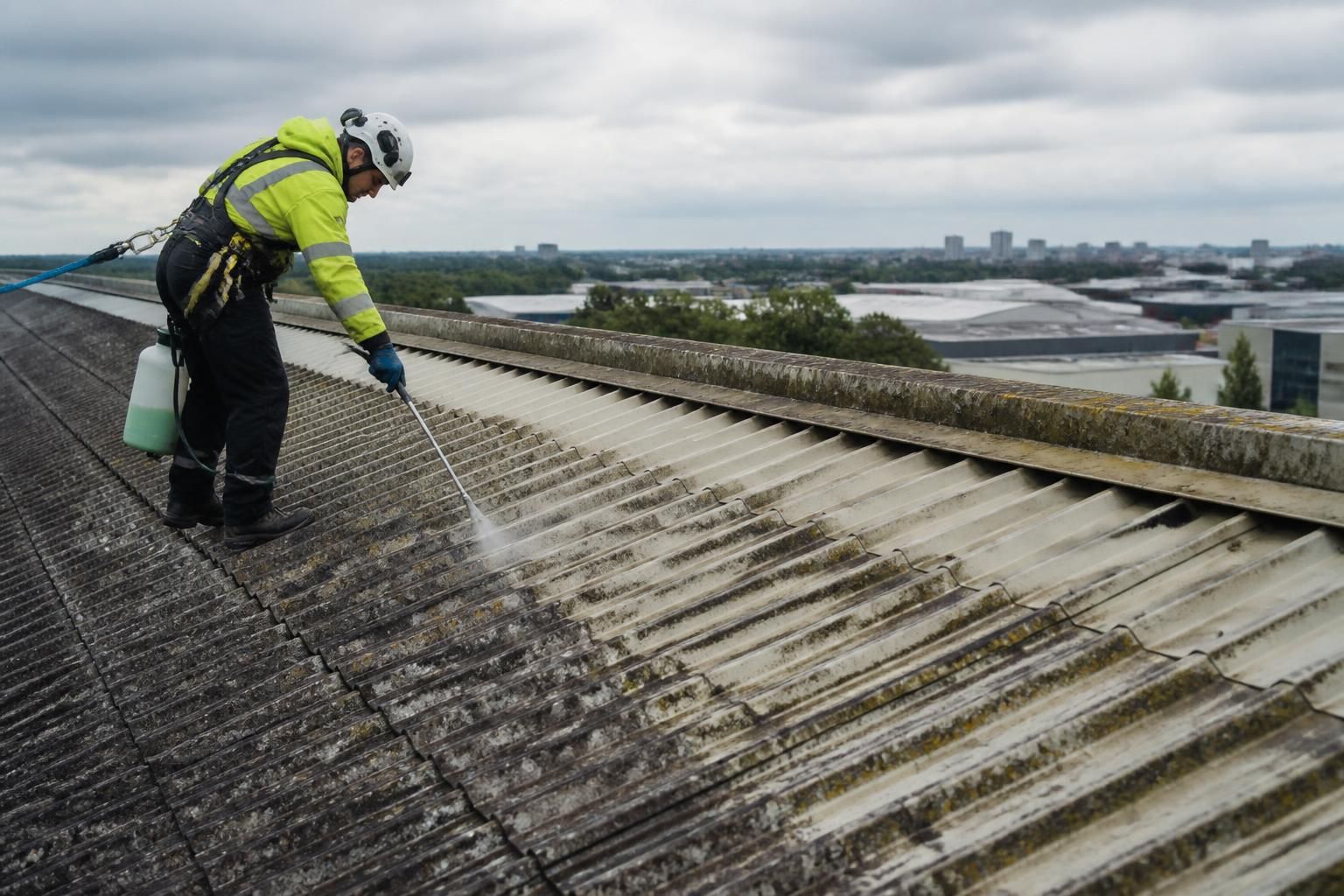
Can biocide treatments be applied to all roof types?
Biocide treatments can be suitable for many roof types, including tiles, slate and some coated or membrane systems, but they cannot be applied universally without checking material compatibility. The roof’s condition, existing coatings, drainage arrangements and the treatment manufacturer’s instructions should be assessed first to prevent staining, surface damage or unwanted chemical run-off.
Biocide treatments are suitable for many common roof coverings, including concrete tiles, clay tiles and some slate roofs, but they cannot be applied safely to every roof type. Suitability depends on the covering material, its condition, any existing coating, the formulation being used and how the roof drains. A professional assessment and a small test area should be completed before treating the full roof.
Concrete and clay roof tiles are often suitable for biocide treatment when they are structurally sound. Treatments can help control moss, algae, lichen and other organic growth after loose contamination has been removed or reduced. Older tiles may be porous, friable or already damaged by frost and weathering. Applying a treatment will not repair cracked, delaminated or heavily eroded tiles, so these defects should be identified before work starts.
Clay tiles can vary considerably in finish and porosity. Some have a protective or decorative surface that may be affected by an unsuitable chemical or aggressive application method. Concrete tiles may also have aged coatings or exposed aggregate. The treatment must therefore be compatible with the specific product and applied at the correct concentration and dwell time. Excessive pressure should not be used simply because a roof has been treated; the cleaning method must remain appropriate for the age and condition of the tiles.
Natural slate can sometimes be treated, but it requires particular care. Slate is generally less tolerant of rough handling than many modern tiles, and old slate may be thin, layered or vulnerable around fixings. A suitable biocide may be used where the manufacturer permits it, provided the roof is assessed for slipped, cracked or loose slates first. Walking directly on slate can cause breakage, so access arrangements are an important part of the method statement. Mortar joints, leadwork and adjacent materials should also be protected from unnecessary chemical contact.
Coated metal roofs may be compatible with selected biocide products, but the coating must be checked first. Chemical exposure can dull, stain or soften certain finishes, particularly where the coating is already chalking or has started to fail. The assessment should consider the metal type, painted or plastisol finish, corrosion, exposed fixings and the condition of sealants. Any treatment used should be approved for the surface and rinsed or controlled in accordance with the product instructions.
Fibre cement and asbestos-containing roofing must not be treated as ordinary sheet roofing. Fibre cement can be fragile, and asbestos-containing materials present a separate risk if fibres are released through abrasion, impact or unsuitable pressure washing. The roof’s age and documentation should be checked where asbestos is possible. Work on asbestos-containing materials requires appropriate assessment, controls and competent handling; a routine roof biocide application may be unsuitable.
Single-ply membranes and other flat-roof systems, such as EPDM, PVC and TPO, may accept some low-impact treatments, but compatibility is product-specific. The membrane, welded seams, adhesives, edge details, insulation system and protective finish all need consideration. A chemical that is safe for one membrane may damage another or affect seams and warranty conditions. Standing water, roof outlets and drainage channels should be checked because retained solution can create prolonged contact with the membrane or discharge into an unsuitable drainage system.
GRP, fibreglass, liquid-applied and coated systems also need a manufacturer-approved approach. These surfaces can contain resins, pigments or topcoats that respond differently to alkaline or oxidising products. A test patch should be inspected for colour change, loss of gloss, tackiness, surface marking and any change to the coating before wider application. Where a roof is under warranty, the treatment should be checked against the warranty requirements in advance.
Thatched roofs are generally not appropriate for routine biocide treatment. Thatch is a specialist natural covering with different requirements for moisture management, fire safety and preservation. Applying chemicals may affect the material or introduce risks that are not present on tiled roofs. Any treatment of thatch should only be considered following advice from a suitably qualified thatched-roof specialist and the product manufacturer.
Roof condition is as important as roof material. A treatment may be unsuitable where the covering is severely degraded, leaks, has exposed underlay, failed flashings or blocked drainage. Moss growth can conceal defects, while chemical application and subsequent rainfall may move loosened material into gutters and downpipes. Gutter capacity, rainwater outlets, nearby watercourses, planted areas and neighbouring property should be included in the assessment and control plan.
A responsible application normally includes the following checks:
- Identify the roof covering and any painted, sealed or waterproofed finish.
- Inspect for cracks, loose sections, corrosion, leaks, failed joints and fragile areas.
- Read the product label, safety data sheet and manufacturer’s compatibility guidance.
- Complete a discreet test patch and allow sufficient time to assess the result.
- Protect or isolate sensitive surfaces, vehicles, plants, water features and drainage routes where necessary.
- Apply the product at the specified dilution and keep it within the intended treatment area.
- Control access, protect operatives and prevent contact with building occupants and the public.
- Inspect gutters and outlets after the work and remove displaced organic material safely.
Biocide treatment is not always a substitute for physical cleaning. Some products are designed to remain on the surface and gradually reduce biological growth, while others are intended for use alongside a controlled cleaning process. They will not remove all staining immediately, and they cannot correct damage caused by roots, frost, corrosion or failed fixings. The expected result should be agreed before work begins, particularly where the roof forms part of a commercial building with access, drainage or appearance requirements.
In practice, the safest answer is based on the individual roof rather than its general category. If the material, coating or condition is uncertain, treatment should be paused until it has been identified and a compatible method confirmed. For commercial and industrial premises, the assessment should also cover access equipment, COSHH controls, weather conditions, run-off management and the requirements of the building owner or roof-system manufacturer.
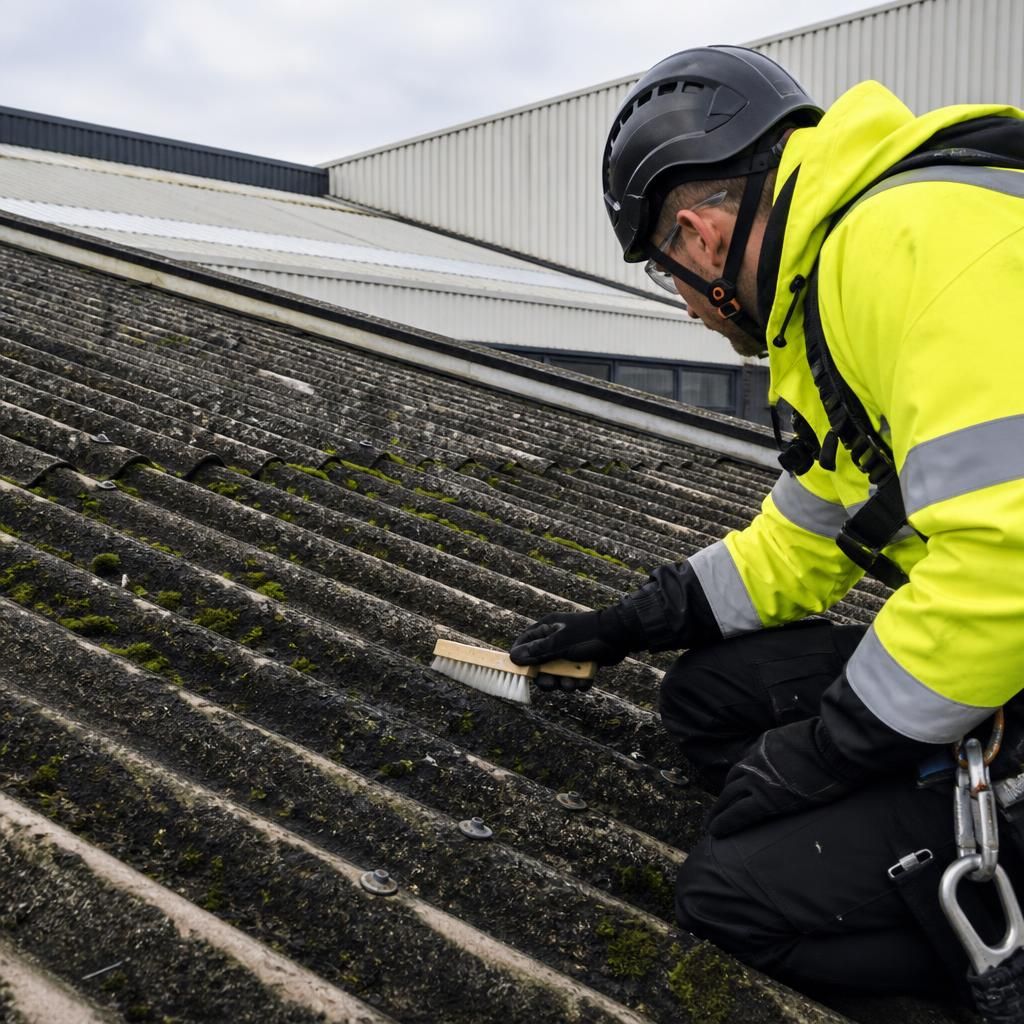
Biocide treatments cannot be assumed suitable for every roof covering. Before full application, the product should be checked against the roof material, coating and condition, then tested on a small, discreet area.
The test area should be inspected after the recommended dwell time for colour change, loss of gloss, softening, staining or damage to the surface. This is particularly important for coated metal, slate, GRP, liquid-applied systems and single-ply membranes, where an incompatible treatment may affect the finish, seams or warranty. If the result is unsuitable, treatment should stop until the roof-system manufacturer or a qualified specialist confirms an appropriate alternative.