
Why is bio cleaning preferred for ecologically sensitive landscapes involving stone surfaces?
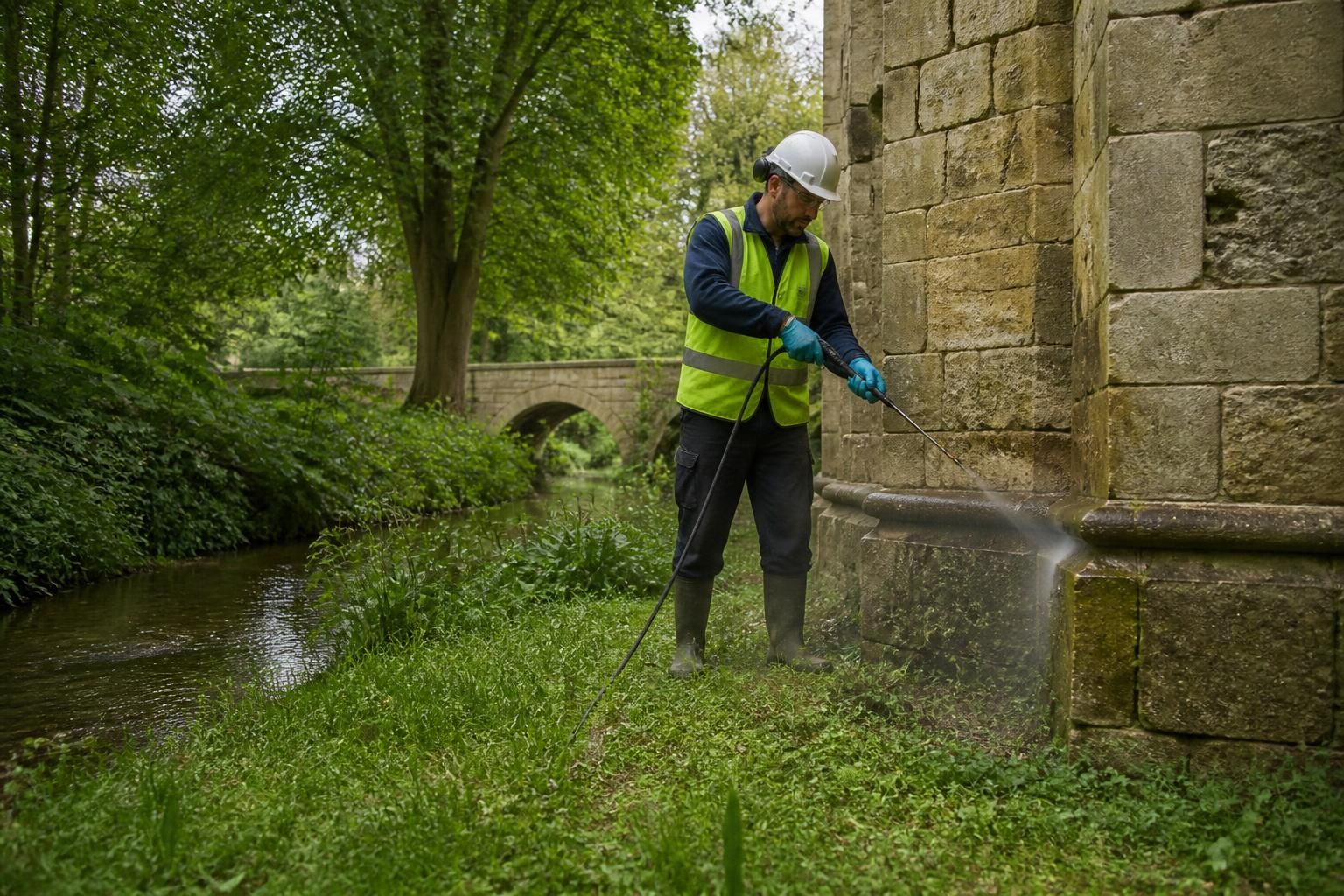
Bio cleaning is preferred for ecologically sensitive landscapes because it uses carefully selected, biodegradable treatments to break down organic growth and surface contamination with less risk to surrounding soil, plants, wildlife and watercourses. On stone surfaces, it can provide effective cleaning while reducing the abrasion, dust and chemical impact associated with harsher mechanical or conventional cleaning methods.
Bio cleaning is preferred in ecologically sensitive landscapes because it can remove biological growth and surface contamination from stone with less abrasion, dust, runoff and environmental impact than aggressive mechanical cleaning or unsuitable chemical treatments. Carefully selected, biodegradable cleaning products are applied in a controlled manner, allowing the stone to be cleaned while reducing risks to surrounding soil, vegetation, wildlife and watercourses.
It reduces physical damage to stone. Mechanical cleaning methods can erode the surface of sandstone, limestone and other porous materials, particularly where the stone is weathered, friable or already weakened by moisture and frost. High-pressure water can open pores, dislodge fragile edges and drive water into joints. Bio cleaning generally relies on dwell time and chemical action rather than force, so the operator can use lower pressure and gentler rinsing. This is important for historic walls, landscaped stonework, memorials, retaining structures and natural rock features.
It is better suited to sensitive surroundings. Ecologically sensitive landscapes may contain mature planting, protected habitats, drainage channels, ponds or soils that should not be exposed to unnecessary contamination. A suitable bio cleaning treatment breaks down or loosens organic soiling, including algae, moss, lichen and other biological growth, without relying on highly aggressive acids, solvents or caustic products. Lower-impact chemistry does not remove the need for environmental controls, but it can make the cleaning operation easier to manage responsibly.
It helps control dust and displaced contamination. Dry mechanical cleaning can release dust and fragments into the surrounding environment. Abrasive methods may also spread spores, fine particles and degraded coating material beyond the work area. Bio cleaning is normally carried out as a damp, controlled process, with the treatment and softened contamination kept close to the surface. Rinsing and collection arrangements can then be planned to prevent polluted water entering surface drains or natural watercourses.
It protects the appearance and character of the stone. Stone surfaces often have an uneven texture, aged patina or naturally open pore structure. Over-cleaning can leave a patchy appearance or expose fresh, vulnerable material beneath the original surface. A bio cleaning approach allows the operator to work progressively, assess the result and stop once the required level of cleaning has been achieved. This is preferable where the objective is to remove harmful growth and staining without making old stone look unnaturally new.
Bio cleaning can also be useful where conventional cleaning would create excessive water use, noise or vibration. This is relevant in public gardens, heritage settings, occupied properties and areas close to wildlife. The method is not automatically suitable for every contaminant, however. Thick cement residues, rust, paint, oil and deeply embedded mineral staining may require a different treatment, such as a carefully selected poultice, specialist chemical process or limited mechanical intervention. The cleaning method should therefore be chosen according to the stone type, contamination, drainage conditions and ecological constraints.
A responsible bio cleaning process normally includes:
- Inspecting the stone, joints, coatings and surrounding landscape before work begins.
- Identifying the contamination and checking whether it is biological, mineral, cement-based or a mixture of deposits.
- Reviewing nearby planting, watercourses, drainage routes and access limitations.
- Testing the proposed treatment on an inconspicuous area to check compatibility, dwell time and the final appearance.
- Protecting vulnerable vegetation and controlling runoff, overspray and rinse water.
- Applying the product at the lowest effective concentration and allowing sufficient contact time.
- Removing loosened contamination with low-pressure rinsing or another appropriately gentle method.
- Inspecting the surface afterwards and carrying out further treatment only where necessary.
The term “bio cleaning” should not be taken to mean that every product is harmless in every situation. Biodegradable products can still affect aquatic life, soil organisms or vegetation if they are misapplied or discharged without control. Product instructions, safety data, site-specific risk assessments and any relevant environmental restrictions must be followed. Where a site has protected habitats, sensitive waterways or heritage stone, professional assessment is particularly important.
For ecologically sensitive landscapes, the main advantage is therefore the balance between effective cleaning and controlled intervention. Bio cleaning can preserve the physical integrity of stone, reduce disturbance to the surrounding environment and provide a more measured alternative to abrasive or highly aggressive methods. Its suitability depends on accurate diagnosis, testing, careful application and responsible management of all cleaning residues.
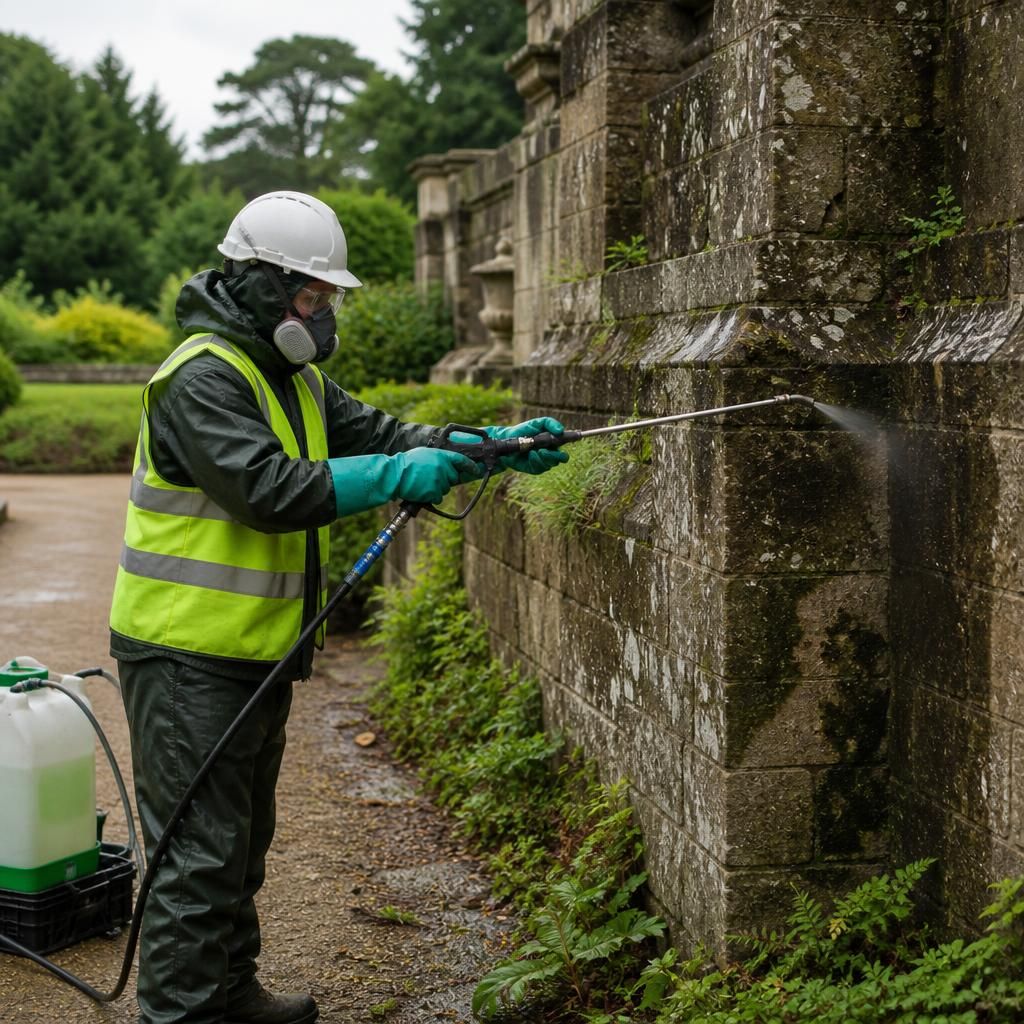
Bio cleaning is preferred in sensitive landscapes because it can loosen biological growth from stone using controlled chemical action rather than aggressive abrasion. This allows lower-pressure rinsing, helping reduce damage to porous or weathered surfaces while limiting dust, vibration and disturbance to nearby planting, soil and wildlife.
The method still requires careful site management. Vegetation, drains and watercourses should be protected, runoff contained and the treatment tested on an inconspicuous area before wider application. Biodegradable products are not automatically harmless, so product guidance, suitable dilution and responsible collection or disposal of rinse water remain essential.
Arrange a Bio Cleaning Assessment for Your Stone Landscape
Arrange a bio cleaning assessment for your stone landscape so we can review the surface, contamination, surrounding ecology and suitable treatment controls. We can recommend a practical cleaning approach that protects the stone and helps manage risks to nearby soil, planting and watercourses.