
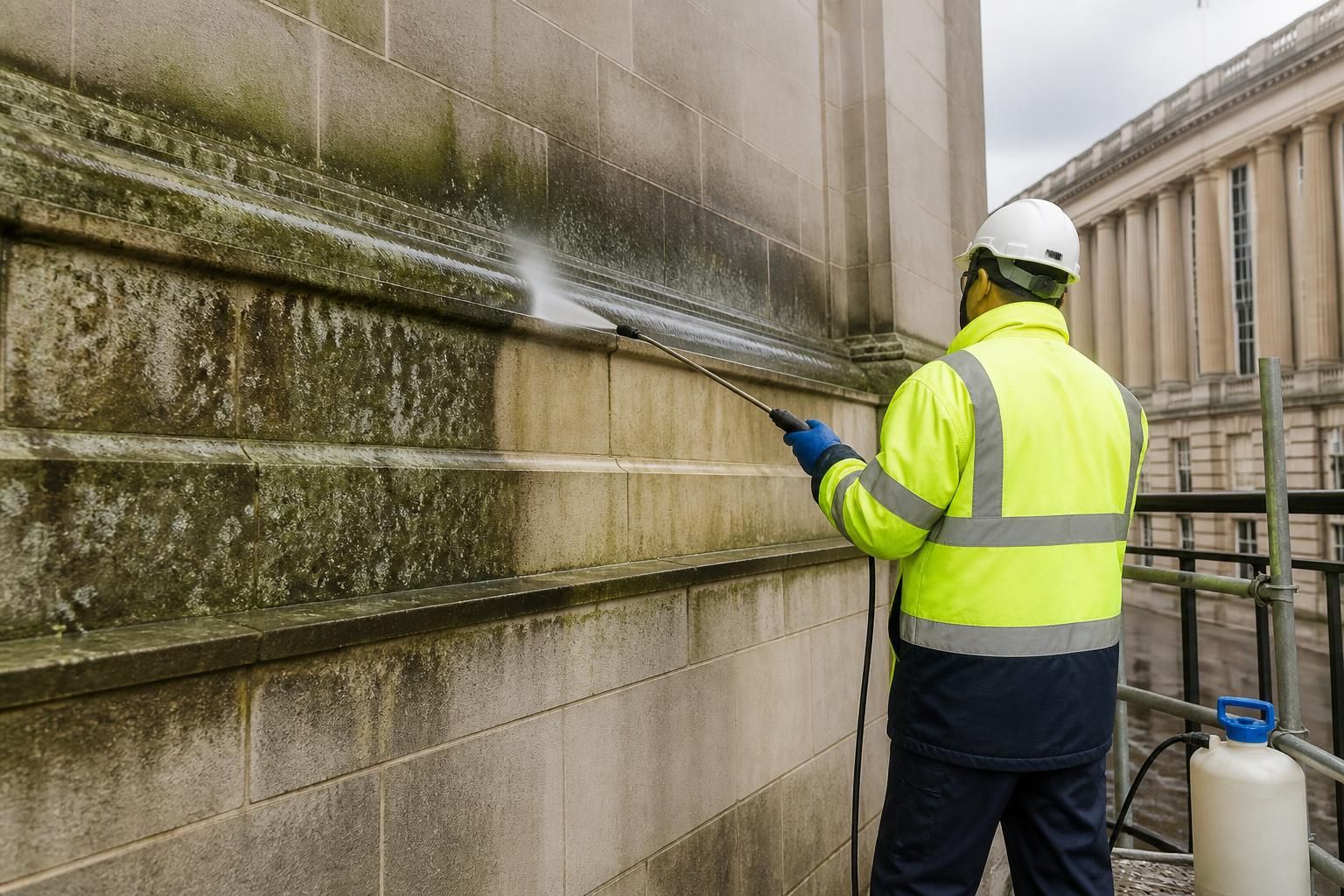
What types of stone and cement surfaces can benefit from bio cleaning?
Bio cleaning can benefit natural stone such as sandstone, limestone, granite and slate, along with cement-based surfaces including render, concrete, paving, façades and masonry. It is particularly suitable where dirt, algae, moss, organic growth or cement residues need removing while reducing the risk of abrasion or damage to the underlying surface.
Bio cleaning can benefit a wide range of natural stone and cement-based surfaces, particularly where dirt, algae, moss, organic growth, atmospheric staining or cement residues need to be removed without relying on aggressive abrasion. It is commonly considered for sandstone, limestone, granite, slate, concrete, render, paving, masonry, façades, kerbs and other mineral surfaces. The most suitable method depends on the substrate, its condition, the type of contamination and whether the surface is historic, decorative or structurally sensitive.
Unlike purely mechanical cleaning, bio cleaning uses carefully selected cleaning products and controlled application methods to break down organic contamination and, where appropriate, soften or release cementitious residues. This can reduce the need for forceful pressure, abrasive blasting or repeated scrubbing. It does not mean that every stone or cement surface can be treated in the same way: porous, friable, polished, weathered and repaired areas all require different controls.
Natural stone surfaces that may benefit include:
- Sandstone: Bio cleaning is often suitable for removing algae, moss, lichen, soiling and cement staining from sandstone, which can be vulnerable to aggressive pressure and abrasive methods. The product selection, dwell time and rinsing procedure must be controlled to avoid disturbing the stone matrix or existing pointing.
- Limestone: Limestone façades, walls, paving and architectural details can accumulate organic growth and atmospheric dirt. Because limestone may react adversely to unsuitable acidic or alkaline products, a compatible bio-cleaning system and a small test area are essential.
- Granite: Granite is dense and durable, but its joints, textured finishes and surrounding materials may still be affected by incorrect cleaning. Bio cleaning can help remove biological growth and surface soiling where preserving the finish is more important than using high mechanical pressure.
- Slate: Slate roofs, paths, steps and walling can develop algae, moss and lichen, especially in shaded or damp locations. Controlled cleaning is important because excessive pressure can lift edges, open natural laminations or damage adjacent pointing.
- Reconstituted and composite stone: Manufactured stone products may contain cement, aggregates, pigments or surface coatings that respond differently to cleaning. A test panel helps establish whether bio cleaning is appropriate and confirms that the appearance will remain consistent.
Cement-based surfaces that may benefit include:
- Concrete: Concrete walls, slabs, car parks, loading areas, paving and retaining structures can be treated for organic growth, general dirt, staining and some cementitious deposits. The required approach varies between smooth, power-floated, brushed, exposed aggregate and heavily weathered concrete.
- Render and stucco: Rendered façades can collect algae, traffic film, soot and other atmospheric soiling. Bio cleaning may provide a lower-impact alternative to high-pressure washing, particularly where the render is aged, cracked, weak or painted.
- Concrete paving and blockwork: Paths, courtyards, service yards, kerbs and block paving commonly develop moss, algae, weeds and embedded dirt. Treatment may be used as part of a wider maintenance programme, although joints, drainage and nearby planting must be protected.
- Cement-based masonry and façades: Cement-rich masonry, concrete panels and external building elements can benefit where deposits are surface-bound and the underlying finish needs to be preserved. Testing is especially important on façade panels with coatings, sealants or previous repairs.
- Cement residues on stone: Mortar splashes, laitance and construction residues on sandstone, limestone or other masonry may sometimes be softened or reduced using a suitable bio-cleaning process. Older, thick or hardened deposits may require several controlled stages rather than one aggressive treatment.
Bio cleaning is particularly useful where contamination is biological or organic in nature. Typical examples include green algae, black spot, moss, lichen, bird fouling, leaf staining, soil deposits and general atmospheric grime. It can also have a role in removing cement haze and other mineral residues, but the product must be chosen for the specific deposit. A treatment effective against organic growth is not automatically suitable for hardened mortar, cement or mineral scale.
The condition of the surface is as important as its material. Sound, dense stone and concrete generally provide more options than surfaces that are delaminating, powdery, cracked or heavily weathered. Particular care is needed around open joints, repaired sections, friable edges, carved details, exposed aggregate and areas with previous water ingress. Cleaning may reveal defects that were concealed by dirt, so a condition assessment should be completed before work starts.
Historic and listed masonry can benefit from bio cleaning when the method is selected to preserve the original fabric, but it should not be treated as a standard wash-down operation. The cleaning specification may need to account for the stone’s porosity, salt content, weathering pattern, mortar type and any conservation requirements. Where cement has been applied to older sandstone or limestone, removing the residue must be balanced against the risk of pulling out weak grains or damaging the surrounding surface.
Bio cleaning is not always the right choice. Deeply embedded oil, rust, paint, tar, severe efflorescence or thick hardened cement may require a different treatment or a combination of methods. Some surfaces may also have coatings, sealants or pigments that are sensitive to the cleaning chemistry. Mechanical cleaning, steam cleaning, low-pressure washing or specialist poultice treatment may be considered instead, or used in carefully controlled combination with bio cleaning.
A suitable assessment normally considers:
- the exact type of stone, cement or manufactured finish;
- whether the surface is porous, polished, textured, coated, painted or sealed;
- the nature, age and thickness of the contamination;
- the condition of joints, edges, repairs and adjacent materials;
- run-off controls, drainage and the presence of plants, watercourses or sensitive areas;
- the required final appearance and whether colour variation or previous repairs may become more visible.
A small inconspicuous test area should be completed before full-scale cleaning. This confirms that the product and contact time are compatible with the surface, shows how readily the contamination releases and identifies any change in colour, texture or sheen. The area should be reviewed after rinsing and drying, since some effects are not apparent while the stone is wet.
For commercial and industrial sites, bio cleaning is often most effective as part of a planned maintenance approach rather than a one-off response to heavy staining. Regular inspection can identify early biological growth, failed joints, drainage problems and areas that remain damp. Correcting those underlying conditions helps reduce recurrence and avoids the need for increasingly intensive cleaning.
In practical terms, the surfaces most likely to benefit are sound natural stone and cement-based materials affected by organic growth, surface dirt or compatible cement residues, especially where preserving the substrate is a priority. The final method should always be based on an assessment and test rather than on the material name alone. This is particularly important for sandstone, limestone, historic masonry, weathered render and any surface with existing damage or specialist finishes.
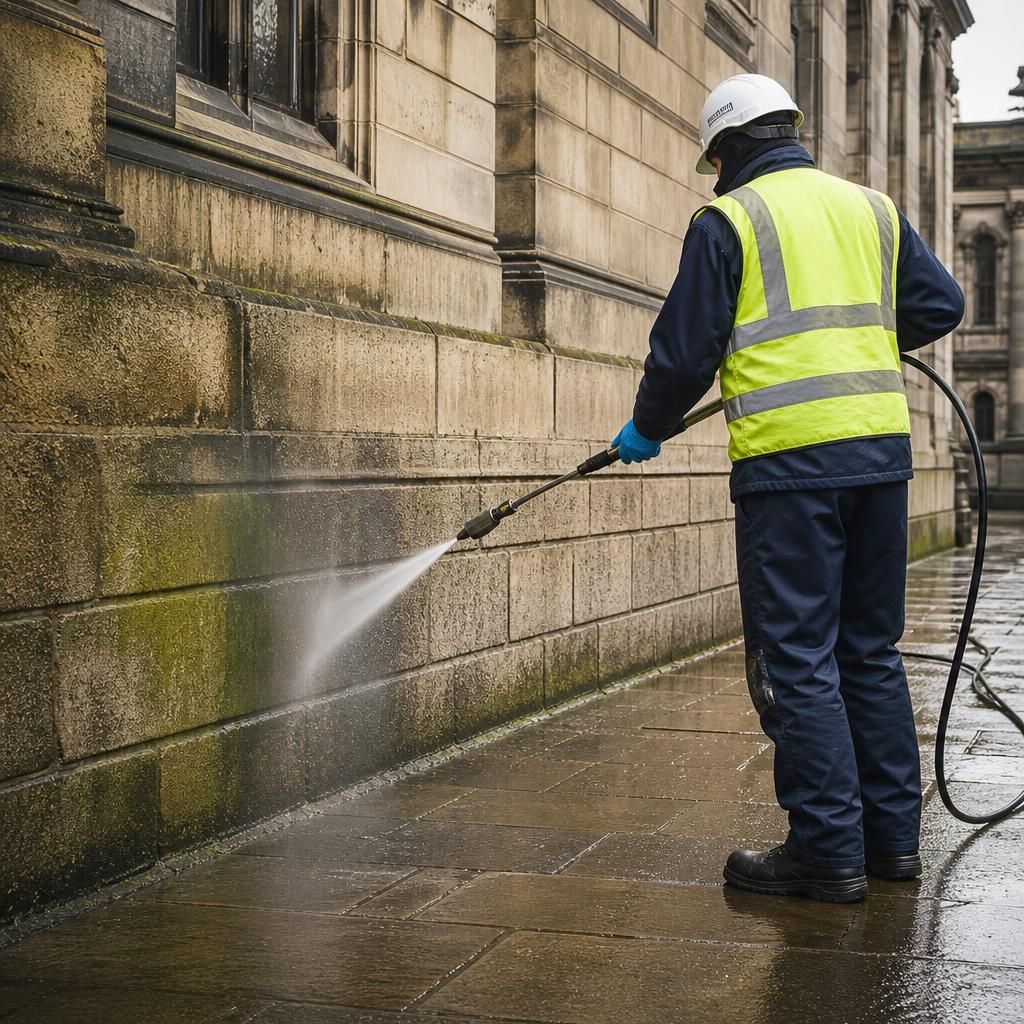
Bio cleaning is particularly beneficial for porous and weather-sensitive surfaces such as sandstone, limestone, aged render and concrete affected by algae, moss, lichen or surface grime. It uses controlled cleaning chemistry to loosen contamination, reducing reliance on aggressive pressure or abrasive techniques that may erode the surface, disturb pointing or expose existing defects.
It can also be considered for granite, slate, block paving, cement-based façades and reconstituted stone, provided the product is compatible with the material and its finish. A small test area should always be assessed after rinsing and drying, as porosity, coatings, repairs and previous weathering can affect the result. Cement splashes and mortar residues may require a separate or combined treatment rather than a product intended only for biological growth.
Arrange a Bio Cleaning Assessment for Your Stone or Cement Surface
Arrange a bio cleaning assessment for your stone or cement surface so we can identify the substrate, contamination and any areas requiring special controls. We can then recommend a suitable treatment and confirm its compatibility with a discreet test area.