
What precautions should be taken when using bio cleaning on delicate stone surfaces?
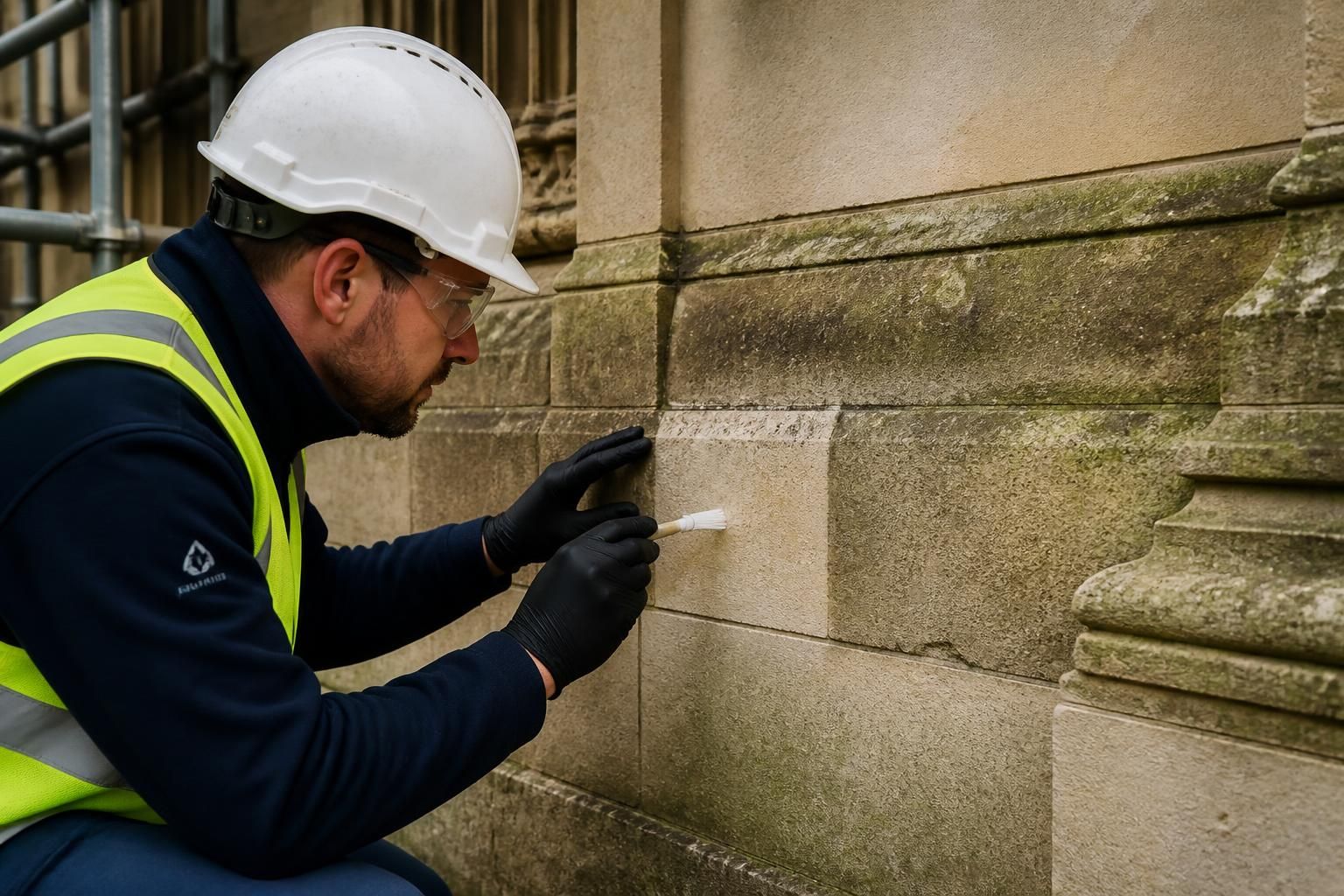
When using bio cleaning on delicate stone surfaces, first carry out a small, discreet test area to confirm compatibility, then apply the product at the correct concentration and dwell time without allowing it to dry. Protect adjacent materials, control runoff, avoid aggressive agitation or pressure, and use a suitably experienced technician to assess the stone, weather conditions and existing damage before full application.
Bio cleaning on delicate stone surfaces should be controlled through a documented assessment, a discreet compatibility test, accurate product preparation and gentle application. The product must be suitable for the specific stone and contamination, used in accordance with its technical data and safety instructions, and kept under supervision throughout its dwell period. This is particularly important for sandstone, limestone, historic masonry and surfaces with weathered joints, friable areas or previous repair work.
Assess the stone before cleaning
Before applying any bio cleaning solution, inspect the surface and record its condition. Identify the stone type, surface finish, previous coatings, mortar joints, repairs, cracks, open pores, delaminated areas and signs of salt activity. A surface that appears sound may still have weakened faces or poorly bonded repairs that could be affected by moisture, handling or rinsing.
- Check whether the stone is polished, honed, textured, painted, sealed or otherwise treated.
- Identify areas that are already loose, powdery, spalled or prone to flaking.
- Confirm whether adjacent materials, such as metal, glass, timber, render or painted surfaces, may react with the cleaning product or retain residues.
- Consider the source of the staining, as biological growth, cement residues, atmospheric soiling and salts may require different treatments.
Where the building is listed, historically significant or subject to conservation requirements, the cleaning method should be agreed with the relevant client representative or conservation professional before work begins. Cleaning should not be used to conceal defects that require repair.
Carry out a discreet test area
A test patch is essential and should be placed in an inconspicuous location that represents the main surface. It should reproduce the proposed application, dwell time, agitation and rinsing method rather than being a superficial product check. After the area has dried, inspect it for colour change, etching, patchiness, raised grain, loss of surface detail, mortar damage and any change in water absorption.
Some effects are not immediately visible, so the test should be reviewed after an appropriate observation period. The result should be recorded and approved before proceeding. If the test produces an uncertain or uneven result, stop and reassess the product, dilution, dwell time or overall method instead of expanding the treatment.
Control product strength and contact time
Use only a product confirmed as suitable for the stone and the type of contamination. Follow the manufacturer’s instructions, safety data and any site-specific method statement. Do not increase the concentration or extend the dwell time in an attempt to speed up cleaning. Delicate stone can be affected by excessive chemical contact even when a product is intended for masonry.
Prepare the solution accurately and apply it evenly. Keep the treated area under observation and prevent the product from drying on the surface, particularly in warm, windy or highly absorbent conditions. If drying is likely, work in smaller sections or adjust the application procedure in line with the product guidance. Do not allow partially treated areas to develop visible overlaps or tide marks.
Protect adjoining materials and control runoff
Mask or otherwise protect windows, doors, metal fittings, electrical equipment, painted surfaces, timber, soft landscaping and vulnerable paving. Pre-wetting or other forms of protection may be appropriate for some surrounding materials, but this must be compatible with the cleaning system and site conditions.
Runoff should be contained and managed so that dissolved contamination and cleaning residues do not enter drains, watercourses, planted areas or neighbouring properties. Follow the agreed site drainage and waste procedures, and check local requirements where the work is carried out near environmentally sensitive areas. Never assume that a product described as bio-based or biodegradable can be discharged without controls.
Use gentle agitation and rinsing
Bio cleaning should not be combined with aggressive brushing, abrasive pads or high-pressure washing on fragile stone unless the method has been specifically tested and approved. Use soft, non-abrasive agitation only where necessary, working with the surface rather than scrubbing across exposed grain or eroded detail.
Rinse thoroughly using the least aggressive method that removes the product and loosened contamination. Excessive pressure can drive water into joints, open pores and cracks, while insufficient rinsing may leave residues that continue to affect the surface. Rinsing should be controlled to avoid saturating vulnerable masonry or forcing contaminated water into the building fabric.
Choose suitable weather and site conditions
Do not apply bio cleaning products during conditions that make control difficult, such as strong sunlight, high wind, heavy rain, frost or extreme temperatures. Weather affects drying, dwell time, runoff and the ability to rinse consistently. Provide suitable access, exclusion zones and protection for people using the building, especially where treatment is taking place above entrances or public areas.
Use competent operators and keep records
Delicate stone cleaning should be carried out by technicians who understand masonry behaviour, chemical handling, access safety and low-impact cleaning techniques. The method statement should identify the product, dilution, application process, test results, protection measures, runoff controls, rinsing procedure and any restrictions imposed by the building or site.
After completion, inspect the stone in both wet and dry conditions where practical. Check that residues have been removed and that no new staining, streaking, discolouration, surface loss or joint erosion has occurred. Record any areas requiring further observation rather than repeatedly treating them. These precautions allow bio cleaning to remove appropriate contamination while reducing the risk of altering the colour, texture, porosity or historic character of delicate stone surfaces.
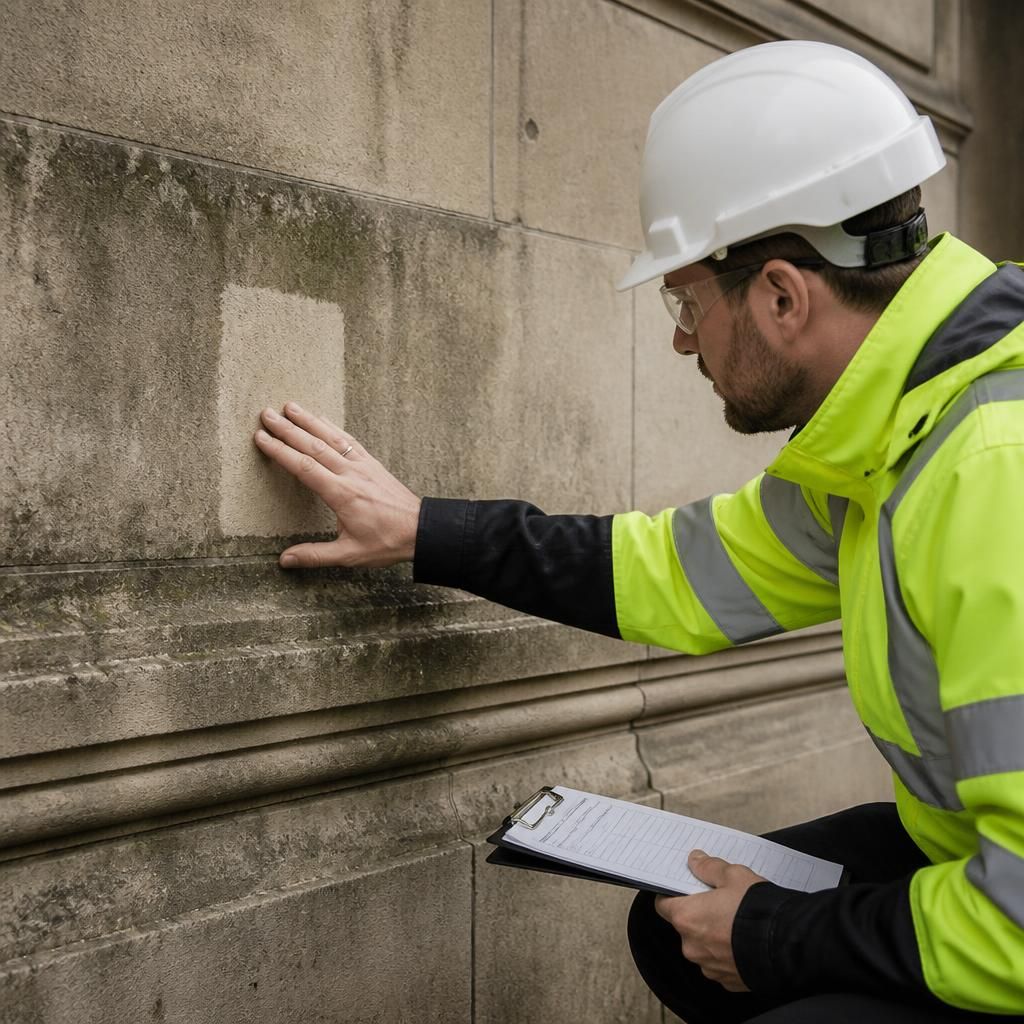
A discreet test patch is the most important precaution when using bio cleaning on delicate stone. Apply the proposed product at its intended dilution, dwell time, agitation and rinsing method to a representative area that is not readily visible. Once dry, check for colour change, etching, patchiness, raised grain, mortar damage and altered water absorption. Review the test again after an appropriate observation period, as some effects are not immediately apparent. Do not proceed with full-scale cleaning until the result has been assessed and approved.
Request a Delicate Stone Cleaning Assessment
Contact Encanto Exterior Cleaning to arrange a professional assessment before bio cleaning is carried out on delicate stone, historic masonry or vulnerable joints. We can review the surface, identify suitable precautions and recommend a controlled cleaning method.