
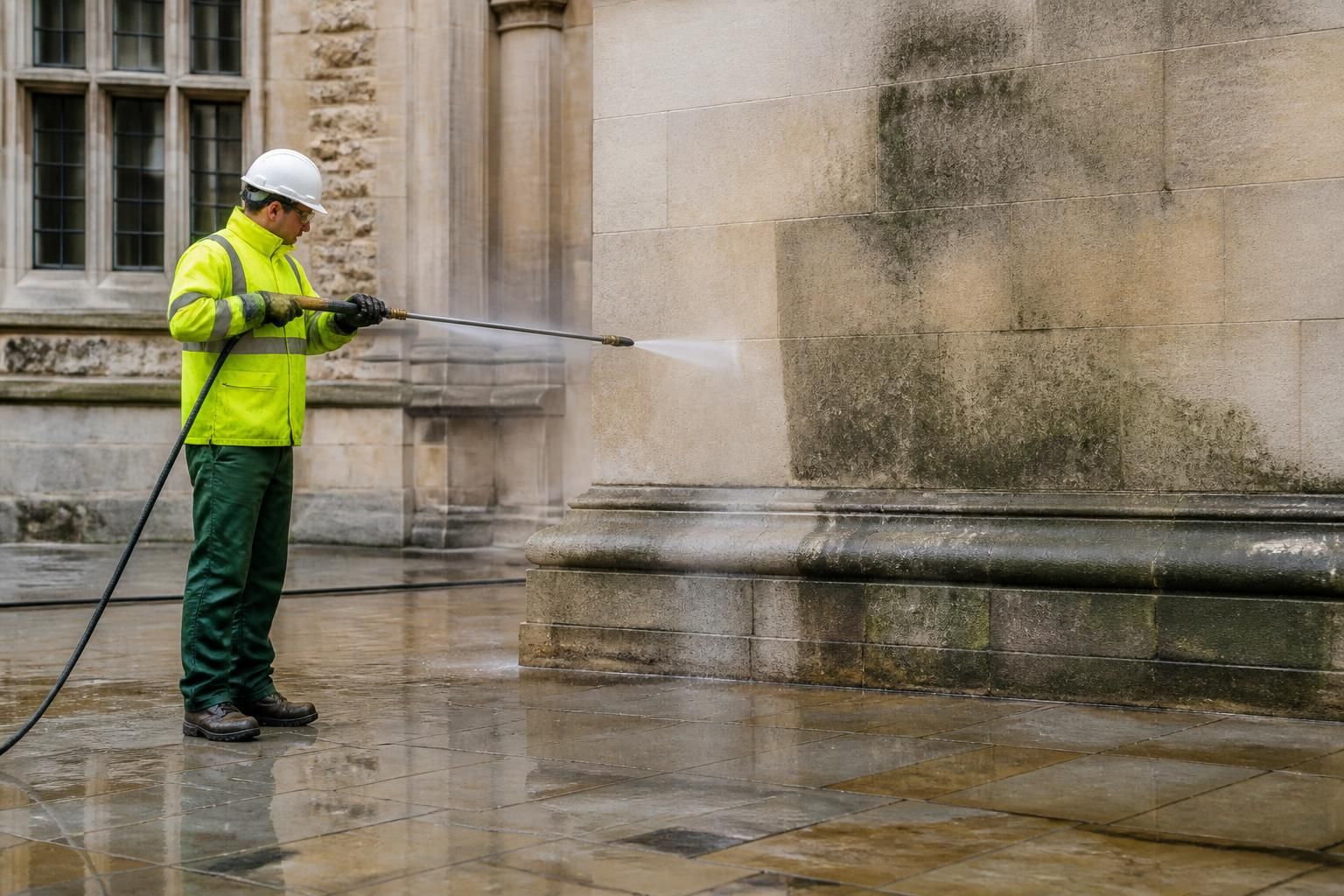
What are the environmental benefits of using bio cleaning for stone and cement surfaces?
Bio cleaning uses biodegradable, lower-impact cleaning agents to break down cement residues and organic soiling on stone and cement surfaces, reducing reliance on harsh chemicals and abrasive methods. When correctly specified and contained, it can also reduce surface damage, water use and contaminated run-off, helping extend the life of existing materials and minimise waste from repairs or replacement.
Bio cleaning can reduce the environmental impact of cleaning stone and cement surfaces by using biodegradable or lower-impact cleaning agents, gentler application methods and controlled rinsing instead of relying solely on aggressive chemicals, abrasive blasting or high-pressure washing. When the system is correctly selected for the material and the waste water is properly contained, it can help protect existing surfaces, reduce repair-related waste and limit pollution risks.
Reduced use of harsh chemicals
Traditional cement and stain removal may involve strong acids, alkalis, solvents or other chemicals that can present risks to plants, soil, drainage systems and aquatic environments if they are misused or allowed to escape from the work area. Bio cleaning products are typically formulated to break down organic soiling or assist with the controlled removal of cement residues using less aggressive chemistry. This can reduce the hazard associated with storage, handling and disposal, although the exact environmental profile depends on the product formulation.
Biodegradable does not automatically mean harmless. A product may still affect vegetation, wildlife, metals or porous stone, and any cleaning agent must be assessed against its safety data, intended use and the surrounding environment. Professional specification is therefore important, particularly near watercourses, planted areas, public spaces and listed or historic buildings.
Less abrasion and reduced damage to materials
Bio cleaning can reduce the need for abrasive methods such as grit blasting, aggressive brushing or mechanically chiselling hardened cement from stone. These methods can remove part of the masonry surface, open the pores, expose aggregate or leave scratches and uneven patches. Chemical or biological action can soften or loosen the contaminant before a controlled rinse or gentle agitation is used.
Preserving the original stone or cement surface is an environmental benefit because it avoids unnecessary replacement. Retaining existing masonry reduces demand for new raw materials, manufacturing energy, transport and packaging. It can also reduce the amount of damaged material sent to landfill. This benefit depends on the cleaning method being carefully controlled; an unsuitable product or excessive dwell time can still damage sensitive stone.
Potentially lower water and energy demand
Where bio cleaning loosens contamination effectively, less intensive pressure, agitation and repeated rinsing may be required. This can reduce water consumption compared with a process that depends on prolonged high-pressure washing. Lower equipment pressure can also reduce energy demand and the risk of mist or spray spreading beyond the work area.
Actual water and energy use varies with the surface, the thickness of the cement residue, access conditions and the required finish. Bio cleaning is not automatically waterless or low-energy. The environmental advantage is greatest when the contractor uses targeted application, allows the product to work for the specified time and rinses only as much as is necessary.
Better control of contaminated run-off
Removing cement, salts, dirt and biological growth can produce alkaline or otherwise contaminated wash water. A responsible bio cleaning process includes measures such as drain protection, bunding, wet vacuum recovery, filtration and appropriate collection or disposal. These controls help prevent residues entering surface water drains, soil or nearby habitats.
Containment is a key part of the environmental benefit. Even a lower-impact cleaning product can cause pollution if the resulting slurry or wash water is discharged without assessment. Before work starts, the drainage layout, nearby watercourses, weather conditions and disposal requirements should be reviewed. Collected waste must be handled in accordance with the relevant site procedures and legal requirements.
Lower risk to surrounding areas
Gentler, targeted cleaning can reduce overspray, dust and physical disturbance around the building. This is useful where stone façades, retaining walls, paving or cement structures are close to planted borders, sensitive landscaping, public footways or drainage channels. It can also reduce the risk of abrasive particles spreading into the surrounding area.
Appropriate precautions remain necessary. Plants and vulnerable surfaces should be protected, wind and rainfall should be considered, and test patches should be completed before wider application. Work should stop if weather conditions could carry product or contaminated water away from the controlled area.
Support for longer service life
Removing cement residues and organic contamination without unnecessarily eroding the substrate helps preserve the surface and may delay more extensive restoration. Maintaining sound stone and cement reduces the environmental burden associated with demolition, replacement materials, site deliveries and construction waste.
Cleaning alone does not prevent every form of deterioration. If water is entering through failed joints, cracks or defective drainage, those underlying defects should be addressed after cleaning. Otherwise, repeated treatment may be needed and the overall environmental benefit will be reduced.
Why method selection still matters
The most sustainable method is not necessarily the one described as bio or biodegradable. It is the method that removes the contamination effectively while using the least damaging combination of product, pressure, water, energy and waste handling. A proper assessment should consider:
- the type, porosity, age and condition of the stone or cement;
- whether the contamination is cementitious, organic, oily, biological or a combination of residues;
- the product’s pH, ingredients, biodegradability and handling requirements;
- the proximity of drains, soil, vegetation, watercourses and public areas;
- how wash water and removed residue will be captured, tested and disposed of;
- the amount of rinsing, access equipment and energy likely to be required; and
- whether a small test area confirms that the method cleans effectively without etching, staining or altering the surface.
For commercial and industrial sites, environmental controls should be included in the method statement rather than treated as an afterthought. Records of the products used, site protection, waste-water controls and final inspection provide a clear basis for demonstrating responsible practice to property managers, clients and relevant authorities.
In summary, bio cleaning can offer environmental advantages through lower-impact chemistry, reduced abrasion, more efficient use of water and better preservation of existing stone and cement. These advantages are achieved only when the process is correctly specified, tested, contained and followed by responsible waste-water management. A site assessment is the appropriate first step where the surface is historic, heavily contaminated or close to an ecologically sensitive area.
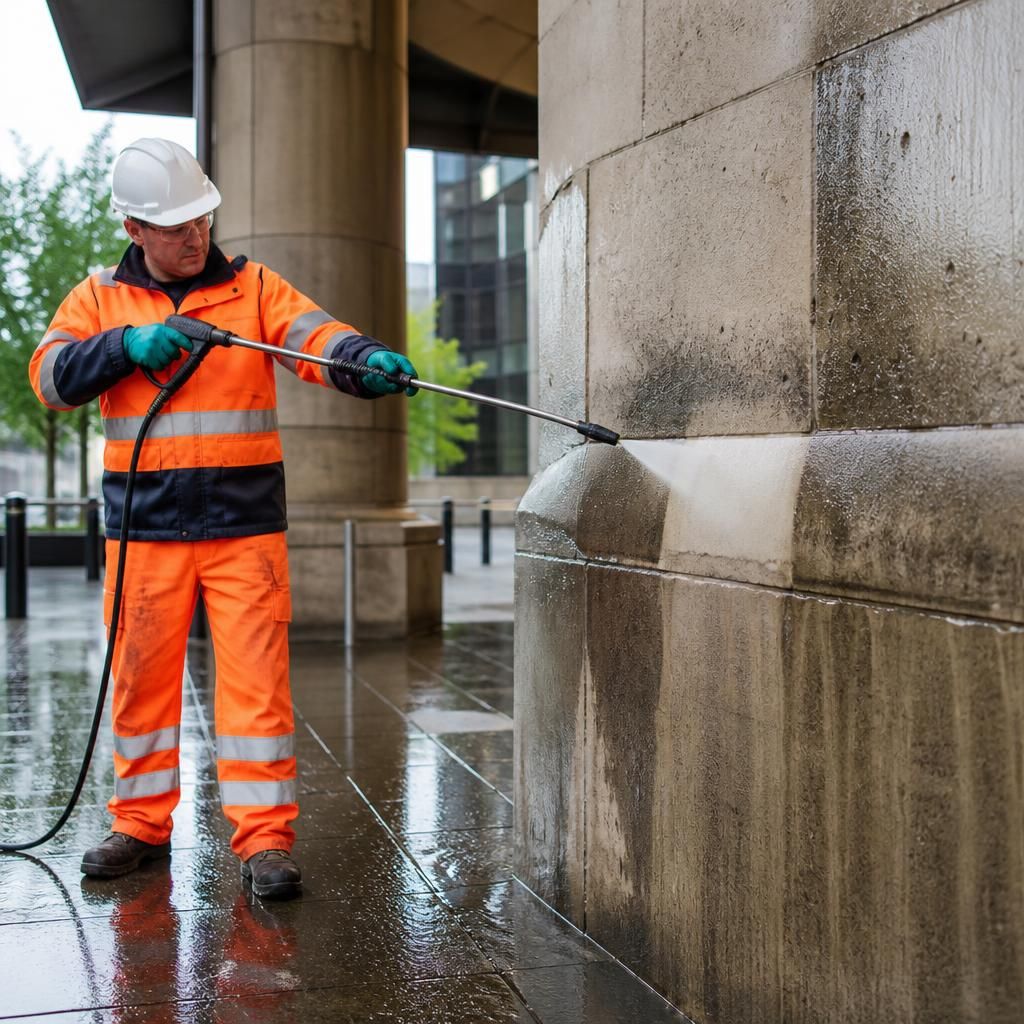
One of the main environmental benefits of bio cleaning for stone and cement surfaces is that it can remove cement residues with less abrasion than aggressive mechanical methods. By softening or breaking down the contamination before controlled rinsing and gentle agitation, the process can help retain sound masonry instead of removing part of the original surface.
Preserving existing stone or cement reduces the need for repairs, replacement materials, transport and disposal of damaged masonry. The benefit depends on correct product selection, a small test area and proper control of rinse water. Bio cleaning is not automatically harmless, but when it is carefully specified and contained, it can provide a lower-impact alternative for maintaining existing structures.