
What are the environmental benefits of using bio cleaning for cement removal in stone structures?
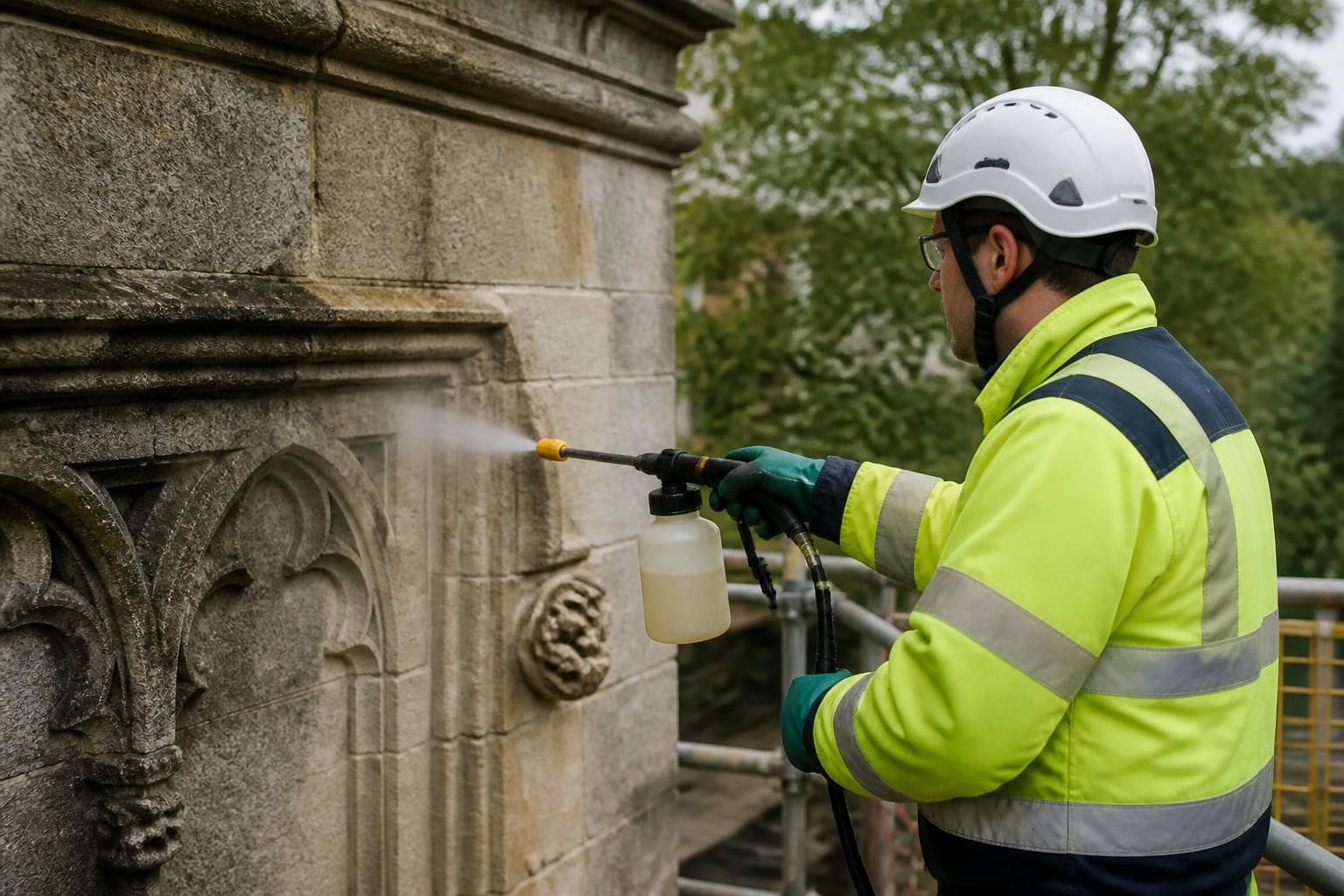
Bio cleaning removes cement residues from stone structures using targeted, biodegradable cleaning agents, reducing reliance on harsh acids and aggressive mechanical abrasion. This can lower chemical runoff, dust and damaged-stone waste while helping preserve the existing structure and minimise the need for replacement materials.
Bio cleaning can reduce the environmental impact of removing cement from stone structures by using targeted, biodegradable cleaning agents instead of relying solely on strong acids, solvents or aggressive mechanical abrasion. When the product is correctly selected and the wash water is properly controlled, the process can reduce harmful runoff, airborne dust, stone damage and waste while preserving the existing structure.
Reduced use of aggressive chemicals
Traditional cement removal may involve acidic products that can affect surrounding soil, vegetation, drainage systems and watercourses if they are not contained and neutralised correctly. A suitable bio cleaning formulation is designed to soften, break down or release cement residues with a less aggressive chemical action. This can reduce the potential for corrosive residues and lower the risk of unintended damage to adjacent materials.
Biodegradable does not mean that a product can be discharged without controls. The environmental profile depends on its ingredients, concentration, contact time and how the resulting wastewater is managed. Product safety data should be checked before use, particularly where work is close to drainage, planted areas or water-sensitive sites.
Less dust and airborne pollution
Mechanical methods such as grinding, chiselling and abrasive blasting can generate dust containing fine mineral particles and fragments of cement. This dust can settle on nearby surfaces, enter drainage systems and create an exposure concern for workers and occupants. Bio cleaning generally uses a controlled application and removal process, which can substantially limit airborne dust during cement removal. Any remaining deposits should still be collected and disposed of responsibly rather than washed uncontrolled into the surrounding area.
Protection of existing stone and reduced material waste
Preserving the original stone is an important environmental benefit. Excessive abrasion can remove sound material along with the cement, enlarge joints, expose vulnerable areas and alter the surface profile. Strong acids can also affect calcareous stones, mortar joints or metallic fixings if the treatment is unsuitable. By targeting the cement residue and reducing the need for force, bio cleaning can help retain more of the existing structure.
Keeping sound stone in place avoids the environmental costs associated with replacement, including quarrying, manufacturing, transport and installation of new materials. It can also reduce the amount of damaged stone, spent abrasive and contaminated debris sent for disposal. This benefit depends on the stone being suitable for treatment and the cement being removable without compromising the substrate.
Potentially lower water and energy demand
Where bio cleaning softens cement deposits effectively, it may reduce the need for prolonged mechanical work, repeated blasting or extensive rinsing. That can lower equipment running time and the associated energy use. It may also reduce water consumption when compared with processes that depend on high-volume pressure washing to dislodge residues. The actual result varies with the thickness and age of the cement, the porosity of the stone, the selected product and the number of applications required.
Water use should therefore be planned rather than assumed to be low. Controlled low-pressure rinsing, collection of wash water and efficient application methods help prevent the environmental advantage being lost through unnecessary flushing.
Lower risk to surrounding surfaces and habitats
Stone structures are often located near planted areas, public spaces, historic fabric or sensitive landscapes. A carefully specified bio cleaning treatment can reduce the risk of acid burn, chemical overspray, vibration and abrasive impact affecting nearby materials. This is particularly useful where access is restricted or where the structure cannot easily be isolated from its surroundings.
Before work begins, nearby vegetation, drainage points, exposed metals and adjacent finishes should be assessed and protected. The treatment should be tested in an inconspicuous area, and the application should be stopped or adjusted if unexpected staining, softening or colour change occurs.
Wastewater and site controls remain essential
The environmental benefit comes from the complete method, not just the label of the cleaning product. Cement residues released during treatment can make wash water alkaline and may contain suspended solids or other contaminants. Suitable controls can include:
- preventing wash water from entering surface-water drains or watercourses;
- using drain covers, bunding, collection mats or temporary containment where appropriate;
- removing solid cement residues before rinsing;
- allowing suspended material to settle where the site method permits;
- testing or neutralising wastewater when required by the product instructions or site conditions; and
- disposing of collected residues and wastewater through an approved route.
These measures are especially important on commercial, industrial and public sites where drainage arrangements may be complex and runoff can travel beyond the immediate work area.
Why specification matters
Bio cleaning is not automatically the most sustainable option for every cement deposit. A product that is biodegradable may still be unsuitable for a particular stone, require several applications or perform poorly on thick, fully cured cement. Repeated treatment can increase water, labour and waste requirements. The most responsible approach is to inspect the stone, identify the cement type and condition, review the product information, and compare bio cleaning with the least damaging viable alternative.
For this reason, an environmentally responsible cement-removal plan normally includes a survey, a small test area, protection of surrounding surfaces, controlled application, dust and runoff management, and a final inspection. Bio cleaning can then provide a lower-impact route to removing cement while maintaining the integrity and service life of the stone structure.
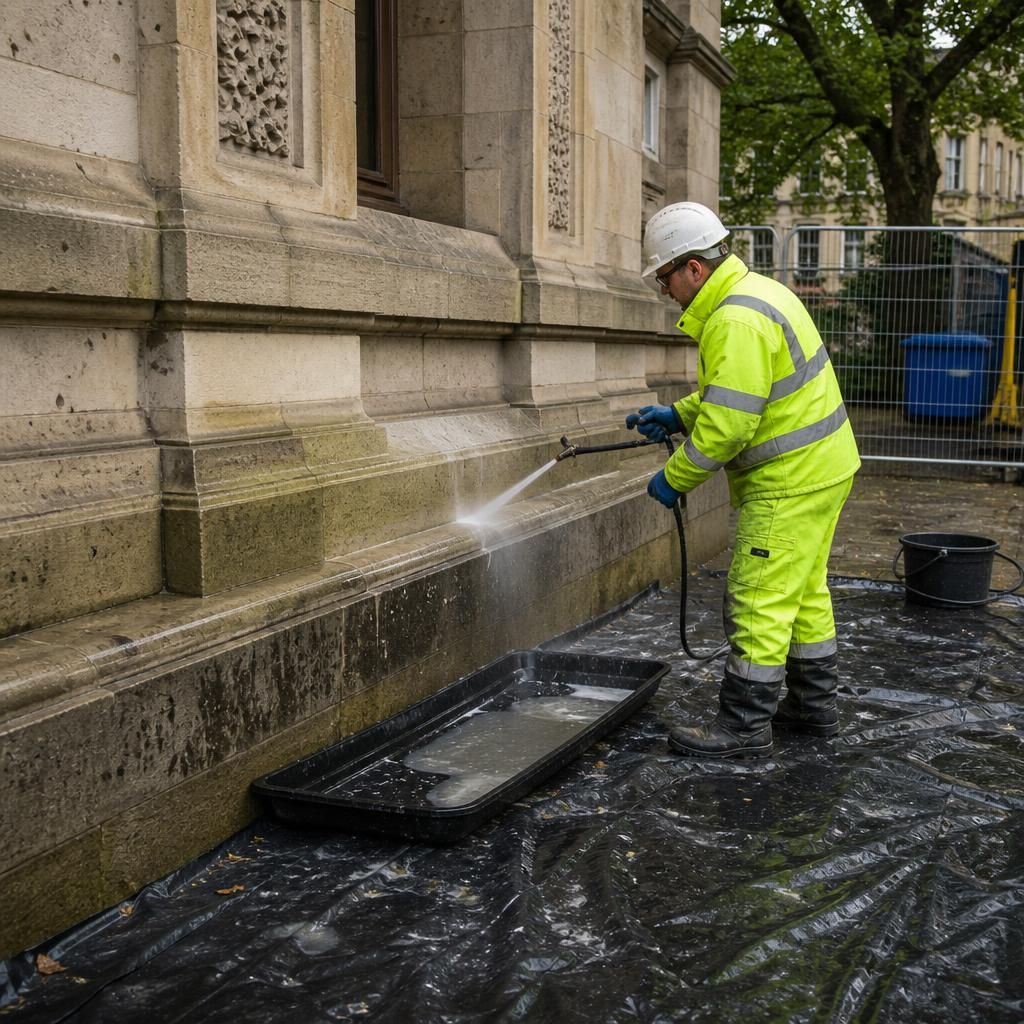
Bio cleaning can reduce the environmental impact of cement removal, but its benefits depend on controlling the wastewater produced during the work. Cement residues and cleaning agents should not be allowed to flow into surface-water drains, planted areas or nearby watercourses.
Before rinsing, loosened cement should be collected wherever practical. Drain covers, bunding and collection mats can help contain wash water, while suspended solids should be settled or removed in accordance with the product instructions and site requirements. Any collected wastewater must be assessed and disposed of through an approved route.
This approach helps prevent the environmental advantage of bio cleaning being lost through uncontrolled runoff. A site-specific assessment should consider the stone, surrounding drainage, nearby vegetation and the product’s safety information before treatment begins.