
Is bio cleaning effective on surfaces heavily stained with cement residues?
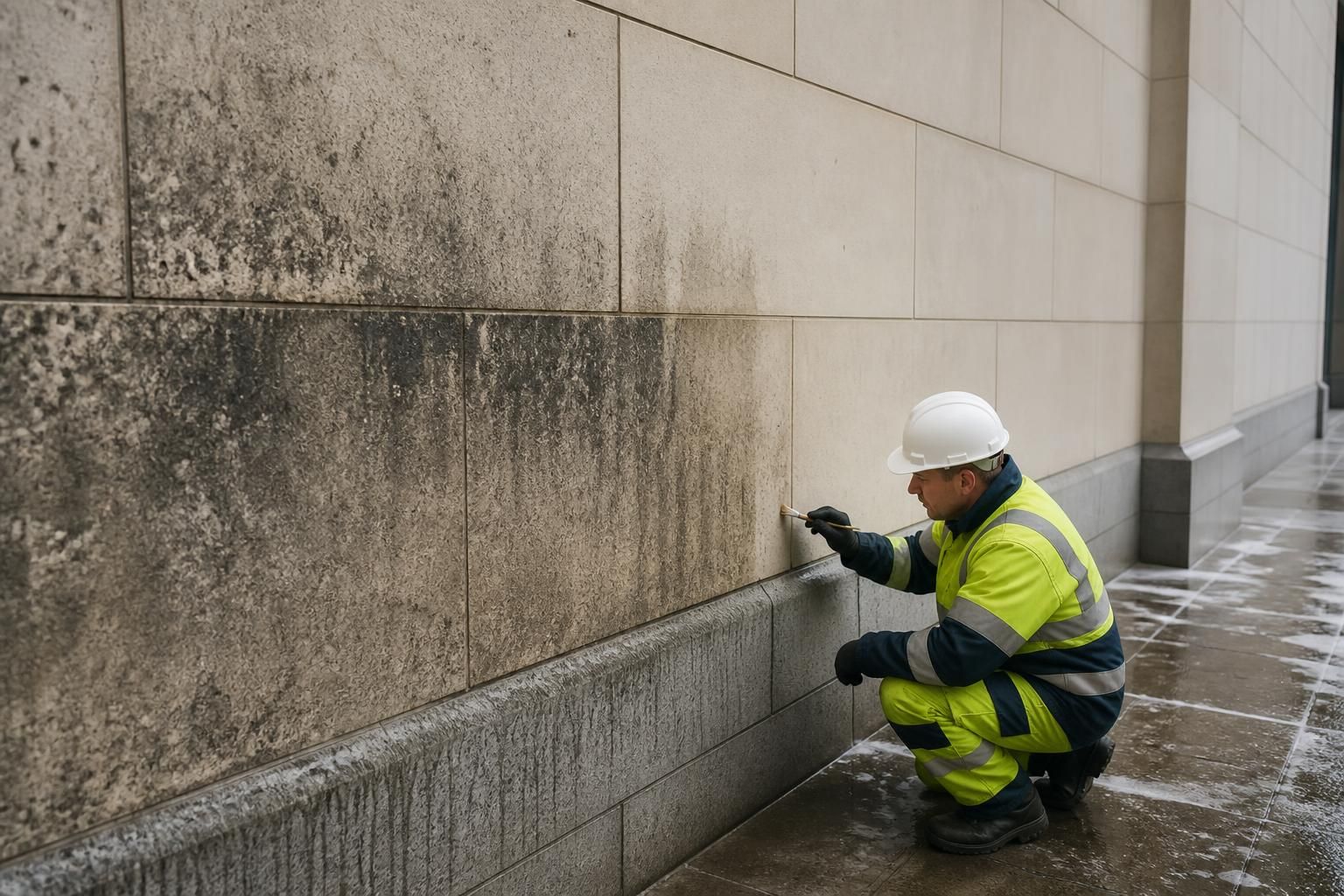
Bio cleaning can be effective on heavily stained stone and cement surfaces, particularly for breaking down cement residues without the abrasion associated with aggressive mechanical cleaning. Where deposits are thick, hardened or deeply embedded, specialist treatment may need extended dwell time, repeated applications or careful pre-removal before bio cleaning is used to finish the surface safely.
Bio cleaning can be effective on surfaces heavily stained with cement residues, but its success depends on the type, thickness and age of the deposit, as well as the stone or cement substrate beneath it. It is generally most effective when the product is specifically formulated for mineral or cement contamination and is given sufficient contact time. Thick, hardened or deeply embedded residues may require repeated applications, controlled mechanical assistance or careful pre-removal before bio cleaning can complete the treatment.
Cement residues are primarily mineral deposits rather than organic dirt. This means that a product described as biological, biodegradable or environmentally preferable will not automatically dissolve them. The formulation must be suitable for cementitious contamination. Some specialist bio cleaning systems use low-impact, biodegradable chemistry to loosen or break down residues while reducing the need for aggressive abrasion. Others are better suited to organic staining, such as algae, moss, oils or general surface dirt, and will have limited effect on hardened cement.
The condition of the residue is important. Fresh cement splashes and thin cement films are usually more responsive because they have not fully hardened or bonded with the surface. Older deposits can become tightly attached, especially on textured sandstone, porous concrete, masonry joints and uneven paving. Repeated construction traffic, weathering and previous cleaning may also drive the residue further into pores. In these circumstances, bio cleaning may still form part of an effective treatment, but it should not be presented as a single-application solution.
Before treatment, the surface should be assessed to identify:
- the substrate, including sandstone, limestone, concrete, brick, rendered surfaces or coated materials;
- whether the contamination is loose dust, surface film, splashes, thick build-up or a deeply bonded deposit;
- the age and likely composition of the cement residue;
- existing damage, weathering, open joints, previous coatings or areas of friable stone; and
- nearby metalwork, glazing, drainage points, planted areas and other materials that may be affected by the cleaning system.
A small inconspicuous test area is essential. Testing confirms whether the product softens the residue, whether the dwell time is appropriate and whether the substrate changes in colour, texture or appearance. On sandstone and other porous stone, the test should also assess whether the treatment leaves residue within the pores or causes the cement to spread during rinsing. The proposed method can then be adjusted before wider application.
For heavy staining, the usual process involves removing loose material, applying the selected treatment evenly, allowing controlled dwell time and monitoring the surface rather than allowing the product to dry. The softened residue may then be lifted using suitable low-impact agitation or carefully controlled pressure. Further applications may be needed for thicker areas. Rinsing should be thorough but carefully managed so that loosened cement is not driven into joints, drainage systems or adjacent porous surfaces.
Mechanical cleaning can sometimes be used alongside bio cleaning, but the choice of equipment and pressure is critical. Excessive pressure, abrasive blasting or aggressive scraping can remove the surface of sandstone, round sharp masonry details, expose aggregate in concrete or leave visible cleaning patterns. A gentler approach may be preferable: bio cleaning first loosens the deposit, followed by soft agitation or controlled rinsing to remove what remains. This combination can reduce the amount of abrasion required without assuming that chemistry alone will remove every deposit.
There are also situations where bio cleaning is not the most suitable primary method. Very thick cement render, large hardened splashes, cement-based grout or residues that have chemically bonded with a surface may need specialist mechanical reduction, a compatible cement remover or a staged combination of methods. The substrate must determine the treatment. A method suitable for robust concrete may be unsafe on calcareous stone, weathered sandstone, historic masonry or a surface with a sensitive coating.
Heavy cement residue treatment should therefore be carried out by experienced operatives with appropriate controls. Areas should be isolated where necessary, adjacent materials protected and run-off contained in accordance with the site requirements. Operatives should follow the product safety information, use suitable protective equipment and avoid mixing cleaning products. Particular care is needed around glazing, painted metal, natural stone, planted areas and drainage infrastructure.
In practical terms, bio cleaning is most valuable where the objective is to remove cement contamination while limiting unnecessary damage to the underlying surface. It can be a highly effective part of a restoration or post-construction cleaning programme, particularly when the residue is thin to moderate or can be softened before removal. For severe staining, the correct expectation is a planned, test-led treatment that may involve several stages rather than an instant result from one application.
After cleaning, the surface should be inspected in natural light and checked for remaining deposits, staining, etched areas and trapped residue. Any further treatment should be based on that inspection. Where a large façade, car park, paved area or stone structure is involved, a written method statement and agreed test panel help establish the safest approach before full-scale cleaning begins.
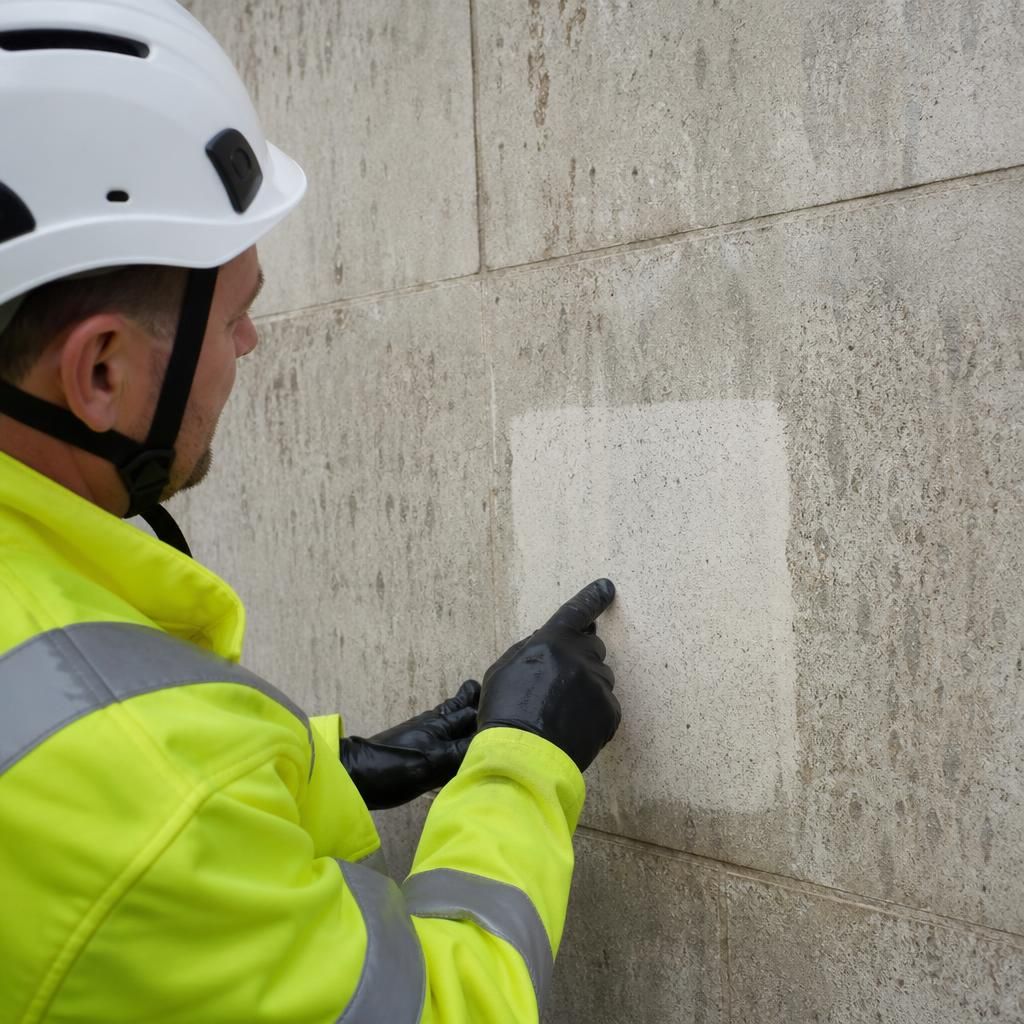
On heavily cement-stained surfaces, a small test area is essential before full bio cleaning begins. It shows whether the treatment will soften the residue sufficiently, how long it needs to remain in contact, and whether the underlying stone, concrete or masonry changes in colour, texture or appearance.
The test should include the proposed application, agitation and rinsing process. On porous sandstone or textured surfaces, the area should also be checked for cement being pushed further into the pores or joints. If the deposit remains bonded, the method can be adjusted to include repeated applications or controlled low-impact mechanical assistance rather than relying on a single treatment.