
How does bio cleaning maintain the integrity of sandstone compared to mechanical cleaning methods?
Bio cleaning removes cement residues from sandstone through a controlled, low-abrasion process, helping preserve the stone’s surface texture, edges and natural appearance. Compared with mechanical cleaning, it reduces the risk of scratching, surface loss and opening the stone’s pores, provided the treatment is correctly selected, tested and rinsed.
Bio cleaning helps maintain sandstone’s integrity by softening and breaking down cement residues through a controlled, low-abrasion treatment rather than removing them primarily by force. This reduces the likelihood of scratching, profiling, edge damage and loss of the stone’s weathered surface compared with aggressive mechanical cleaning. The result depends on selecting a suitable formulation for the sandstone, testing it first and controlling the application, dwell time, agitation and rinsing.
Sandstone is porous and can vary considerably in hardness, mineral content, cementation and condition. Its surface may already be weakened by weathering, salts, previous cleaning or water penetration. Mechanical methods can place additional stress on this vulnerable surface. Abrasive blasting, grinding and hard scraping may remove cement quickly, but can also strip the stone surrounding the residue, flatten tool marks, round sharp details and leave visible patches with a different texture.
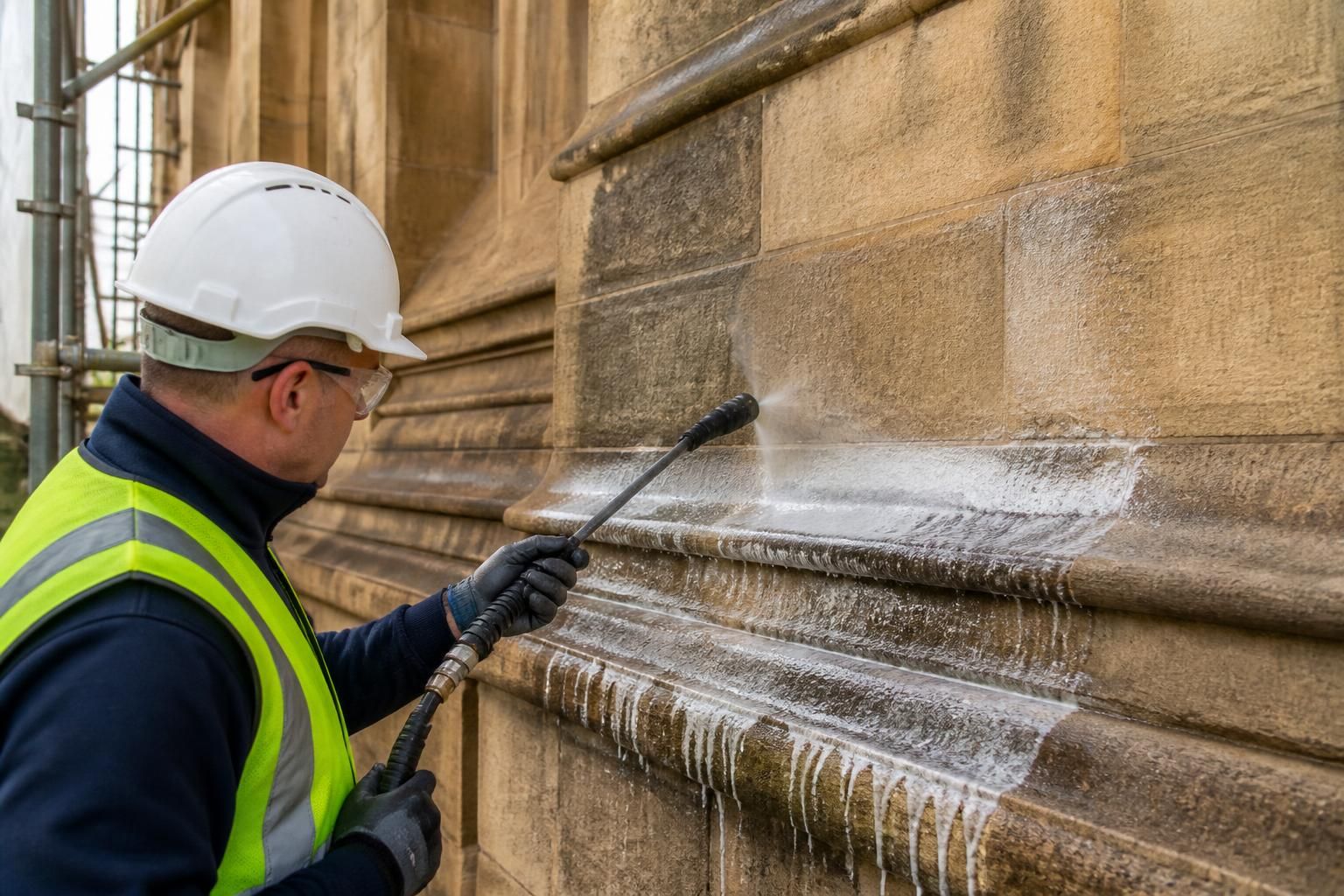
High-pressure water presents a separate risk. If the pressure, nozzle distance or water volume is unsuitable, it can drive water into the stone, open existing cracks, dislodge friable grains or erode softer areas. Mechanical cleaning is not automatically unsuitable, but it must be carefully matched to the stone and the deposit. On historic, carved or heavily weathered sandstone, the margin for error is particularly small.
How bio cleaning protects the surface
- Less abrasion: The cement is treated chemically or biologically so it can be removed with gentle agitation, reducing dependence on abrasive tools.
- More selective action: A properly chosen product can target cementitious residues while limiting unnecessary removal of sound sandstone. Compatibility must still be confirmed because no treatment is universally safe for every stone.
- Better retention of detail: Mouldings, joints, arrises, carved features and textured finishes are less likely to be worn down than they would be through grinding, aggressive scraping or abrasive blasting.
- Reduced surface disturbance: Gentle treatment is less likely to create fresh scratches, impact marks or an uneven profile that attracts dirt and changes the appearance of the façade.
- Controlled removal of residues: Once the cement has softened, it can generally be lifted and rinsed away in stages instead of forcing the entire deposit off in one mechanical operation.
The main advantage is not simply that the method is described as “bio”. The protection comes from the complete cleaning system: an appropriate product, a controlled application, compatible tools and a carefully managed rinse. Some specialist bio-based or low-impact treatments use naturally derived ingredients or biological action, while others are formulated to break down mineral residues with reduced reliance on aggressive acids. The product data and a site test should determine whether the treatment is appropriate for the specific sandstone.
Comparison with mechanical cleaning
Mechanical cleaning relies on impact, friction, cutting or water force. It can be effective for loose deposits and for removing thick cement from areas where the stone is sound and robust. However, the method is less selective when cement has bonded tightly to the surface. Removing the residue may also remove a thin layer of sandstone, particularly where the cement has entered pores or irregularities.
Bio cleaning works more gradually. The treatment is applied to the affected area, allowed to react for a controlled period and then removed using soft brushes, non-abrasive tools or suitably regulated low-pressure rinsing. Several controlled applications may be preferable to one aggressive pass. This approach gives the operative an opportunity to assess the surface between stages and stop before sound stone is affected.
Mechanical tools may still have a role after bio cleaning has weakened the deposit. A soft hand tool can sometimes lift remaining fragments, while carefully controlled water can remove loosened material from the pores. Combining methods in this limited way is different from using mechanical force as the primary means of removal, and it can provide a safer solution for localised or stubborn contamination.
Important precautions for sandstone
- Inspect the stone for friable areas, cracks, open joints, previous repairs, salt deposits and signs of water ingress before treatment.
- Carry out a representative test patch, including dwell time, agitation and rinsing, rather than testing only on a sound, inconspicuous area.
- Check how the treatment affects colour, texture, pointing, adjacent metals, glass, coatings and other materials.
- Prevent the product from drying on the surface unless the manufacturer’s instructions specifically require this.
- Use the least aggressive agitation and rinsing that will remove the softened residue. Excessive water can be as damaging as excessive pressure.
- Collect or control contaminated run-off where required, particularly when cement residues or cleaning products could enter drains, soil or watercourses.
- Allow the sandstone to dry and inspect it in suitable lighting before deciding whether further treatment is necessary.
Bio cleaning is not a guarantee that sandstone will remain unaffected. Thick, deeply bonded or aged cement may require repeated treatment, careful localised mechanical assistance or a different specialist system. Some sandstone types may also react adversely to particular formulations, especially where the stone contains carbonate minerals or has been previously treated. For this reason, an experienced contractor should identify the stone, assess the residue and establish a written method before undertaking widespread cleaning.
In practical terms, bio cleaning is generally the preferred starting point where preserving the original sandstone surface is more important than achieving the fastest possible removal. It offers a controlled way to reduce cement residues while retaining natural texture and architectural detail. Mechanical cleaning can then be limited to areas where testing shows that the stone can tolerate it, making the overall process more conservative and more consistent with long-term stone preservation.
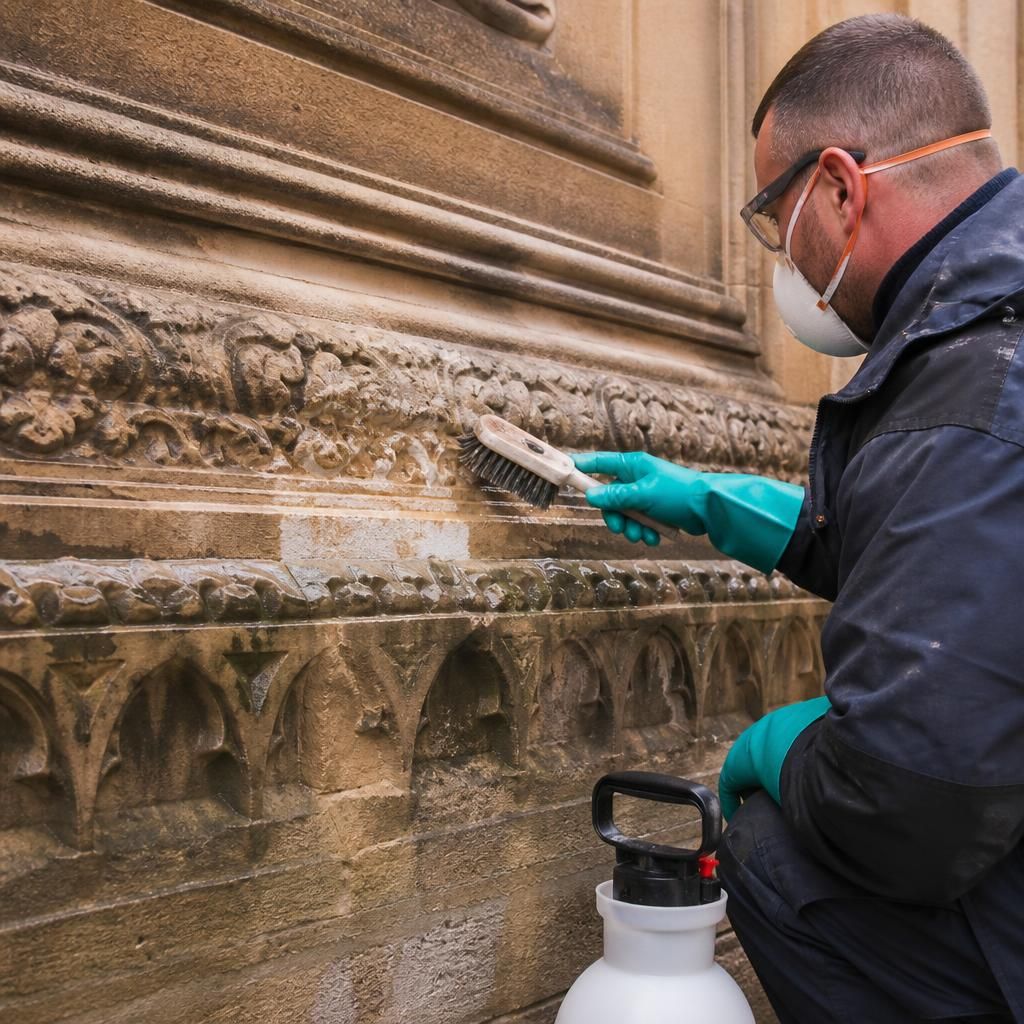
Bio cleaning helps protect sandstone by softening cement residues before they are removed, reducing the need for abrasive scraping, grinding or high-pressure water. This limits the risk of scratching the surface, dislodging friable grains and wearing down carved details or sharp edges.
The treatment must be matched to the stone and tested in a representative area first. Controlled dwell time, gentle agitation and careful rinsing allow the residue to be removed in stages, while preserving as much of the sandstone’s original texture and profile as possible.