
How does bio cleaning differ from traditional cleaning methods for stone and cement?
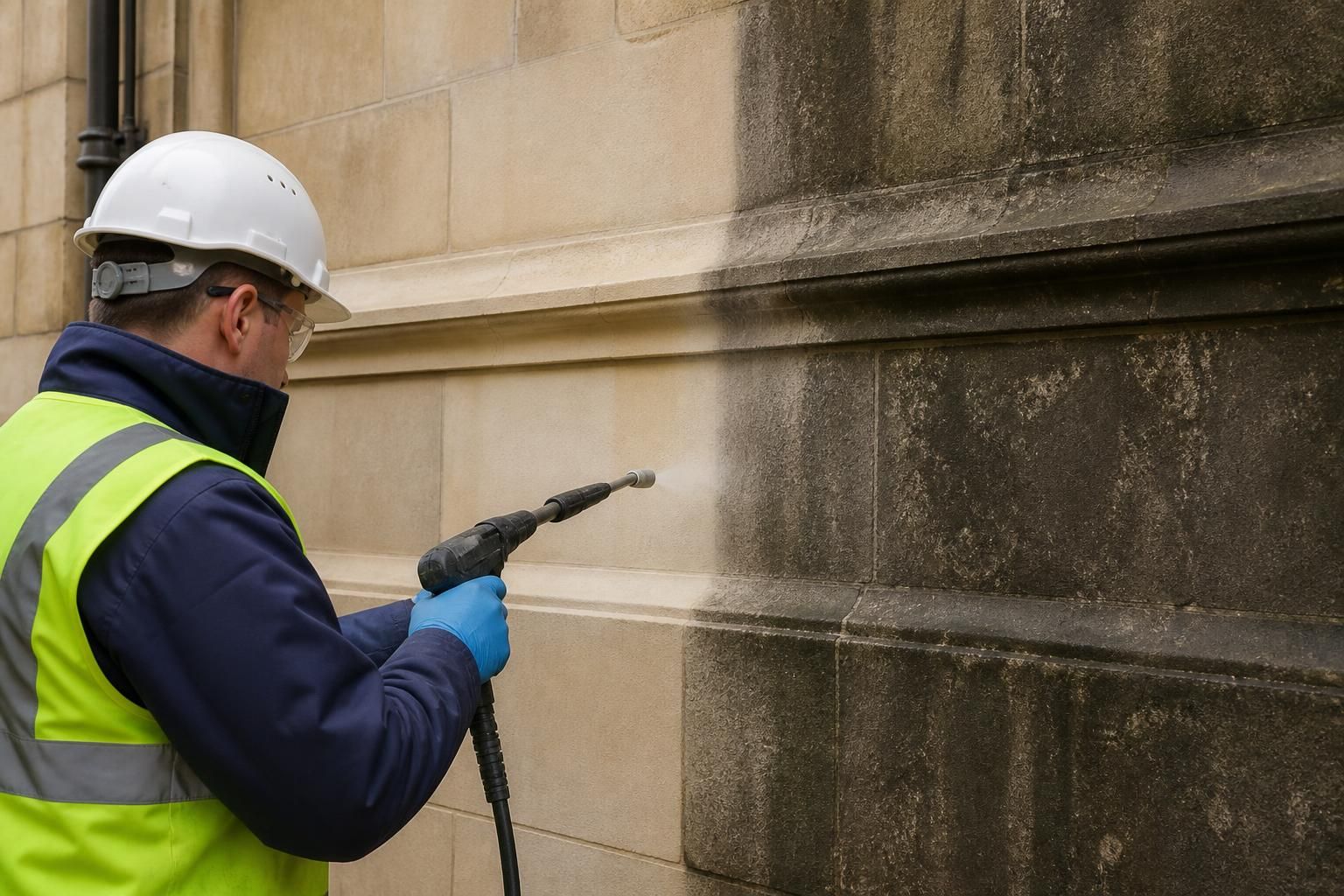
Bio cleaning uses carefully selected biological or biodegradable treatments to break down cement residues and organic staining, whereas traditional cleaning relies mainly on mechanical abrasion, pressure or stronger chemical products. It is generally gentler on porous stone such as sandstone, helping reduce surface erosion, discolouration and damage to the surrounding material when correctly assessed and applied.
Bio cleaning differs from traditional stone and cement cleaning mainly in how the contamination is removed. Bio cleaning uses a carefully selected biological or readily biodegradable treatment to soften, digest or break down cement residues and associated organic matter. Traditional cleaning usually depends on physical force, such as pressure washing or abrasion, or on stronger chemical products that dissolve, loosen or strip the deposit. The most suitable approach depends on the stone type, cement residue, surface condition and surrounding environment.
On porous materials such as sandstone, the difference is particularly important. Stone can absorb water and chemicals, while its surface may contain weak grains, weathered areas or existing repairs. Excessive pressure can erode the face of the stone, open the pores or drive contamination further into the substrate. Abrasive methods can remove a small amount of sound stone along with the cement. Strong acids may dissolve cement effectively but can also etch calcareous materials, affect mortar joints, alter the colour of the surface or leave soluble residues if they are not properly controlled.
Bio cleaning is designed to work more selectively. Rather than relying primarily on impact or aggressive chemical action, the treatment is applied to the affected area and allowed to act on the cementitious or organic material. Once softened or broken down, the residue can be removed with controlled agitation, low-pressure rinsing or another suitable finishing method. This can reduce the amount of mechanical action needed, helping to preserve the texture, profile and weathered character of the underlying stone.
Traditional methods are not automatically unsuitable. Low-pressure washing, steam cleaning and carefully chosen chemical treatments can be effective when the operator understands the substrate and controls the process. Mechanical cleaning may be appropriate for loose surface deposits, while steam can help remove some organic staining without the same abrasive effect as blasting. The risk arises when a method is selected for speed or convenience rather than for compatibility with the stone and the deposit.
- Cleaning action: bio cleaning breaks down or loosens the contaminant through a controlled treatment, whereas traditional approaches often depend on pressure, abrasion, heat or a stronger chemical reaction.
- Effect on the substrate: bio cleaning can reduce direct wear on delicate or porous stone, while aggressive mechanical or chemical methods may cause erosion, etching, discolouration or loss of surface detail.
- Control: biological treatments are normally applied to defined areas and left to work for a controlled period. Traditional cleaning can be more immediate, but pressure, dwell time, concentration and temperature must be carefully managed.
- Environmental considerations: appropriately selected biodegradable treatments can reduce reliance on harsh chemicals. However, all removed cement, treatment residue and wash water still require responsible containment and disposal.
- Working time: bio cleaning may require more dwell time and, in some cases, repeat applications. A faster traditional method is not necessarily the safer or more economical option if it damages the stone or creates extensive repair work.
The term ‘bio cleaning’ does not mean that every product is harmless or that the treatment can be left uncontrolled. Formulations vary, and some may contain active chemical ingredients alongside biodegradable components. The product must be checked against the stone, adjacent metals, glass, coatings, sealants and planted areas. A controlled test patch is essential because the apparent cement mark may also include rust, salts, biological growth or staining that responds differently to the treatment.
A typical comparison begins with a site assessment. The surface is inspected to identify the stone or cement type, porosity, weathering, joints, previous repairs and the extent to which the residue is bonded. Loose material is removed without unnecessary abrasion. The selected bio treatment is then tested on an inconspicuous area, applied at the appropriate strength and allowed to dwell under supervision. The softened residue is removed using the least aggressive effective method, and the area is rinsed or neutralised in accordance with the product guidance. The result is checked after drying, as damp stone can temporarily conceal shading or residual marks.
Bio cleaning is often preferred where preserving the stone is the priority, particularly on historic masonry, textured sandstone, carved details and surfaces close to planting, drainage channels or water-sensitive surroundings. It may also be useful where cement splashes are irregular and a broad blast or high-pressure treatment would affect more of the surface than necessary.
There are limits. Heavily hardened, thick or deeply embedded cement may need careful mechanical reduction before or after treatment. Bio cleaning may be less suitable where the contamination is not biologically or chemically responsive, where the substrate is unstable, or where site conditions prevent adequate dwell time, rinsing or waste-water control. In these cases, a combined approach may be safer: reduce the bulk of the deposit mechanically, then use a compatible treatment for the remaining film, rather than using high pressure or aggressive chemicals throughout.
In practical terms, bio cleaning is not simply a softer version of pressure washing. It is a substrate-led process intended to remove the deposit while limiting unnecessary loss of the original material. Traditional cleaning can still deliver good results when carefully specified, but bio cleaning offers greater control where cement residue is attached to porous, delicate or historically important stone. The correct choice should be based on testing, not on the label of the cleaning method alone.
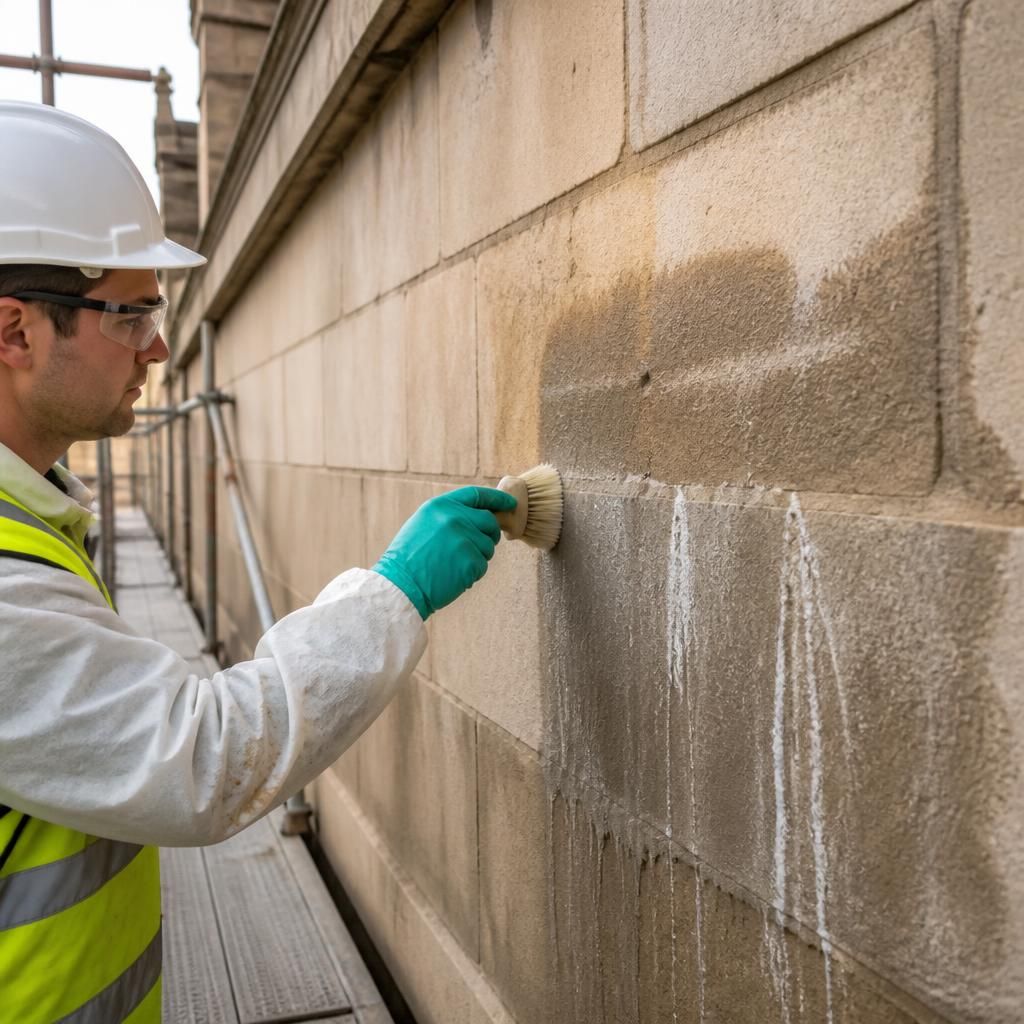
Bio cleaning removes cement and associated staining through a controlled biological or biodegradable treatment, rather than relying mainly on high pressure, abrasion or aggressive chemical action. The treatment is selected for the stone and residue, then given time to soften or break down the deposit before controlled agitation and low-pressure rinsing remove it.
This difference is especially important on porous or weathered stone, such as sandstone, where excessive pressure or abrasive cleaning can erode the surface and remove sound material with the cement. A test patch confirms the treatment is compatible with the stone, joints, coatings and nearby materials. Bio cleaning may take longer than a direct mechanical approach, but it can reduce unnecessary wear and help retain the stone’s original texture and detail.