
What specific industrial cleaning techniques are used for food processing facilities?
Food processing facilities typically require hygienic pressure washing, low-pressure cleaning, steam cleaning and targeted degreasing to remove food residues, fats, oils, biofilm and other contamination from floors, walls, equipment exteriors and drainage areas. Techniques are selected according to the surface, residue and hygiene requirement, with controlled water use, suitable detergents, thorough rinsing and safe wastewater management to support food safety and compliance.
Food processing facilities use a combination of dry cleaning, controlled-pressure washing, foam cleaning, steam cleaning, degreasing and hygienic drainage cleaning. The correct technique depends on the type of food residue, the surface material, the risk of cross-contamination and whether the area is part of production, storage, dispatch or external plant. Cleaning methods should be carried out in accordance with the site’s food safety procedures, chemical controls and planned sanitation schedule.
Dry removal of loose debris
Cleaning normally begins with the removal of loose flour, crumbs, powder, packaging fragments and other dry material. Brushes, scrapers, industrial vacuums and dedicated tools are used to collect debris before water is introduced. This prevents dry residues from becoming difficult-to-remove slurry and reduces the risk of pushing contamination into joints, drains, machinery bases or wall-floor junctions.
Dry cleaning is particularly important in bakeries, mills, ingredient handling areas and facilities processing powders. Vacuum equipment should be suitable for the material being collected, and cleaning tools should be controlled to prevent contamination moving between raw-material, processing and finished-product areas.
Foam cleaning and detergent application
Foam cleaning applies a suitable detergent to floors, walls, equipment exteriors, conveyors and other washable surfaces. The foam helps the chemical remain in contact with the surface while it loosens proteins, starches, sugars, fats and general organic soil. It is then rinsed away using a controlled method appropriate to the area.
Detergent selection is based on the residue and the material being cleaned. Alkaline cleaners are commonly used against fats, oils and protein-based soils, while acidic products can help remove mineral deposits, limescale and some processing residues. Chemicals must be used at the manufacturer’s specified dilution and contact time, with attention to temperature, ventilation, personal protective equipment and compatibility with stainless steel, aluminium, painted surfaces, seals and flooring.
Foam should not be treated as a substitute for mechanical action. Heavily soiled areas may also require brushing, scraping or agitation, particularly around welds, fixings, non-slip flooring, drains and difficult-to-access equipment bases.
Controlled high-pressure and low-pressure washing
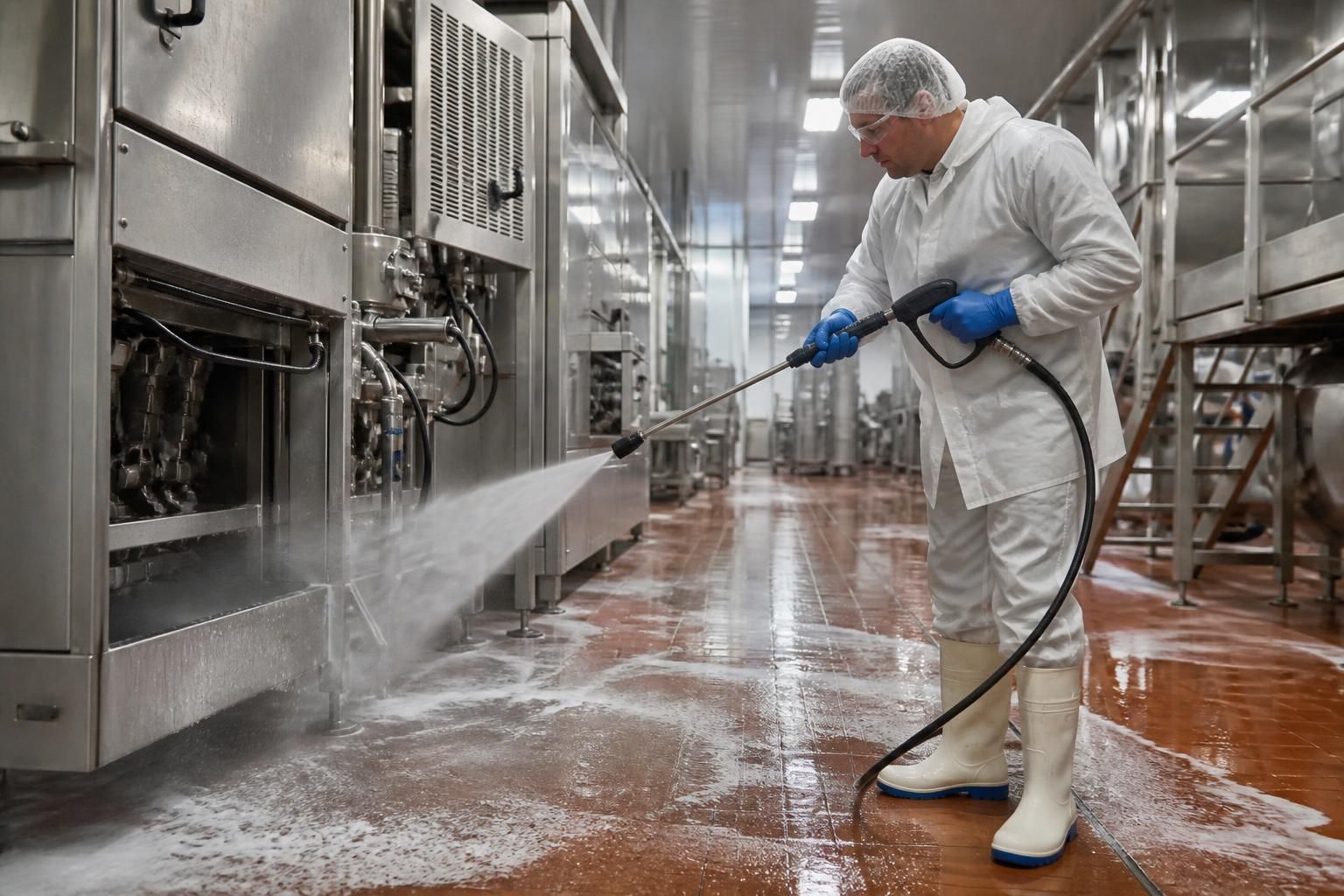
Pressure washing removes softened food residues, grease, mud and contamination from robust surfaces such as floors, loading areas, external walls, refuse areas, vehicle bays and drainage channels. In production environments, pressure must be carefully controlled. Excessive pressure can aerosolise contamination, drive water beneath seals or panels, damage coatings and spread residue from dirty areas to cleaner ones.
Lower-pressure washing is often more appropriate around exposed machinery, electrical housings, control panels, open production lines and sensitive surfaces. Operators control the nozzle, spray pattern, distance and direction to avoid contaminating adjacent equipment or creating unnecessary wastewater. Cleaning generally progresses from cleaner areas towards dirtier areas and from higher surfaces towards the floor, subject to the site’s documented hygiene procedure.
High-pressure washing is also useful for external parts of a food facility, including cladding, concrete yards, delivery areas, container stores and waste-handling zones. These areas still require controls to prevent dirty water, aerosols and debris entering production or ventilation systems.
Steam cleaning
Steam cleaning uses heated vapour to loosen grease, fats, food residues and some forms of biological soil while using relatively little water. It can be useful for machinery frames, joints, hard-to-reach details, tiled surfaces, drains, thresholds and areas where excessive water would create a problem.
Steam is not suitable for every surface or every contamination risk. Heat and moisture can affect electrical components, adhesives, paint finishes, insulation, bearings and sensitive seals. Steam also does not automatically replace detergent cleaning or disinfection. The method, temperature, exposure and drying requirements should be assessed against the equipment manufacturer’s guidance and the facility’s hygiene controls.
Targeted degreasing
Meat, dairy, ready-meal, bakery and food-to-go facilities can accumulate fats, oils and sticky organic residues on floors, walls, extraction components, machinery exteriors and waste-handling equipment. Targeted degreasing combines a compatible detergent with dwell time and mechanical agitation to break down the soil before rinsing.
Degreasers should be applied only where needed and should not be allowed to dry on the surface. Particular care is required around food-contact surfaces, rubber components, painted finishes and drainage systems. Following degreasing, surfaces must be rinsed thoroughly so that chemical residues do not remain.
Cleaning of biofilm and difficult residues
Biofilm is a layer of organic material and microorganisms that can adhere to persistently damp surfaces, including drains, joints, conveyor components and floor channels. It is usually addressed through a combination of suitable chemistry, sufficient contact time and physical removal. Simply washing the visible surface may leave material attached in cracks, beneath fittings or inside drainage components.
Burnt-on sugars, baked-on product, dried starch and hardened protein may need scraping, controlled soaking, specialist detergents or steam-assisted cleaning. Abrasive methods must be selected carefully because damaged stainless steel, flooring or protective coatings can create crevices that are harder to keep hygienic.
Drain, channel and waste-area cleaning
Drains and floor channels require planned cleaning because they collect organic matter, grease, standing water and debris. Suitable methods may include removing covers and baskets, manually clearing solids, detergent application, brushing, low-pressure flushing and controlled rinsing. Wastewater should be directed into the approved drainage system rather than allowed to flow into clean production areas or surface-water drains.
External waste compounds, loading bays, grease-affected areas and bin stores can be cleaned with pressure washing and degreasing where appropriate. These areas should be managed separately from food-contact and high-care zones, with suitable tools and a defined sequence to reduce cross-contamination.
High-level and specialist access cleaning
Food factories often have elevated pipework, beams, ducts, cable trays, roof structures and ventilation components where dust and residue can accumulate. Access equipment, vacuum systems, telescopic tools or controlled steam and low-pressure techniques may be used, depending on the surface and the risk of falling debris or water contamination.
High-level work requires isolation of affected areas, protection of exposed products and equipment, controlled exclusion zones and a safe access plan. Cleaning should not disturb dust or deposits in a way that allows them to fall onto open product or cleaned surfaces.
Rinsing, drying and post-cleaning checks
After chemical cleaning, surfaces are rinsed using a method that removes loosened soil and detergent without spreading contamination. Standing water is removed where necessary, and floors, channels and equipment are allowed to dry in accordance with the site’s procedure. Good drainage and adequate drying are important because persistent moisture can support microbial growth and create slip hazards.
Checks may include visual inspection, review of cleaning records and, where specified by the food business, hygiene verification such as ATP testing or microbiological sampling. These checks support the site’s own validation and verification system; they do not replace the cleaning process itself.
How the technique is selected
- Residue: Dry powders, proteins, fats, sugars, mineral scale and biofilm require different cleaning approaches.
- Surface: Stainless steel, resin flooring, concrete, painted panels, rubber and sealed joints have different chemical and pressure tolerances.
- Area classification: High-care, low-care, raw-material, storage, dispatch and external areas need different controls and cleaning sequences.
- Equipment sensitivity: Electrical systems, bearings, seals, sensors and control panels may require low-moisture or protected cleaning.
- Water and drainage: The quantity of water, available drainage and wastewater route determine whether pressure washing, steam or a low-moisture method is appropriate.
- Food safety controls: Cleaning must fit the facility’s allergen, chemical, cross-contamination, pest-control and hygiene procedures.
For a food processing facility, the most effective programme is usually a documented combination of dry removal, detergent or foam cleaning, controlled rinsing, targeted pressure or steam cleaning, drainage maintenance and verification. The method should be agreed with the responsible site team before work begins, particularly where production equipment, food-contact surfaces, high-care areas or trade effluent controls are involved.
Controlled pressure protects hygiene and equipment
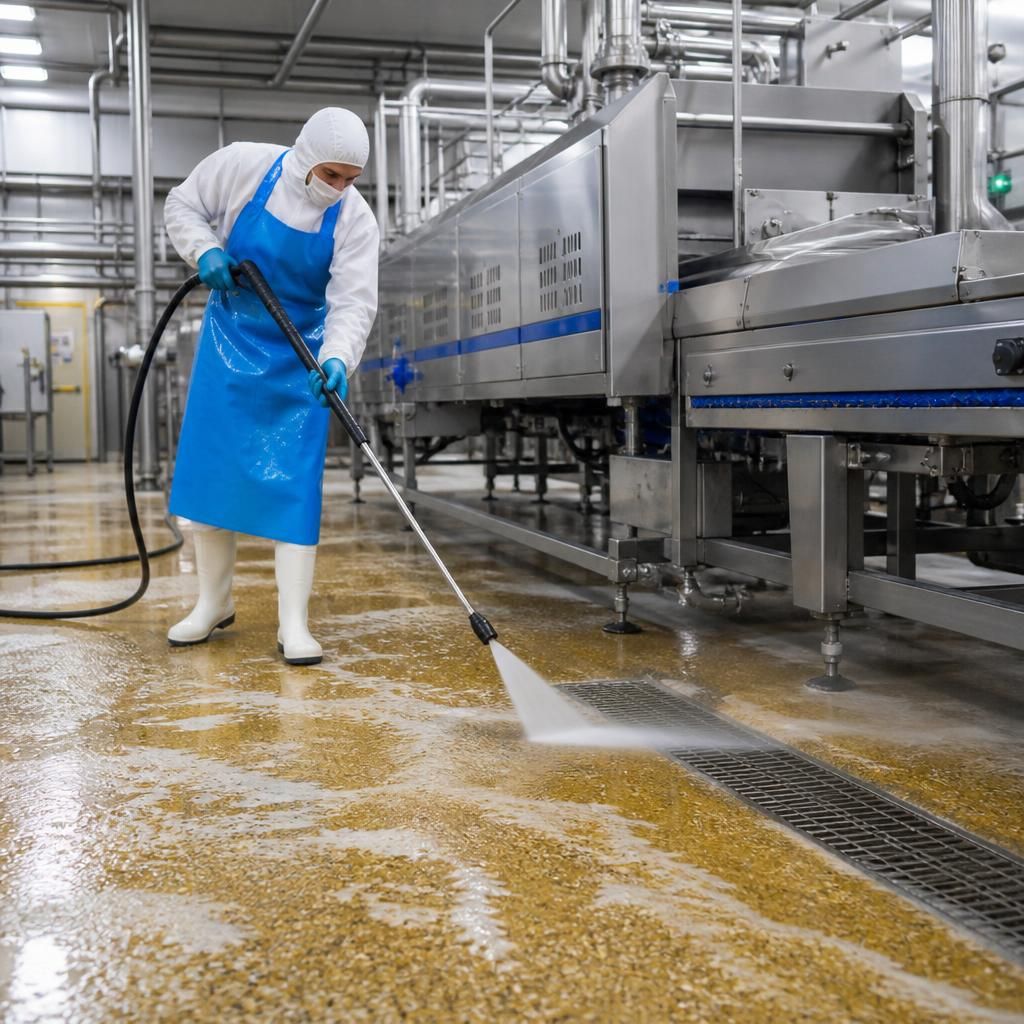
Pressure washing in a food processing facility must be matched to the surface, residue and hygiene zone. Higher pressure can remove stubborn contamination from robust floors, yards and drainage channels, but may also create aerosols, force water beneath seals or spread soil into clean areas. Lower-pressure washing, foam cleaning or steam cleaning is often more suitable around machinery, electrical housings, joints and sensitive equipment.
Cleaning should follow the site’s approved sequence, typically working from cleaner areas towards dirtier ones while protecting exposed product and food-contact surfaces. Rinsing, drying and wastewater control are equally important, as residual detergent, standing water and contaminated run-off can create further hygiene or safety risks.