
What specific cleaning techniques and equipment does the industrial cleaning service provider use for different types of industrial residues and surfaces?
We match the cleaning method and equipment to the residue and surface: hot- or cold-water pressure washing and rotary surface cleaners for concrete, paving and heavy grime; steam cleaning and controlled detergents for oil, grease and ingrained deposits; soft washing for delicate façades and cladding; and specialist graffiti-removal treatments for painted or masonry surfaces. Where required, we use vacuum recovery, water-fed systems and access equipment to control runoff and clean roofs, façades, high-level structures and confined areas safely.
Industrial cleaning techniques and equipment are selected according to the residue, the substrate, the required finish and the conditions on site. We combine pressure washing, steam cleaning, controlled detergents, soft washing, specialist graffiti removal, vacuum recovery and access equipment rather than applying one method to every surface. This helps remove contamination effectively while reducing the risk of damaging concrete, coatings, cladding, masonry, roofing materials or drainage systems.
How the cleaning method is selected
Before work starts, we assess the surface and identify the type of contamination. Oil, grease, cement residue, atmospheric staining, organic growth, dust, paint and general process grime respond differently to heat, pressure, agitation and cleaning chemicals. We also consider the condition of the substrate, nearby electrical equipment, drainage arrangements, access restrictions, water availability and whether the area needs to remain operational.
A small test clean may be used to confirm the most suitable pressure, temperature, detergent and dwell time. This is particularly important on painted façades, powder-coated cladding, aged masonry, roofs and surfaces with existing damage. The aim is to achieve the required standard using the least aggressive practical treatment.
Pressure washing for hard surfaces and heavy grime
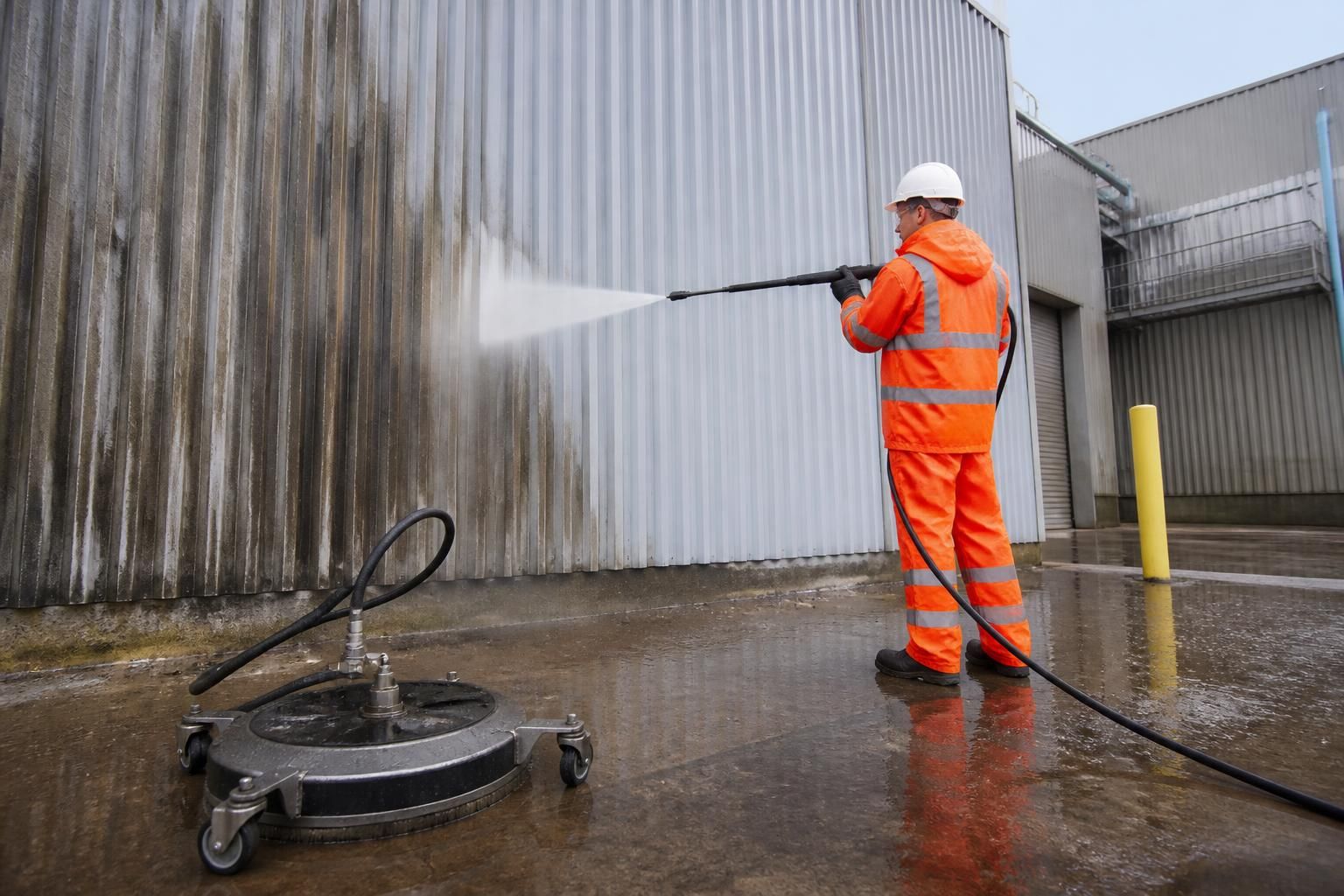
Hot- or cold-water pressure washing is used for robust surfaces such as concrete yards, loading areas, paving, car parks, plant-room floors and some masonry. Water pressure removes loose dirt and embedded deposits through mechanical action, while hot water helps break down oily or greasy contamination.
- Cold-water pressure washing is suitable for loose dirt, dust, mud, moss and general surface contamination where heat is not necessary.
- Hot-water pressure washing is more effective where oil, grease, traffic film or other deposits need heat to soften and lift them from the surface.
- Rotary surface cleaners provide more even cleaning across large flat areas than a hand-held lance. They help control spray, reduce striping and improve consistency on concrete, paving and other suitable hard surfaces.
- Adjustable lances and specialist nozzles allow the operator to vary the spray pattern and working intensity for edges, joints, steps, walls and difficult-to-reach areas.
Pressure washing is not automatically suitable for every substrate. Excessive pressure can remove pointing, drive water behind cladding, lift coatings or mark softer stone. For this reason, settings and techniques are adapted to the material rather than relying on maximum pressure.
Steam cleaning for oil, grease and ingrained deposits
Steam and high-temperature cleaning are useful when a residue is bonded to the surface or when a lower-water process is preferable. Heat softens oil, grease, carbon deposits and some process residues, allowing them to be removed with controlled agitation and, where appropriate, a compatible detergent.
Steam cleaning can be particularly useful around machinery, service areas, walls, hardstanding and detailed surfaces where a high-pressure approach could force contamination into joints or sensitive components. The method still requires careful control: heat can affect paint systems, sealants, plastics and other heat-sensitive materials, so the substrate is checked before treatment.
Detergents and degreasers for chemical contamination
Some residues need more than water. A suitable detergent or degreaser may be applied to oil, grease, traffic film, atmospheric deposits, food-related residues or ingrained dirt. The product is selected for the contaminant and substrate, then applied at a controlled concentration and allowed to dwell for the appropriate period before rinsing or extraction.
Cleaning chemicals are never treated as a substitute for surface assessment. Product compatibility, contact time, ventilation, worker protection and wastewater controls all need to be considered. Chemicals are handled in line with the relevant site procedures and COSHH requirements, and surfaces are rinsed or recovered as necessary to prevent residue being left behind.
Soft washing for façades, cladding and delicate surfaces
Soft washing uses a lower-pressure application with a suitable cleaning solution to remove algae, moss, lichen, organic staining and general atmospheric soiling from surfaces that could be damaged by aggressive jetting. It is often appropriate for façades, rendered walls, painted surfaces, coated cladding and other areas where preserving the finish is as important as removing the contamination.
The cleaning solution is allowed to work on the deposit before being gently rinsed, where the surface and site conditions permit. Nearby windows, seals, vents, plants, vehicles and drainage points are protected or managed during the process. Soft washing is not simply pressure washing at a lower setting; it depends on choosing a compatible treatment and controlling application, dwell time and runoff.
Graffiti removal and paint contamination
Graffiti removal is matched to the paint or marker, the age of the marking and the underlying surface. Specialist graffiti-removal products, controlled pressure, steam or a combination of these methods may be used on brickwork, concrete, render, painted walls and other masonry.
Porous materials can absorb paint, while painted or coated surfaces may be stripped by an overly aggressive treatment. We therefore test the cleaning approach where necessary and work progressively, removing the marking without unnecessarily eroding the substrate or damaging an existing finish. In some cases, a protective coating may be considered after cleaning to make future removal more controlled.
Roof and high-level cleaning equipment
Roofs, façades, warehouse elevations, canopies and high-level structures often require access equipment rather than ground-level cleaning alone. Depending on the site assessment, this can include powered access platforms, mobile towers or other suitable access arrangements. Equipment is selected according to height, ground conditions, obstruction risks and the need to keep people and vehicles clear of the work area.
Water-fed systems and extended-reach equipment can help clean elevated areas while reducing the need for operators to work directly at the edge of a roof or façade. Roof cleaning methods are adapted to the roof covering, drainage layout and condition. Loose materials, vulnerable flashings, rooflights and seals are identified before work begins, and walkways or exclusion zones are used where required.
Vacuum recovery and water control
On industrial sites, removing dirty water can be as important as removing the visible residue. Vacuum recovery equipment may be used to collect slurry, contaminated wash water and loosened debris from floors, yards, car parks and other hard surfaces. This helps prevent polluted runoff entering surface-water drains and keeps work areas safer and more usable.
Where recovery is required, we identify drainage points and agree the disposal or discharge arrangements before cleaning. Solids, oils and chemical residues are managed in accordance with the site’s waste procedures and applicable environmental requirements. Water-fed systems can also provide a controlled supply for façade and glazing-related work where low-splash application is beneficial.
Typical equipment used on industrial cleaning projects
- Hot- and cold-water pressure washers with adjustable pressure and flow controls.
- Steam cleaning equipment for heat-assisted removal of grease and ingrained deposits.
- Rotary surface cleaners for consistent treatment of large horizontal areas.
- Specialist lances, nozzles, brushes, scrapers and agitation tools for detailed or restricted areas.
- Surface-compatible detergents, degreasers and graffiti-removal products.
- Soft-washing application equipment for façades, cladding and organic staining.
- Wet vacuums and water-recovery equipment for slurry and contaminated runoff.
- Water-fed and extended-reach systems for controlled high-level cleaning.
- Access equipment selected for roofs, façades, structures and difficult-to-reach locations.
How the process is controlled on site
Effective industrial cleaning depends on more than the machine being used. We establish the cleaning objective, inspect the substrate, protect sensitive areas, confirm access and runoff arrangements, and select the least aggressive method capable of producing the required result. Operators then monitor pressure, temperature, chemical use, dwell time and water recovery throughout the work.
This approach allows the same project to use different techniques in different zones. For example, hot-water pressure washing and a rotary cleaner may be suitable for a concrete loading area, while a lower-pressure detergent treatment is more appropriate for adjacent cladding. A greasy plant-room floor may require steam and degreasing, whereas nearby painted walls may need controlled soft washing or specialist graffiti treatment. Matching the technique to each surface delivers a more reliable clean and helps protect the condition and service life of the industrial site.
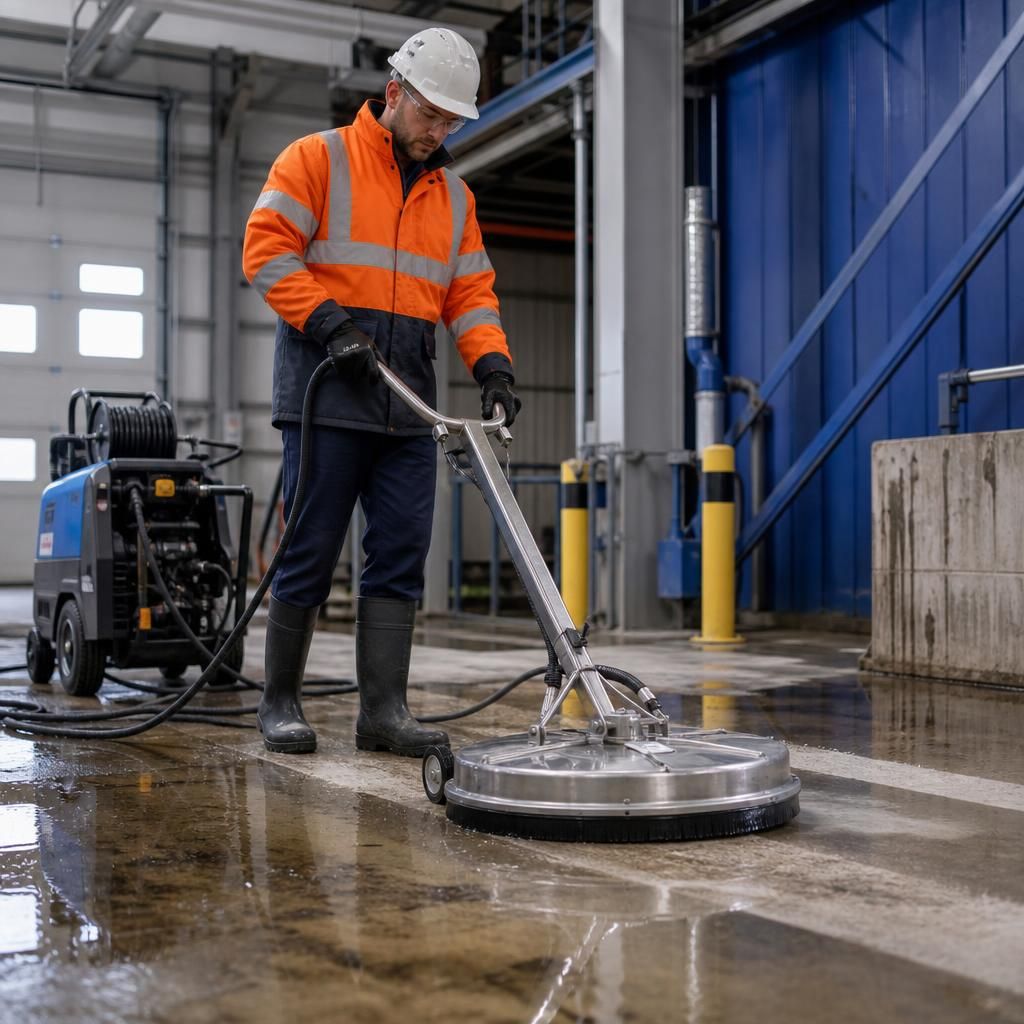
Industrial cleaning equipment must be matched to both the residue and the surface beneath it. Oil and grease on concrete may respond well to hot-water pressure washing or steam, while painted cladding, aged masonry and coated surfaces usually require lower pressure, compatible detergents and controlled rinsing.
A test clean helps confirm the pressure, temperature, chemical concentration and dwell time before work continues across a larger area. This reduces the risk of removing coatings, damaging pointing, forcing water behind cladding or marking softer materials. The same site may therefore need different methods in different zones: a rotary surface cleaner for a concrete yard, steam for a greasy plant-room floor and soft washing for an adjacent façade.
Where cleaning creates slurry or contaminated wash water, vacuum recovery can collect the waste rather than allowing it to enter surface-water drains. This keeps the work area safer and supports the site’s agreed wastewater and waste-management procedures.