
What measures does the industrial cleaning service provider take to ensure environmental sustainability and waste management compliance?
We support environmental sustainability by selecting suitable low-impact cleaning methods, controlling water and chemical use, and preventing contaminated runoff from entering drains or ground. Wastewater, sludge, packaging and other controlled waste are contained, segregated, documented and transferred through appropriate disposal or recovery routes in line with UK environmental and waste-management requirements.
Environmental sustainability and waste management compliance are managed through planned cleaning methods, controlled use of resources, pollution prevention and documented waste handling. For each industrial or commercial site, the cleaning approach should be selected according to the surface, residue, drainage arrangements, access constraints and environmental risks. This avoids treating every task in the same way and helps ensure that cleaning achieves the required standard without creating avoidable waste or contaminated runoff.
Environmental controls are considered during the site assessment. Before work begins, the cleaning team reviews the areas to be treated, the substances likely to be removed, nearby drains and watercourses, ground conditions, storage areas and the proposed discharge or collection arrangements. This information is used to prepare a method statement and risk assessment that address pollution prevention, water use, chemical selection, waste containment and emergency procedures.
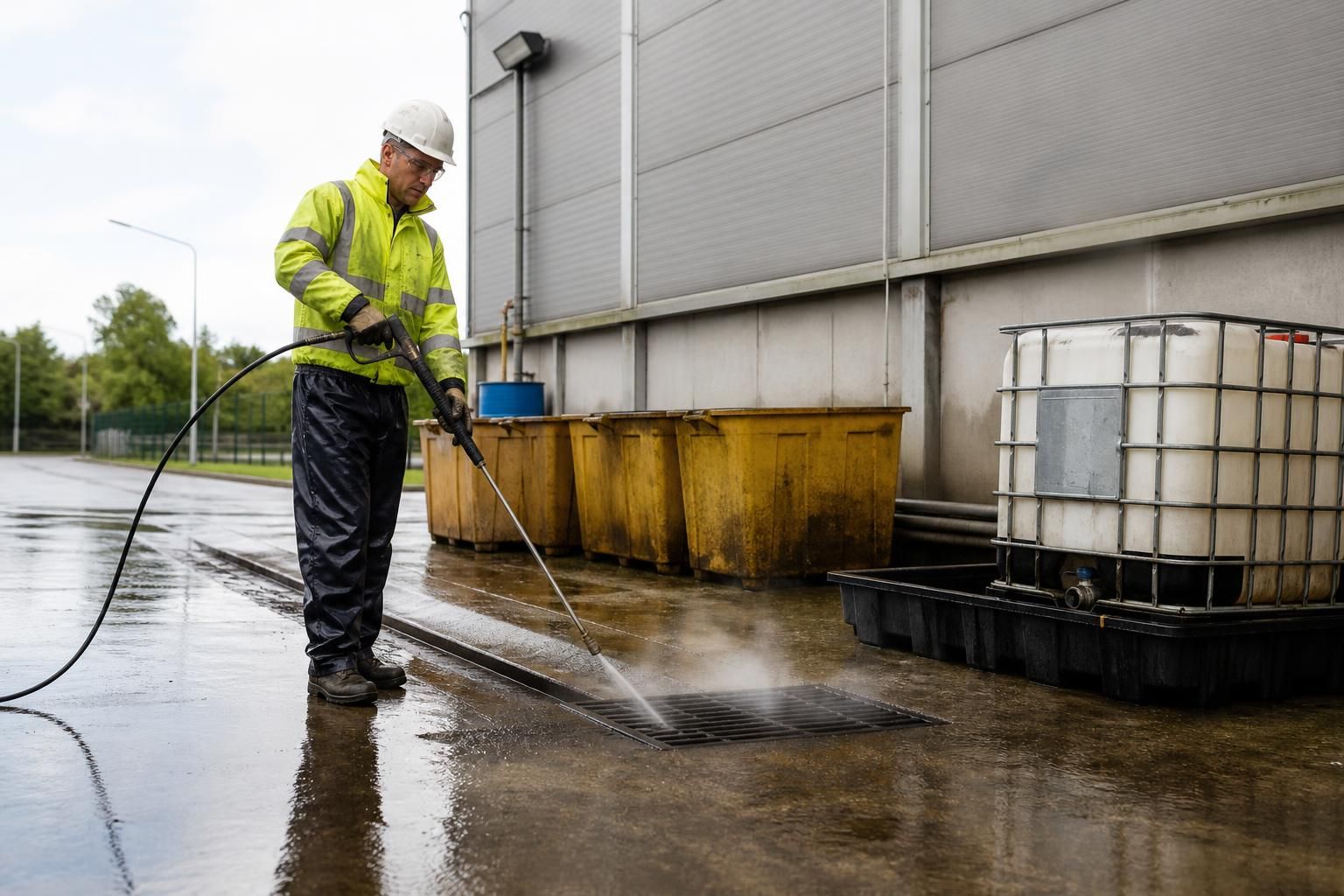
Where appropriate, the plan will identify whether wastewater can be safely discharged to the foul drainage system, whether it must be collected for approved disposal, or whether additional filtration or treatment is required. Surface-water drains are not used as a route for contaminated water. Drain covers, bunding, booms, temporary barriers, wet vacuums and collection tanks can be used to prevent wastewater, silt, oils, detergents and other residues from reaching the environment.
Cleaning methods are chosen to reduce resource use without compromising the result. The team may select pressure washing, steam cleaning, soft washing, mechanical agitation or dry removal according to the type of contamination and substrate. Lower-water or lower-chemical methods can be suitable for some residues, while controlled pressure and recovery equipment may be more appropriate where large quantities of dirt or contaminated water are present. The objective is not simply to use the most powerful method, but to use the least intensive effective method for the surface and risk involved.
- Water flow and pressure are controlled rather than left unrestricted.
- Pre-treatment and dwell times are used carefully to avoid unnecessary repeat cleaning.
- Chemicals are selected for the contamination and surface, with dilution and application controlled in accordance with the product information.
- Where practicable, collected water and materials are recovered rather than allowed to spread across the site.
- Equipment is maintained to prevent leaks, excessive consumption and avoidable rework.
Chemicals are managed through identification, storage and controlled use. Products are kept in suitable labelled containers, protected from damage and stored away from incompatible substances. Safety data sheets and supplier instructions inform handling, dilution, personal protective equipment and spill response. The cleaning team also considers whether a less hazardous or less environmentally persistent product can achieve the same outcome. Chemicals are never mixed unless the product instructions specifically permit it.
Wastewater and removed material are assessed according to what they contain, not simply how they look. Water from a routine external wash may require different handling from water containing oil, heavy metals, solvents, biological contamination, paint residues or construction materials. Sludge, silt, absorbents, filters, chemical containers and contaminated protective materials may also require separate classification. If there is uncertainty about the waste type, it should be held safely and assessed before disposal rather than sent through an unsuitable route.
Waste is segregated, contained and transferred in line with the applicable UK requirements. The waste hierarchy is applied by preventing waste where possible, then considering reuse or recovery before disposal. Waste streams are kept separate to prevent contamination and to support appropriate recycling or recovery. Containers, tanks and skips are suitable for the material held, clearly identified and positioned so that leaks, overfilling and unauthorised access are prevented.
- General waste is kept separate from contaminated or hazardous materials.
- Packaging, metals, plastics and other recoverable materials are separated where suitable recovery routes are available.
- Liquids, sludge and residues are stored in secure containers with appropriate secondary containment where required.
- Hazardous waste is identified and handled using the required documentation and authorised disposal or recovery arrangements.
- Waste is transferred only to appropriately authorised carriers, facilities or contractors for the relevant waste type.
The waste producer or site operator retains responsibility for ensuring that waste is correctly described and transferred with the required duty-of-care information. Depending on the material and route, records may include waste transfer notes, hazardous waste consignment notes, waste descriptions, quantities, carrier details, destination information and evidence of disposal or recovery. Keeping these records creates an auditable chain from collection to final treatment and helps the customer demonstrate compliance during internal reviews or external inspections.
Pollution prevention measures are supported by preparation and response procedures. The team checks hoses, tanks, pumps, vacuum equipment and connections before use, and establishes where recovered water or waste will be held. Spill kits and suitable absorbent materials should be available for the task. If a spill, equipment failure or unexpected contamination occurs, work is stopped where necessary, the source is isolated, the material is contained and the responsible site contact is informed. The incident is then recorded and escalated in accordance with the site’s environmental procedures.
Environmental controls also apply to transport and site housekeeping. Waste containers are secured during movement, vehicles and equipment are checked for leaks, and materials are not left where they could enter drainage systems or obstruct emergency access. At the end of a project, the work area is inspected for residual sludge, packaging, chemical containers, standing water and other debris. Any outstanding waste or discharge issue is reported rather than concealed or left for the customer to resolve.
Compliance is coordinated with the customer’s own environmental management system. Site rules, permit conditions, drainage plans, prohibited discharge requirements and emergency contacts are confirmed before work starts. On regulated, high-risk or environmentally sensitive premises, the cleaning method may need to be reviewed with the site manager or environmental representative. Food, manufacturing, construction, utilities and local-authority sites can have different controls, so the method statement is adapted to the location and the substances involved.
These measures do not mean that every job has the same environmental requirements. A low-risk façade wash, a fuel-contaminated yard, a post-construction clean and a factory-floor degrease produce different waste streams and require different controls. The appropriate approach is therefore based on the site survey, the contamination profile, the cleaning technique, the drainage arrangements and the relevant legal and client requirements. This site-specific process supports responsible resource use while maintaining the cleaning standard expected from a professional industrial cleaning service.
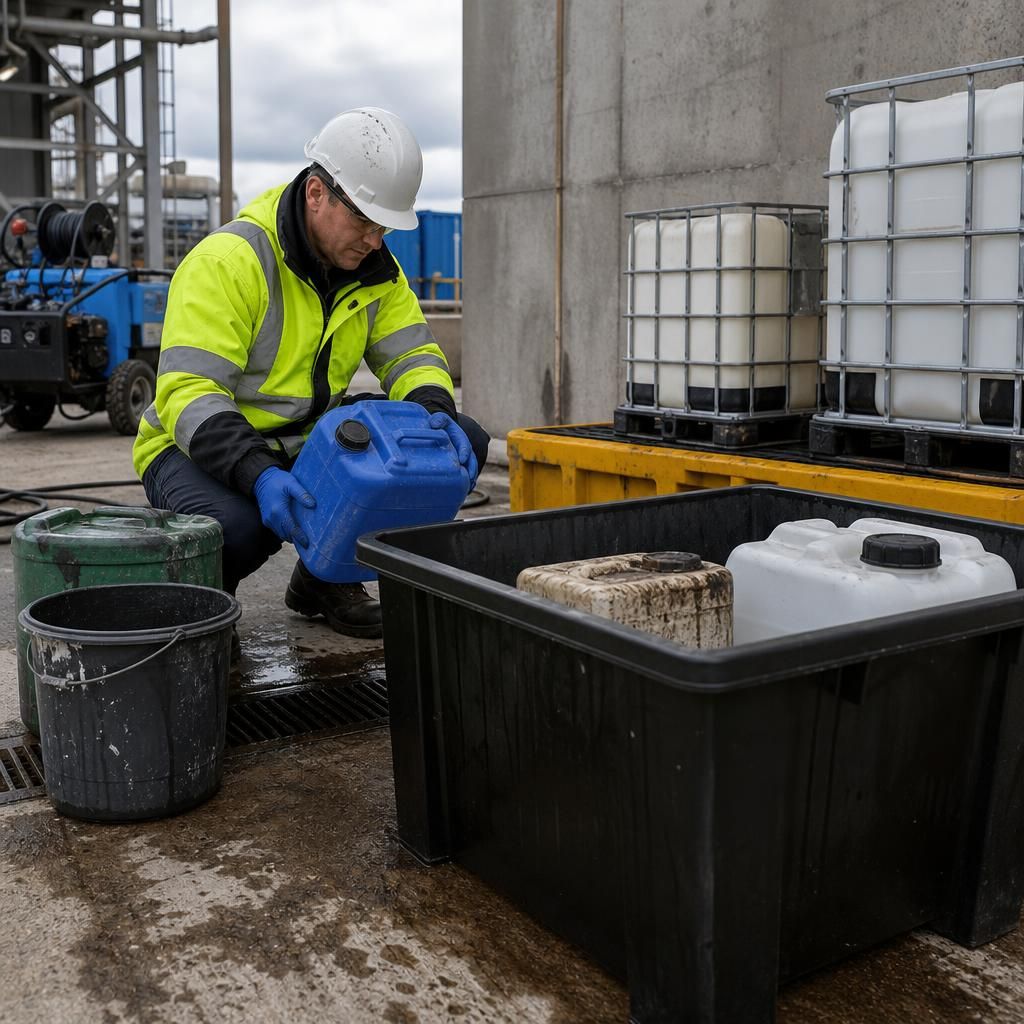
Waste management compliance means identifying, containing and transferring each waste stream through an appropriate, documented route. Industrial cleaning waste can include wastewater, sludge, oil residues, chemical containers, filters, absorbents and contaminated materials, so it must be assessed according to its contents rather than treated as general waste.
Before work starts, the cleaning method and collection arrangements are agreed with the site contact. Drain covers, bunding, wet vacuums, tanks or sealed containers may be used to prevent contaminated water and residues entering surface-water drainage. Waste is then segregated where practical, with hazardous materials kept separate from recyclable or general waste.
Records such as waste transfer notes or hazardous waste consignment notes provide an auditable trail showing what was removed, in what quantity, by whom and where it was taken. Waste is transferred only through suitable authorised routes, helping the customer demonstrate that environmental controls and duty-of-care requirements have been followed.