
What industry-specific cleaning regulations and safety standards should be considered when selecting an industrial cleaning service provider?
When selecting an industrial cleaning service provider, check that they can demonstrate compliance with UK health and safety requirements, including the Health and Safety at Work etc. Act, COSHH, PUWER, LOLER and the Work at Height Regulations where applicable. Also confirm suitable risk assessments, method statements, trained operators, insurance, environmental controls and lawful waste-management procedures for the specific site and cleaning work.
When selecting an industrial cleaning service provider, verify that the contractor can comply with the UK health and safety, environmental and sector-specific requirements that apply to your site and the proposed work. This normally includes suitable risk assessments and method statements, COSHH controls, competent operators, safe equipment management, work-at-height arrangements, insurance, emergency procedures and lawful waste and wastewater handling.
Compliance should be assessed against the actual premises, materials, access conditions and cleaning methods rather than treated as a generic certification exercise. A contractor using pressure washing inside a manufacturing facility will have different controls from one removing graffiti at a public building, cleaning a food-processing area or working on a construction site.
Core health and safety duties
The Health and Safety at Work etc. Act 1974 provides the general legal framework. It requires employers and those controlling workplaces to protect employees and other people affected by their activities. A suitable provider should be able to explain how its work will be coordinated with the client’s existing site rules, permits, traffic plans and emergency arrangements.
The Management of Health and Safety at Work Regulations require risks to be assessed and controlled. Before work begins, the contractor should identify hazards such as moving vehicles, live machinery, fragile surfaces, chemicals, high-pressure water, steam, slips, falling objects, poor ventilation and unauthorised access. The assessment should be specific to the location and method, not a generic document reused without site review.
Ask to see a method statement that reflects the risk assessment. It should describe the work sequence, equipment, exclusion zones, isolation requirements, access arrangements, supervision, personal protective equipment, spill response and what will happen if conditions change. Workers should be briefed on the controls, and the method should be reviewed when the scope, surface, chemical or site conditions change.
COSHH and chemical controls
The Control of Substances Hazardous to Health Regulations apply where cleaning chemicals, detergents, solvents, biocides, oils, contaminated residues, dusts, fumes or biological agents may cause harm. The provider should identify each hazardous substance, obtain current safety data information, assess exposure routes and specify controls for storage, dilution, application, ventilation and disposal.
For chemical cleaning, confirm that operators are trained to read product information and understand incompatibilities. Acids, alkalis, chlorine-based products and other substances must not be mixed unless the manufacturer’s instructions expressly permit it. COSHH controls should also cover spray mist, vapour, skin contact, eye exposure and contaminated clothing. Suitable PPE is important, but it should support—not replace—substitution, containment, ventilation and safe working procedures.
Where cleaning may disturb asbestos-containing materials, the provider must establish whether asbestos is present before work starts. The Control of Asbestos Regulations apply to relevant work, and asbestos-related tasks may require specialist competence, notification, controlled conditions and licensed arrangements. A general cleaning contractor should not proceed on suspect materials without appropriate assessment and advice.
Work equipment and pressure-cleaning controls
The Provision and Use of Work Equipment Regulations apply to pressure washers, steam-cleaning systems, vacuum equipment, pumps, generators, powered access equipment and other work equipment. Equipment should be suitable for the task, maintained, inspected where required and operated only by people with adequate information, instruction and training.
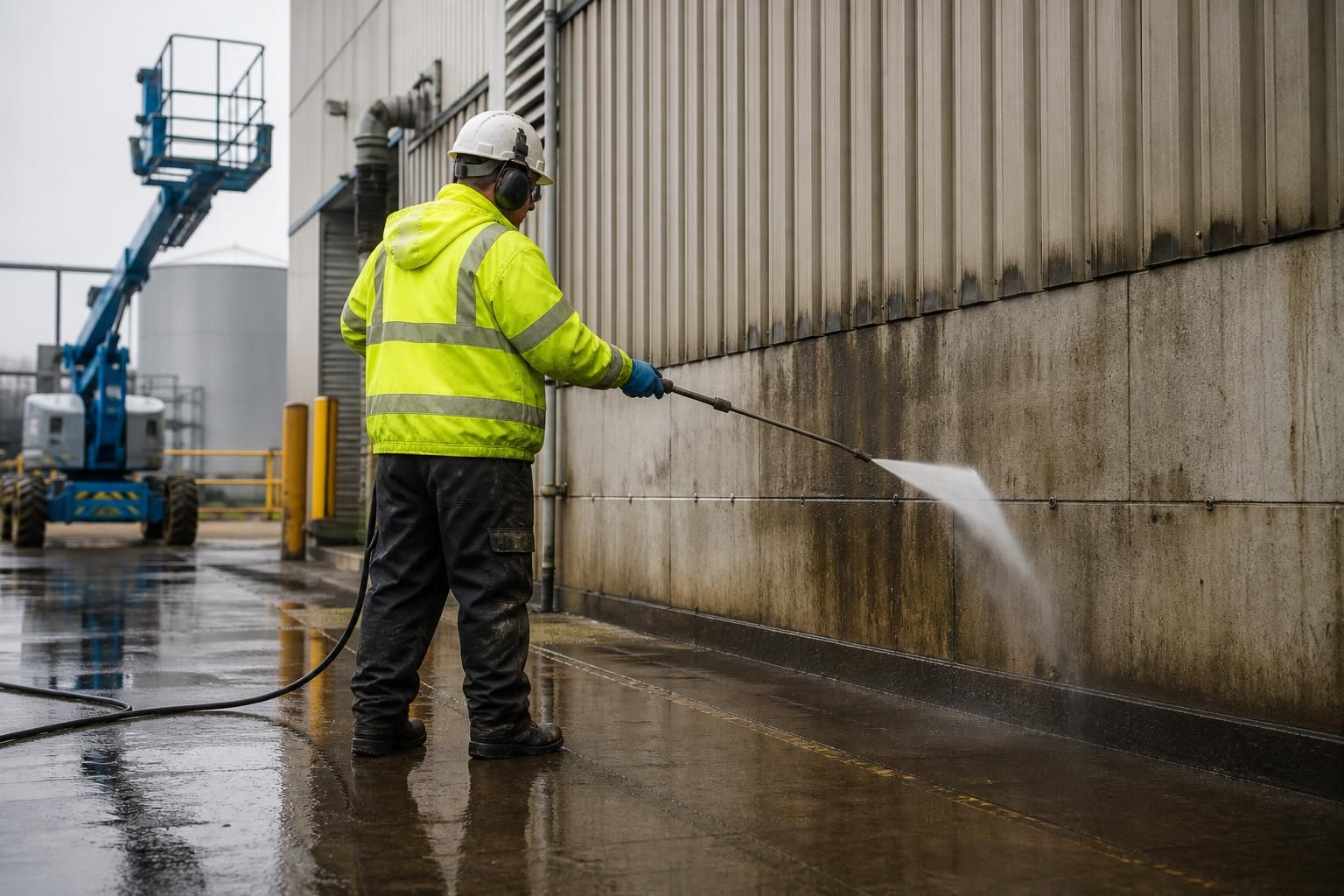
High-pressure water can inject fluid into the body, damage surfaces, create flying debris and spread contaminated material. The method statement should address operating pressure, nozzle selection, hose condition, trigger controls, safe distances, electrical risks, drainage, overspray and pedestrian protection. Steam introduces additional burn and pressure hazards, while powered equipment can create noise, vibration and exhaust risks.
The Lifting Operations and Lifting Equipment Regulations apply where lifting equipment is used, including certain access and lifting arrangements. Lifting operations should be properly planned, supervised and carried out with suitable, examined equipment. If mobile elevating work platforms, cradles, hoists or other lifting equipment are used, ask for evidence of the required examinations and operator competence.
Work at height, access and confined spaces
The Work at Height Regulations apply whenever someone could fall and suffer injury. A suitable provider should first consider whether work can be completed from ground level, then select appropriate access equipment and controls. Where ladders, towers, mobile elevating work platforms, cradles or rope-access systems are proposed, the contractor should explain inspection, rescue, exclusion zones, weather limits and surface requirements.
Work at height must not rely solely on personal restraint or fall-arrest equipment without a planned rescue procedure. Operators should be trained for the specific equipment, and access routes must account for overhead services, fragile roofs, vehicle movements and falling materials.
Cleaning tanks, ducts, pits, silos and other restricted areas may involve confined-space risks. The Confined Spaces Regulations require hazards to be avoided where possible and controlled through suitable assessment, testing, ventilation, communication, supervision and emergency rescue arrangements. A provider should not enter a confined space simply because it is physically accessible.
Construction, maintenance and high-risk sites
Where cleaning forms part of a construction, refurbishment or demolition project, the Construction (Design and Management) Regulations may apply. The cleaning contractor should cooperate with the principal contractor and follow the site’s construction phase plan, induction arrangements, permits, segregation controls and reporting procedures. This is particularly important during post-construction cleaning, when dust, debris, temporary services, unfinished edges and other trades may be present.
Additional controls may be needed for flammable atmospheres, combustible dust, fuel residues or solvent vapours. The Dangerous Substances and Explosive Atmospheres Regulations should be considered where there is a risk of fire or explosion. Sites with pressure systems, hazardous machinery, biological contamination or stored energy may also require permit-to-work, isolation and specialist supervision.
Food, pharmaceutical and hygiene-sensitive premises
Food businesses must maintain hygienic premises and prevent contamination under applicable food hygiene legislation. A cleaning provider working in food processing or storage areas should understand hygienic zoning, allergen controls, food-contact surfaces, chemical residues, foreign-body risks, drainage and the need to protect products and packaging during cleaning.
Ask how the contractor controls equipment cleanliness, colour coding, chemical approval, dilution, rinse requirements and verification of completed work. Requirements may also be set by the site’s food-safety management system, customer standards or recognised certification scheme. These additional standards are not a substitute for legal compliance, but the provider must be able to work within them and maintain the site’s documented procedures.
Environmental and waste-management requirements
Industrial cleaning can produce contaminated water, sludge, chemical residues, paint waste, oily deposits, abrasive media and contaminated absorbents. The Environmental Protection Act, the Environmental Protection (Duty of Care) Regulations and applicable waste legislation require waste to be stored, described, transferred and disposed of correctly.
Do not assume that wash water can be discharged into a surface-water drain, foul drain or watercourse. The provider should identify drainage arrangements before work starts and explain how pollutants will be contained, recovered, treated or removed. Trade effluent consent, sewer approval, an environmental permit or other regulatory permission may be required depending on the material and discharge route. Waste transfer documentation and hazardous-waste records should be retained where applicable.
Good environmental controls include drain protection, bunding, spill kits, vacuum recovery, controlled run-off, filtration, segregation of waste streams and secure storage. The method statement should explain what happens if a spill occurs and who must be notified. Cleaning methods should be selected to control water use, chemical use, airborne dust and unnecessary waste without compromising the required hygiene or surface result.
Training, competence and evidence to request
A reliable provider should be able to demonstrate competence for the specific work, not just provide a general training statement. Request evidence of relevant operator training, equipment familiarisation, site inductions, chemical awareness, work-at-height competence, confined-space training, first aid arrangements and toolbox talks where appropriate.
- Current risk assessments and method statements for the proposed work.
- COSHH assessments and safety data information for chemicals used on site.
- Inspection, maintenance and examination records for relevant equipment.
- Training and competency records for operators and supervisors.
- Public liability, employers’ liability and, where relevant, professional or environmental liability insurance.
- Waste carrier details and a clear process for waste transfer and hazardous waste.
- Incident, near-miss and emergency reporting arrangements.
- Evidence of a suitable quality, environmental and health-and-safety management process where relevant to the contract.
Accreditations can support a procurement decision, but they should not replace a conversation about the actual site risks. Check the scope, expiry and relevance of any certification, and ask how findings from inspections, incidents and corrective actions are managed.
How the client and provider should work together
Legal responsibility is often shared. The client controls information about the site, known hazards, asbestos, traffic routes, production processes and emergency arrangements. The contractor controls its employees, equipment, cleaning methods and supervision. Both parties must exchange relevant information, coordinate activities and review arrangements when the work changes.
Before appointing a provider, give accurate details of the surfaces, contamination, chemicals, access restrictions, operating hours, drainage, nearby personnel and any vulnerable occupants. A competent contractor should ask questions, arrange a site survey where necessary and identify exclusions rather than promise a method without sufficient information. Selecting a provider on this evidence-based basis helps protect workers, visitors, property and the client’s wider regulatory obligations.
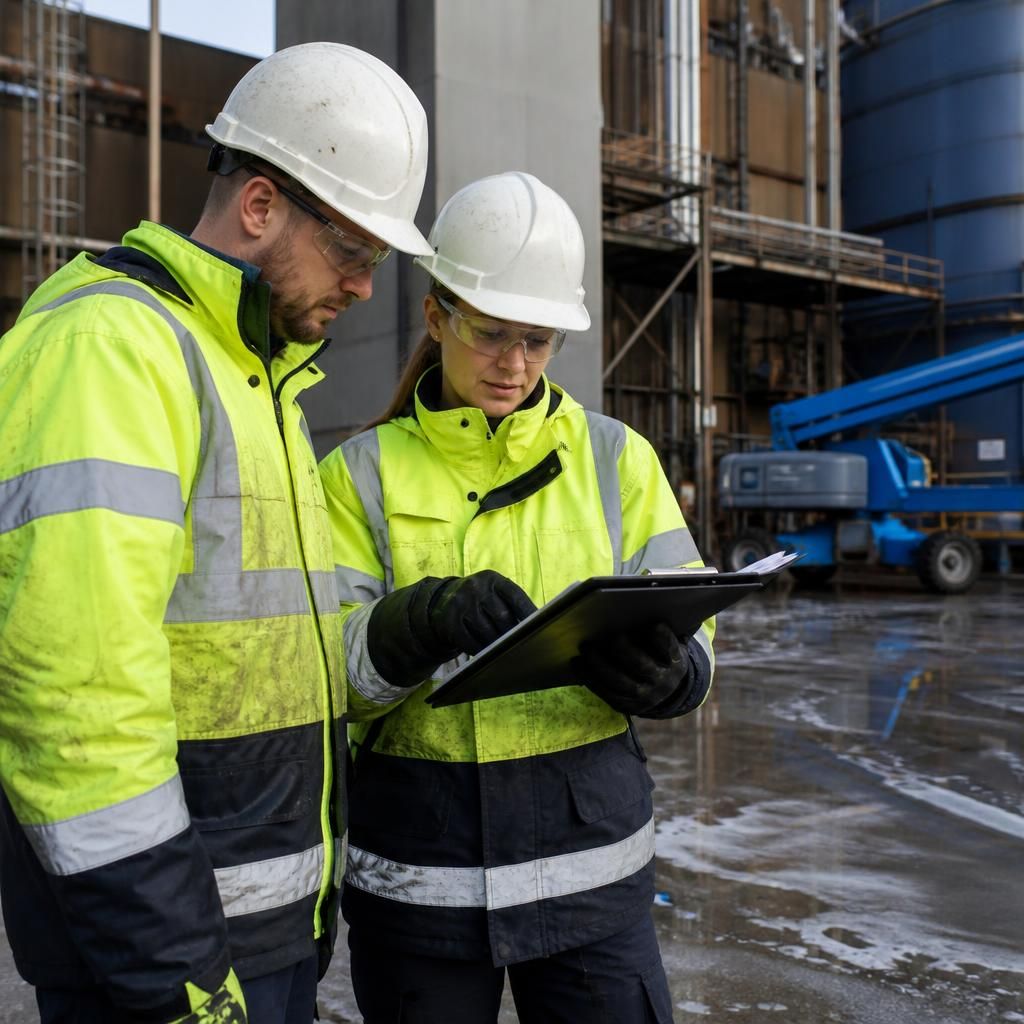
Before appointing an industrial cleaning provider, verify that its proposed methods comply with the regulations relevant to your site, equipment and contaminants. Ask for a site-specific risk assessment and method statement, COSHH assessments, operator training records, equipment inspection documents and evidence of suitable insurance.
The provider should also explain how it will control work at height, high-pressure water, hazardous substances, restricted areas, vehicle movements and contaminated wastewater. Where cleaning takes place in food, construction or other regulated environments, confirm that the contractor can follow your site procedures, permits and hygiene controls. This evidence is more useful than relying on a general accreditation alone because it shows how risks will be managed during the actual work.
Discuss Your Industrial Cleaning Compliance Requirements
Discuss your site-specific cleaning requirements with Encanto Exterior Cleaning, including access conditions, contaminants, equipment, drainage and applicable compliance controls. We can help identify the documentation and working arrangements needed before the service begins.