
What criteria should businesses consider when selecting an industrial cleaning service provider?
Businesses should assess an industrial cleaning provider’s relevant experience, health and safety procedures, insurance, trained staff, equipment, environmental practices, availability and ability to deliver a clear, compliant service plan. The provider should also demonstrate reliable project management, suitable access solutions and transparent pricing for the specific site, surfaces and cleaning risks involved.
The right industrial cleaning service provider should be assessed on more than price. Businesses should look for relevant industrial experience, demonstrable health and safety controls, suitably trained staff, appropriate equipment, reliable project management, environmental compliance, adequate insurance and a clear method statement for the specific site and cleaning requirements.
Relevant experience and scope of work
Start by checking whether the provider has completed work in environments similar to yours. Factory floors, warehouses, loading areas, production facilities, roofs, façades, cladding and external yards can involve very different surfaces, contaminants, access requirements and operational risks. A contractor experienced in general commercial cleaning may not have the equipment or controls needed for heavy industrial residues, oil contamination, ingrained dirt, construction dust, algae, staining or graffiti.
Ask for evidence that the provider regularly undertakes the type of work required, including comparable site conditions and cleaning methods. Relevant experience should cover both the physical cleaning and the practical demands of working around vehicles, machinery, production schedules, contractors, pedestrians and restricted access areas.
Understanding of the site and its risks
A reliable provider should assess the site before preparing a quotation or work plan. This may include reviewing the surfaces, contamination, drainage, access points, working heights, nearby operations, electrical installations, traffic routes and areas that must remain in use. A site survey helps identify whether pressure washing, steam cleaning, soft washing, manual cleaning or a combination of methods is appropriate.
The provider should ask useful questions about the work rather than make assumptions. These may include:
- What type of residue or contamination needs to be removed?
- Which surfaces are involved, and are any fragile, coated or damaged?
- Will cleaning take place near production, storage, vehicles, members of the public or sensitive equipment?
- How will wastewater, detergents, debris and contaminated materials be contained and removed?
- Are there restrictions on working hours, noise, water use, access or vehicle movements?
- Will the work require mobile access equipment, traffic management, isolation or coordination with other contractors?
Health and safety management
Industrial cleaning can involve high-pressure water, chemicals, slippery surfaces, moving vehicles, work at height, confined or restricted areas, electrical hazards and falling debris. The contractor should be able to explain how these risks will be controlled before work begins.
Request appropriate risk assessments and method statements for the planned work. These should describe the hazards, control measures, personal protective equipment, exclusion zones, emergency arrangements, equipment checks and responsibilities of the cleaning team. Where the work forms part of a construction or refurbishment project, the provider should understand its duties under the Construction (Design and Management) Regulations where applicable and coordinate with the principal contractor or site manager.
For chemical use, the contractor should assess the products required under the Control of Substances Hazardous to Health Regulations and provide suitable information, handling procedures and spill controls. Work at height should be properly planned, with suitable access equipment and rescue arrangements. Equipment used for lifting people or loads should be selected, inspected and operated in accordance with relevant legal requirements, including the requirements associated with LOLER and PUWER where applicable.
Training, competence and supervision
Ask how operatives are trained for the tasks they will carry out. Competence should cover the cleaning techniques, machinery, chemicals, access equipment and site hazards relevant to the project. Operatives may also need specific training for pressure washing, steam cleaning, working at height, traffic management, manual handling, spill response and the use of powered equipment.
The contractor should identify who will supervise the work, how instructions will be communicated and how changing site conditions will be managed. A competent supervisor is particularly important on large or occupied sites, where the cleaning team must coordinate with the client, other contractors and site personnel.
Suitable equipment and cleaning methods
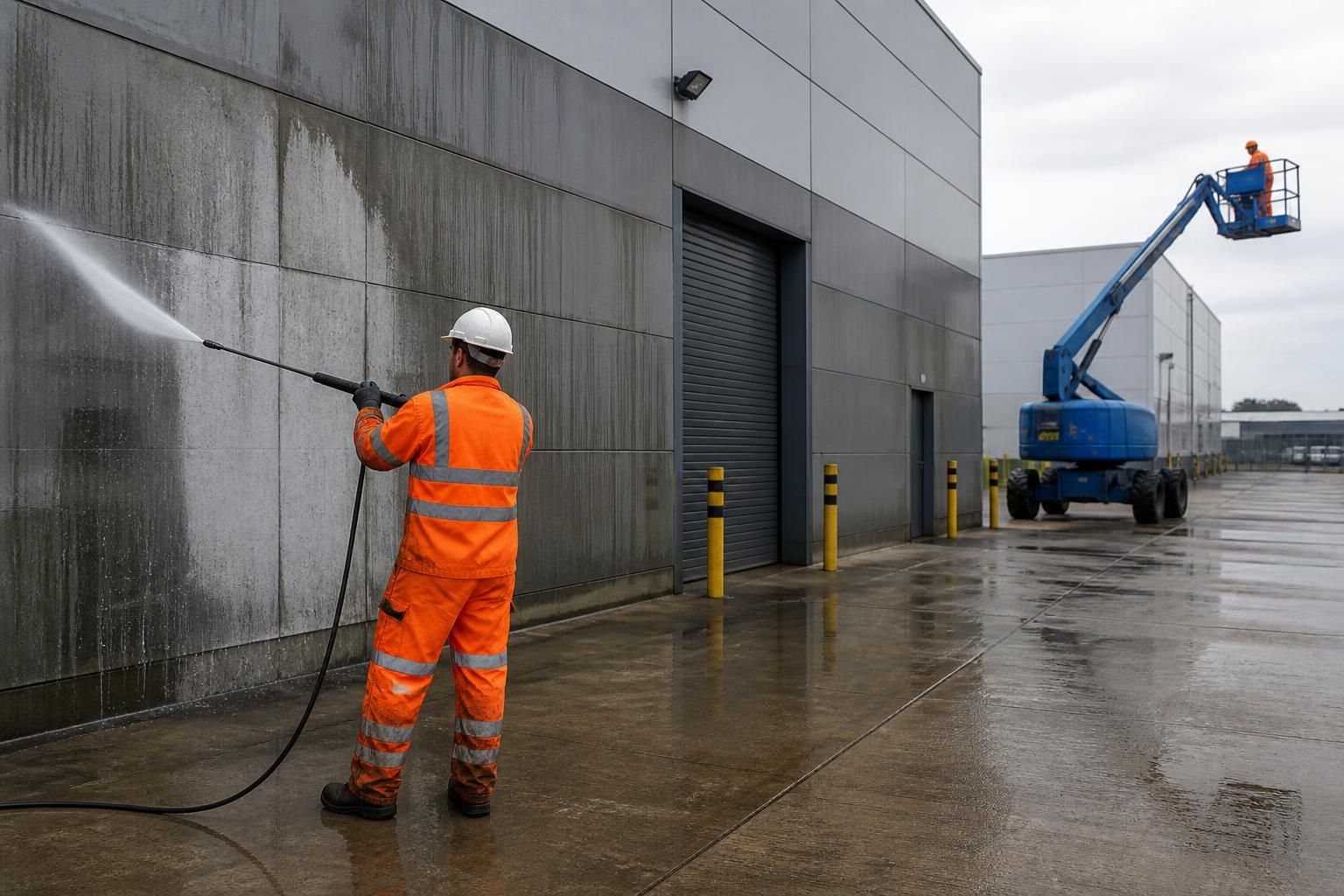
Equipment should be selected according to the surface and residue, not simply because it is available. High-pressure cleaning can be effective on robust external surfaces, yards and hard-standing areas, but excessive pressure may damage coatings, joints, masonry or sensitive components. Steam cleaning may be preferable where heat and reduced water use are beneficial. Soft washing, controlled detergents or manual techniques may be more suitable for delicate façades, coated cladding or areas where run-off must be carefully controlled.
Ask the provider to explain:
- Which cleaning method is proposed and why it is suitable.
- How the method will be tested on uncertain or sensitive surfaces.
- What pressure, temperature, detergent or agitation controls will be used.
- How equipment will be maintained and checked before use.
- How water, power and access requirements will be managed.
- How the team will prevent damage to seals, finishes, machinery, drainage systems and surrounding property.
A small test area can help confirm the cleaning result and identify any risk of colour change, surface erosion or coating failure before the main work starts.
Access arrangements and operational planning
Many industrial cleaning projects involve roofs, high façades, canopies, elevated structures or areas obstructed by plant and stock. The provider should propose a safe and proportionate access solution, such as mobile elevated work platforms, towers, access platforms, telescopic equipment or ground-based systems where suitable. Access equipment must be appropriate for the surface, reach, ground conditions, weather and work activity.
Planning should also consider the effect of cleaning on normal operations. A good service plan will define working areas, isolation requirements, protection for equipment and stock, vehicle movements, signage, exclusion zones, drying times and handover arrangements. For ongoing maintenance, agree the frequency, priority areas, response times and reporting process in advance.
Environmental controls and waste management
Industrial cleaning can produce wastewater containing detergents, oils, silt, heavy contamination or other substances that must not enter surface-water drains without appropriate controls. The provider should explain how run-off will be prevented, collected, filtered, treated or disposed of, and how waste transfer and disposal requirements will be met.
Consider whether the proposed method minimises unnecessary water and chemical use without compromising the result. The contractor should select products responsibly, prevent spills, protect soil and drainage systems, and separate or contain waste where required. Environmental controls should be included in the method statement rather than treated as an afterthought.
Insurance, compliance and documentation
Check that the provider holds suitable public liability and employers’ liability insurance, together with any additional cover appropriate to the work. The level and scope of cover should reflect the site risks, access methods and potential impact on third-party property or operations.
Ask for relevant policies, accreditations, training records, equipment inspection records and previous health and safety documentation where appropriate. Accreditations can support a contractor’s credibility, but they should not replace a detailed assessment of the actual team, methods and controls proposed for your site.
Quality control and evidence of completion
The quotation or work plan should state what will be cleaned, the expected standard, preparation requirements, exclusions and any limitations caused by permanent staining, surface damage or inaccessible areas. Clarify how quality will be checked and how defects or missed areas will be addressed.
For larger projects, useful completion records may include photographs, inspection notes, waste documentation, incident reports where relevant and recommendations for future maintenance. These records help the client demonstrate that the work was completed and provide a reference point for subsequent cleaning.
Transparent and comparable pricing
Compare quotations on the basis of the complete service, not just the headline cost. A low price may exclude access equipment, wastewater controls, traffic management, preparation, out-of-hours working, waste disposal or remedial visits. The quotation should identify labour, equipment, detergents, access arrangements, disposal costs, client responsibilities and any assumptions.
Ask whether the price is fixed, subject to a site inspection, or likely to change if additional contamination or restricted access is found. A clear scope reduces disputes and makes quotations from different providers easier to compare. For recurring work, consider the total cost of maintaining the site, including reduced disruption, predictable scheduling and the prevention of avoidable surface deterioration.
Reliability and communication
The contractor should provide a named contact, realistic programme and clear process for reporting delays, access problems, incidents or changes to the work. Reliability is especially important where cleaning must take place around production, deliveries, public access or other contractors.
Before appointing a provider, confirm availability, lead times, out-of-hours capability and arrangements for urgent issues. For an ongoing contract, agree service standards, reporting requirements, review dates and a process for changing the scope as the site develops.
In practice, the strongest selection process combines a site assessment with checks on competence, safety, equipment, environmental controls, insurance, pricing and communication. The provider should be able to explain exactly how the work will be carried out, what risks and limitations apply, how the site will be protected and what evidence will be supplied when the cleaning is complete.
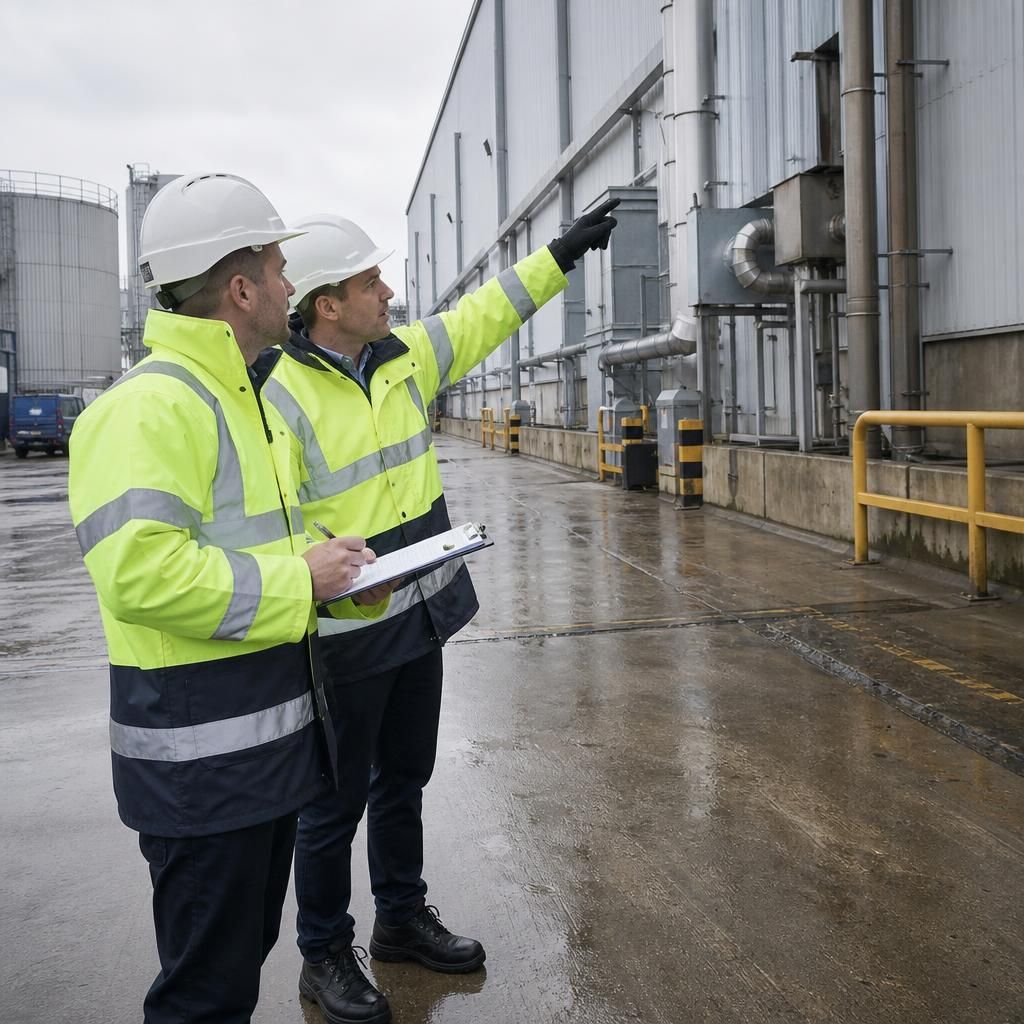
A site assessment is the starting point for selecting a suitable industrial cleaning service provider. Before work begins, the contractor should inspect the surfaces, residues, access routes, drainage, nearby equipment and operational hazards. This allows them to recommend an appropriate method, such as pressure washing, steam cleaning, soft washing or controlled manual cleaning, without relying on assumptions.
The assessment should lead to a clear quotation, risk assessment and method statement. These documents should explain how the cleaning will be completed, how machinery and stock will be protected, how wastewater and debris will be controlled, and what access equipment or site coordination is required. A provider that can identify these requirements in advance is better placed to deliver safe, consistent results with minimal disruption to your operations.