
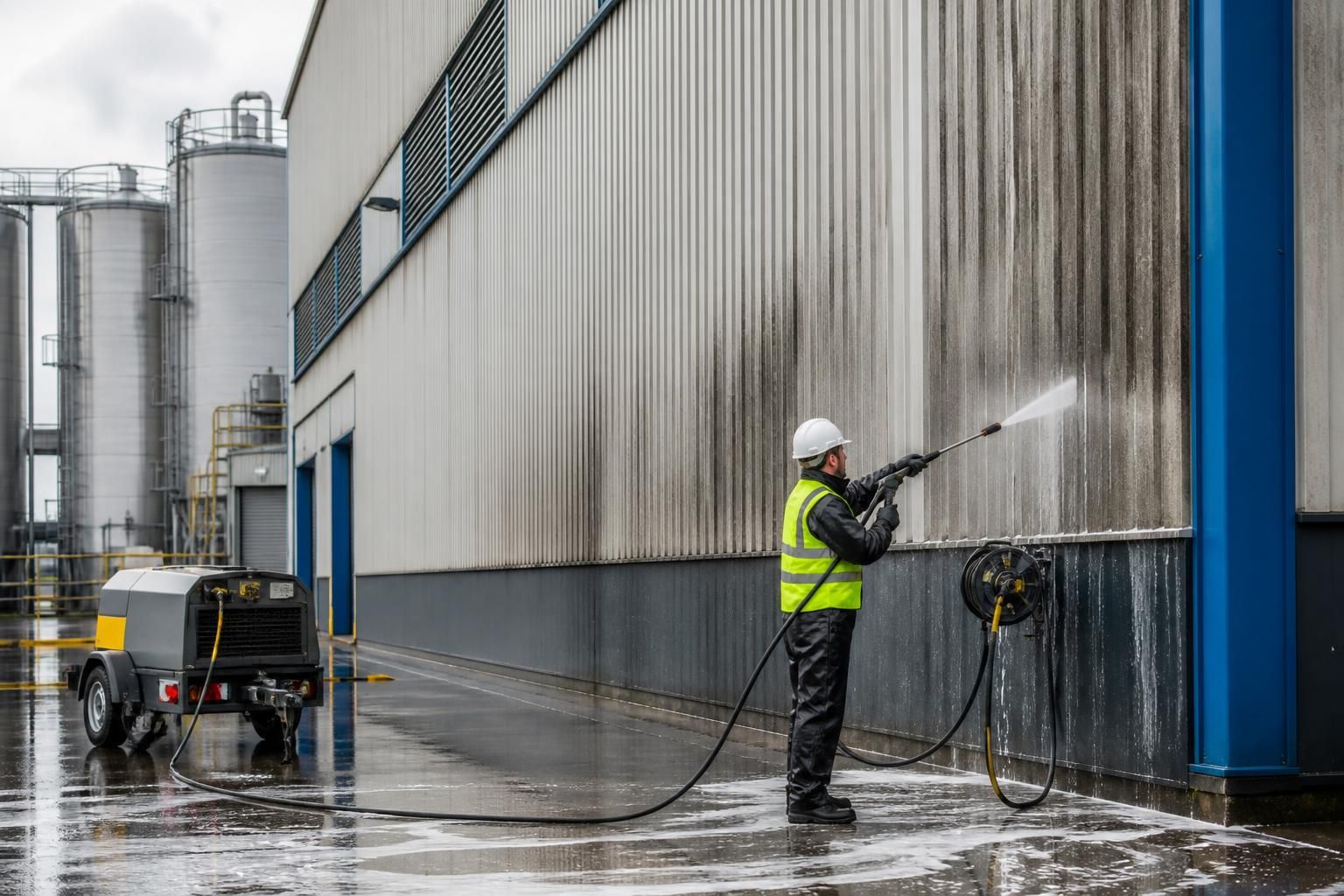
What are the most critical factors to consider when assessing the cost-effectiveness of industrial cleaning services?
The cost-effectiveness of industrial cleaning services depends on the total value delivered, not simply the quoted price. Assess the cleaning scope, required equipment and access, surface and residue types, service frequency, health and safety compliance, waste handling, downtime reduction and the contractor’s ability to provide reliable results with minimal disruption.
The cost-effectiveness of industrial cleaning services should be assessed by comparing the total value delivered with the full cost of the work, rather than choosing the lowest quotation. A reliable assessment considers the cleaning scope, surface condition, access requirements, equipment and labour, service frequency, compliance obligations, waste handling, downtime, and the contractor’s ability to deliver consistent results without disrupting operations.
Define the required cleaning scope
Begin by recording exactly what must be cleaned and the standard required. Industrial cleaning may include façades, cladding, roofs, plant areas, production spaces, loading bays, car parks, hard standings, welfare areas, storage facilities and external structures. A quotation that covers only visible dirt removal may not include degreasing, residue treatment, rinsing, stain removal, graffiti removal, high-level access or waste collection.
The required finish also affects value. Some areas may need general appearance cleaning, while others require the removal of oils, chemicals, biological growth, construction residues or contaminants that could create a slip, hygiene or operational risk. A clearly defined specification makes quotations comparable and prevents additional work being identified after the contract has started.
Assess the condition and type of contamination
Soiling that is allowed to build up can require more intensive treatment than planned maintenance. Heavy oil deposits, embedded dirt, rust staining, cement residue, chewing gum, algae, moss and graffiti may need different cleaning methods and more preparation. The material being removed must also be considered, as an approach suitable for concrete may damage coated metal, brickwork, natural stone, render or sensitive machinery.
Cost-effectiveness therefore depends on selecting a method that removes the residue efficiently without causing surface damage. Pressure washing, steam cleaning, chemical treatment, soft washing and mechanical agitation each have appropriate uses. The contractor should be able to explain why a particular method has been selected and how it will be tested on the surface before full-scale cleaning.
Consider access and site logistics
Access is often a significant cost factor in industrial cleaning. High façades, roofs, ducting, elevated structures and restricted plant areas may require access platforms, powered access equipment, scaffolding, rope access or specialist tools. The site may also need traffic management, exclusion zones, permits, escorts or coordination with other contractors.
Restricted access can increase set-up time and labour requirements even where the actual cleaning area is relatively small. When assessing a quotation, check whether access equipment, transport, set-up, dismantling and site supervision are included. A contractor who understands the site layout and plans access properly can reduce lost time and avoid unnecessary equipment hire.
Compare the cleaning method and equipment
Equipment selection affects productivity, water consumption, drying time, surface protection and the quality of the final result. Industrial high-pressure cleaning can be effective for robust external surfaces, while steam cleaning may be more suitable where controlled heat and lower water volumes are beneficial. Specialist vacuums, surface cleaners, recovery systems and filtration equipment may be needed where contaminated water cannot enter surface drainage.
The most expensive equipment is not automatically the most cost-effective. The relevant question is whether the equipment is suitable for the surface, residue, access conditions and environmental controls. Poorly matched equipment can increase cleaning time, cause damage, leave residues behind or create additional disposal costs.
Evaluate service frequency and the total maintenance cycle
A one-off deep clean may be appropriate after construction, a spill, prolonged neglect or a major refurbishment. In other settings, a planned maintenance programme can provide better value by preventing heavy build-up and reducing the need for disruptive restorative cleaning.
Frequency should be based on the site’s use, traffic levels, exposure to weather, production residues, tenancy requirements and presentation standards. The cheapest individual visit may not represent the lowest overall cost if it allows contamination to return quickly. Compare the expected cost of reactive cleaning with a planned schedule that maintains the site at a manageable standard.
Include operational disruption and downtime
The price of cleaning is only part of the financial impact. Work may affect vehicle movements, production areas, loading operations, customer access, staff movement or neighbouring premises. Cleaning during operating hours may require additional controls, whereas cleaning outside normal hours may involve higher labour or supervision costs.
Ask how the work will be phased, how long each area will be unavailable, and whether cleaning can be coordinated with planned shutdowns, maintenance or construction activity. A method that costs slightly more but reduces disruption may deliver greater value than a cheaper approach that delays operations or requires repeated area closures.
Allow for health, safety and compliance requirements
Industrial cleaning must be planned around hazards such as working at height, moving vehicles, pressurised water, electrical equipment, chemicals, confined spaces, contaminated residues and slippery surfaces. Competent planning, suitable personal protective equipment, risk assessments, method statements, training and site controls are essential elements of the service.
Compliance-related work should not be treated as an optional cost reduction. Inadequate controls can result in injuries, enforcement action, damaged assets, contamination incidents or unplanned closure. When comparing providers, consider the quality of their safety documentation, site-specific planning, equipment inspections and communication with the client’s responsible person.
Check water use, recovery and waste disposal
Cleaning costs can include water supply, containment, recovery, filtration, treatment, transport and disposal. Run-off containing oil, chemicals, silt, paint, biological material or construction residues must be managed appropriately and must not be allowed to enter unsuitable drains or watercourses.
A responsible quotation should explain how waste water and removed material will be contained, collected and disposed of. This is important both for legal compliance and for accurate cost comparison. A lower initial price may not be genuinely cheaper if disposal requirements are unclear or later added as a variation.
Assess quality, durability and the risk of rework
Cost-effectiveness depends on achieving the required result first time. Look for evidence that the contractor understands the relevant surfaces, can define acceptance standards and will inspect the work during and after completion. On larger projects, sample areas can help confirm the proposed method, appearance and level of residue removal before the full programme begins.
Rework, complaints, missed areas and accidental damage create direct costs and can interfere with operations. A detailed scope, competent supervision and clear completion records reduce this risk. It is also useful to establish how defects or areas requiring further attention will be recorded and resolved.
Compare quotations on a like-for-like basis
When reviewing proposals, check whether each quotation includes:
- the same areas, surfaces and cleaning standard;
- preparation, protection and post-cleaning inspection;
- labour, supervision and site management;
- access equipment and traffic or pedestrian controls;
- water, power, chemicals and specialist equipment;
- waste water recovery and disposal;
- out-of-hours working or phased attendance where required;
- risk assessments, method statements and relevant documentation; and
- any exclusions, assumptions, variations or remedial work.
A transparent quotation is usually more useful than a short headline price. Clarify what could cause the price to change, such as hidden contamination, restricted access, additional protection or a change in the required finish.
Measure value using practical outcomes
For ongoing industrial cleaning, agree suitable measures before work begins. These may include completion against the agreed specification, reduced visible build-up, fewer reactive call-outs, improved access and presentation, reliable attendance, minimal disruption and accurate reporting. The measures should reflect the purpose of the cleaning rather than relying only on visual appearance.
For example, a warehouse may require clear, safe traffic routes; a construction site may require removal of dust and residue before handover; and a commercial property may require consistent façade and entrance presentation. The most cost-effective service is the one that meets the operational objective at a controlled and predictable total cost.
Questions to ask before approving the work
- What cleaning standard and areas are included?
- Which method will be used for each surface and residue?
- What access, protection and site controls are required?
- How will cleaning affect production, traffic and other contractors?
- How will water, chemical residues and other waste be managed?
- What documentation and safety controls will be provided?
- How will the completed work be inspected and reported?
- Would a planned maintenance schedule reduce future costs?
In practice, the strongest assessment combines the quoted price with operational impact, compliance risk, expected cleaning life, asset protection and the likelihood of rework. A detailed survey and clearly defined specification provide the most reliable basis for deciding whether an industrial cleaning service represents good value for the site.
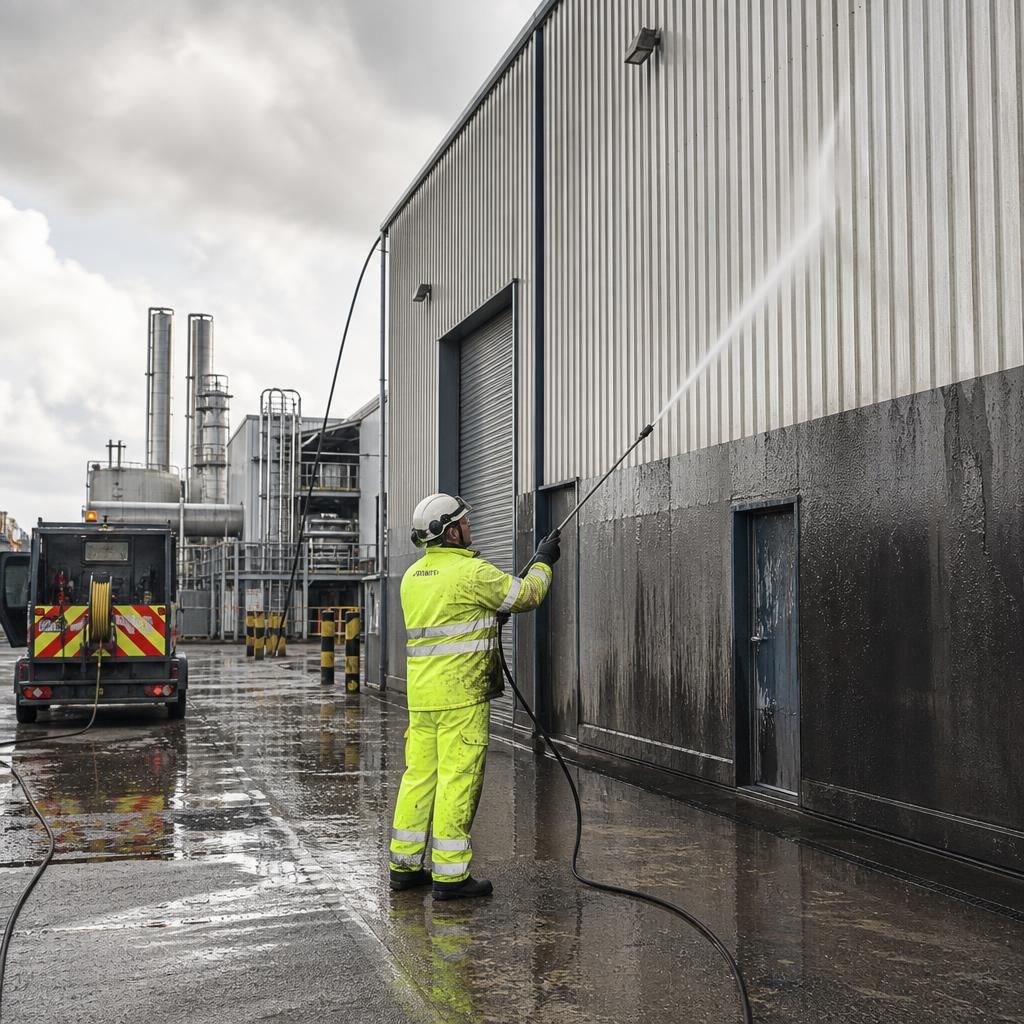
The cost-effectiveness of industrial cleaning is determined by the total cost of achieving the required result, not the headline quotation alone. Labour, access equipment, preparation, surface protection, water recovery, waste disposal and any out-of-hours working should be included when comparing providers.
A like-for-like specification helps identify genuine value. Confirm the areas, surfaces, cleaning standard, method, site controls and completion checks covered by each proposal. A slightly higher initial price may be more economical if it reduces downtime, prevents surface damage, avoids rework and maintains the site for longer.
Request an Industrial Cleaning Cost Assessment
Request an industrial cleaning cost assessment from Encanto Exterior Cleaning to review your site, cleaning requirements, access arrangements and compliance needs. We can provide a clear scope of work and quotation based on the total cost of achieving the required result.