
What are the environmental considerations associated with industrial cleaning services?
Industrial cleaning services can affect the environment through water consumption, cleaning chemicals, energy use and the handling of contaminated wastewater and waste materials. Responsible contractors reduce these impacts by selecting suitable low-impact methods, controlling run-off, using water efficiently and disposing of waste in line with UK environmental requirements.
Industrial cleaning can affect the environment through water consumption, chemical use, energy demand, air emissions, noise, and the handling of contaminated wastewater and solid waste. The main environmental considerations are choosing the least intensive effective cleaning method, preventing polluted run-off, recovering or treating wastewater, controlling chemical use, and disposing of residues through authorised routes. A responsible cleaning plan considers the site, the surface, the contaminant and the receiving drainage system before work begins.
Water consumption and efficiency
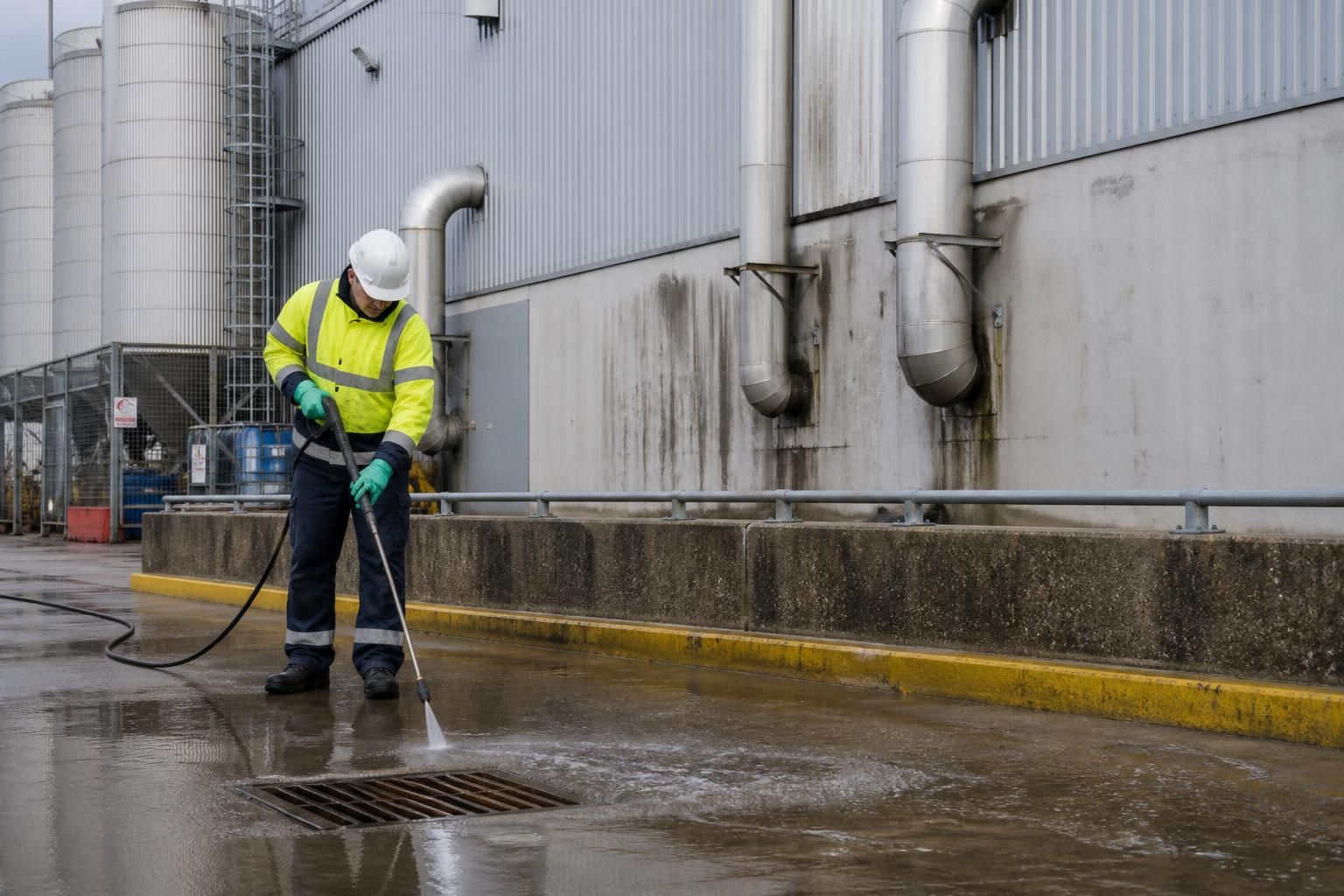
Pressure washing, steam cleaning and surface rinsing can use substantial volumes of water, particularly on large façades, yards, roofs, plant areas and car parks. Water use should therefore be proportionate to the cleaning requirement rather than based on a standard procedure. Practical controls can include targeted cleaning, suitable pressure and flow settings, trigger-controlled equipment, dry removal of loose debris before washing, and the use of steam or other lower-water methods where they are suitable for the surface and residue.
Water efficiency must not compromise the result or create additional pollution. Using too little water can spread contaminants, leave residues in place or encourage repeated cleaning. The objective is controlled application, effective recovery and a documented method that avoids unnecessary consumption.
Cleaning chemicals and their environmental effects
Detergents, degreasers, disinfectants, biocides, descalers and specialist treatments can affect soil, drainage systems and waterways if they are incorrectly selected, over-applied or allowed to escape from the work area. The environmental profile of a product depends on its ingredients, concentration, volume used, biodegradability, toxicity and the type of contamination being removed.
Good practice includes:
- selecting the least hazardous product that will achieve the required result;
- following the manufacturer’s instructions for dilution, contact time, storage and disposal;
- using measured dosing rather than applying excessive chemical;
- preventing incompatible products from being mixed;
- keeping product containers secure and protected from damage; and
- retaining safety data and product information so that environmental controls can be planned properly.
‘Biodegradable’ does not automatically mean that a product can be discharged to a surface drain, watercourse or soil. A product may still harm aquatic life, affect treatment processes or be unsuitable for the receiving drainage system. The intended discharge route must always be confirmed before cleaning starts.
Wastewater, run-off and drainage protection
Wastewater from industrial cleaning may contain oil, grease, detergents, silt, heavy metals, paint particles, construction residues, biological contamination or other substances specific to the site. It must not be allowed to enter surface-water drains or watercourses simply because the water appears clear. Surface-water systems commonly discharge with limited treatment, whereas foul drainage may require permission and controlled discharge.
Before work begins, the team should identify drains, interceptors, discharge points and nearby watercourses. Appropriate controls may include drain covers, bunding, temporary barriers, vacuum recovery, silt control and collection tanks. Where wastewater is collected, it may need testing, treatment or transfer to an appropriately authorised facility. A trade effluent consent or other approval may be required before discharge to the foul sewer, and the requirements of the local water and sewerage company must be followed.
Environmental controls should also account for rain, gradients and hard-standing areas. A sudden storm can move loosened contaminants beyond the original work area, so weather conditions and the condition of containment measures should be reviewed during the job.
Waste classification and disposal
Solid residues such as sludge, silt, paint flakes, oily absorbents, used filters, packaging and contaminated debris must be assessed according to what they contain. Waste should be segregated where practical, stored securely, described accurately and transferred through suitable authorised routes. Hazardous waste requires particular care, including appropriate packaging, labelling, documentation and record keeping.
Waste should never be poured into drains, placed in general refuse or left on site without confirming that this is permitted. The site operator and cleaning contractor should establish who is responsible for classifying the waste, arranging collection and retaining transfer documentation. The waste duty of care applies throughout the transfer chain.
Energy use, emissions and equipment selection
Industrial cleaning equipment may use electricity or fuel to generate high pressure, heat, suction or steam. This creates energy demand and, for combustion-powered equipment, local exhaust emissions. The environmental impact can be reduced by selecting equipment that is correctly sized for the task, maintaining it properly, avoiding unnecessary idling and using lower-emission or electrically powered equipment where the site infrastructure and risk assessment allow.
Equipment choice should consider more than cleaning power. Recovery capability, water efficiency, noise, access requirements, ventilation and the possibility of indoor emissions are also relevant. Diesel or petrol-powered equipment may be unsuitable in enclosed areas unless adequate controls are in place. Electrical equipment can reduce on-site emissions, but its overall benefit still depends on how it is powered and used.
Choosing the least intrusive effective method
Different methods create different environmental pressures. Dry brushing or mechanical removal may reduce water use but can generate dust. High-pressure washing can remove deposits quickly but may create contaminated run-off or damage coatings. Steam cleaning may reduce chemical use and water consumption for some residues, but it requires energy and is not appropriate for every material. Soft washing can be suitable for delicate surfaces, provided the treatment is contained and rinsed or recovered correctly.
The method should therefore be selected after considering the contaminant, surface material, surrounding environment, drainage, access, weather and required finish. A small test area can help confirm the lowest-impact technique that will work without damaging the substrate or causing unnecessary repeat cleaning.
Protection of soil, plants and local watercourses
Overspray, chemical drift and uncontrolled run-off can affect planted areas, soil, trees, wildlife habitats and ponds near the work zone. Sensitive areas should be identified during the site survey and protected with suitable barriers or exclusion zones. Chemicals should not be applied during conditions where wind or rain could carry them beyond the intended surface.
Particular caution is needed when cleaning roofs, bridges, retaining walls, industrial yards and sites close to streams, culverts or drainage ditches. Any visible spill should be contained promptly, reported through the agreed site process and removed using suitable absorbents or recovery equipment.
Environmental management and legal compliance
Environmental responsibilities are shared between the client, site operator and cleaning contractor. A suitable method statement should identify the substances and residues involved, the drainage arrangements, containment measures, wastewater route, waste arrangements, emergency response and relevant permissions. Contractors should work in line with applicable UK environmental requirements and the conditions set by the site, drainage operator and regulators.
Depending on the work, relevant controls may include environmental permitting requirements, trade effluent approval, waste duty of care, hazardous waste requirements, spill response arrangements and restrictions relating to discharges to controlled waters. Chemical storage and handling must also be managed alongside the applicable health and safety controls, including information supplied under COSHH where relevant. Requirements vary according to the location, contamination and discharge route, so they should be confirmed for each project rather than assumed.
How customers can assess an environmentally responsible service
- Ask which cleaning method will be used and why it is suitable for the surface and contamination.
- Confirm how much water is expected to be used and how wastewater will be contained, recovered, treated or discharged.
- Check whether chemicals are necessary, how they will be dosed and what controls apply to their storage and use.
- Establish where sludge, debris, packaging and contaminated materials will go.
- Confirm responsibility for drain protection, spill response and environmental incident reporting.
- Request relevant waste transfer records, discharge approvals or other documentation where applicable.
- Ensure the work plan considers nearby watercourses, planted areas, occupants, traffic and weather conditions.
Environmental performance is best demonstrated through a clear, site-specific plan rather than a general claim that a method is ‘green’. For industrial cleaning across Birmingham, the West Midlands and other UK locations, the practical priorities are controlled water use, correct chemical selection, secure containment, lawful waste management and evidence that the cleaning method has been matched to the site’s environmental risks.
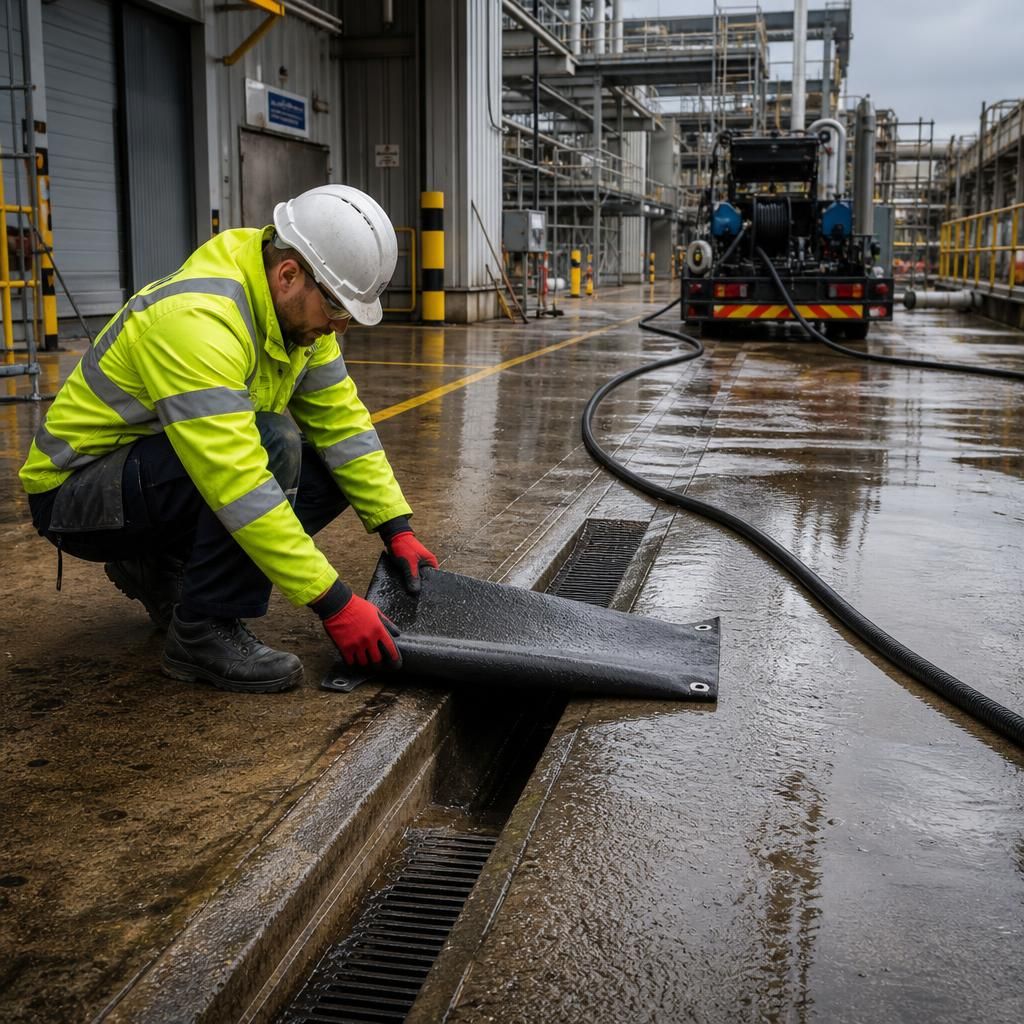
Controlling wastewater and run-off is one of the most important environmental considerations in industrial cleaning. Water used to remove oil, silt, paint, chemicals or other residues can pollute surface-water drains, soil and nearby watercourses, even when it appears clear.
Before cleaning begins, drains and discharge points should be identified and protected with suitable covers, barriers or bunding. Wastewater may need to be recovered, tested, treated or transferred to an authorised facility rather than discharged. The agreed method should also account for rain, site gradients and nearby sensitive areas, with spill response arrangements in place throughout the work.