
What techniques are essential in removing cement residue after construction?
Essential cement residue removal techniques include careful mechanical scraping, controlled pressure washing, steam cleaning and, where appropriate, specialist cement-dissolving treatments. The method should be selected according to the surface material and residue age, with test areas, controlled pressure and suitable runoff management used to prevent substrate damage and environmental harm.
Effective cement residue removal after construction normally combines controlled mechanical cleaning, low- to medium-pressure washing, steam cleaning and, where the surface allows it, a carefully selected cement-dissolving treatment. The correct technique depends on whether the material is loose dust, hardened cement, mortar splashes or grout haze, as well as the type and condition of the underlying surface. A professional approach starts with a survey and test clean, then increases the treatment only as far as necessary.
1. Assess the residue and the substrate
Cement residue is not a single type of contamination. Dry cement dust can often be removed by vacuuming or controlled washing, while hardened mortar requires localised mechanical work. Thin grout haze may respond to a specialist cleaner, but heavy deposits can need several stages of treatment. The substrate may be concrete, brick, natural stone, glazed tile, metal cladding, painted render, glass or a coated surface, and each has a different tolerance to pressure, heat and chemicals.
Before cleaning, the area should be checked for loose coatings, open joints, cracks, damaged sealants, exposed reinforcement, drainage points and sensitive adjacent materials. A small test area helps establish whether the proposed method causes staining, etching, colour change, water penetration or loss of a surface finish.
2. Remove loose material mechanically
Dry removal is usually the safest first stage. Dust, flakes and loose cement can be collected with industrial vacuum equipment, soft brushes or non-metallic scrapers. Hardened spots may be lifted with plastic, timber or purpose-designed hand tools, using controlled pressure rather than striking the surface. This reduces the amount of water and chemical product needed later and prevents loose debris from being driven into joints or drainage systems.
Metal scraping and aggressive chiselling should be used with caution. They can scratch glazed finishes, expose aggregate, damage coatings and leave rust-prone marks on metalwork. Mechanical abrasion, such as specialist pads or low-impact abrasive systems, may be suitable for robust concrete or masonry, but it should be avoided on delicate stone, polished surfaces and painted finishes unless a test confirms that it is safe.
3. Use controlled pressure washing
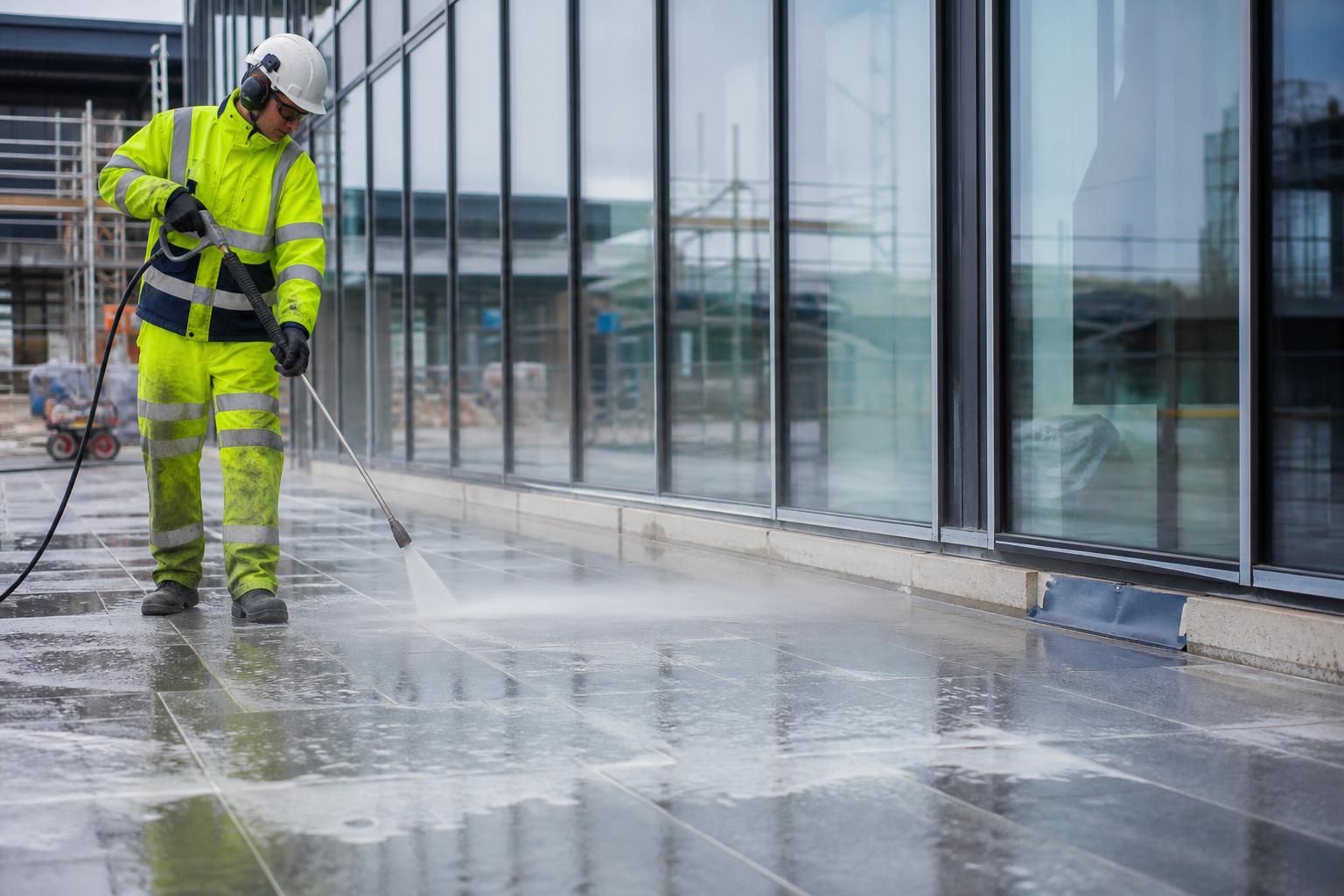
Pressure washing is effective for cement dust, surface deposits and softened residue, particularly on robust concrete, blockwork and some external paving. Water pressure, flow rate, nozzle selection and working distance should be adjusted to the substrate rather than using the highest available setting. A fan spray is generally easier to control than a concentrated jet, and the operator should work progressively rather than holding the spray in one position.
Pre-wetting can limit rapid absorption and help protect porous masonry. Where suitable, a controlled application of warm water or a compatible cleaning solution can soften cement deposits before rinsing. The wash water should be directed away from clean areas and collected or filtered where necessary. Cement-laden runoff must not be allowed to enter surface-water drains, soil or watercourses without appropriate controls.
Pressure washing is not automatically suitable for every façade or internal area. High pressure can drive water behind cladding, enter electrical equipment, erode mortar joints, loosen coatings and damage sealants. It can also spread contaminated slurry across a finished site. These risks are managed through containment, appropriate access equipment and careful control of the cleaning pattern.
4. Apply steam cleaning where heat and low moisture are beneficial
Steam cleaning can soften cement films and mortar splashes while using less water than conventional pressure washing. It is useful around detailed façades, paving, plant areas and surfaces where excessive water could enter joints or building fabric. Heat can also help loosen deposits from textured surfaces that are difficult to clean with a flat spray.
Steam must still be controlled. Some paints, plastics, sealants, membranes and surface coatings may soften or deform when exposed to heat. The operator should confirm the substrate’s tolerance, protect adjacent materials and avoid prolonged application to one area. Steam cleaning is often most effective when followed by gentle agitation and the removal of softened residue rather than relying on heat alone.
5. Use specialist cement and grout residue treatments selectively
Acidic or acid-based cement removers can dissolve mineral deposits and are particularly useful for thin cement films and grout haze that mechanical methods cannot remove cleanly. However, these products can etch concrete, limestone, marble and other calcium-based stone. They may also corrode metals, attack cementitious joints, discolour coatings and harm vegetation if they are misapplied.
A suitable product should be selected for the specific residue and surface. The manufacturer’s instructions must be followed for dilution, contact time, ventilation, neutralisation and rinsing. The cleaner should be applied only to the affected area, never allowed to dry on the surface and kept away from incompatible materials. Where an acidic treatment is unsuitable, a non-acidic specialist formulation or a purely mechanical and steam-based process may be safer.
Chemical cleaning is not a substitute for preparation. Loose deposits should be removed first, test areas should be checked after drying, and the surface should be thoroughly rinsed or neutralised as required. Residual product left in joints or textured finishes can continue reacting after the visible cement has gone.
6. Combine techniques in a controlled sequence
The most reliable results usually come from a staged process: inspect and test, remove loose material, soften the remaining deposits, agitate or scrape carefully, rinse in a controlled manner and inspect again once the surface has dried. Localised treatment is preferable to applying an aggressive method across an entire façade or floor. It limits water use, reduces chemical exposure and makes it easier to protect finished areas.
Operators should avoid mixing cleaning chemicals unless the product instructions specifically permit it. Acidic products must never be combined with bleach or other incompatible substances. Appropriate gloves, eye protection, footwear and respiratory protection should be selected according to the work method and product safety information. Work areas may also need exclusion zones, ventilation and protection for occupants or other contractors.
7. Protect the finished surface and manage the final inspection
Adjacent glass, aluminium, painted surfaces, door hardware, drainage channels and landscaping should be protected before cleaning begins. After treatment, the surface should be checked for remaining haze, water marks, chemical residue, scratches, colour variation and damage to joints or coatings. Any remaining deposits should be treated locally rather than increasing pressure across the whole area.
For large commercial and industrial sites, the cleaning method should also account for access, working-at-height controls, water supply, electrical safety, waste handling and runoff capture. A documented method statement and inspection record helps confirm which techniques were used, which areas were tested and whether the finished surface meets the required standard. This is especially important where cement residue affects slip resistance, drainage, façade appearance or the handover condition of a newly completed building.
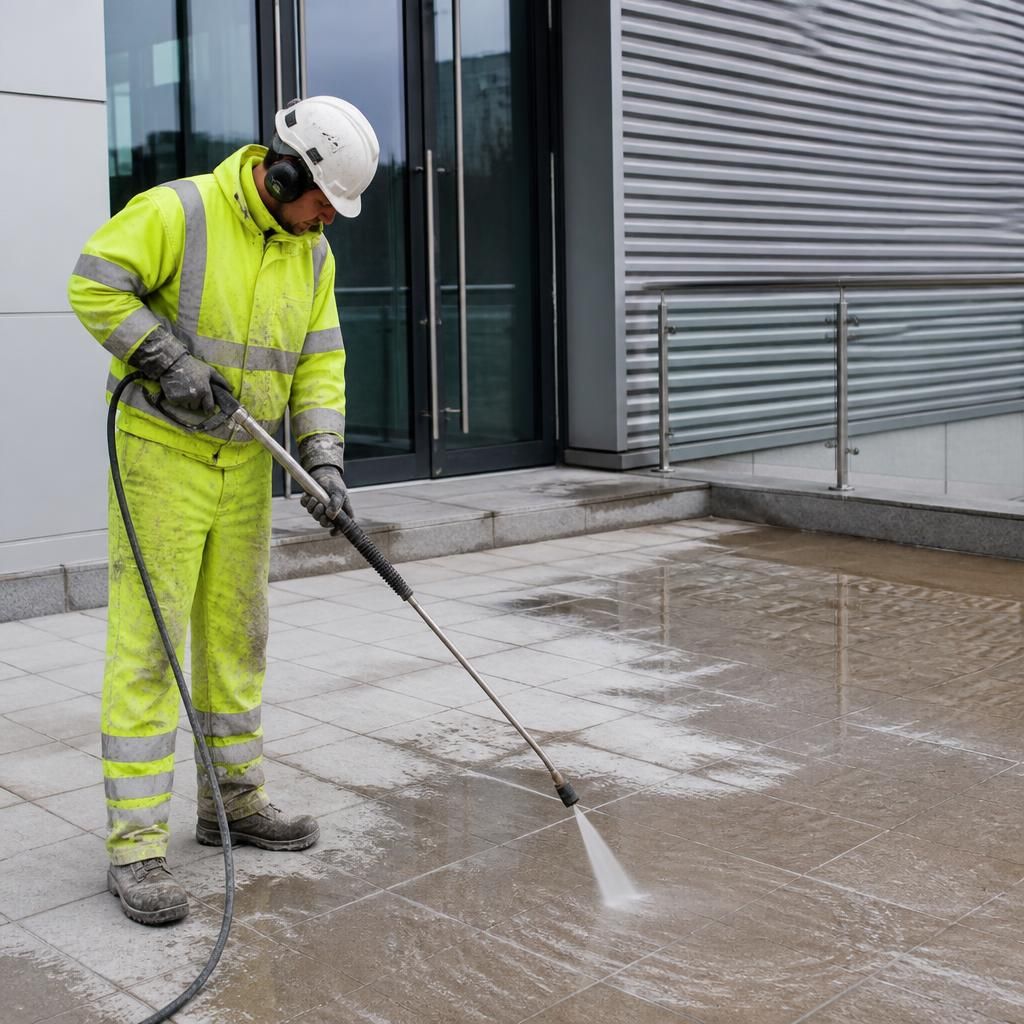
Cement residue removal is safest when carried out progressively: begin with dry mechanical removal, then use controlled washing or steam to soften the remaining deposits. A small test area should be completed first to confirm that the chosen pressure, heat or cleaning product will not etch stone, damage coatings, loosen joints or discolour the surface.
Once the residue has been softened, it can be gently agitated or scraped away before the area is rinsed under controlled conditions. Cement-laden water should be contained and prevented from entering surface-water drains. Specialist cement removers should only be used where compatible with the substrate, with adjacent glass, metal, landscaping and finished surfaces protected throughout.