
What post-construction cleaning methods are most effective for removing cement and grout haze on industrial surfaces?
The most effective approach combines careful mechanical removal, controlled low-pressure washing and a surface-compatible cement or grout haze remover. For mineral deposits, a specialist acidic cleaner may be used on suitable, acid-resistant surfaces, followed by thorough rinsing and wastewater recovery; porous, polished or sensitive materials should first be tested and treated with milder methods such as steam cleaning or pH-neutral products.
The most effective method for removing cement and grout haze from industrial surfaces is a controlled combination of mechanical removal, a surface-compatible cleaning chemical and thorough rinsing. Loose deposits should be lifted without scratching the substrate, while bonded mineral residue can be treated with a specialist cement or grout haze remover where the material is resistant to the product. Low-pressure washing, steam cleaning and wastewater recovery then help produce a clean finish without spreading contamination or damaging adjacent surfaces.
There is no universal product or pressure setting for every industrial surface. The correct approach depends on the age and thickness of the residue, the surface material, its condition and the presence of coatings, joints, sealants or drainage restrictions. A method that is suitable for unsealed concrete may stain, etch or dull polished stone, glazed finishes, metals or decorative coatings.
1. Inspect and identify the surface
Cleaning should begin with a site inspection rather than immediate chemical application. The surface is checked for loose cement, hardened splashes, grout film, efflorescence, paint, sealants and other construction contaminants. The substrate should also be identified, including concrete, blockwork, brick, natural stone, ceramic or porcelain tiles, metal cladding and painted or powder-coated finishes.
Particular attention is needed around movement joints, drainage channels, expansion details, door thresholds, façade interfaces and areas where cleaning water could enter the building. A small test area should be treated using the proposed equipment, chemical and dwell time. This confirms whether the residue can be removed and whether the surface changes colour, texture, gloss or water repellence.
2. Remove loose material mechanically
Dry, loose cement and grout should be removed before wet cleaning. Soft brushes, non-abrasive pads, plastic scrapers and suitable industrial vacuums can lift surface deposits while reducing the amount of chemical and rinse water required. Metal tools, aggressive abrasive pads and uncontrolled grinding can leave scratches, gouges or visible marks, particularly on polished concrete, tiles, coated metal and stone.
Heavier cement spots may need careful spot treatment rather than broad chemical application. The deposit can sometimes be fractured or reduced with controlled tooling, followed by a compatible cleaner for the remaining film. Mechanical removal should be gradual and directed away from vulnerable edges, joints and finished surfaces.
3. Use a compatible cement and grout haze remover
Cement and grout haze are primarily mineral residues, so acidic cleaning products are often effective on suitable acid-resistant substrates. These products dissolve or loosen alkaline cementitious deposits so they can be rinsed away. The selected product must be appropriate for the surface and used in accordance with its technical and safety information.
Acidic products should not be assumed to be safe on natural stone containing acid-sensitive minerals, polished or honed finishes, terrazzo, cement-based decorative surfaces, some metals, glazed or specialised coatings, or areas containing sensitive sealants. They can cause etching, discolouration, loss of sheen or corrosion. On these materials, a pH-neutral or mildly alkaline product, steam cleaning or controlled mechanical action may be safer, although the result may require more dwell time or repeated treatment.
The chemical should be applied in manageable sections so it does not dry on the surface. Dwell time must be controlled: too little contact may leave residue, while excessive contact can increase the risk of surface attack. The product is agitated with a suitable brush or pad, then removed with clean water and, where necessary, a wet vacuum or other recovery equipment.
4. Apply pressure washing selectively
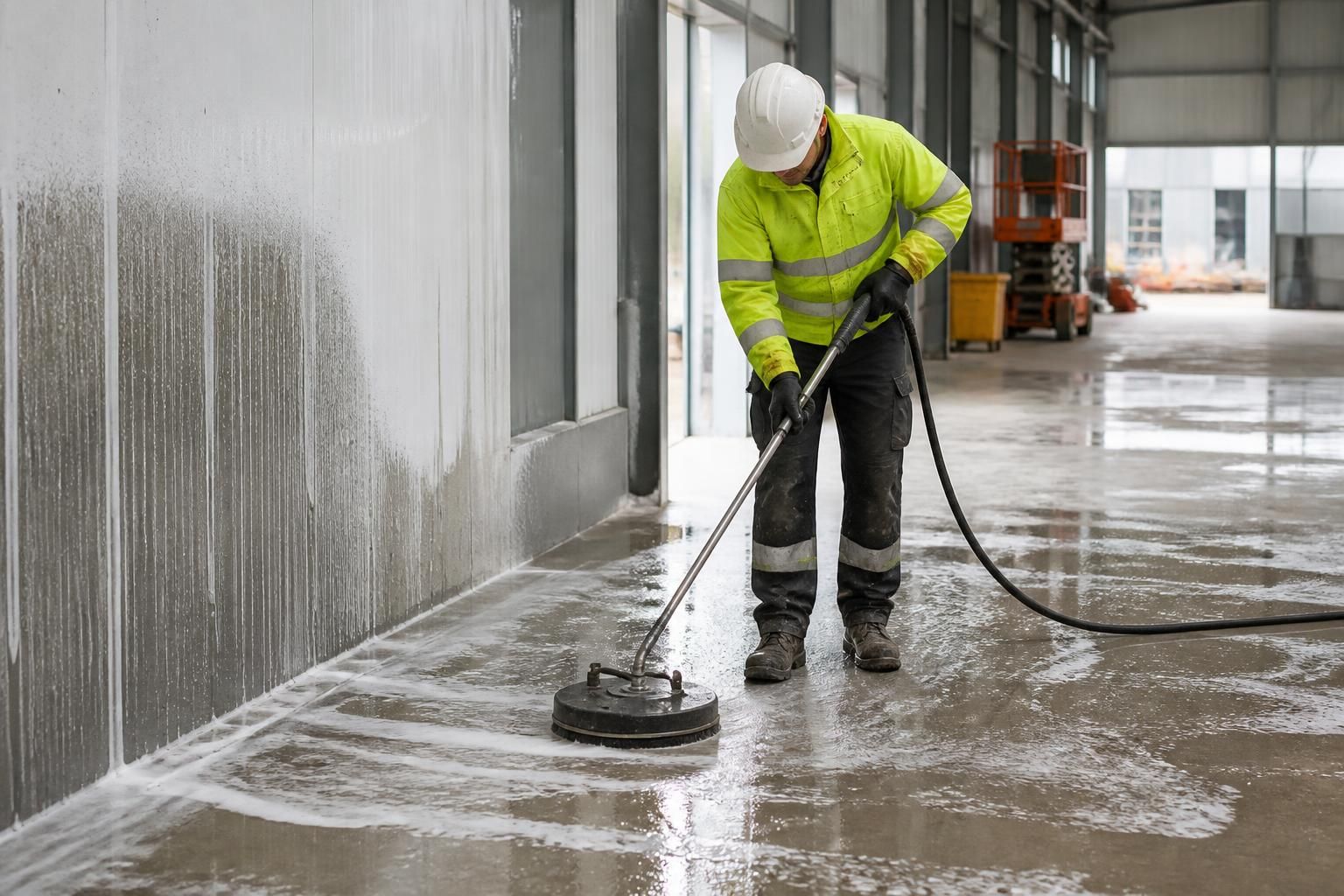
Pressure washing is useful for removing softened cement residue and flushing fine particles from textured concrete, masonry, hard landscaping and other robust industrial surfaces. It is not simply a matter of using the highest available pressure. Excessive pressure can damage mortar joints, force water behind cladding, erode concrete, strip coatings and drive contamination into porous materials.
Controlled low- or medium-pressure cleaning is generally preferable, with the nozzle, distance, water volume and spray pattern adjusted to the substrate. Fan jets and suitable accessories can provide more even cleaning than a concentrated jet. Operatives should work from clean areas towards dirtier areas where practical, avoid directing water into openings and keep the lance moving to prevent localised damage.
5. Use steam cleaning for sensitive or localised areas
Steam cleaning can soften cement and grout films while using less water than conventional pressure washing. It is particularly useful around finished surfaces, detailed façades, entrances, joints and areas where excessive water could affect building interiors or drainage capacity. Steam may also help remove residues from surfaces that should not be exposed to aggressive pressure.
Steam is not automatically suitable for every coating, sealant or material. Heat-sensitive finishes and some plastics may deform, soften or lose adhesion. The equipment and temperature should therefore be tested on an inconspicuous area, with suitable control around joints, membranes and interfaces.
6. Rinse, neutralise where required and recover wastewater
Rinsing is an essential part of haze removal. Remaining chemical and dissolved cement can leave a new film, affect the appearance of the surface or continue reacting after the cleaning visit. Rinse water should be collected or directed through an approved site-management system rather than allowed to enter surface-water drains without authorisation.
Where the product instructions require neutralisation, this should be completed using the specified method before the final rinse. Wastewater containing acidic or alkaline cleaner, cement solids or other construction contaminants must be managed in line with the site’s environmental controls and applicable discharge requirements. Recovery systems can reduce spread, protect occupied areas and make disposal more controlled.
Choosing the method by surface
- Unsealed concrete: controlled mechanical agitation, a compatible cement remover and low-pressure rinsing are commonly effective. Porosity and the age of the concrete should be considered because residue may be held below the surface.
- Brickwork and blockwork: use gentle agitation and controlled rinsing to avoid eroding mortar joints or forcing water into the wall. Test for colour change and salt movement before wider treatment.
- Ceramic and porcelain tiles: grout haze can often be treated with a suitable haze remover and non-abrasive agitation, but joints, sealants and surrounding finishes must be protected.
- Natural stone and terrazzo: identify the stone before using any acidic product. Neutral cleaners, steam or specialist stone-safe methods may be required, followed by careful removal of slurry.
- Painted, powder-coated or metal surfaces: avoid untested acids and abrasive methods. Use a coating-compatible cleaner with low-pressure rinsing, protecting exposed edges and fixing points from corrosion risk.
- Polished or sealed surfaces: use the least aggressive method that will work. Harsh chemicals, abrasive tools and high pressure can permanently alter gloss or protective treatments.
Common causes of poor results
- Applying an acidic product without confirming that the substrate is acid-resistant.
- Allowing the chemical to dry before agitation and rinsing.
- Using high pressure to compensate for insufficient dwell time or unsuitable chemical selection.
- Leaving dissolved cement and dirty rinse water on the surface to dry again.
- Using abrasive tools that remove the finish as well as the residue.
- Cleaning adjacent materials together when they require different methods.
- Failing to protect drainage systems, landscaping, vehicles, glazing, door hardware and occupied areas.
For extensive industrial sites, the work should be divided into defined areas with a written method statement covering the substrate, test results, equipment, chemical controls, access arrangements, protection measures and wastewater handling. Cleaning should progress from the least aggressive method to stronger treatment only where necessary. This reduces the likelihood of irreversible damage and makes the final finish more consistent across large façades, floors, yards and service areas.
After cleaning, the surface should be inspected in suitable lighting once it has dried. Check for remaining haze, streaks, chemical marks, etching, coating damage, blocked drains and residue at edges or joints. Any protective sealant or coating should only be reapplied after the substrate is clean, dry and confirmed compatible with the proposed treatment. This staged process provides the most reliable way to remove cement and grout haze while preserving industrial surfaces and maintaining safe, compliant site conditions.
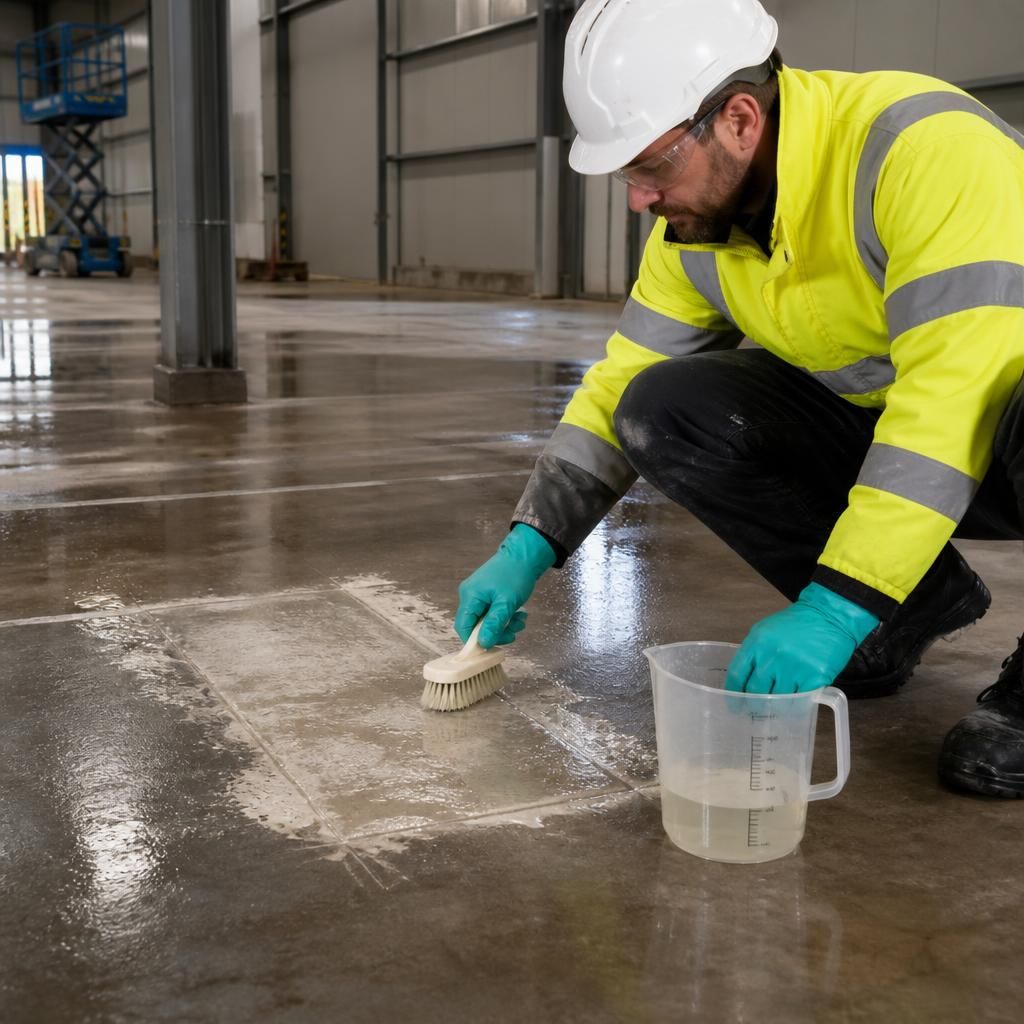
Testing the cleaning method on a small, inconspicuous area is essential before removing cement or grout haze across an industrial surface. The test confirms whether the proposed chemical, pressure, temperature and dwell time will remove the residue without etching, discolouring, scratching or dulling the substrate.
The test area should represent the wider surface and include any relevant joints, coatings or sealants. Compare the treated section with the surrounding finish after rinsing and drying, checking for:
- remaining haze, streaks or chemical residue;
- changes in colour, gloss, texture or water repellence;
- damage to grout, mortar, coatings, metalwork or sealants; and
- water movement into joints, openings or building interfaces.
If an acidic haze remover is unsuitable, use a less aggressive approach such as pH-neutral cleaning, steam or controlled non-abrasive agitation. Only proceed with wider cleaning once the test confirms that the method is effective and compatible with the surface.
Discuss Your Industrial Cement and Grout Haze Cleaning Needs
Discuss your industrial cement and grout haze cleaning needs with our team so we can assess the surfaces, residue and site controls involved. We can recommend a suitable cleaning method, test area and wastewater management plan for your project.