
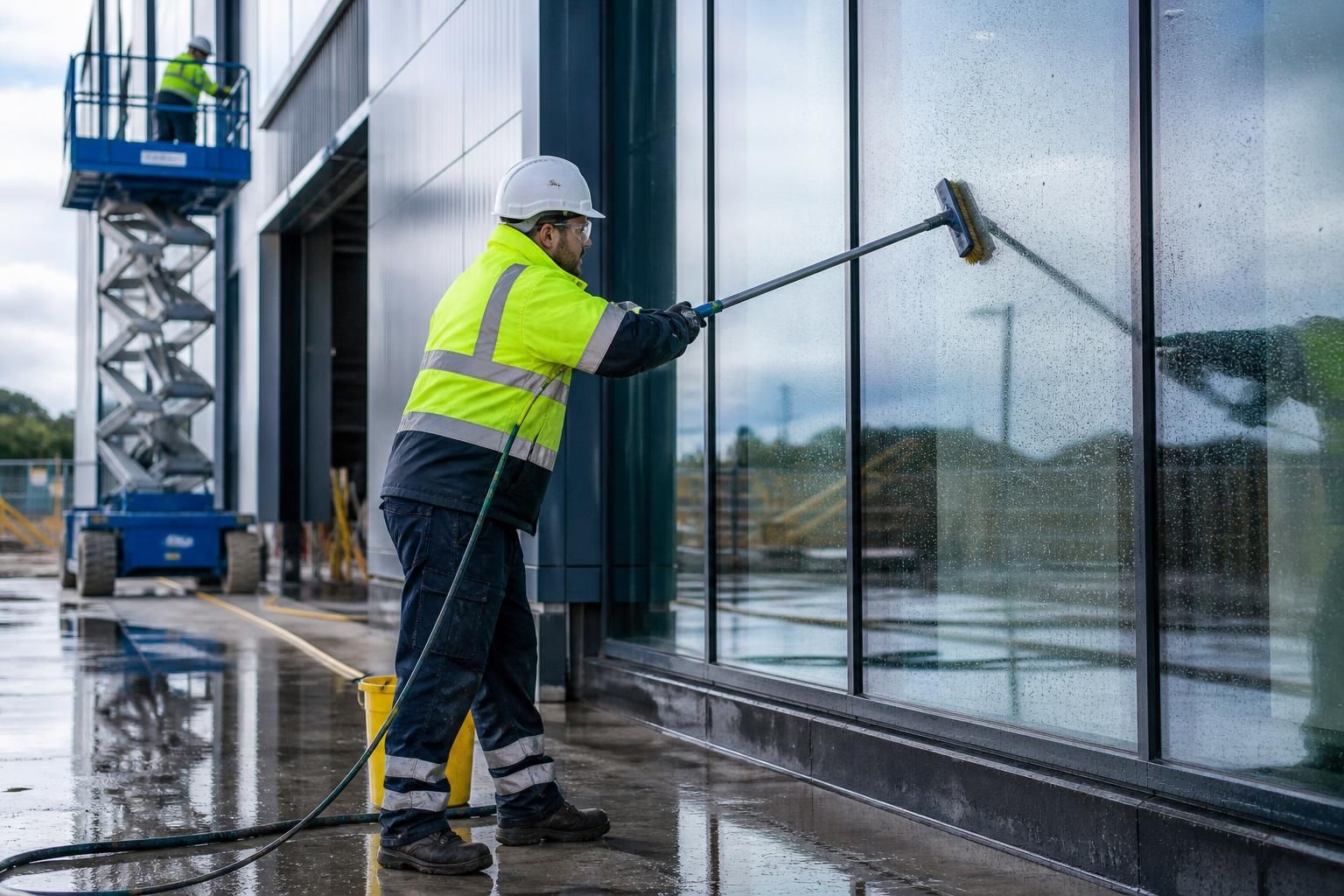
What materials can be damaged during post-construction cleaning, and how can they be protected?
Post-construction cleaning can damage glass, natural stone, painted surfaces, powder-coated cladding, sealants and other delicate finishes if abrasive tools, unsuitable chemicals or excessive pressure are used. Protect them by identifying materials first, testing cleaning methods in an inconspicuous area, using compatible products and controls, and matching pressure, temperature and access equipment to the surface.
The materials most at risk during post-construction cleaning are glass, natural stone, painted and powder-coated finishes, sealants, metals, timber, plastics and newly laid masonry or paving. Damage usually results from using excessive pressure, abrasive tools, unsuitable chemicals, concentrated heat or cleaning methods that have not been tested on the specific surface. Protection starts with a material survey, followed by small-area testing and a controlled cleaning method matched to the substrate, coating and type of construction residue.
Construction sites rarely contain one uniform surface. A completed development may include façade panels, windows, brickwork, concrete, resin floors, roofing materials, painted steel, stainless steel, loading areas and external paving. Each reacts differently to water, detergents, solvents, acids, agitation and heat. Cleaning should therefore be planned by material and by contaminant rather than treating the entire site with one product or pressure setting.
Glass and glazing
Glass can be scratched by cement particles, dry mortar, metal fragments and abrasive pads. Scrapers used at the wrong angle can also leave permanent scoring, particularly where grit is trapped between the blade and the glass. Cement, grout and alkaline residues may etch the surface if allowed to dry or if aggressive chemicals are applied repeatedly. Coated, tinted, laminated and self-cleaning glass may have additional restrictions.
Protect glazing by removing loose particles before wiping or scraping, keeping the surface lubricated where a suitable scraper is required and using clean, non-abrasive tools. Do not drag dry debris across the pane. Cleaning solutions should be confirmed as compatible with the glass coating, adjacent frames and gaskets. Masking or shielding may be needed while nearby masonry, render or cladding is being cleaned, and runoff should not be allowed to dry on the glazing.
Natural stone
Marble, limestone, travertine and other calcareous stones are particularly vulnerable to acidic products, which can dissolve or dull the surface and expose a visibly different texture. Some sandstone and other porous stones can absorb chemicals, retain moisture or suffer colour changes when cleaned too aggressively. Polished stone may lose its finish through abrasive action, while pressure can open joints or dislodge friable areas.
Stone should be identified before cleaning because a product suitable for one type may damage another. Use a compatible, low-impact method and test it in an inconspicuous location, checking the result after the surface has dried. Control dwell time, prevent cleaning agents from drying and rinse thoroughly where the material and surrounding drainage arrangements permit. Avoid assuming that a stronger acid or higher pressure will remove cement faster; it may instead damage the stone and make the residue more difficult to treat safely.
Brickwork, mortar and concrete
New brickwork and mortar can be softer or less cured than older masonry. Excessive pressure may erode mortar joints, mark brick faces or drive water into cavities. Acidic treatments can alter brick colour, attack mortar and leave salts or staining if they are not controlled and rinsed correctly. Concrete can be affected by aggressive cleaning, especially where the surface is young, porous, polished, sealed or coloured.
Protection involves confirming the condition and curing status of the substrate, removing loose dust and debris first, and selecting the least aggressive effective technique. Pressure should be adjusted to the surface rather than set uniformly across the site. Nozzle distance, angle, flow and dwell time all affect the result. Particular care is needed around joints, edges, repairs, expansion gaps and areas where the surface has already been weakened by construction activity.
Painted surfaces and powder-coated cladding
Painted metal, powder-coated panels and factory-finished cladding can be marked by abrasive pads, harsh alkaline or solvent-based products, excessive heat and concentrated pressure. The coating may become dull, discoloured, softened or locally removed. Damage is more likely at edges, corners, damaged sections and around fixings where water or chemicals can collect.
Identify the coating where possible and follow the relevant manufacturer or project maintenance guidance. Use a compatible detergent, soft equipment and controlled rinsing. Avoid allowing chemical solution to remain on the surface or run down onto unprotected materials. Any areas with scratches, exposed metal, failed coating or visible corrosion should be recorded before cleaning, as cleaning cannot correct pre-existing coating failure and may reveal it more clearly.
Sealants, gaskets and waterproofing details
Silicone joints, façade sealants, window gaskets, membranes and other waterproofing components may be attacked by solvents, strong chemicals or prolonged heat. High-pressure water can lift a poorly bonded seal, force water behind a joint or remove protective surface treatments. Even when the main panel or frame appears unaffected, a damaged seal can allow later water ingress.
These details should be treated as vulnerable areas. Keep direct pressure away from open joints, failed sealant and exposed membranes, and use a softer method around interfaces. Chemical compatibility should be checked for both the visible surface and the sealant beneath it. Where sealant is uncured, damaged or being replaced, cleaning should be coordinated with the responsible contractor so that the work does not compromise adhesion or curing.
Metals and architectural finishes
Aluminium, stainless steel, galvanised steel, copper and other metals can suffer staining, pitting, tarnishing or corrosion. Chloride-containing products, strong acids, unsuitable caustic cleaners and contaminated rinse water are common risks. Stainless steel can develop tea staining or surface contamination if iron particles from tools or nearby works are transferred onto it. Galvanised coatings can be attacked by acidic products, while bare or weathered metals may react quickly to chemicals.
Use non-contaminating tools and products appropriate to the particular metal. Work in the direction of any existing brushed finish rather than across it, and rinse residues from ledges, fixings and drainage points. Do not allow chemical runoff from one material to sit on another. Protect adjacent metalwork when cleaning masonry or removing cement residue, and inspect it after drying because some discolouration becomes more apparent once moisture has evaporated.
Timber, composite materials and plastics
Timber can absorb water and cleaning agents, leading to swelling, raised grain, staining or coating failure. High pressure may scar the fibres, particularly on softwood, decking and unfinished surfaces. Composite panels and plastic components can be scratched, bleached, softened or distorted by solvents and heat. Window trims, electrical housings, lighting diffusers and protective films also require care.
Use minimal water where absorption is a concern and avoid directing pressure into end grain, joints, vents or openings. Confirm whether a composite is laminated, coated or sealed before selecting a product. Solvents should not be used on plastics or painted finishes unless compatibility has been established. Protective films must be managed according to their condition: damaged or partially detached film can trap water and debris, while leaving film in place for too long may make removal more difficult.
Resin floors, coatings and specialist finishes
Epoxy, polyurethane, anti-slip and other resin systems may be damaged by abrasive cleaning, aggressive solvents, excessive heat or equipment that catches raised edges. Newly installed floors may also require curing time before exposure to water, chemicals or mechanical cleaning. Loss of gloss, whitening, softening and delamination are warning signs that the method is unsuitable.
Confirm the floor system and curing requirements before cleaning. Remove construction debris with a method that will not cut or gouge the coating, use compatible detergents and control water around joints, drains and vulnerable edges. Mechanical equipment should be selected for the coating rather than simply for the size of the area.
A controlled protection process
- Survey the site. Record the materials, finishes, known coatings, sealants, areas of damage and locations where different substrates meet. Note surfaces that are newly installed, uncured, porous or already deteriorated.
- Identify the residue. Cement, grout haze, paint, adhesive, silicone, dust and metal contamination require different approaches. A method effective against one residue may worsen another or damage the substrate.
- Check product compatibility. Review technical information and safety data, including restrictions for glazing, stone, metals, coatings, sealants and drainage systems. Never mix cleaning chemicals unless the product instructions expressly allow it.
- Test before wider cleaning. Apply the proposed method to a discreet area, then inspect the surface both wet and dry. Check for colour change, etching, gloss loss, scratching, bleeding, staining and damage to adjacent materials.
- Set controls. Adjust pressure, temperature, flow, nozzle distance, agitation and chemical dwell time. Use barriers, sheeting or temporary protection where splash, impact or runoff could affect finished surfaces.
- Clean in manageable sections. Prevent products and loosened residue from drying on the surface. Keep clean and dirty areas separate and rinse or recover runoff in accordance with the site’s environmental controls.
- Inspect and document the result. Review joints, edges, corners, ledges, drainage points and transitions between materials. Record the products and settings used so that future maintenance can follow a proven, compatible method.
Pressure washing, steam cleaning and chemical treatments can all be appropriate, but none is automatically safe for every construction material. Steam can reduce chemical use but may affect coatings, sealants and temperature-sensitive components. Pressure washing can remove heavy deposits efficiently but may drive water into joints or erode weak surfaces. Chemical cleaning can target cement and grout residues but requires strict control of compatibility, dwell time, ventilation, runoff and rinsing.
Where the material or coating is uncertain, cleaning should pause until it has been identified or the responsible manufacturer, façade specialist or construction contractor has provided guidance. Protecting the substrate is part of achieving a complete clean: removing residue while creating etching, coating failure or water ingress is not a successful post-construction result.
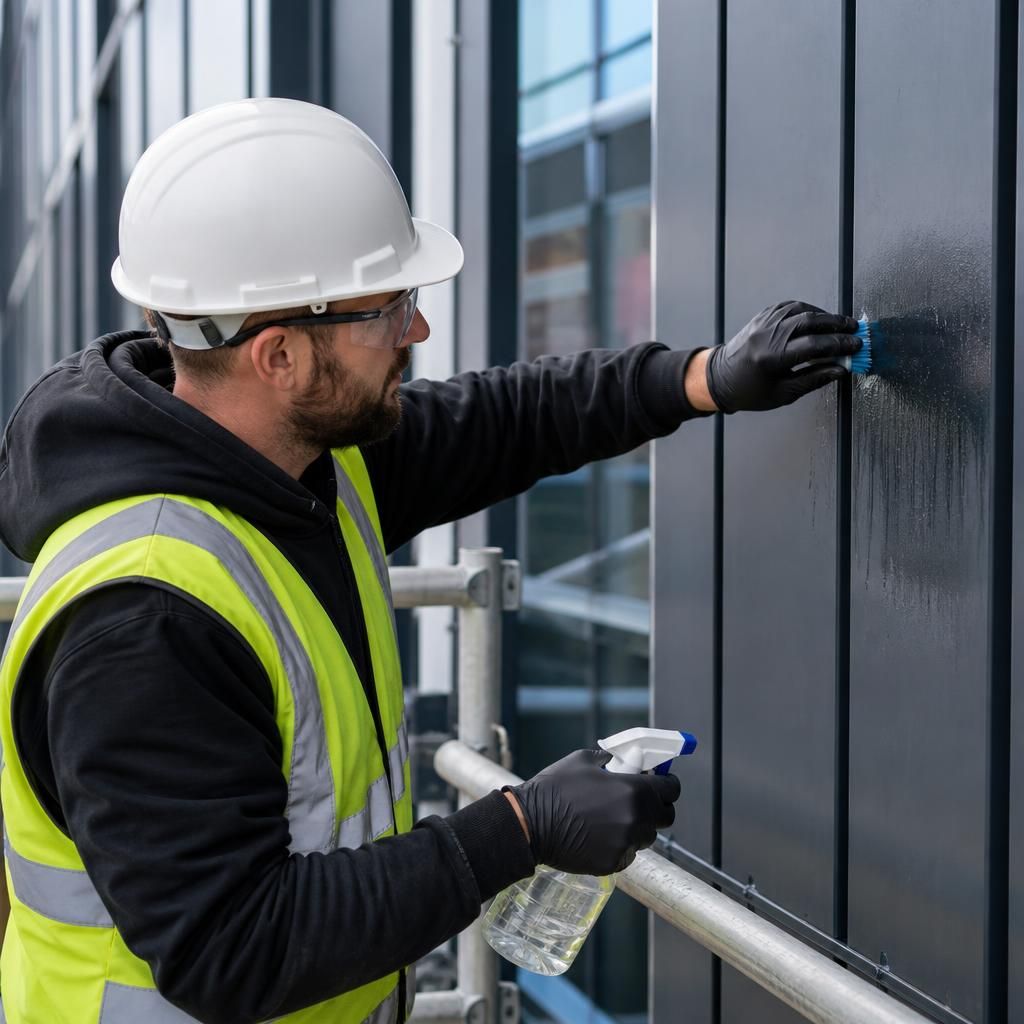
Test cleaning methods on an inconspicuous area before treating the wider site. This confirms that the pressure, temperature, detergent and tools are compatible with the material and its finish.
Inspect the test area when wet and dry for scratching, etching, colour change, gloss loss or softened coatings. If the result is unsuitable, stop and revise the method before cleaning adjacent glass, stone, cladding, sealants or newly finished surfaces.
Discuss Your Post-Construction Cleaning Requirements
Discuss your post-construction cleaning requirements with Encanto Exterior Cleaning so we can assess the materials, residues and access conditions before work begins. We will help establish a suitable cleaning method and protection plan for your site.