
What are the safety considerations for post-construction industrial cleaning?
Post-construction industrial cleaning must begin with a documented site risk assessment covering unstable structures, dust, chemical residues, sharp debris, live services, moving plant and work at height. Controls should include suitable PPE, controlled access, safe equipment and chemical use, dust and wastewater management, and clear coordination with other contractors and site occupants.
Safety in post-construction industrial cleaning depends on identifying and controlling hazards before cleaning begins. A completed build may still contain unstable materials, exposed services, construction dust, chemical residues, sharp debris, mobile plant, incomplete access routes and surfaces that are unsafe to walk or work on. The cleaning plan should therefore be based on a documented site risk assessment and method statement, coordinated with the principal contractor and updated if site conditions change.
Assess the site before work starts
A pre-start inspection should identify the condition of the building, the areas to be cleaned and the activities taking place nearby. Particular attention should be given to:
- Loose façade components, unsecured cladding, unfinished edges and materials that could fall or collapse.
- Openings, floor voids, excavations, fragile roofs, uneven ground and incomplete stairways.
- Live electrical services, temporary supplies, exposed cables, gas services, pipework and other utilities.
- Construction vehicles, lifting operations, powered access equipment and other moving plant.
- Sharp metal, glass, fixings, nails, wire, broken tiles and other construction debris.
- Dust, cement residues, solvents, sealants, coatings and unknown substances that may require specialist handling.
- Poor lighting, restricted ventilation, water accumulation and areas where cleaning could create slip hazards.
Where hazards cannot be controlled safely, the affected area should remain out of bounds until the principal contractor makes it safe. Cleaning should not be used as a substitute for structural repairs, service isolation or general site housekeeping.
Control access and coordinate the work
Post-construction cleaning often takes place while other contractors are completing installation, testing or snagging. A clearly agreed work sequence helps prevent people entering a cleaning zone or being exposed to falling debris, spray, chemicals or moving equipment. Use barriers, warning signs and designated access routes, and keep unauthorised people away from areas where pressure washing, steam cleaning or powered access is taking place.
The site team should agree who controls the work area, how changes are communicated and what happens during an emergency. Cleaning operatives need information about restricted zones, fire arrangements, first-aid provision, welfare facilities, evacuation routes and the location of isolation points. Where several contractors are present, daily briefings and a permit-to-work system may be necessary for high-risk activities such as work at height, confined-space entry, hot work or cleaning near live services.
Use suitable personal protective equipment
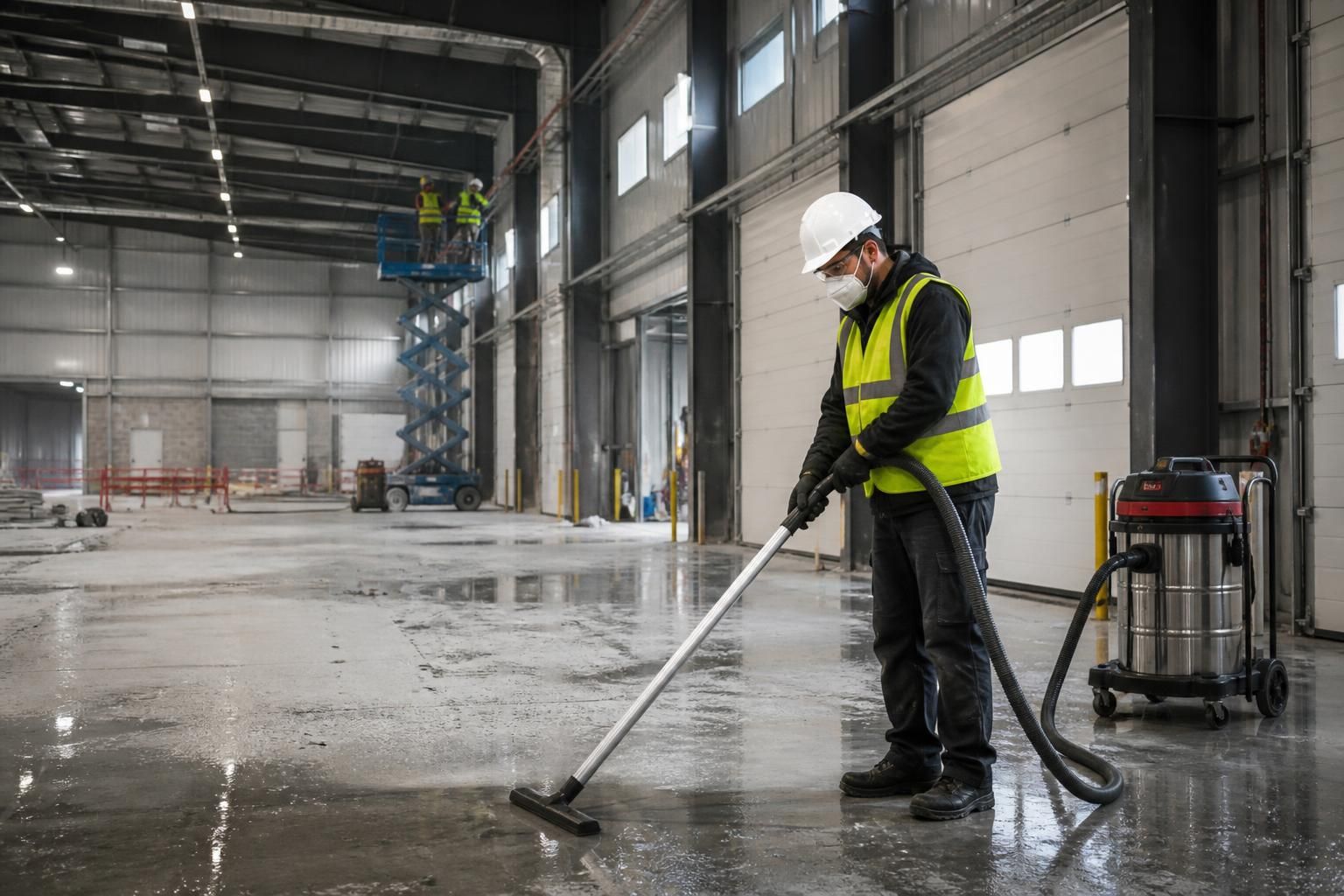
PPE must be selected from the risk assessment rather than issued as a general substitute for other controls. Depending on the task, this may include safety footwear with suitable slip and penetration resistance, hard hats, high-visibility clothing, eye or face protection, hearing protection, gloves and protective clothing. Respiratory protective equipment may be required where dust, aerosols or chemical vapours cannot be adequately controlled by other means.
PPE should be compatible with the cleaning chemicals and equipment being used. Gloves that protect against abrasion may not provide protection against solvents or alkaline products, and face protection may be needed where high-pressure spray can rebound from a surface. Equipment should be inspected, maintained, stored hygienically and replaced when damaged or contaminated. Tight-fitting respiratory protection also requires appropriate face-fit testing and should not be worn with facial hair that prevents an effective seal.
Manage dust and airborne contaminants
Construction dust can contain respirable particles from concrete, mortar, brick, stone and other materials. Dry sweeping or using compressed air can spread dust through occupied or partially enclosed areas. Safer controls include vacuum extraction with suitable filtration, damp methods where appropriate, local ventilation and careful removal of debris.
Operatives should avoid creating unnecessary spray or mist, particularly in poorly ventilated spaces. If the composition of a residue or coating is uncertain, it should be treated cautiously until the material has been identified. Suspected asbestos-containing materials, lead-based coatings or other hazardous substances must not be disturbed by routine cleaning; the work should stop and the relevant specialist assessment and controls should be arranged.
Handle chemicals and residues under COSHH controls
Cleaning products used to remove cement, grout, paint, oils or sealants can cause burns, dermatitis, eye injuries or harmful vapours if selected or applied incorrectly. A COSHH assessment should cover the product, concentration, application method, exposure routes, required PPE, ventilation, storage, spill response and disposal arrangements. Product labels and safety data sheets should be available to the people using the substance.
Never mix cleaning chemicals unless the manufacturer specifically permits it. Acids, oxidising agents, chlorine-containing products and alkaline cleaners can react dangerously. Test products on a small, inconspicuous area first, protect adjacent materials and use the least aggressive method that will achieve the required result. Chemicals should be kept in labelled containers, secured when not in use and transported in a way that prevents leaks or incompatible substances coming into contact.
Operate pressure washing and steam equipment safely
High-pressure water can penetrate skin, damage surfaces, dislodge materials and create dangerous rebound. Operators should use the correct lance, nozzle, pressure and distance for the substrate, and never direct the jet towards people, electrical equipment, glazing or unsecured components. Hoses should be routed to prevent trips, protected from vehicle traffic and checked for damage before use.
Steam cleaning presents additional risks from heat, pressure and condensation. Operators need suitable gloves, eye and face protection and clothing that protects against hot water and vapour. Equipment must be used in accordance with the manufacturer’s instructions, with hoses, couplings, relief systems and power supplies inspected before use. Electrical equipment and temporary supplies must be protected from water, and suitable isolation procedures should be followed before cleaning near electrical installations.
Plan work at height and access equipment
Cleaning at height should be planned so that work from ground level or a safer permanent platform is considered first. Where access equipment is needed, it should be suitable for the ground conditions, height, reach and task. Mobile elevated work platforms, towers, ladders and other equipment must be inspected, used by competent operatives and positioned away from unprotected edges, openings and vehicle routes.
Work platforms should not be overloaded with water, hoses, chemicals or tools, and operatives should not overreach or improvise additional height. Harnesses and restraint systems must be used where required by the equipment and risk assessment, with suitable anchor points and a rescue plan. A plan is also needed for recovering an operative if a platform fails or becomes isolated at height; calling the emergency services alone may not provide a prompt recovery method.
Prevent slips, trips and falling objects
Cleaning introduces water, slurry and loosened debris into areas that may already have uneven or unfinished surfaces. Use controlled application of water, squeegees, wet vacuums, drainage protection and clear routes to manage this risk. Remove debris progressively rather than allowing it to accumulate, and keep hoses, leads and tools outside pedestrian paths wherever possible.
When cleaning façades, roofs or elevated structures, establish an exclusion zone below and secure tools, hoses and materials. Do not work above other people unless effective controls prevent falling objects from reaching them. Wet floors should be signed and isolated until they are safe to use, particularly in entrances, stairwells, loading areas and occupied premises.
Protect drainage, the environment and surrounding areas
Run-off from cement, grout, paint, oils and cleaning chemicals can harm drainage systems, watercourses and treatment processes. Before using water or chemicals, confirm where the run-off will go and protect drains that must not receive contaminated water. Use collection, filtration, containment or approved disposal arrangements where required, and never discharge contaminated slurry or chemical solution without authorisation.
Nearby vehicles, plant, glazing, finished surfaces, landscaping and occupied areas should be protected from spray, dust and chemical contact. Spill kits should be available, and operatives should know how to contain, report and clean up a spill safely. Waste, contaminated absorbents and residues should be segregated and removed through an appropriate waste route in line with the site’s environmental controls.
Maintain competence, supervision and emergency arrangements
Operatives should be trained and competent for the equipment, access method and substances involved. Supervisors should check that the agreed controls are being followed and stop work if conditions become unsafe, such as a change in weather, unexpected construction activity, equipment failure or discovery of an unknown material.
Before work begins, confirm arrangements for chemical splashes, pressure-injection injuries, falls, fire, electric shock, spills and exposure to hazardous substances. Emergency contact details, first-aid facilities, eyewash, fire equipment and communication methods should be accessible. All incidents, near misses and defects should be reported and reviewed so that controls can be improved before work resumes.
A safe post-construction cleaning project is therefore not defined solely by the cleaning method. It requires a suitable risk assessment, competent operatives, controlled access, correctly maintained equipment, COSHH and environmental controls, and active coordination with everyone still working on or using the site. These measures protect workers, visitors, building materials and the wider environment while allowing the cleaning work to be completed without introducing new hazards.
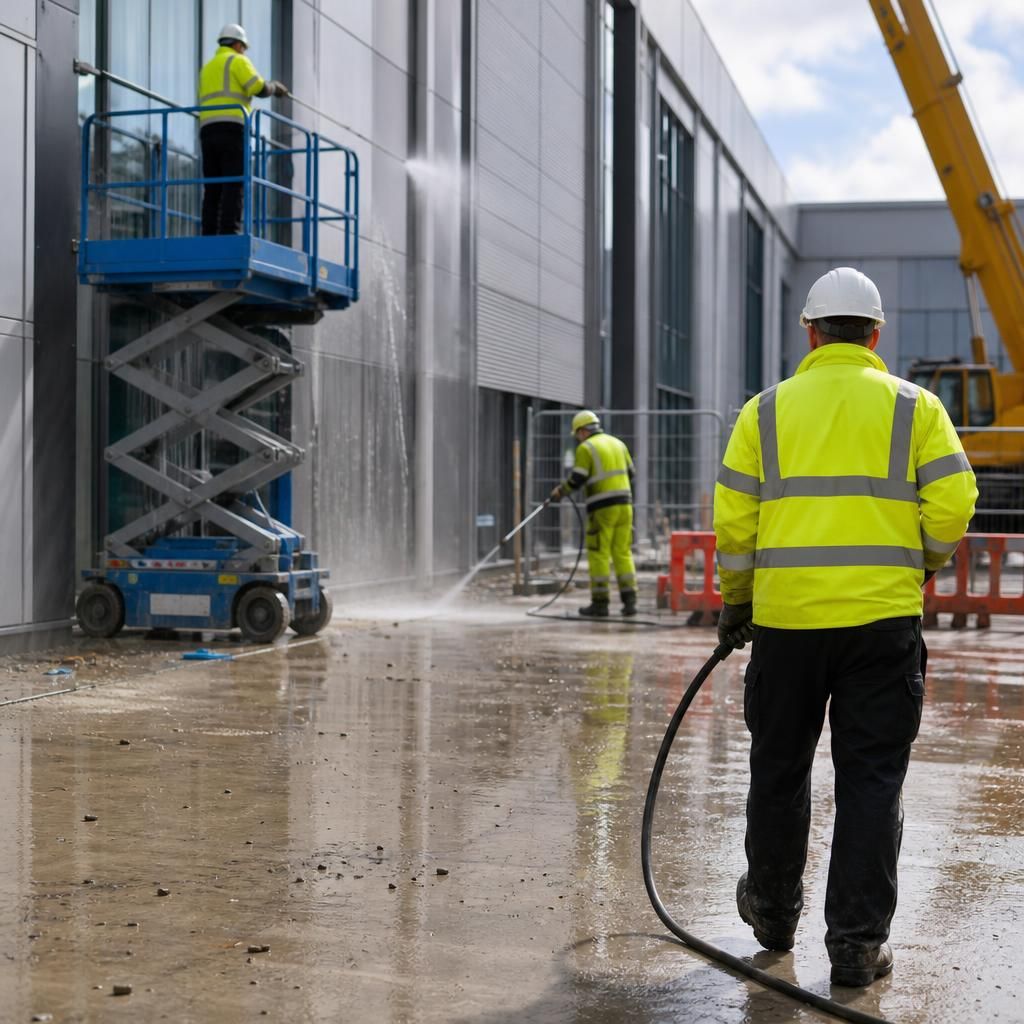
Access control is a critical safety measure during post-construction industrial cleaning because the work can involve high-pressure spray, steam, chemicals, wet surfaces and falling debris. Before cleaning starts, the work area should be clearly separated from other contractors, visitors, vehicles and site occupants.
- Use barriers and warning signs around active cleaning zones, including areas below façade or roof work.
- Agree designated pedestrian and vehicle routes with the principal contractor and keep hoses, cables and equipment clear of them.
- Prevent access to wet floors, open edges, unstable materials and areas where debris or spray may fall.
- Coordinate cleaning activities with deliveries, lifting operations, testing and other trades working nearby.
- Brief operatives on emergency arrangements, evacuation routes, first-aid provision and the person responsible for controlling the work area.
Access restrictions should remain in place until surfaces are safe, equipment has been removed and any residual hazards have been checked. If site conditions change, cleaning should pause while the risk assessment and work controls are reviewed.
Plan Safe Post-Construction Cleaning for Your Site
Speak to Encanto Exterior Cleaning to discuss your site hazards, access requirements and control measures before post-construction industrial cleaning begins. We can help plan a safe, compliant cleaning programme for your Birmingham, West Midlands or UK site.