
What are the key steps involved in post-construction industrial cleaning to ensure thorough site preparation?
Post-construction industrial cleaning involves a planned sequence of site assessment, waste and debris removal, dust control, detailed cleaning of surfaces and equipment, treatment of cement or grout residue, and a final inspection. Completing these steps with appropriate access equipment, cleaning methods and safety controls leaves the property clean, compliant and ready for handover or operation.
Post-construction industrial cleaning is a controlled, staged process that takes a newly built, refurbished or altered site from construction completion to a safe, clean and usable condition. The essential sequence is site assessment, preparation and isolation, removal of construction waste, dust control, cleaning of fixed surfaces and equipment, treatment of cement or grout residues, detailed access cleaning, waste disposal and a documented final inspection.
1. Assess the site and agree the cleaning scope
Cleaning should begin with a site walkover rather than with equipment or chemicals. The contractor should identify the areas requiring work, the types of contamination present and the standard required for handover or occupation. This assessment normally covers floors, walls, façades, cladding, roofs, loading areas, plant rooms, welfare facilities, car parks and access routes.
The condition of each surface also needs to be recorded. Concrete, masonry, coated metal, glass, painted finishes, resin floors, plastics and electrical equipment can all respond differently to pressure, heat, moisture and chemical treatments. Existing damage, uncured coatings, open joints, drainage limitations and sensitive installations should be noted before cleaning starts. The agreed scope should clarify exclusions, access requirements, working hours, water and power availability, waste arrangements and the inspection standard.
2. Make the area safe and ready for cleaning
Before work begins, the site should be made suitable for cleaning activities. This may involve segregating work zones, arranging permits, coordinating with other contractors, protecting pedestrians and isolating machinery or services. Any equipment that must remain operational should be identified, and vulnerable electrical components, control panels, sensors, ventilation openings and finished surfaces should be covered or otherwise protected.
Access equipment must be selected for the height, reach and ground conditions involved. Mobile elevated work platforms, towers, scaffold, long-reach equipment or specialist vacuum systems may be appropriate, depending on the building and the risk assessment. The work plan should also address water run-off, slip hazards, overspray, falling debris, confined areas and the need to prevent contamination from moving into already-cleaned sections.
3. Remove bulk waste and loose construction debris
Large items should be cleared before detailed washing or dust removal. This includes packaging, timber, plasterboard offcuts, insulation, cable fragments, metal pieces, surplus materials, rubble and other loose waste. Manual collection, industrial vacuuming, mechanical sweeping or suitable material-handling equipment may be used according to the site conditions.
Removing bulk debris first improves access and prevents cleaning machinery from spreading contamination. It also exposes damaged surfaces, blocked drains, protruding materials and trip hazards that may otherwise be concealed. Waste should be separated and stored safely for removal through the appropriate disposal route, particularly where containers, coatings or other materials may require controlled handling.
4. Control dust before wet cleaning
Construction dust can settle on horizontal surfaces, ledges, steelwork, ducting, roof structures and equipment housings. If it is immediately disturbed with compressed air or uncontrolled brushing, it can become airborne and redeposit across the site. Industrial vacuuming with suitable filtration, careful brushing and, where appropriate, damp-wiping methods should therefore be used to capture dust progressively.
High-level areas are normally cleaned before lower-level surfaces so that falling dust does not undo completed work. Particular attention is needed around door tracks, service penetrations, cable trays, beams, racking, plant bases and other areas that collect fine particulate matter. Dust control protects workers and helps produce a more reliable final finish.
5. Clean fixed surfaces from high to low
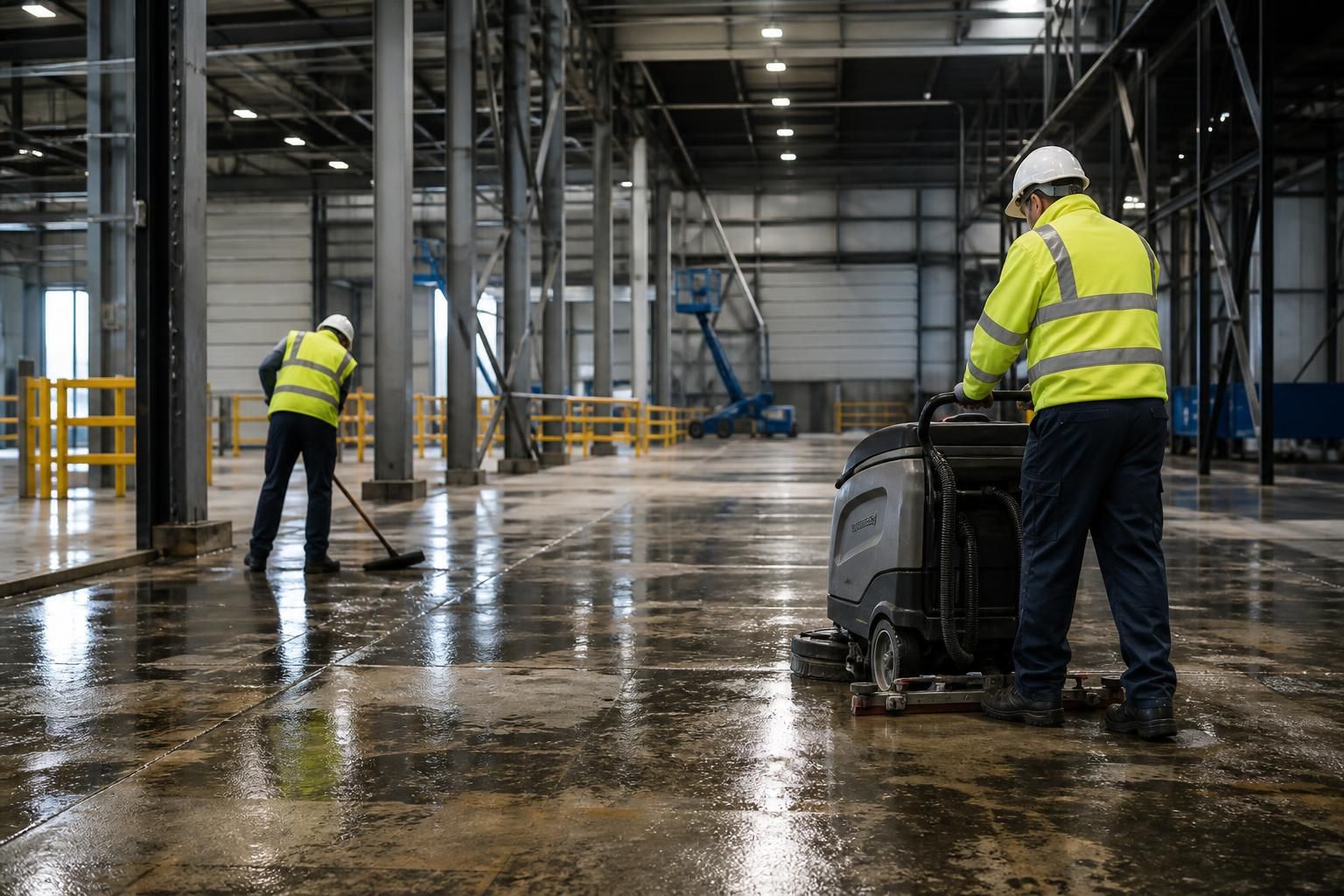
Once loose contamination has been removed, the team can clean walls, ceilings, structural steel, floors, façades and other fixed surfaces. The method should be matched to the material and the contamination. Pressure washing can be effective for robust external surfaces and hardstanding, while steam cleaning is useful where controlled moisture and heat can loosen ingrained dirt or residues. Low-pressure washing, rotary equipment, scrubber-driers, detergent application or manual cleaning may be more suitable for internal and sensitive areas.
Cleaning should generally progress from higher surfaces to lower ones and from cleaner zones towards more heavily contaminated areas. Detergents must be applied at an appropriate concentration and allowed sufficient contact time without being left to dry. Rinsing should be controlled so that dirty water does not run into clean areas, unprotected ground or surface-water drainage.
6. Treat cement, grout haze, paint and other construction residues
Cement splashes, mortar, grout haze, plaster, adhesive, sealant and paint are often the most technically demanding residues. They should be identified before treatment because an unsuitable acid, solvent, abrasive or pressure setting can etch concrete, dull metal, damage coatings or mark masonry.
Residues should be removed using the least aggressive effective method. This may involve careful scraping with a non-damaging tool, controlled pressure washing, steam, a suitable specialist cleaner or mechanical agitation. Chemical products should be tested in an inconspicuous area, used in accordance with their safety data and thoroughly rinsed or neutralised where required. Fresh cement residue is not automatically safe to remove aggressively; the surface beneath it still needs to be protected.
7. Clean plant, equipment and detailed areas
Industrial cleaning must include more than open floors and visible walls. Plant exteriors, conveyors, racking, stairs, handrails, dock levellers, shutters, doors, service corridors and machinery surrounds should be checked against the agreed scope. Cleaning near motors, bearings, sensors, electrical assemblies and control cabinets requires controlled moisture and appropriate protection.
Edges, corners, joints, expansion gaps, drainage channels, thresholds and areas behind equipment should receive particular attention. These locations commonly retain slurry, dust and packaging fragments and can affect safe operation or later maintenance if left untreated.
8. Manage water, run-off and drying
Wet cleaning is only complete when surfaces and the surrounding area have been left under control. Excess water should be collected or directed to an approved drainage arrangement rather than allowed to enter surface-water systems carrying silt or chemicals. Sludge and contaminated wash water may need separate handling, depending on the materials removed and local requirements.
Floors, access routes and equipment should be allowed to dry sufficiently before inspection or handover. Ventilation, extraction, squeegeeing, wet vacuuming or drying equipment can help, but these measures must not spread dust or create additional hazards. Warning signs and restricted access should remain in place while wet surfaces present a slip risk.
9. Complete a final inspection and rectify defects
The final inspection should be systematic rather than limited to a visual look at the main areas. It should check for remaining dust, cement residue, grout haze, paint marks, oil or grease, water streaks, blocked drainage points, waste, damaged finishes and inaccessible areas. The agreed cleaning specification, drawings, photographs and site handover requirements can be used as the inspection reference.
Any failed areas should be recorded, re-cleaned and inspected again. A completion record can include the areas cleaned, methods used, products applied, waste removed, access equipment used, exclusions, outstanding defects and photographs where appropriate. This provides a clear handover trail and helps the client distinguish cleaning issues from construction defects.
Why the sequence matters
Following this order reduces recontamination and avoids using aggressive methods where simpler ones will work. Bulk waste is removed before dust is controlled, high-level surfaces are cleaned before floors, and residues are treated only after the underlying material and contamination have been assessed. The result is a site that is not merely visually cleaner, but safer to access, easier to inspect and better prepared for occupation, commissioning or formal handover.
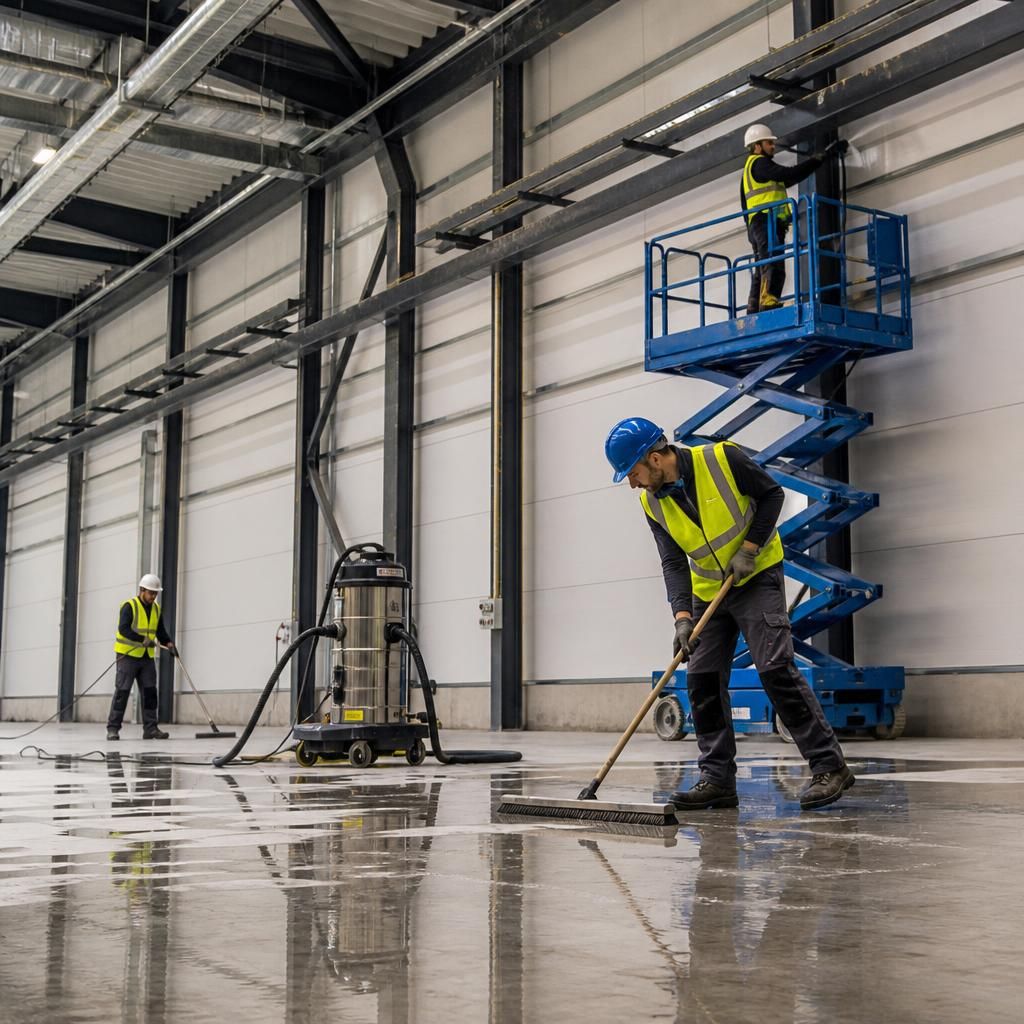
A controlled high-to-low cleaning sequence is essential in post-construction industrial cleaning because dust, slurry and loosened residues naturally fall onto lower surfaces. High-level steelwork, beams, ducting, ledges and equipment housings should therefore be cleaned before walls, floors and access routes.
Bulk waste should be removed first, followed by dust extraction and surface cleaning using methods suitable for the material. Cleaning teams should then treat cement, grout haze, paint and adhesive residues, control wash water and allow surfaces to dry before the final inspection. This sequence limits recontamination and makes it easier to identify any remaining defects before handover.